Henrietta Bredin

Wit of a hunter-gatherer

From our UK edition

Over the years Chris Beetles must have made the pencil-wielding fingers of Quentin Blake and Ronald Searle itch with a desire to draw him. He presents a vigorously compact figure, possesses a pair of appropriately beetling brows sheltering an extremely shrewd gaze and sports an unabashedly splendid set of bugger’s grips. Standing in the doorway of his gallery on Ryder Street in the heart of art-dealing London, both he and his collection are a world away from the smooth-talking, sharp-suited power-broking of Christie’s and Sotheby’s, the plush hush of Colnaghi. The walls of the gallery bristle with pictures, hung to fill every possible available space from floor to ceiling.

A passion for music

From our UK edition

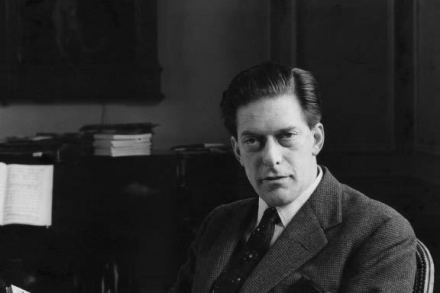
Henrietta Bredin talks to the Earl of Harewood about a life in opera In his memoir, The Tongs and the Bones, the Earl of Harewood ruefully quotes his uncle, the Duke of Windsor, remarking, ‘It’s very odd about George and music. You know, his parents were quite normal — liked horses and dogs and the country.’ As it happens, George Harewood also likes horses and dogs and the country — and football and cricket and fishing — but in addition he has had, from an early age, an abiding passion for music. At the start of the second world war, while he was still at school, he notched up as many performances by Sadler’s Wells Opera as he could and tuned into static-ridden radio broadcasts of operas from Italy, Germany and Hungary.

Anthony Whitworth-Jones: Garsington on the move

From our UK edition

When is a country-house opera not a country-house opera? When it no longer has a country house attached. This is what is about to happen to Garsington Opera, which is moving, lock, stock, barrel and picnic basket, from the exquisitely planned and intimate gardens of the Bloomsbury-redolent Garsington Manor near Oxford to the wide-open rolling hills of the Wormsley Estate in nearby Buckinghamshire. The move is a change and a challenge that the company’s general director, Anthony Whitworth-Jones, seems thoroughly to relish. ‘It’s enormously exciting,’ he says.

Guiding principles

From our UK edition

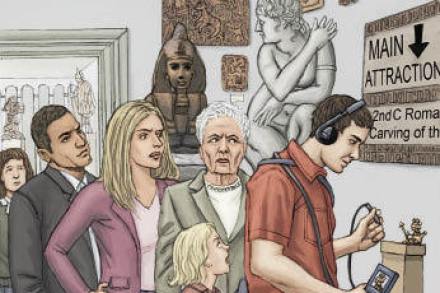
What are the ingredients of a good audio guide? Henrietta Bredin investigates These days you’re more than likely, at any museum, gallery, exhibition or public building of interest, to be offered an audio (or even a multimedia) guide with which to ‘enhance your visitor experience’. There will probably be a small cost involved and you will then find yourself with a pair of headphones and an attached box to sling around your neck — or something known in the trade as a wand, which looks like a large telephone with a selection of buttons to choose from.

Molière with a US accent

From our UK edition

Matthew Warchus tells Henrietta Bredin why he is directing an American play inspired by Molière Rehearsing is an extraordinarily intensive, exploratory, deeply engaging business and director Matthew Warchus, emerging from a long day’s work on his new production of La Bête, by David Hirson, takes a while to change gear, blinking slightly dazedly as we walk towards the Old Vic in search of somewhere quiet to talk. ‘It’s a slippery play, this one,’ he says. ‘The text is so dense and highly wrought and it’s changing shape as we go along. The acting of it creates dimensions that just aren’t apparent on the page.

The great communicator

From our UK edition

Conductor Marin Alsop talks to Henrietta Bredin about sharing a concert platform with Bernstein Last September there was a Mass Rally at the Southbank Centre in London. For an entire day the concert halls and foyers overflowed with shoals of people — children lugging instruments, parents rushing after them, singers clutching scores — all gathered to help launch the Bernstein Project, a year-long celebration of the extraordinary genius of Leonard Bernstein. Beginning with fanfares from Bernstein’s Mass, it will culminate in July with a complete performance of that work, involving community choirs, a marching band and a rock group, alongside dancers and professional soloists.

In the firing line

From our UK edition

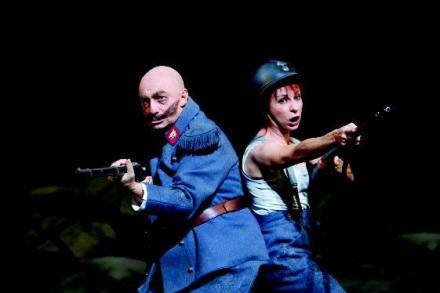
Henrietta Bredin goes backstage at the Royal Opera House and finds a stash of weaponry I am standing outside a heavily reinforced metal door somewhere in the furthest flung recesses of the labyrinthine corridor-tangle backstage at the Royal Opera House. A painted shield has the word Armoury picked out on it in gold lettering and next to a no smoking warning is a sign saying ‘No trespassing. Violators will be shot. Survivors will be shot again’. The door swings ponderously open to reveal the possessor of this somewhat macabre sense of humour, chief armourer Rob Barham. He is not a small man and his lair seems to fit around him like a tortoise shell, leaving him the minimum of space in which to manoeuvre.

A view from the pit

From our UK edition

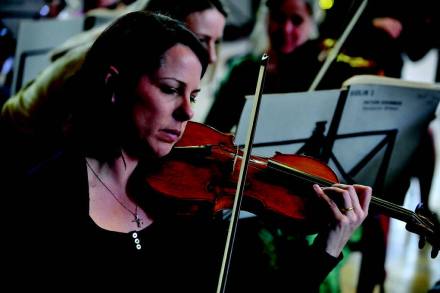
Henrietta Bredin talks to the leader of ENO’s orchestra about working ‘in the trenches’ ‘Working in the trenches’ is how some people describe their lives in the orchestra pit, playing for opera performances. The traditional opera house has a horseshoe-shaped auditorium and the musicians are accommodated below stage level so that, ideally, the sound they make floats up and out into the theatre without overwhelming the singers. At Bayreuth, in the Festspielhaus that Wagner had built specifically for the performance of his own operas, the musicians are completely invisible, in a pit that is not just recessed well beneath the stage but is also covered by a hood.

Opera

From our UK edition

Henrietta Bredin on boats, trains, planes that transport singers around the stage Opera, so they say, has the power to transport the listener on wings of sound to places beyond the imagination — on a good night, at any rate. But just to keep singers, and directors, on their toes, a number of composers have, over the years, been tickled by the notion of writing specific modes of transport into the opera’s storyline. Puccini was car-mad, so you’d think he might have put one of his favourites into an opera. His first purchase was a De Dion-Bouton 5 CV in 1901, and some years later he commissioned a special off-road number from Lancia, for hunting trips.

Communicating through music

From our UK edition

Henrietta Bredin on how Music for Life can help overcome the isolation of dementia sufferers I am looking at an elderly woman, tiny in a huge armchair. She has not spoken for months, she has not maintained eye contact with anyone for even longer and she has developed a nervous compulsion to keep one hand always up to her chin, covering her mouth. A woman in a pink overall is sitting next to her, gently stroking her hand, and a young man with a violin is kneeling at her feet. With infinite patience, the violinist starts to play a simple tune, making it even quieter, more exploratory, when she appears to flinch at the sound of the first notes. Very, very slowly, almost indiscernibly, the woman’s tight, clenched muscles relax slightly. The little tune trickles on.

Dallas bucks the trend

From our UK edition

Henrietta Bredin talks to Spencer de Grey, architect of the new opera house in Texas There can’t be a gesture much more brave and defiant than building a new opera house in the current doom-laden financial climate. Deep in the heart of Texas, in the centre of its freshly revamped arts district, Dallas has done exactly that. The project was awarded to Foster and Partners and has been the brainchild and chief responsibility of Spencer de Grey, whose previous work includes the Great Court at the British Museum and the Sage music centre in Gateshead.

Ready for anything

From our UK edition

Henrietta Bredin talks to Simon McBurney about his latest challenge: doing Beckett for the first time I am standing in Simon McBurney’s kitchen, discussing pigs (he’s not only kept them but also slaughtered them, butchered them and made over 20 different sorts of salami), memory and language (both capacious and exact in his case), watching him brew coffee (freshly ground, delectably strong), grill toast and spread marmalade (home-made, dark and delicious) and realising that his insatiably curious intellect, his grace and economy of movement are as compelling in a domestic setting as they are on stage.

A colossal achievement

From our UK edition

There is a slightly odd but pleasingly old-fashioned feel to the design for the dustjacket of this book, with its early London Underground style of lettering and a painting of the Coliseum at night, as viewed from Trafalgar Square, in 1905 — some decades before the building became home to English National Opera. There is a slightly odd but pleasingly old-fashioned feel to the design for the dustjacket of this book, with its early London Underground style of lettering and a painting of the Coliseum at night, as viewed from Trafalgar Square, in 1905 — some decades before the building became home to English National Opera. This is a substantial volume and it deals with its subject matter in considerable detail.

Behind the scenes at the Coliseum

From our UK edition

I do wish English National Opera would remember what it’s called and, mindful of its status as the only English-language opera company we have, translate opera titles into English as well as singing them in that language. There was no reason for Kaija Saariaho’s L’amour de loin not to be given as Love from afar, nor for Donizetti’s Lucia to be ‘of’ rather than ‘di’ Lammermoor. Ligeti’s Le grand macabre is, admittedly, harder to render and may perhaps be allowed as an honourable exception, along with the untranslatable Così fan tutte.

An ‘intelligent spectacle’

From our UK edition

Henrietta Bredin talks to David Pountney about running the Bregenz Festival Back in the days when David Pountney was director of productions at English National Opera, his so-called office was a tiny broom cupboard of a space carved out of a backstage cranny of the London Coliseum, with a single grubby window overlooking a narrow passageway known as Piss Alley for obvious and strongly smelling reasons. He now, as artistic director of the Bregenz Festival in Austria, occupies a lavishly appointed sort of control tower, with floor-to-ceiling windows looking out across Lake Constance and giving a direct hawk’s-eye view of the stage built out into the lake, which is the festival’s major attraction.

A close engagement with music

From our UK edition

Sean Rafferty tells Henrietta Bredin how an abbot persuaded him to make his first recording Six minutes to go before the daily live broadcast of BBC Radio Three’s In Tune goes on air and the atmosphere is full of a sort of supercharged alertness, of tension expertly controlled by a small team of people who all know exactly what they are doing. The producer asks about a recording of a Handel aria she wants to play later in the programme — it’s not here yet, and may only be available on DVD, but it’s being looked for, and if it fails to materialise, she’s got an alternative as back-up. Two minutes to go and presenter Sean Rafferty ambles into the studio, having been talking to the programme’s first two guests in the Green Room next door.

‘A sticky, sweaty play’

From our UK edition

Henrietta Bredin talks to Ruth Wilson about her role as Stella in the Donmar’s Streetcar If Ruth Wilson doesn’t very soon become a major force to be reckoned with, as an actress, director, producer, screenwriter (probably all four), I’ll eat my entire, quite extensive collection of hats. She is bursting with talent and possesses a gleefully voracious appetite for a challenge. This is probably just as well as she is about to take on the role of Stella at the Donmar Warehouse in Tennessee Williams’s A Streetcar Named Desire. ‘I love Stella,’ she says, leaning back in her chair and gulping a mug of tea. ‘I think she’s quite an opportunist, very modern and forward-thinking.

Dangerous territory

From our UK edition

Henrietta Bredin talks to Janis Kelly about her role in Rufus Wainwright’s first opera, Prima Donna Anyone less like the clichéd idea of a prima donna than Janis Kelly would be hard to find. She is known and loved as a singer and consummate actress with a conspicuous lack of airs and graces who will throw herself into anything, the more challenging and off the wall the better, imbuing performances with her own particular brand of intense musicality and grace. Lucky Rufus Wainwright, then, who has cast her to perform the title role in his first foray into writing opera, Prima Donna, which will be given its world première at the Manchester International Festival on 10 July.

Grecian jewel

From our UK edition

I am sitting in the town square of Hermoupolis, capital of the Greek island of Syros, when I am approached with great courtesy by a gentleman carrying a bundle of papers, on the top of which I can make out the words Notenbüchlein für Anna Magdalena Bach. I am sitting in the town square of Hermoupolis, capital of the Greek island of Syros, when I am approached with great courtesy by a gentleman carrying a bundle of papers, on the top of which I can make out the words Notenbüchlein für Anna Magdalena Bach. It is the island’s Head of Cultural Affairs, Nikos Almpanopoulos, due for his weekly piano lesson after the drink we have arranged to have together.

Godot time

From our UK edition

Get home from the theatre to find my laptop flashing a notice at me saying: 'Godot: overdue'. Which indeed he was, patiently, achingly, endlessly waited for in an extraordinary performance by Messrs Stewart, McKellen, Callow and Pickup. Difficult to single out particular moments but possibly the best piece of advice for all of us in these topsy-turvy times is Pozzo's: 'Dance first, think later; that's the natural order of things.