Arts feature

Art and place

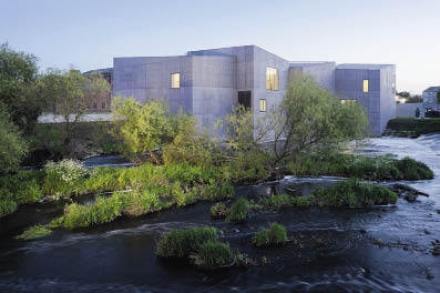
James Hamilton says that regional art galleries are as evocative as local landscape It is always a cause for celebration when a new art gallery opens. There is something about the existence of its galleries that indicates a nation’s state of health. Lively galleries demonstrate that a nation is not so caught in the imperative to pay for schools and hospitals that it can’t, in the worst of times, present the fruits of the difficult lives and hard-won insights of painters and sculptors. In Wakefield, following the Turner Contemporary at Margate, the Hepworth opened on 21 May. That two relatively small towns in the English regions should be so blessed with expensive new kit in difficult times is wonderful to see.

Live truths

I met a Distinguished Old Rock Critic at a party recently, and was delighted to find that the obvious acronym didn’t apply. I met a Distinguished Old Rock Critic at a party recently, and was delighted to find that the obvious acronym didn’t apply. We chewed on this and that: CDs vs downloads, the blackboard-scraping quality of Chris Martin’s voice, and the unending need to hear the wonderful new music we know is out there somewhere but can’t seem to find. He is my senior by some years but the bug is still in his system, which I found encouraging. I met a Distinguished Old Rock Star recently, too, and he admitted he couldn’t give a monkey’s about any of it, and listened to as little as he could get away with.

Priestley values

The J.B. Priestley flame is kept alive today by his son Tom, who resides in the same Notting Hill flat he has lived in for more than 50 years. His father — novelist, dramatist, scribe, broadcaster, socialist (who died in 1984) — was glad that Tom, now 79, hadn’t chosen the same life. ‘The only time he came here to the flat he said, “Don’t be a writer. Dreadful business.”’ Tom is a retired film editor who manages the literary estate. He is the offspring of J.B.’s second marriage to Jane Bannerman, the divorced wife of the humorist writer Bevan Wyndham Lewis. There was one more Mrs Priestley after her — Jacquetta Hawkes, the distinguished but flinty archaeologist.

Identity crisis | 11 June 2011

Laura Gascoigne on how the Venice Biennale is searching for its place in art history Picture one of the world’s largest private yachts moored at the quayside of the Riva dei Sette Martiri, protected by a metal perimeter fence and a security detail. Now imagine two battered sea freight containers dumped in the shape of a tau cross on the quay just out of spitting distance of the security fencing. One is Roman Abramovich’s 115m superyacht Luna; the other is a Haitian pavilion showing Vodou-inspired sculpture by the Grand Rue Sculptors from the slums of Port-au-Prince. Welcome to the opening of this year’s Venice Biennale (until 27 November), bigger than ever and more deeply riven with contradictions.

Out of the ordinary | 4 June 2011

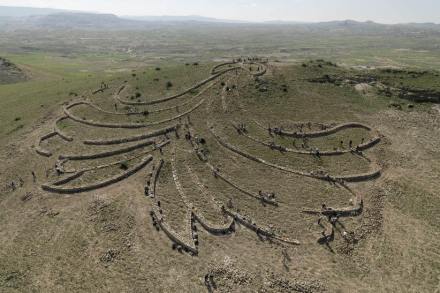
From high in the sky over Cappadocia Susan Moore looks down at part of the largest contemporary land art project in the world There are few artists whose work is best seen by hot-air balloon. There are even fewer whose works can only be photographed in their entirety by satellite. To describe the Australian Andrew Rogers as a land artist on an epic scale seems something of an understatement. Over the past 13 years he has masterminded the construction of 47 monumental structures in 13 countries spanning seven continents and involving some 6,700 people. The more remote a site, the better it suits his purpose. Rogers has a penchant for wilderness, desert and plateau, favouring culturally resonant sites that are often barely accessible, and not flinching from challenging extremes of climate.

Never say goodbye

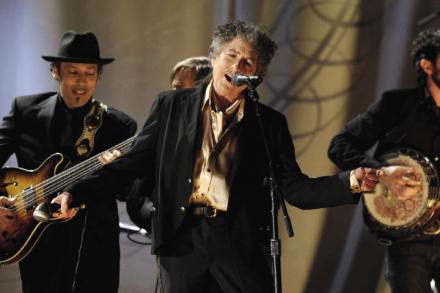
Michael Henderson considers the perennial appeal of Bob Dylan Bob Dylan turns 70 next week, and from Duluth to Derby they will blow out the candles. The Minnesotan troubadour, who rolled into New York the year Kennedy became president, will pay no attention. As he wrote in one of his better songs, ‘Me, I’m still on the road, heading for another joint.’ Like Ken Dodd, a different kind of minstrel, he will stop performing only when they put him in a box. It would not be unkind to say he has been crooning like a 70-year-old for some while. His voice, which was never an instrument of beauty, lost whatever shape it may have had at least a decade ago.

American view – Sword of controversy

‘I’ve refused to become a prisoner of “Piss Christ”,’ said the photographer Andres Serrano, referring to his 1987 photograph of a crucifix submerged in a glass filled with urine. ‘I’ve refused to become a prisoner of “Piss Christ”,’ said the photographer Andres Serrano, referring to his 1987 photograph of a crucifix submerged in a glass filled with urine. But the fact remains that he has become a very wealthy prisoner of that work.

Portraits of a marriage

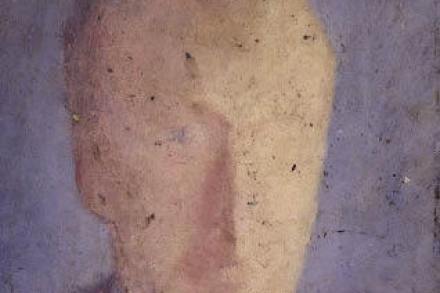
Andrew Lambirth on the special relationship between the artists Zoran Music and Ida Barbarigo that is explored in an exhibition that shows their work together for the first time in more than half a century At the Estorick Collection, a modest north London townhouse, there is until 12 June a most engaging exhibition devoted to two artists, husband and wife, whose work is not particularly well known in this country, though both are recognised and celebrated internationally. Ida Barbarigo (born Venice 1925) first met Zoran Music (1909–2005) at an exhibition of his paintings in Trieste in the spring of 1944. Their burgeoning friendship was interrupted when Music was arrested by the Nazis, who first accused him of spying and then wanted to recruit him.

Unexpected passion

Michael Henderson talks to Alfred Brendel about his favourite films ‘I belong to no tribe,’ says Alfred Brendel, taking tea at his home in Hampstead, surrounded by some of the books that constitute his vast library. ‘I follow no creed, subscribe to no ideology, and I despise nationalism. I have lived in many places but wherever I go I am a paying guest.’ If you wanted a single statement to do justice to this extraordinary man, that would do pretty well. It is the expression of a well-travelled, well-read, well-versed man in language that is by turns serious and playful. With his immense learning, worn lightly, and a highly developed sense of irony and absurdity, Brendel is every inch a central European.

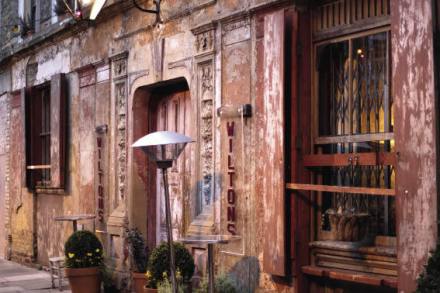
Wilton’s Music Hall – The good old days

John Major is half way through a book about the rise and fall of the music hall. His father, Tom, was a song-and-dance man who formed a double act with his wife, Kitty. John’s brother Terry was a trapeze artist, and the former prime minister must have come close to going into the family trade. Parliament’s gain was, in John Major-speak, showbiz’s not inconsiderable loss. Oh, yes.   Tom Major was a name in his day, although the fag-end of the music hall he knew is deader now than even the madrigal. The generation of halls that emerged in 1850 were very rapidly gone. Only one survives, in the East End of London, off Cable Street in Stepney.

We are the mockers, too

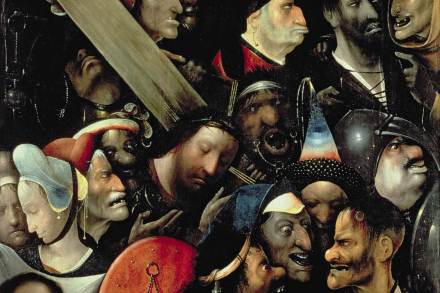
Hieronymus Bosch had a distinctive view of our debased humanity, most distinctly expressed in his paintings of Christ’s Passion, says Michael Prodger Carl Jung described the painter Hieronymus Bosch as ‘the master of the monstrous...the discoverer of the unconscious’. He was, however, only half right. While it is true that Bosch has no peers as a conjurer of phantasms and grotesques, he was no proto-psychologist: he was a man of his times. Bosch lived c.1450–1516 so his times were the late Middle Ages and there was no such thing as the unconscious then — there was the Bible. All human behaviour, good or ill, could be ascribed either to God or to the Devil. And, in Bosch’s worldview at least, the Devil was in the ascendant.

Spring round-up

Perhaps to contradict the shocking fade-out of sculpture post-1970 in the Royal Academy’s Modern British Sculpture exhibition, just ended, there are a number of good sculpture shows in the commercial galleries. Perhaps to contradict the shocking fade-out of sculpture post-1970 in the Royal Academy’s Modern British Sculpture exhibition, just ended, there are a number of good sculpture shows in the commercial galleries. A survey at Waddington’s of Bill Woodrow’s witty recycled works from the 1980s ends on 16 April, but over the road is a fine display of recent prints and sculpture by Ivor Abrahams (born 1935), entitled Suburban Encounters (Mayor Gallery, 22a Cork Street, W1, until 28 April).

Pop up Games

Despite promises, the London Olympics is set to leave us with a legacy of unwanted buildings. We should cut costs and have flatpack movable stadia, says Ross Clark The complex used for the 1908 Olympics became known as White City. For 2012, the challenge is not to create a White Elephant City. While gymnastics can impress and beach volleyball entertain, the Olympic sport that has spectators truly gasping is property development. It has become almost a cliché that each Olympic city be left with a host of monumental venues that were built to sell the host city to the world but that lie empty for years while citizens struggle to pay the bill. Even before the credit crunch, London 2012 was conceived as the Olympic Games that would put an end to the gargantuan waste.

Little big man

A museum dedicated to Charlie Chaplin will open soon. William Cook gets a preview and talks to the star’s son Michael about life with a legend Standing in the deserted drawing-room of Charlie Chaplin’s Swiss château, waiting to meet his eldest surviving son, Michael, I remember something Auberon Waugh once said to Naim Attallah. ‘A lot of sons of famous fathers seem to be upset by the circumstance, even destroyed by it,’ said Waugh. ‘But I don’t think they need be. It entirely depends on the personality.’ However, Waugh was merely the son of the best British novelist of the last century. The man I’ve travelled here to meet is the son of the 20th century’s biggest film star — for a while, the most famous man in the world.

The power of words | 2 April 2011

Tom Conti tells Mary Wakefield how to get inside a woman’s mind I watched Shirley Valentine again last night. It’s different when you’re older. At 14 it’s impossible to imagine that any sane woman would talk to a wall — or put up with that dour, demanding husband for so many years. When you’re 35, well, it doesn’t seem so far-fetched, does it? Tom Conti (as Costas, the love interest) looks better, too, this time round — more attractive. When you’re a teen, you’ve no idea how rare it is to find a middle-aged man who looks good in jeans. As the credits scrolled up over sundown in Mykonos, I was full of an unsettled longing for retsina, self-actualisation and holiday romance.

The great redeemer

Assailed on all sides by cultural vacuity, we are more than ever in need of the life lessons of Beethoven, argues Michael Henderson We do not, as a rule, meet all our loves at once. Those things which mean so much to us in our emotional maturity did not always strike us as special presences. Indeed, we may have been suspicious of, or felt hostility towards, some of the supreme works of art, and the minds that created them: many an indentured Wagnerian had first to leap through the magic fire of his initially forbidding music dramas. Last week, therefore, as I sat in the drawing-room of a house in central London, and watched Gábor Takács-Nagy, founder of the Takács Quartet, supervise another superb ensemble, the Belcea, as they played through Beethoven’s Op.

A passion for music

Henrietta Bredin talks to the Earl of Harewood about a life in opera In his memoir, The Tongs and the Bones, the Earl of Harewood ruefully quotes his uncle, the Duke of Windsor, remarking, ‘It’s very odd about George and music. You know, his parents were quite normal — liked horses and dogs and the country.’ As it happens, George Harewood also likes horses and dogs and the country — and football and cricket and fishing — but in addition he has had, from an early age, an abiding passion for music. At the start of the second world war, while he was still at school, he notched up as many performances by Sadler’s Wells Opera as he could and tuned into static-ridden radio broadcasts of operas from Italy, Germany and Hungary.

21st-century floating world

It’s an irony of Western art that our vision of modern metropolitan life was shaped, via Impressionism, by ukiyo-e prints — ‘pictures of the floating world’ of Edo, Japan. It’s an irony of Western art that our vision of modern metropolitan life was shaped, via Impressionism, by ukiyo-e prints — ‘pictures of the floating world’ of Edo, Japan. In his new exhibition, Tokyo, at Flowers East, Jiro Osuga updates that vision for the 21st century. The son of a Japanese businessman, Osuga left his native Tokyo for London in 1970 at the age of 12 and studied at Chelsea and the Royal College of Art.

Painter’s progress

Andrew Lambirth talks to Alan Reynolds, who abandoned a lucrative career as a landscape painter to follow his instincts towards abstraction At the age of 85, Alan Reynolds is enjoying a sudden and well-deserved flurry of interest in his work. A superb monograph has just been published on his art, written by Michael Harrison, director of Kettle’s Yard in Cambridge, and to launch the book there’s an exhibition at Annely Juda Fine Art (23 Dering Street, W1, until 26 March). This is Reynolds’s seventh solo show at the gallery, which has successfully represented him since 1978, and which has been responsible for promoting his work in Europe.

Cultural connections

Afghanistan has been subjected to centuries of turmoil, yet an astonishing collection of treasures survives and will be on show at the British Museum next week, as the exhibition’s curator St John Simpson explains Afghanistan is often described as the crossroads of Asia and of the ancient world, and a major new exhibition of objects loaned by the National Museum of Afghanistan in Kabul to the British Museum sets out to tell the story of its turbulent history and rich culture. By virtue of its position and physical geography, Afghanistan has always played an important role in the mediation of cultures between Iran, Central Asia and South Asia.