Arts feature

Illustration: The laws of shadows

In May 1904 a young artist called James McBryde wrote excitedly to his great friend M.R. James. ‘I don’t think I have ever done anything I liked better than illustrating your stories. To begin with I sat down and learned advanced perspective and the laws of shadows...’ In May 1904 a young artist called James McBryde wrote excitedly to his great friend M.R. James. ‘I don’t think I have ever done anything I liked better than illustrating your stories. To begin with I sat down and learned advanced perspective and the laws of shadows...

Silent witness

A new exhibition of paintings and drawings by Leon Kossoff (born 1926) is an event in the art world. Kossoff is an intensely private man and keeps such a low profile that many people react with surprise to the information that he is still very much alive and working. Not for him the carefully calculated public appearance or widely disseminated views; he is reluctant to give interviews and finds it increasingly difficult to say anything at all about his pictures. In fact, he is so reticent about his art, and so much wants it to speak for itself, that he has discouraged several people from writing books about him. To date, there are a number of Kossoff exhibition catalogues, with more or less revealing texts, but no heavyweight monograph.

Venetian Visions

Andrew Lambirth finds the National Gallery’s new exhibition on Canaletto and his contemporaries both illuminating and enjoyable Giovanni Antonio Canal (1697–1768), better known as Canaletto, is a safe bet and a crowd-pleaser, and the weary critic is entitled to ask — not another Canaletto show? What can there be left to say? But note the exhibition title — Venice: Canaletto and his Rivals. Venice comes first, the great tourist trap herself, kingdom of the sea and romance-magnet, and in the placing of the words the unashamed popularism of the show emerges. Or so the cynic might think.

Mrs Gaskell’s bicentenary: Knutsford’s Amazons

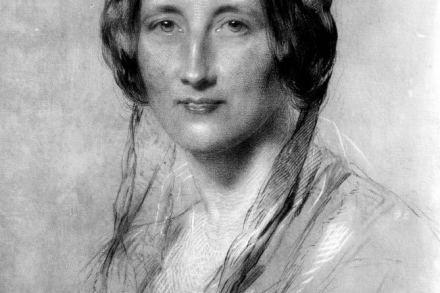
On the southern edge of Manchester, a few miles from the airport, there is a commuter town where the Victorian novel remains very much alive. This year Knutsford celebrates the bicentenary of its most famous daughter, who immortalised this ‘dear little town’ in several of her finest stories. More than 150 years after it first appeared, in weekly instalments in Dickens’s Household Words, Cranford remains Mrs Gaskell’s most enduring creation. And in these streets you can still trace the outline of the world that she created. Elizabeth Gaskell was born in 1810, in Chelsea, the daughter of a Unitarian minister. Her mother died when she was a few months old, and Elizabeth was packed off to an aunt in Knutsford.

Arts debate: ‘Brutal and vulgar’

From the start, the combatively worded motion — ‘Time for the arts to stand on its own two feet and stop sponging off the tax-payer’ — came under attack in the Spectator arts debate at Church House last month. From the start, the combatively worded motion — ‘Time for the arts to stand on its own two feet and stop sponging off the tax-payer’ — came under attack in the Spectator arts debate at Church House last month. Speaking for the motion were Nigel Farage MEP, Tiffany Jenkins and Marc Sidwell; against were Ben Bradshaw MP, Matthew Taylor and the Culture Secretary Ed Vaizey, who called it ‘brutal, vulgar, left-wing, and hostile to excellence and quality’.

The Great Escape

Hollywood’s gloss on reality makes Olivia Glazebrook want to weep. Why can’t the Americans learn from the French? When Hollywood wants to captivate an audience of ‘grown-ups’ — those who have become desperate to escape the awful dreariness and suffering of their everyday lives — it shows them an alternative soothing world into which they can be plugged, for just a few hours. These poor suckers — we’ll call them ‘cinema-goers’ — yearn for this glossy, idealised world, which will be not a dream (because dreams can be puzzling and obtuse) but a calming vision, populated by beautiful characters who will look human, but not too human.

An artist of the sinking world

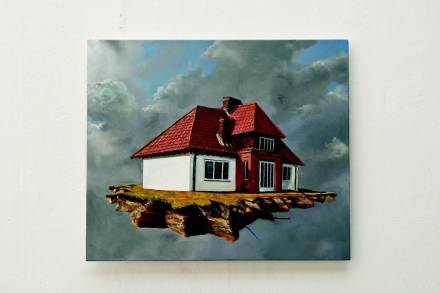
Julian Perry (born 1960) paints images of genuine topicality in an immaculate high-definition realist style. Julian Perry (born 1960) paints images of genuine topicality in an immaculate high-definition realist style. His last show in 2007 dealt with the allotment sheds bulldozed by the relentless encroachment of the Olympic site. Since then he has been painting pictures of coastal erosion, visiting locations around England and composing hallucinatory images of deracination and loss. ‘Clifftop with Fridge Freezers’ was one of the first of the new series. I asked him to describe the subject.

Building block

Britain’s architects can produce the best designs in the world, says Amanda Baillieu. So why aren’t any on display at the Venice Architecture Biennale? Something has gone very wrong for the British at the Venice Architecture Biennale. This three-month event may play second fiddle to the older and larger Art Biennale, but for architects it is meant to be the only festival where they can let rip, free from the restraints of budgets, planning and bureaucracy. They come to gossip, to see what their rivals are up to and schmooze clients. Even Norman Foster has dropped by to talk up his firm’s plan for Hong Kong’s new £1.8 billion arts district. Some 30 countries show their wares in national pavilions, slugging it out for punters and prizes.

The art of risk-taking

Despite the economic gloom, ENO’s John Berry is optimistic about the future of opera Opera director David Alden said in a recent interview, ‘Opera is alive, popular — and hot.’ I agree. Opera is very much in the public eye and thriving in UK opera houses, cinemas and performing arts centres. However, as we wait to see the outcome of the coalition’s spending review, the arts community has been vocal about its concerns and fears. London is not Munich or Vienna where public subsidy for the arts is a way of life and debated on the same level of necessity as health and education. Yet Britain is revered worldwide for the energy and quality of its performing arts institutions.

Mourning in America

New York is in the grip of memorial mania, writes Tiffany Jenkins In early 1991, the construction of a federal office building in lower Manhattan was halted after an unexpected discovery. Underneath the ground, covered by a patina of concrete and steel, was the coffin of a colonial-era African. It was not alone. Construction work was halted, archaeologists called in, and it was soon established that the site was a major burial ground from the 17th and 18th centuries. As many as 15,000 to 20,000 black men, women and children were buried there, by the historians’ count, making this one of the most important archaeological finds in all America. The significance was not lost on New York’s people or its authorities.

Beneath the Fringe

Lloyd Evans joins the hopeful hordes seeking fame and fortune in Edinburgh Wonderful, Edinburgh. Isn’t it magical? The artistic world has descended on Scotland’s magnificent capital for three weeks of self-expression and glorious creativity. Or so everyone wants everyone else to think. When people speak of Edinburgh they reach whoopingly for a peculiar grammatic mode, the puerile tense. Delightful, daring, courageous, uplifting, inventive, risk-taking, inspirational, sublime. Yes, maybe. But take off the kindergarten dolly-goggles and you’ll find other qualities, other adjectives, lurking. Vain, greedy, embittered, jealous, self-obsessed, megalomaniac, drunk, stoned and bankrupt. This is the true Edinburgh.

Space invaders | 14 August 2010

Ben West investigates the growth in unusual exhibition venues — from brothel to butcher’s shop The economic downturn has forced many of us to rethink how we operate. This is especially so in the arts, an area that has always struggled for funding, and where cuts are inevitably huge considering all the hospitals and schools we need to keep afloat — not to mention a sparkling new Olympic village to complete. Last month the government announced that it wishes to make cuts to the arts of 25 per cent over the next four years. However, in many areas, until now at least, tightened budgets have not been overly discernible: for example, you may have seen a slightly thinner programme in theatres, or fewer films in production in an already overcrowded marketplace.

The new alternatives

William Cook goes to Skegness and watches Cannon & Ball attract an adoring audience It’s August and Edinburgh is full of fashionable young comedians, but here in Skegness the Festival Fringe seems a million miles away. With its amusement arcades and fish and chip shops, this unpretentious place feels forgotten by the metropolitan arts establishment. There are no TV producers on the windswept promenade, no theatre critics in the bingo halls. Yet Skegness boasts a theatrical heritage far older than the Edinburgh Festival — traditional seaside entertainment. And this summer it’s playing host to Britain’s most seasoned seaside entertainers, Cannon & Ball. Throughout the 1980s Cannon & Ball were one of the biggest acts in Britain.

‘A totally irresponsible art’

Nina Conti appears convinced that her puppets are real. Freddy Gray investigates Isn’t Nina Conti too good-looking to be a ventriloquist? One thinks of blokes in working-men’s clubs with frazzled hair, not Nina with her smiling face and big brown eyes. It’s hard not to look at her, which must be a professional disadvantage: isn’t the audience meant to watch the puppet? I want to put this technical question to Nina, but worry that it might sound creepy. Instead, feebly, I ask if she believes reports that ventriloquism is making a comeback. ‘I’m not sure I really buy into that,’ she says, with a kind and apologetic shrug. But the art of talking through a puppet does seem to be enjoying a renaissance.

Back to the future | 24 July 2010

Charles Moore on how to renew and maintain life in the deserted villages of rural Romania To understand this story, one must go back nearly 25 years. As Soviet Communism moved towards collapse in the late 1980s, people were in danger of forgetting Romania. Because of Romania’s relative independence from Moscow, the West played down the insane policies of its despot, Nikolai Ceausescu. The Spectator, I am glad to say, did not. We sent in journalists under cover, and started a scheme, paid for by kind readers, to send free copies of the magazine, much sought after by print-starved intellectuals. The world finally took notice of Ceausescu’s horrors when he began a policy of systematically destroying all villages, housing peasants in concrete blocks of flats.

Silencing the voices

The ‘seriously handsome’ Toby Stephens talks to Mary Wakefield about the magic of acting With some people, their prep school selves seem barely submerged beneath the adult surface. They talk away like grown-ups but one shrug, a grin, and you can see their inner schoolchild. Toby Stephens, sitting opposite me in a boxy room high up on the top deck of the National Theatre, is a good example. He’s 41, seriously handsome with dark red hair and a fine-boned 1940s face; he’s a dab hand at playing cads and attempted world domination as the evil Gustav Graves in Die Another Day (quite outshining that drip Pierce Brosnan). But there’s something about him that still seems to be 12. It makes me want to hug him, though I’m quite sure that wouldn’t help.

Going for a song

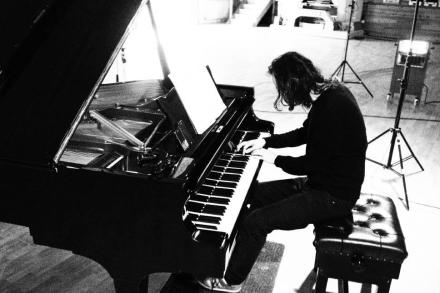
It’s Proms time again. Peter Phillips is struck by the imbalance between singers and players What with all the talk of cuts, and the Proms being a showcase for the BBC house ensembles, I imagine this year’s season might be a time for each to put their best foot forward. I imagine, in fact, that there must be some talk in rooms that used to be smoke-filled of scrapping one or two of them. In total they are: the BBC Concert Orchestra, the BBC National Orchestra of Wales, the BBC Philharmonic, the BBC Scottish Symphony Orchestra, the BBC Singers, the BBC Symphony Chorus, and the BBC Symphony Orchestra.

Guiding principles

What are the ingredients of a good audio guide? Henrietta Bredin investigates These days you’re more than likely, at any museum, gallery, exhibition or public building of interest, to be offered an audio (or even a multimedia) guide with which to ‘enhance your visitor experience’. There will probably be a small cost involved and you will then find yourself with a pair of headphones and an attached box to sling around your neck — or something known in the trade as a wand, which looks like a large telephone with a selection of buttons to choose from.

‘Everyone must have a voice’

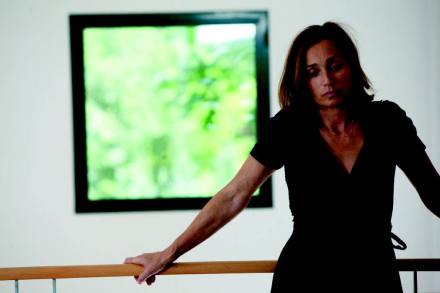
Marianne Gray talks to the down-to-earth Oscar nominee Brenda Blethyn about her latest film Brenda Blethyn doesn’t really understand why people continually ask her why she plays dowdy, often downtrodden characters, like Cynthia, the despairing mother in Secrets & Lies, or James McAvoy’s heartbroken mother in Atonement, or Mrs Bennet in Pride and Prejudice, who horse-trades her daughters. Or, indeed, like her latest role, the anxious Elizabeth, an ignorant, conservative, prejudiced woman, in London River. ‘I just don’t see it like that,’ says Blethyn, who has made a brilliant career out of playing understated, restrained women. ‘Everyone must be portrayed. Everyone must have a voice, even the flawed ones. I don’t try to smooth out the edges.

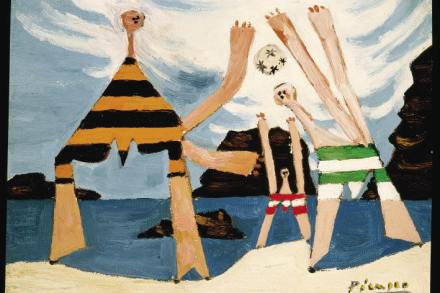
Picasso: angel and monster

Andrew Lambirth talks to John Richardson, biographer and friend of the artist John Richardson has spent a lifetime in the company of great art and artists, and is justly celebrated for his ability to evoke, explain and evaluate their work in beautiful prose. Best known as the biographer of Picasso, he has written about many other artists, including Manet and Braque, and has curated a number of seminal exhibitions since the Picasso retrospective he staged in New York in 1962. For the past 50 years he has lived in New York, though born in England in 1924. He was in London recently for the installation of his major new curatorial excursion, Picasso: The Mediterranean Years 1945–62 at Gagosian Gallery (6–24 Britannia Street, WC1, until 28 August).