James Hamilton

Art and place

From our UK edition

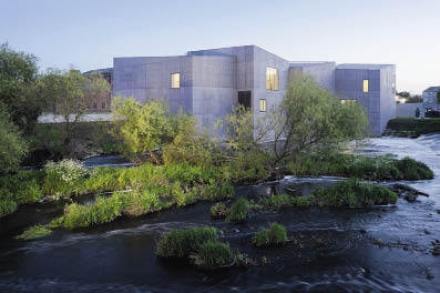
James Hamilton says that regional art galleries are as evocative as local landscape It is always a cause for celebration when a new art gallery opens. There is something about the existence of its galleries that indicates a nation’s state of health. Lively galleries demonstrate that a nation is not so caught in the imperative to pay for schools and hospitals that it can’t, in the worst of times, present the fruits of the difficult lives and hard-won insights of painters and sculptors. In Wakefield, following the Turner Contemporary at Margate, the Hepworth opened on 21 May. That two relatively small towns in the English regions should be so blessed with expensive new kit in difficult times is wonderful to see.

A catastrophe waiting to happen

From our UK edition

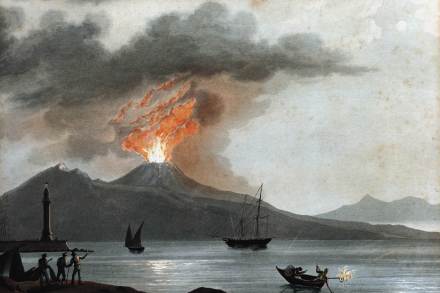
Gillian Darley’s book has the pace, colour and deliberation of a Vesuvian eruption, which is fitting; for we must get used to the fact that sooner or later the volcano will erupt again with a devastating power. Gillian Darley’s book has the pace, colour and deliberation of a Vesuvian eruption, which is fitting; for we must get used to the fact that sooner or later the volcano will erupt again with a devastating power. The subtitle of the book is quite accurate. Vesuvius probably is the most famous volcano in the world, because unlike all others it has attracted for some 2,000 years multifarious extraordinary people to study it. Darley enumerates these in their legions, showing that Pliny the Younger, writing after the 79 AD eruption, was not the first.

Call to action

From our UK edition

From across Margate Bay, the prickly silhouette of the new Turner Contemporary art gallery points towards the sea like prows of departing cruise liners. Here at last is the inspired intervention in economy and townscape to encourage resurgence in the south-east of England as has been catalysed by Tate St Ives in the south-west. Margate has a history of imaginative investment in high capital cost ventures to draw people to Thanet. The Royal Sea Bathing Hospital was opened in the 1790s to provide a cure for tuberculosis. John Rennie’s stone pier was completed in 1815 to allow steam packets to land visitors from London.

Behind the lines

From our UK edition

The Artist’s Studio Compton Verney, Warwickshire, until 13 December Sainsbury Centre for Visual Arts, Norwich, 9 February to 16 May 2010 Compton Verney, in the heart of Warwickshire, settles into its Capability Brown landscape like a grand old diva sinking into a sofa. Some surprise then, as this sparkling art museum constantly raises the senses with its refreshing series of exhibitions. Last year saw Giacometti, Oskar Kokoschka and Jack Yeats; this year Constable Portraits and The Artist’s Studio; next year Francis Bacon and Volcano. The Artist’s Studio explores those places that are part workshop, part engine-room, part desert island, and their evolution as a source of creative energy through five centuries.

Present, conserve, explain

From our UK edition

‘Thank you. It’s magnificent,’ said Philip Pullman as he opened the new extension at the Ashmolean Museum of Art and Archaeology in Oxford at the end of October. ‘Thank you. It’s magnificent,’ said Philip Pullman as he opened the new extension at the Ashmolean Museum of Art and Archaeology in Oxford at the end of October. And magnificent it certainly is, a triumphant reinvention of the Ashmolean, with 39 new galleries being added in this inspired development designed by Rick Mather Associates. The orientation of the museum has been radically altered, bringing archaeology and antiquity into the foreground.

The last man to know everything

From our UK edition

Joscelyn Godwin, the author of this vast and beautiful book, admits at the outset that while Athanasius Kircher was held in awe during his lifetime in the 17th century as ‘some rugged headland jutting out to sea’, when he died this had been eroded to the point of collapse: ‘the seas wash over it as if it had never been.’ Kircher’s triumph and tragedy was that his work was the final complete expression of magic, arcana and dogma, and when he died the world was moving into the Age of Reason.