Ed Rex

Laura Marling at Secret Music: a concert without croquet is a concert not worth attending

From our UK edition

The word ‘concert’ means different things to different people. For some it evokes dinner jackets and not clapping between movements; for others, jumping up and down in a stadium, desperately trying to spot the band through a sea of blinking smartphones. But Secret Cinema’s latest brainchild, dubbed Secret Music, is something else entirely: its inaugural production brings Laura Marling’s new album to life and places you right at its core. Stepping into the grounds of a grand Victorian hospital in East London, transformed for the night into a 1920s hotel, you’re left to explore its various rooms, with their eclectic and unfailingly interesting occupants, at your leisure.


We should be teaching kids to make programs like Word, not how to use them

From our UK edition

Technology is turning the human urge to consume information into an unhealthy addiction. Some of this consumption — reading, following the news, exposing ourselves to culture — has obvious merits; I’d have no trouble downloading the entire works of Shakespeare in the time it would have taken someone ten years ago to find their keys before setting off to a bookshop. But with so much around us to consume we seem to have lost the ability to make things ourselves. How can we be creative when every waking moment is spent trying to keep up with the feeds, updates and new releases volleyed at us from all sides? Take, for example, the iPad, that pinnacle of consumption, that manages to fit TV, record store and library into a retina display and a single button.

Making music

From our UK edition

Since the birth of the peer-to-peer file-sharing service Napster in the late 1990s, the record industry has been the unwilling poster child for entire businesses being overthrown by the march of technology. The major labels, once all-powerful, now stand Ozymandias-like, looking out over their barren empires; an ailing HMV, long ago diagnosed as terminal, is finally in its death throes; and it looks increasingly unlikely that music will ever be paid for again. An industry that’s resorted to The X Factor is an industry in trouble. Michael Breidenbruecker is the co-founder of the music streaming and recommendation service Last.fm, one of London’s big tech success stories. ‘When we started in 2000,’ he says, ‘there was no market.

Beyond the elite

From our UK edition

There are few art forms with more colossal barriers to entry than classical music. Picture yourself finally plucking up the courage to go to your first classical concert. You arrive late, because at that gig last Saturday you had to sit through two ill-judged warm-up acts, an act of charity you’re not inclined to repeat; but here, even the slightest tardiness has you waiting outside until that gruelling pause, presumably marked in the programme, when the orchestra falls silent, the conductor slowly and disapprovingly turns to look at the doors, and you and a couple of other heathen shuffle in, mumbling about taxis and Bob Crow. What’s more, you go and clap after the andante, to the sneering delight of your more sonata form-savvy neighbours.

Singing siblings

From our UK edition

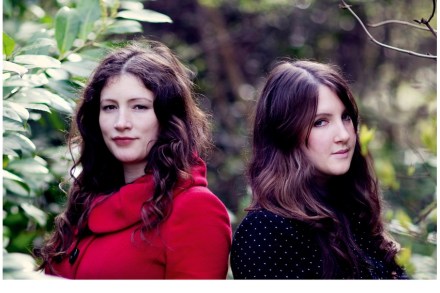
The Unthanks couldn’t have chosen a more fitting venue for the first night of their current tour than St James’s Church, Piccadilly; just as it’s all too easy for passers-by, eyes glued to the bright lights, to overlook this relic of the 17th century, one could be forgiven for missing The Unthanks’ distinctive breed of folk music amid the barrage of predictable tales of nightclub romance filling the airwaves. But sisters Rachel and Becky Unthank still managed to pack the pews. Where does our nationwide fascination with singing siblings come from? The Gallaghers had us on tenterhooks every time they bickered; Jedward seem to be building a career on nothing more than shared DNA; and now groups of sisters everywhere are transforming solo songs into family singalongs.

Classical affair

From our UK edition

Before Stephen Fry walked on to the stage at the Barbican on Monday to take part in a discussion on the place of classical music in today’s society, he asked his Twitter followers to suggest new names for what he sees as an off-putting label, ‘classical’. The replies that flowed in were typically informed and astute: ‘shit, outdated, irrelevant, dead’. ‘This is the scale of the problem we face,’ he lamented. James Rhodes (above), the concert pianist with a knack for shunning the stereotype of the straight-backed, tailcoated performer, put it another way: ‘Walk into HMV (if you can find one), and if you ask for classical music, they shunt you down to the basement like you’ve asked for midget pornography.

Imogen Heap

From our UK edition

Imogen Heap, the English songwriter whose gloves let her control her music with hand gestures, has perfected the art of delegation. While most musicians leave it to their labels to sort out a press biography, she forged hers from 1,500 contributions from her Twitter followers; where others endlessly pore over potential concert setlists, she lets visitors to her website choose hers. It’s what the 21st century has termed ‘crowdsourcing’, and Heap is now taking it one step further: she’s co-writing her fourth album with her fans. She’s brought out two songs from the album so far, and both have involved asking the public to contribute ideas: from musical snippets to recollections of slightly embarrassing personal experiences.

Sound – It’s rocket science

From our UK edition

With 3D images astounding half the population and leaving the other half feeling distinctly seasick, it was only a matter of time before another of our senses got the same treatment. Sure enough, 3D sound reproduction is finally with us; but while you might expect Professor Edgar Choueiri, its inventor, to be an audio engineer of some sort, he in fact spends most of his time as professor of mechanical and aerospace engineering at Princeton University. Let the ‘3D sound? It’s not rocket science’ gags commence. Born in Lebanon and schooled in France, Choueiri now works on spacecraft propulsion in the US, funded by Nasa.

Taking Time

From our UK edition

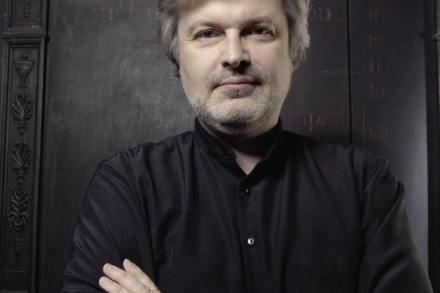
James MacMillan has a string of large-scale choral and orchestral works to his name, and last month saw the première of his chamber opera Clemency at Covent Garden. One wonders, then, how he makes time to write a new, small-scale choral piece for the re-opening of St Patrick’s Church in Soho Square. James MacMillan has a string of large-scale choral and orchestral works to his name, and last month saw the première of his chamber opera Clemency at Covent Garden. One wonders, then, how he makes time to write a new, small-scale choral piece for the re-opening of St Patrick’s Church in Soho Square.

This charming man

From our UK edition

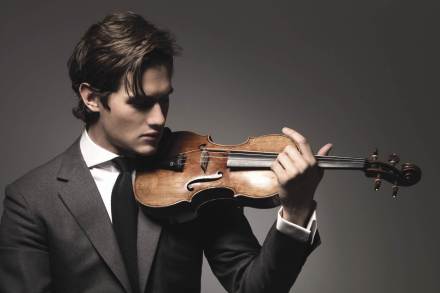
Charlie Siem, the half-British, half-Norwegian violinist, only came to the virtuosic style late in his development (‘probably because I was lazy’, he explains, not convincing me for a moment); but when he did he was hooked. His new, self-titled album (Warner Classics) is, ostensibly, a homage to the virtuosic tradition established in the early-19th century by Paganini, who once proclaimed, ‘I am not handsome, but when women hear me play, they come crawling to my feet.’ Siem, who is currently the global face of Dunhill, does not have that problem.

Read on

From our UK edition

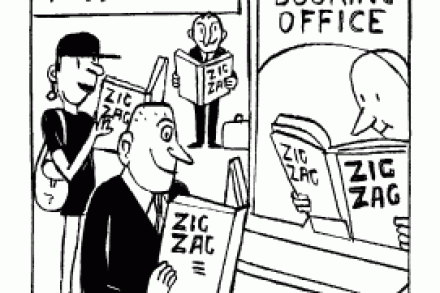
I was nervous as I approached the man in Paddington station on Saturday night. We Brits tend to assume that being addressed by a total stranger means one of two things: either they want our money, or they’re mad (and the 48 copies of Ben Macintyre’s Agent Zigzag in my bag might have suggested the latter). I was nervous as I approached the man in Paddington station on Saturday night. We Brits tend to assume that being addressed by a total stranger means one of two things: either they want our money, or they’re mad (and the 48 copies of Ben Macintyre’s Agent Zigzag in my bag might have suggested the latter).

Reinventing the circus

From our UK edition

An elderly gentleman prodding me in the face with his inflatable iguana might expect to command my full attention. As I found my seat in the Albert Hall, though, the gentleman in question had to turn away disheartened, as I was too busy taking in the spectacular set of Cirque du Soleil’s Totem to be distracted by his intrusive pet. An elderly gentleman prodding me in the face with his inflatable iguana might expect to command my full attention. As I found my seat in the Albert Hall, though, the gentleman in question had to turn away disheartened, as I was too busy taking in the spectacular set of Cirque du Soleil’s Totem to be distracted by his intrusive pet.

Culture notes

From our UK edition

Hush: it’s secret When I go to a film, there are certain things I expect: the popcorn only affordable with a small loan; the endless standing up and sitting down as people push past, suddenly sure the film will look better from the row in front; these are a given. What I don’t expect is to be plunged into the film’s set, spending two hours wandering through the real-life version of the world on screen. But that’s what you get when you sign up to Secret Cinema. I booked a ticket to its latest screening, and arrived at the specified time and place without knowing what film I would actually be seeing.

World Music

From our UK edition

Sitting at my computer, headphones in hand and wearing top-half concert dress, bottom-half pyjamas, this is shaping up to be the most bizarre performance I have ever given. I’m about to join Eric Whitacre’s Virtual Choir, made up of singers from all over the world recording themselves singing his composition Sleep. Sitting at my computer, headphones in hand and wearing top-half concert dress, bottom-half pyjamas, this is shaping up to be the most bizarre performance I have ever given. I’m about to join Eric Whitacre’s Virtual Choir, made up of singers from all over the world recording themselves singing his composition Sleep.