Arts feature

Natural selection

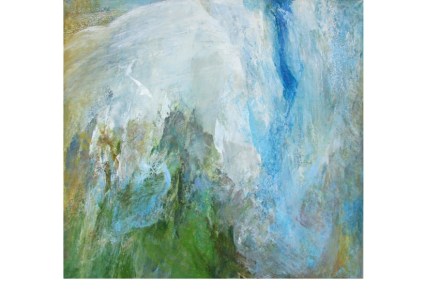
Andrew Lambirth meets the artist John Hubbard, whose work is concerned with atmosphere and the spirit of place John Hubbard makes paintings about landscape which draw upon his early training in America and the influence of the Abstract Expressionists. But his pictures are far from abstract images: they are about the play of light through foliage or the surface of rock seen close to. They are concerned with atmosphere and the spirit of place — with earth, air, light and sometimes water interacting. He denies that these are aerial views, asserting that his paintings try to capture the experience of being in the landscape, rather than looking down upon it, and being in it over a period of time.

A silent revival

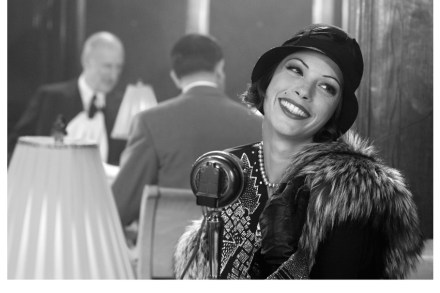
Peter Hoskin says that thanks to the DVD and advances in film restoration there has never been a better time for movie fans Whatever happened to silent cinema? Oh, yes, that’s right, it was supplanted by the talkies in the late Twenties and early Thirties, until it suddenly came back to life in time for the Academy Awards next week. Never since the first Oscars were handed over in 1929 has a silent film looked more likely to win the Best Picture statuette. And even if The Artist doesn’t achieve what every bookie expects it to, then there’s always Martin Scorsese’s Hugo; not itself a silent film but — perhaps a first for a 3D kids’ film — it does revolve around the work of the early cinematic pioneer Georges Méliès.

Wrestling with paint and demons

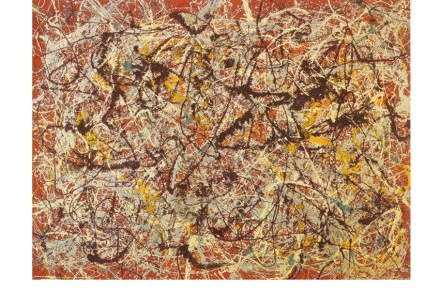
In his centenary year, the status of Jackson Pollock (1912–56) looks assured: a self-created American hero who is now accorded all the reverence due an Old Master. The most famous of the Abstract Expressionists, nicknamed Jack the Dripper because of his trademark style, his emphasis was on paint and process: the surface of the canvas was an arena in which the artist could externalise his feelings through action. Some have called Pollock the father of Performance Art, but his primary involvement was with pure painting — creating a complex abstract imagery that was intended to engage with Jungian archetypes and thus have access to deep meaning.

Breaking records

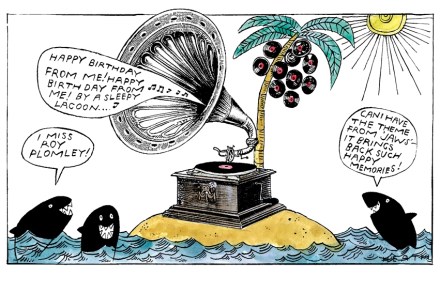
As the 70th anniversary of Desert Island Discs approaches, Kate Chisholm charts its enduring success Ed Miliband should be worried. He’s not as yet been invited to choose eight ‘favourite’ pieces of music for that staple of the Radio 4 diet, Desert Island Discs (or DID to those in the know). Nick Clegg, David Cameron and even Alex Salmond have all been cast away, but not Miliband. Perhaps he’s not being taken seriously enough as the leader of the Labour party? Perhaps he’s not yet ready to reveal his Top Eight records?

Rich rewards

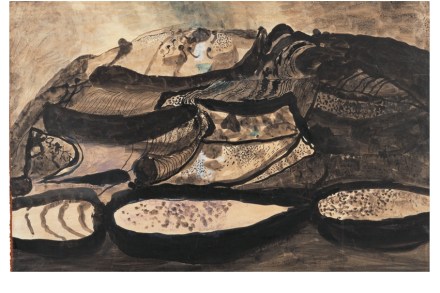
For as long as I’ve been interested in Modern British art, I’ve been fascinated and intrigued by the work of Graham Sutherland (1903–80). One of the first Cork Street exhibitions I went to as a schoolboy was of paintings, gouaches, watercolours and graphics by Sutherland from the collection of Douglas Cooper, held at the Redfern Gallery in the autumn of 1976. I was enormously impressed, particularly by the golden-eyed toad rampant, the thorny sentinel figures, a 1944 Welsh landscape and a gouache of bomb-damaged buildings from 1942. (My recall is not always quite so accurate: in fact, I have the fold-out card from the exhibition before me as I write.

Opportunity knocks

Tony Hall tells Michael Prodger about how he transformed the Cultural Olympiad into the London 2012 Festival The most obvious gift possessed by Tony Hall, or Baron Hall of Birkenhead to give him his proper title, is for cleaning up an almighty mess. When he joined the Royal Opera House in 2001, after a long career at the BBC where he had been director of News and Current Affairs, the place had just chewed through five chief executives in four years. Under his aegis turnover has more than doubled, the number of new operas performed is up, and he introduced £10 student tickets while lowering its reliance on the government grant. However, when he was asked in 2009 to take over the running of the Cultural Olympiad as well, the mess he faced was of even more Augean proportions.

A look ahead | 31 December 2011

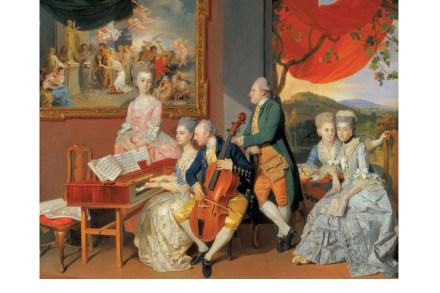
For those seeking refuge from the Olympics, Andrew Lambirth picks out the exhibition highlights of 2012: Freud, Hockney, Turner, Zoffany, Lely, Picasso... In the coming year, when the country will be besieged by all things Olympic, and many people of taste and discernment will (I am assured) be fleeing to spots less barbarous and sports-obsessed, there will still be a lifeline of art exhibitions to refresh those parts that physical activities cannot reach. Focusing on English artists, the main attractions will be shows dedicated to Lucian Freud (at the National Portrait Gallery), David Hockney (at the Royal Academy) and Damien Hirst (at Tate Modern).

An ideal Christmas

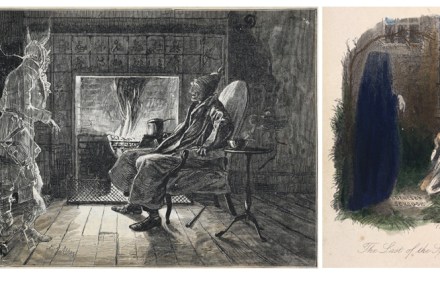
Andrew Lambirth on John Leech, artist friend and travelling companion of Dickens, whose pictures help illuminate the novelist’s work Christmas approaches, and my thoughts turn, with reassuring inevitability, to Dickens. As the nights draw in and the winter winds blast across the fields of East Anglia, the counter-urge is for the comfort of a good book, to be read preferably by the fireside in a snug armchair. Dickens is the high priest of cosiness, forever creating situations in which the fire and wine within are contrasted with the cold and storm without. In his novels, hearth and home are crucial images of goodness, comfort and continuance, and nowhere more so than in his first and greatest festive story, that indisputable classic, A Christmas Carol.

Consumed by Dickens

If you don’t like Simon Callow, you probably don’t like the theatre either. He is as theatrical as a box of wigs. Who else would bark ‘come!’ when someone knocks on his dressing-room door? There he is with a glass of wine, a boom of good cheer, having peeled off his side whiskers after his lushly enjoyable one-man show based on two rediscovered Dickens stories, Dr Marigold and Mr Chops. But that tour is now over and Callow (probably still best known for his part in the film Four Weddings and a Funeral — the funeral was his) is going straight into another Dickens, his new version of A Christmas Carol. The actor-writer who has cornered the market in Dickens works likes Dickens. He has a book coming out next year, his 13th.

Top of the pops

Michael Henderson talks to John Wilson, whose obsession with songs from the golden age of musicals led him to form his own band ‘People think I am an expert on musicals,’ says John Wilson, in his pleasing Geordie voice, ‘but that is something I am certainly not. I am obsessed with songs, written by professional songwriters for professional singers in the golden age of popular music.’ It is a nice distinction, to restore the original meaning of that adjective, and Wilson, who is currently touring the country with the orchestra that takes his name, is proving as good as his word. This is a fruitful time for the Gateshead-born conductor, one year short of his 40th birthday.

Perfect harmony

Andrew Lambirth finds paintings at the National Gallery’s Leonardo exhibition of such a singular and pure beauty as to take the breath away The great world is humming with an event of international importance at the National Gallery: the largest number of Leonardo da Vinci’s surviving paintings ever gathered together. To see anything by this extraordinary Renaissance genius is worth turning aside for, but in recent years there have been a fair few exhibitions, principally at the V&A in 2006, at the Royal Collection in 2003, and a provincial touring show in 2002. Admittedly, these displays have consisted of Leonardo’s drawings, but the prospective visitor should be aware that this new show at the NG is also largely composed of drawings.

The invisible man | 12 November 2011

Besides being one of the most exquisitely melodious, sensitive singer-songwriters you’re ever likely to hear, John Grant is also one of the most beautiful men you could ever hope to meet. I’m not the only married man to feel this way about the tortured gay pop star. As he tells me over lunch on London’s South Bank, male fans are constantly gushing after his shows about how utterly they worship and adore him. ‘Then they’ll go and ruin it by saying, “Oh, and by the way, may I introduce my wife?”’ And it’s not that the Michigan-born 42-year-old is excessively handsome or exquisitely ephebic or anything like that.

Stealing beauty

I’m standing alongside Angela Rosengart, in a room full of portraits Picasso drew of her, when something spooky happens. Out of the corner of my eye, the old woman beside me becomes the young woman on the wall. It’s over in an instant, but it’s still strange and rather wonderful. For a moment, Frau Rosengart is young again, just as Picasso saw her. We’re in the Rosengart Museum in Lucerne, a grand neoclassical building (formerly a branch of the Swiss National Bank) that houses Rosengart’s extraordinary art collection — more than 100 works by Klee, plus dozens of other modern masters: Léger, Kandinsky, Modigliani...

Jacobean journey

It sounds like mission impossible. To celebrate this year’s 400th anniversary of the King James Bible, the RSC set itself the task of mounting a play about the controversies surrounding the translation. A drama, therefore, entirely lacking in drama. No action or spectacle, no romance or comedy, no surprise twists or last-minute poisonings. Just people talking. And for David Edgar, who accepted the commission, this was part of the attraction. ‘A meeting between people who are unrelated but share a common purpose,’ he tells me, ‘can be as exciting and vivid and active as that great staple of drama, the family meal. Even sitting around writing a letter to a relative is a recognisable form of human behaviour.’ We meet in a break from rehearsals.

Postmodernism: Style and Subversion 1970–1990

Postmodernism is a term with a surprisingly long history. It was first used in the 1870s and was subsequently employed by dazed or disaffected commentators with some regularity throughout the first two thirds of the 20th century, until it became de rigueur in the ghastly decade of the 1970s. The architect Charles Jencks pronounced the death of Modernism at 3.32 p.m. on 15 March 1972, and Post-Modernism (hereinafter known as PoMo) was fairly, or unfairly, upon us. But what actually is it? Essentially, it meant the end of all seriousness and the shunning of order, moderation and reason, the denial of a belief in the perfectibility of the human race and the merit in striving for something better.

Set art free

Too often art is subjugated to curators’ theories or interpretations. Let the work speak for itself, says Andrew Lambirth The casual observer of London’s art scene, or even the devoted reader of exhibition listings, might be forgiven for thinking that the range of shows available throughout the conspectus of the nation’s museums was of a healthy vigour and diversity. In fact, it could be effectively argued that there are still too many different blockbusters simultaneously competing for box-office success, with museums forever chasing revenue by putting on displays of tried-and-tested favourites, and not actually serving the public in the best possible way.

The art of collecting

Passion was in the air in the rooms of the Wallace Collection last week — or at least the word was at the inaugural Apollo seminar sponsored by specialist art broker Stackhouse Poland with AXA Art Insurance. ‘How do you collect art and antiques in today’s market?’ was the question and the panel, chaired by Apollo’s editor Oscar Humphries, was unanimous that passion played an essential part when starting a collection. James Stourton, chairman of Sotheby’s, believed that to start a collection one had to be energetic, assiduous, knowledgeable and to be at the right place at the right time because supply was always short. And he advised always to buy the best one can afford. Ah, money.

Northern lights | 8 October 2011

Those BBC refuseniks will rue the day they passed up the chance to relocate to Salford, England’s new cultural capital, says William Cook Standing on the roof of Daniel Libeskind’s Imperial War Museum North, staring at the shiny new buildings down below, you could be forgiven for thinking you were in Hamburg or Berlin. There’s the same futuristic skyline, the same glint of glass and metal. There’s even a sleek modern tram, snaking between the shops and cafés along the quay. But this isn’t a continental conurbation — this is Salford. The improbable renaissance of this unloved city sums up England’s biggest schism, not between black and white or rich and poor, but between north and south.

Down to earth

Lloyd Evans talks to the warm, vibrant, vegetable-growing actor, teacher and director Caroline Quentin Terminal fear. Rising nausea. And possibly vomiting. That’s what Caroline Quentin expects to go through on the opening night of her new play, Terrible Advice, at the Menier Chocolate Factory. ‘I’m really pretending it’s not happening at the moment,’ she tells me when we meet in the theatre bar. With two weeks to go before the first performance, she confesses, ‘I get dry-mouth at the very bloody thought of it. Mind you, I’m always like this halfway through rehearsals, I think, agh! I can’t bear it, perhaps I can run away. Or feign injury. Or I start booking flights mentally and all that.

‘England’s most closely guarded secret’

Dennis Creffield is admired by artists but little known to the wider public. Andrew Lambirth meets this octogenarian artist as his new show on the theme of William Blake and Jerusalem opens ‘I’m a peripatetic architectural draughtsman,’ says Dennis Creffield, best known for his magnificent series of charcoal drawings of the medieval English cathedrals, commissioned in 1987 by the Arts Council. He has indeed travelled the country, drawing not only cathedrals but also Welsh and English castles, the pagodas of Orford Ness in Suffolk (laboratories that were used for testing the trigger mechanisms of atomic bombs), the stately pile of Petworth House in Sussex, and many aspects of London.