Arts feature

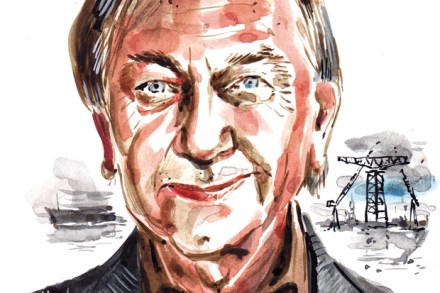
Bill Forsyth interview: ‘If we hadn’t made a go of it, my plan was just to disappear.’

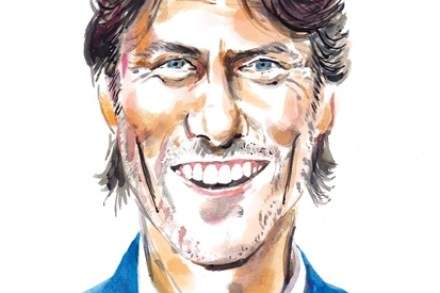
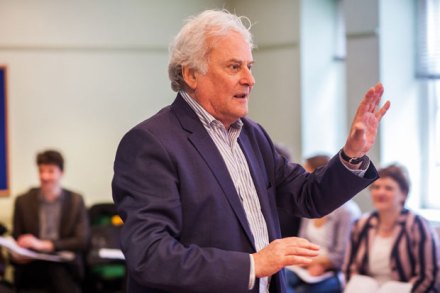
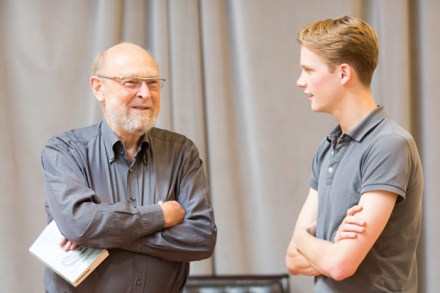
I watched the new DVD of Gregory’s Girl on the train from London up to Edinburgh. I hadn’t seen Bill Forsyth’s school-yard comedy in more than 30 years. Incredibly, it hasn’t dated in the slightest. When I saw it in the cinema, in 1981, as an acne-ridden adolescent, this tender romance was a revelation — for me, and millions like me. Funny yet heartfelt, it was that rare and precious thing — a rite of passage movie that was neither patronising nor pretentious. Half a lifetime later, Gregory’s Girl still rings true. A reticent, retiring man, Forsyth doesn’t do many interviews, but to promote this new DVD he’s agreed to meet amid the serene splendour of Edinburgh’s Museum of Modern Art.

Polly Teale interview: Cuts are making the theatre ‘a place where you can only survive if you are from a privileged background’

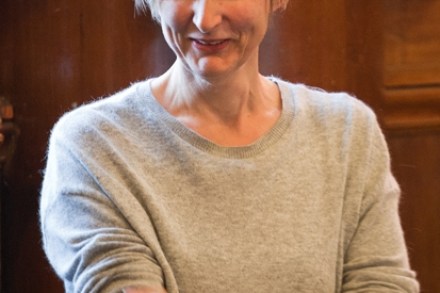
I spend an hour with the theatre director Polly Teale. She’s 50ish with a tall, willowy physique and strong, aquiline features. Her hair is arranged in a combed bob whose flicky fringe overhangs her bright, deep-set eyes. She’s easy-going and so good-natured that at one point she asks me about myself — a courtesy few interviewees extend to journalists. But she’s focused, almost obsessively, on her current job and she steers all my questions back to her upcoming production of Bakersfield Mist, by the LA writer Stephen Sachs. The story has elements of mystery, comedy and class war. It’s set in a trailer park in Bakersfield, a ruined backwater 60 miles from LA, whose name is shorthand in America for ‘the scrapheap’.

A photographer sheds new light on Constable Country

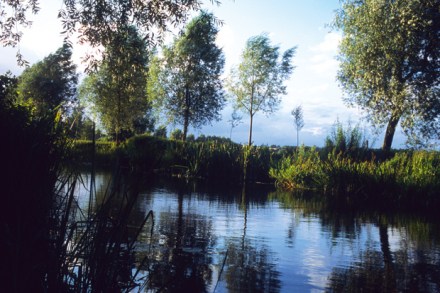
The phrase ‘Constable Country’ summons up a quintessentially English landscape: river and meadows, open vistas bordered by trees, the greens and golds of cultivated acres, with the wide (and often blustery) skies of East Anglia over all. John Constable (1776–1837) is one of our greatest artists and certainly one of the most popular. His vision of rural England has become a cherished ideal of how landscape should look, and is as much a state of mind as a real place. In actuality it is based around the village of East Bergholt where Constable was born, in the Essex–Suffolk border country, and extends through Dedham Vale and the valley of the river Stour.

Robin Ticciati interview: ‘Glyndebourne is a festival where the established and the fresh exist together’

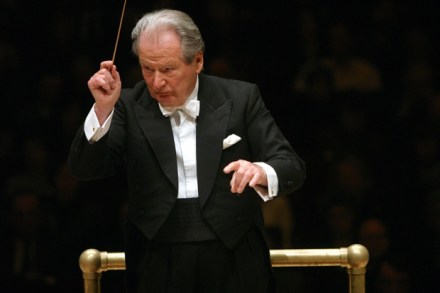
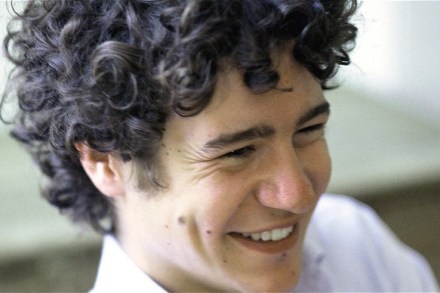
Glyndebourne, the great Sussex opera house, celebrates its 80th anniversary this summer. Hurrah! There is a new music director, too, 31-year-old Robin Ticciati. Hurrah! And he opens the season next week with a new production of Der Rosenkavalier directed by Richard Jones. Hurrah! Summer has begun. There are few finer plots of land to be on a summer evening in England than Glyndebourne, one of those rare places where the frame matches the picture. In a way Glyndebourne defines England, and summer, and the way the English take their pleasures. Certainly there is no place like it anywhere else. People at other festivals may love music just as much, and swank even more, but Glyndebourne, with or without black tie, is a world apart.

The very best of Broadway – a director’s cut

‘America,’ said John Updike, ‘is a vast conspiracy for making you happy.’ If that’s true, there have been few more successful conspiracies than the Broadway musical — that is, the ‘book’ (meaning ‘play’) musical — a dramatic form that blends drama of character and narrative with song and dance. ‘Words make you think thoughts, music makes you feel a feeling, a song makes you feel a thought,’ said the songwriter Yip Harburg. The best musicals have a thrilling seamlessness and a cumulative emotional charge; the worst are chunks of dialogue interleaved with musical interludes. The first ‘book’ musical was John Gay’s The Beggar’s Opera, written in 1728.

Batman: from midnight monster to pop-tacular star. Kapow!

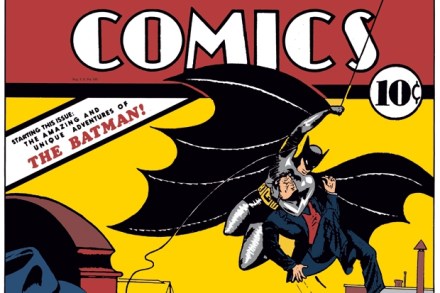
‘Well, Commissioner, anything exciting happening these days?’ Those were the first words — all seven of ’em — spoken by a new character introduced in the May 1939 issue of Detective Comics. That character was a chap called Bruce Wayne. You may know him better as the Batman. And, if you subtract May 1939 from now, you’ll realise that he is three quarters of a century old this year. So, yes, Bruce, there is something exciting happening these days. It’s your 75th birthday. Mr Wayne is sprightly for a septuagenarian — particularly given that he was hardly fresh-faced and spring-limbed at birth. When the writer Bill Finger and the artist Bob Kane designed this new comic-book hero they took inspiration from plenty of old non-comic-book heroes.

The National Gallery’s Veronese is the exhibition of a lifetime

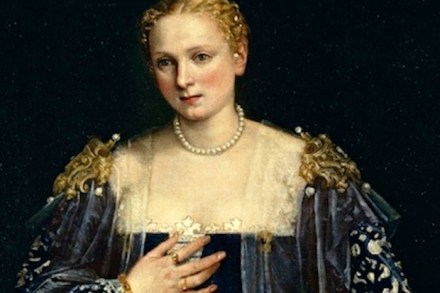
Paolo Veronese (1528–1588) is one of the great painters of the Venetian School, often joined in an unholy trinity with Titian and Tintoretto. But he was not Venetian, and only arrived in the city when he was well into his twenties. His formative years were spent in Verona, hence his popular name (he was also known as Paolo Caliari, and before that as Paolo Spezapreda, in reference to his early training as a stonecutter, following his father and grandfather), which suggests a very different background from his two most famous confrères. He has also been categorised as a Mannerist, but this is more art-historical pigeonholing than useful elucidation.

When Britain’s avant-garde weren’t so shouty

When the New York art dealer David Zwirner opened his London gallery in October 2012, observers expected him to make a statement of intent. Zwirner, who the magazine Art Review placed at number two in its 2013 Art Power 100 survey, is one of the art world’s most important three gallerists (the others are Larry Gagosian and Iwan Wirth). After a year of settling in, Zwirner made a newsworthy announcement: he had signed up the 27-year-old Colombian-born, London-based artist Oscar Murillo. For a twenty-something, he had just had a remarkable set of auction results at Christie’s last June, with a work going for £253,875 against an estimate of £20,000 to £30,000.

The curator brain drain

In 1857, the National Gallery’s pioneering director Sir Charles Eastlake bought one of Veronese’s most sumptuous paintings, ‘The Family of Darius before Alexander’. The purchase was met with strident and very personal opposition from a Tory, Lord Elcho, in the House of Commons, but his objections were swatted aside by Lord Palmerston and we were spared the irony of fighting to defend the Indian empire while rejecting the opportunity to buy the finest painted celebration of imperial conquest. ‘The Family of Darius before Alexander’ is the centrepiece of the first monographic show in this country dedicated to Veronese (until 15 June). This is the sort of triumphant exhibition that the National Gallery does so well.

Why are Shakespeare’s women so feeble?

There’s a problem, as we all know, with female roles in the theatrical canon, and it reaches all the way back to the Bard. Shakespeare’s women lack the richness and variety of his male characters. Modern theatre practitioners have tried all kinds of ploys to correct this imbalance. Next month the RSC launches a season of dramas, Roaring Girls, written during Shakespeare’s lifetime and featuring women in pivotal roles. This is bound to reopen the question of Shakespeare’s approach to women and their subordinate position in his work. It’s easy to argue that Shakespeare’s art simply reflects his habitat. Wealth, freedom and influence were the preserve of men, so he tended to leave women on the sidelines.

Julian Mitchell on Another Country: ‘I based it on my fury and anger and I wrote it fast and it flowed’

Today’s top public schools are plush country clubs with superb facilities, lovely food, first-class teaching, no fagging, no beating and, one imagines, minimal sexual interference from the staff. Most even have things called girls. While excellent at turning out world-class actors, the public schools these days are far too nice and unbrutal to be of any use as dramatic material for a play. Julian Mitchell’s play Another Country (1981) belongs to another era. It is a tale of sadistic, crumpet-munching prefects lording it over traumatised fags; homosexuality is rife and there’s brutal jockeying for position among the prefects — all good training for the cabinet jobs these teenagers one day expect to enjoy.

Ivan Vasiliev and Roberto Bolle: interview with ballet royalty

In 1845, the theatre impresario Benjamin Lumley made history by inviting the four greatest ballerinas of the day to appeartogether on the stage of Her Majesty’s Theatre in London. It is fitting, therefore, that next week, 169 years later, Sergei Danilian’s internationally acclaimed project Kings of the Dance should reach the London Coliseum. After all, the project, which had its world première in 2006, is a modern adaptation of an old idea, even though it is an all-male event this time round, and more than just an exploitation of trite balletomania, which is probably what Lumley went for.

Paloma Faith interview: ‘If you do something enough times, it becomes you’

Paloma Faith is an unusual pop star. Her flamboyant, retro appearance is upholstered by a deep-thinking mind and she articulates herself in an uncut East London accent. She hangs out with the author Hanif Kureishi and you can expect to find her at an art opening. When we meet in London’s Soho House, she is a cocktail of reds and oranges. Her hair, held back by a neon scrunchie, is white gold after the ‘gingerness’ washed out in the sea and she’s wearing a red-and-white checked gingham skirt with Chelsea boots. Although she admits that by keeping slim she makes a concession to conformity, she otherwise seems to do things her own way.

‘At last I wasn’t worried about making pictures’: an interview with Mark Shields

Mark Shields is a painter of considerable versatility and skill who is unable to rest on his laurels. Born in 1963 in Northern Ireland, where he still lives, he developed a powerful realist style that owes much to the Old Masters, and scored early success with meticulous portraits and still-life paintings. If he had been happy to continue in that vein, he would no doubt have made a very good, if safe, living, but ambition and self-questioning have led him on to develop new ways of painting and drawing, from mysterious, atmospheric landscapes and complex narrative pictures to large-scale pastel drawings on canvas.

What now for ENO?

It has been a bracing start to the year at English National Opera. David Alden’s production of Peter Grimes, praised to the skies for the musical performance under Edward Gardner, returned to the Coliseum. Next up is Rigoletto (reviewed on page 50), directed by Alden’s twin, Christopher. Then comes Rodelinda, in another new production (or co-production, as is often the way these days) by Richard Jones. Audiences will be particularly keen to see the Rigoletto, and not shy of making comparisons with the celebrated production by Jonathan Miller, which has finally been stood down after three decades. Hanging over everything, though, is the realisation that Gardner’s time at the helm is drawing to a close.

What Emperor Augustus left us

The symbol engraved on Augustus’ signet ring was a sphinx. Julian the Apostate described him as ‘a chameleon’. He seized power declaring himself the saviour of the Roman Republic, but in the process abolished it. He ruled as an autocrat but maintained the fiction that he was no more than the Republic’s First Citizen — and left as his legacy a new system of imperial government that was to continue for another 400 years in the West and until 1453 in Constantinople in the East. This year marks the 2,000th anniversary of Augustus’ death in 14 AD, on the 19th of the month by then named in his honour.

Is it a good idea to splash money on European cities of culture?

As you enter the old KGB building, at the end of Freedom Street, the first thing that hits you is the cold. Outside it’s below freezing. Inside it’s even colder. The cells are in the basement, down a dank and narrow corridor. Upstairs are the offices where the KGB filed away the details of the men and women they kept below. In the foyer, where people used to come in to enquire about their next of kin (who might be dead or in Siberia or in a cell downstairs for all they knew), there’s a letterbox where visitors could leave incriminating memos about their neighbours. ‘During the Soviet occupation the State Security Agency imprisoned, tortured, killed and morally humiliated its victims in this building,’ reads a plaque outside.

The ‘detestable, bombastic, egocentric’ detective — Hercule Poirot lives on

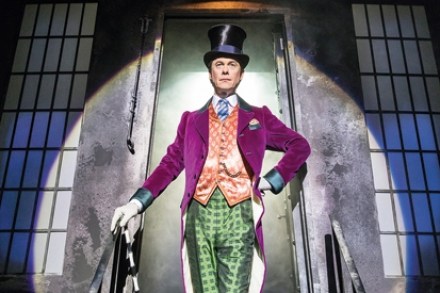
With all the enormous fuss over Sherlock on the telly, David Suchet’s recent retirement from Poirot should not be forgotten. What an incredible innings! The actor finally hung up his patent-leather shoes after a quarter-century of playing the sleuth in 70 stories. The case is not closed for fans, however. Agatha Christie’s Belgian brainbox — to whom a speck of dirt on a cuff is more agonising than a bullet wound — has already returned. He is on stage in the form of Robert Powell, famous for once playing Jesus of Nazareth. The play is Black Coffee, Christie’s first play and the only one with Hercule Poirot in it. Poirot, a Belgian refugee from the first world war, made his début in her first book, The Mysterious Affair at Styles.

Is Hollywood finally waking up to the talents of women? Nah

There is, we all know, only one anniversary that matters this year: 20 March 2014, 50 years since The Twilight Zone episode ‘The Masks’ was first beamed into America’s cathode-ray tubes. Bunting will be stretched from television screen to television screen in celebration. Champagne will be spilt over remote controls. After all, ‘The Masks’ isn’t just a particularly fine episode of a particularly fine show. It is also the only episode — of 156, if we don’t count the two revival series made in later decades — to be directed by a woman. Ida Lupino.

The best thing to come out of Davos

Another new year and once again the world’s leading CEOs and politicians descend on Davos, transforming this little Alpine town into the world’s most (self-) important talking shop. Yet there’s another side to Davos that’s far more interesting than dry geopolitical debate. Long before it became a stage for the World Economic Forum, this quiet corner of the Swiss Alps was the home of one of the most brilliant figures in modern art. Ernst Ludwig Kirchner spent his last 20 years in Davos. The town features in many of his finest paintings. It’s the only place with a museum devoted to his work. The Kirchner Museum in Davos is a striking piece of modern architecture, a Rubik’s Cube of glass and concrete bathed in natural light.