Arts feature

The Nazi origins of the Vienna Phil’s New Year’s Day concert

It may be the last water-cooler moment in world television. On the first morning of the year, at 11.15 Central European Time, in a place that considers itself the epicentre of Europe, a group of men in formal dress mount the Musikvereinssaal stage in Vienna to perform a ritual that passes for culture and tradition. It is, of course, neither. The music is strictly bar-room, written by members of the Strauss family as social foreplay for the soldiery and serving classes in low taverns. Like most forms of dirty dancing, the music rose vertically from barroom to ballroom and was soon performed as encores by symphonic orchestras to dowager purrs of wie schön. The New Year’s Day concert is an annual jellybox of waltzes, polkas, galops, marches and any old tritsch-trash.

Snow – art’s biggest challenge

In owning a flock of artificial sheep, Joseph Farquharson must have been unusual among Highland lairds a century ago. His Aberdeenshire estate covered 20,000 acres — surely enough to support the modest local ovine needs. But Farquharson was a painter, the fake sheep artist’s models. For cleanliness and biddability, few grazing ewes can match a woolly dummy. Joseph Farquharson was 27 when he scored his first hit at the Royal Academy in 1873. ‘Day’s Dying Glow’ depicts a handful of sheep negotiating a snowy incline alongside an icy burn. Leafless trees crown a mound. Behind them a sickly sun is sinking or possibly rising.

Le French bashing has spread to France. Are things really that bad?

The French for French-bashing is le French bashing. This verbally costive nation is at it once again, torpidly borrowing an approximately English expression rather than coining its own. Such bashing is not an exclusively Anglo-Saxon practice. There is indigenous bashing. At least there is Éric Zemmour, whose salutary Le Suicide français was published a couple of months ago. Its very first sentence declares that France is the sick man of Europe — which prompted Manuel Valls, little Hollande’s prime minister this week and a man who is not growing into that poisoned office, to take the bait, exhibit a preposterously thin skin and denounce the book twice in a few days. This is not to suggest that M.

Fortune tellers, pound shops and Orville: why I love Blackpool

‘Jesus is the light of the world,’ reads the sign outside Blackpool’s Central Methodist Church, but all along the promenade the lights are going out. I’d returned to my favourite seaside resort to catch the end of the Illuminations, an annual attraction that brings several million visitors here every year. Since 1879, this vast canopy of fairy lights has stretched Blackpool’s summer season into autumn, flooding the seafront with ‘artificial sunshine’. But even Blackpool, with all its razzamatazz, can’t turn winter into summertime. From the Central Pier to the South Pier, the Illuminations are now all dormant. Only a modest cluster remains, between the Tower and the North Pier.

Sex, lies and El Sistema

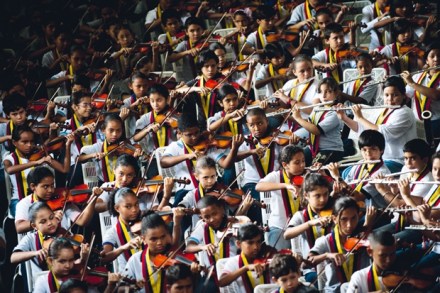
The two trendiest words in classical music are ‘El Sistema’. That’s the name for the high-intensity programme of instrumental coaching that turned kids from the slums of Venezuela into the thrilling Simon Bolivar Youth Orchestra (SBYO), conducted by hot young maestro Gustavo Dudamel before he was poached by the Los Angeles Philharmonic. Or so the legend goes. When the SBYO was booked for the Proms in 2011, the concert sold out in three hours. Sir Simon Rattle, no less, declared El Sistema to be ‘the most important thing happening to classical music anywhere in the world’. Audiences wept at the sight of former street urchins producing a tumultuous, triumphant — and virtually note-perfect — performance of Beethoven’s Fifth.

How Hollywood is killing the art of screenwriting

Writing is dead. Long live writing. What do I mean when I say writing is dead? That’s a whole other article, but in brief: cinema killed the novel, email killed the letter, CGI killed cinema and Twitter killed email. The good news is that, despite this bloodbath, writing is actually alive and well and living in Texas. And the reason I know that is that I was there at the end of last month. The Austin Film Festival, where I had a script in the competition, is the only major film festival in the US that focuses primarily on the writers (as opposed to directors or actors). The result is that, for those few days while the festival takes place, you can’t stir an elbow in Austin without knocking over a writer’s pint. The place is crawling with them, seething with them.

David Hockney interview: ‘The avant-garde have lost their authority’

‘I just stay here and do my thing,’ David Hockney told me soon after I arrived at his house and studio in Los Angeles this August. ‘I’m not that interested in what happens outside. I live the same way as I have for years. I’m just a worker.’ Hockney has been labouring prodigiously for more than 60 years now, since he entered Bradford School of Art at the age of 16. ‘There is something inside David,’ his assistant Jean-Pierre Gonçalves de Lima noted, ‘that drives him to make pictures.’ In the summer of 2013, after a series of disasters — including a minor stroke and the terrible death of a young assistant — Hockney moved back to California after a long period of working in Bridlington. It was a dark period.

The story of the first painting to sell for over a million pounds

Nothing could have prepared the art world for the astounding moment in 1970 when, at a Christie’s sale on 27 November, the world auction record for a painting smashed through the million-pound barrier for the very first time. It was Velázquez’s portrait of his assistant Juan de Pareja, and in the week leading up to its sale the international press became excited about the possibility that it would beat the previous record of £821,482, paid in 1961. I had recently become the art critic of the Evening Standard, and its enlightened editor, Charles Wintour, asked me to write a special article about this Velázquez portrait. Propped up on a chair in a secluded top-floor room at Christie’s headquarters, this painting impressed me profoundly.

No one in the Bible has been as elaborately misrepresented as Mary Magdalene

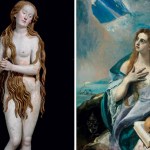
How would the real Mary Magdalene have reacted to her posthumous reputation? Not very kindly, one suspects. Our only historical source, the New Testament, does not even hint that she was a prostitute, and she’s unlikely to have been placated by Christians telling her: ‘It’s OK, we think you were a reformed whore.’ No one in the Bible has been so elaborately misrepresented. In addition to not being an ex-prostitute, Mary of Magdala was not Mary of Bethany, the sister of Martha and Lazarus, who anoints the feet of Jesus with ‘about a pint of pure nard, an expensive perfume’ and then wipes it up with her hair. Nor was she the ‘woman taken in adultery’, the one told to go and sin no more. Nor was she the wife of Jesus.

Sylvie Guillem interview: ‘A lot of people hate me. Bon. You can’t please everybody’

If you follow dance or music closely, make them part of your life, you look on certain performers as your daemon. These are the artists who become part of your inner landscape. They act as a tuning fork for your emotions and imagination. And you mark their progress with particular hope that you won’t be disappointed. When the 25-year-old Sylvie Guillem arrived in London in 1989 from Paris Opera Ballet, with a flaming reputation as Rudolf Nureyev’s prodigal daughter, one’s first reaction was wariness. She seemed so flashy in her incredible bodily gifts.

How Londoners can reclaim the River Thames

Last week, 539 apartments designed by Frank Gehry and Norman Foster were made available for off-plan purchase. This was heralded by simultaneous launches in London and Kuala Lumpur and a press release announcing Sting and Trudie Styler as early buyers. Battersea Power Station has stood unused for more than 30 years but after multiple failed attempts at redevelopment progress is now well under way towards its transformation into one of London’s most desirable addresses. Ultimately due to house 3,400 homes — only 15 per cent of which are set to be affordable — the project is emblematic of a far larger reclamation of London’s waterfront as a site for luxury housing.

The pop artist whose transgressions went too far – for the PC art world

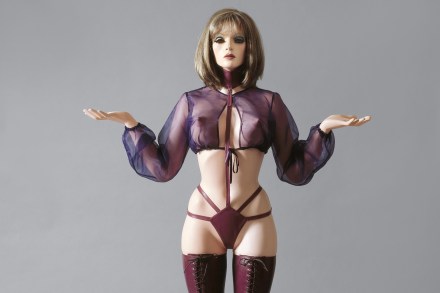
Allen Jones (born 1937) has been demonised. In 1969 he made a group of three sculptures of scantily-clad female figures. They were slightly larger than life and arranged in positions that enabled them (with the addition of a glass top or padded seat) to be turned into a table, a chair and a hat stand. These super-mannequins were highly modelled, wigged and leather-booted, and unavoidably realistic. When first exhibited in 1970 they provoked outrage among the feminist community. Jones’s 1978 retrospective of graphic art at the ICA caused a near riot even though the sculptures weren’t shown. In 1986, when the chair went on display, it had acid thrown over it by an incensed extremist.

Rembrandt at the National Gallery: the greatest show on earth

At the opening of Rembrandt: The Late Works at the National Gallery (until 18 January), I met a painter friend of mine in the final room. This was, he said, one of the most magnificent exhibitions he had seen in his entire life, which — considering he is perhaps 70 and a frequent visitor of galleries — was praise indeed (and entirely deserved). Mischievously, I mentioned that he had also been highly enthusiastic about Veronese at the National Gallery a few months ago. ‘Ah, but there is a huge difference between Veronese and Rembrandt,’ he vehemently responded. ‘When you look at a Madonna by Veronese, you see a glamorous model wearing expensive clothes, with Rembrandt’s “Bathsheba” [pointing at the picture in front of us] you can read her thoughts.’ He got it in one.

Maya Plisetskaya and Rodion Shchedrin: ‘The KGB put a microphone in our marriage bed’

‘People in the West don’t understand nothing. Even the new Russian generation don’t understand anything at all. You don’t know, and it’s better you don’t.’ Maya Plisetskaya scrutinises me with her beautiful, kohl-rimmed, 88-year-old eyes, a gaze made wary in childhood, when her father was shot as an enemy of the Soviet people, her mother jailed, and her Jewish family broken by persecution. ‘Can anyone understand how if you took a single carrot from the collective farm, just one carrot, you could get ten years’ prison? Who could understand that?

Frieze Art Fair: where great refinement meets harrowing vulgarity

If you wanted to find a middle-aged man in a bright orange suit, matching tie and sneakers, Frieze is a good place to start looking. I found one. Or maybe he was a limited edition existing in several reproductions. Certainly, he was frequently spotted: conspiratorial of aspect, he was stooped and crouched over a mobile with body language saying ‘serious business’. I overheard: ‘Ah, Corinna. Va bene? How are prices in Zurigo?’ Long before you reach Frieze’s vast tented sites in Regent’s Park there are signs of danger. Extraordinary shoes and statement hair and rucked-up skinny trousers start appearing in a fall-out zone about half a mile away from the BMW VIP drop-off area and the Mercedes-Benz shuttle buses.

Mike Leigh interview: ‘A guy in the Guardian wants to sue me for defamation of Ruskin!’

[audioplayer src="http://traffic.libsyn.com/apollomagazine/Apollo_final.mp3" title="Tom Marks, editor of Apollo magazine, talks to Mike Leigh"] Listen [/audioplayer]Mike Leigh is in a cheerfully bullish mood when I meet him at the Soho Hotel. ‘Have you read today’s Guardian?’ Dammit — I should have seen that coming. ‘A guy in G2 would like to sue me for defamation of Ruskin!’ He seems almost pleased. His characterisation of the great critic as silly and effete in his new film, Mr Turner, does seem a little ungenerous. Ruskin did more for Turner than anyone. ‘That’s true,’ says Leigh. ‘Working with the brilliant young actor Joshua McGuire, I started to think how Ruskin was incredibly spoiled and cosseted by his parents… He was a prig!

Without sci-fi, there would be no cinema

Do you know what’s hateful? The snobbery that film fans have to contend with. There’s the ‘it’s only a movie’ snobbery, by which cinema is suitable only for wastrels and dogs. And there’s the ‘if it ain’t Danish and silent, then it ain’t no good’ snobbery. Proponents of both should spend less time blowing conjecture through their Sobranie smoke, and more time watching the Hollywood films of John Ford, Nicholas Ray and William A. Wellman. Now that’s off my chest, here’s one way in which cinema is relatively free from snobbery. For decades, novelists and literary types have wrangled over whether science fiction books are anything more than — to use Margaret Atwood’s snooty description — ‘talking squids in outer space’.

The images from the Apollo missions will reduce you to tears

When people ask why I’m obsessed with the Apollo moon missions, I always want to reply using the same phrase: ‘Because they were out of this world.’ I never do, because it happens to sound like a very bad joke. But it’s the truth. For the first time ever, mankind left its home turf and discovered somewhere new. It was qualitatively the greatest journey in human history. Not — and this is the point — that it was mankind rejecting that home turf; leaving the Earth made us value it all the more. That’s where the greatness lay. It’s also the charm of a new exhibition in London.

My Schubert marathon

On 10 October, the Sheldonian Theatre in Oxford will host the first concert in ‘the biggest ever celebration of the life and work of Franz Schubert’. Over three weeks, all 650 songs (or thereabouts) will be performed, most of them in England’s oldest concert hall, the Holywell Music Room just around the corner from the Sheldonian. We’re promised the greatest assembly of Schubert singers in history: they include Sir Thomas Allen, Ian Bostridge, Sarah Connolly, James Gilchrist, Robert Holl, Wolfgang Holzmair, Angelika Kirchschlager, Christopher Maltman, Mark Padmore, Christoph Prégardien — plus the cream of accompanists: Julius Drake, Graham Johnson and Roger Vignoles.

The camera always lies

Everyone knows about architecture being frozen music. The source of that conceit may be debated, but its validity is timeless and certain. For all its weightiness, architecture plays with ethereal proportion, harmony, resonance and delight: the stuff of music. But architecture is more fundamentally about the management of light and space. Or, at least, that’s how architects see it. So photography makes better sense of architecture than any other medium does: there is something congruent between the fixed optical geometry of a camera and the way we perceive buildings. And because images are more readily accessible than travel to remote sites, everyone’s experience of world architecture is, at least initially, based on the photographic record, not the real thing.