Arts feature

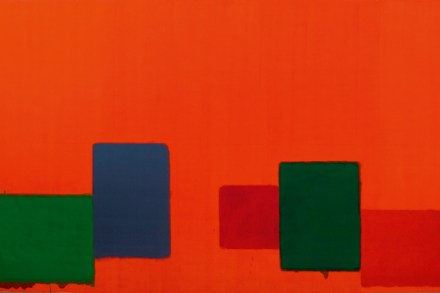
Is John Hoyland the new Turner?

What happens to an artist’s reputation when he dies? Traditionally, there was a period of cooling off when the reputation, established during a lifetime, lost momentum and frequently collapsed, quite often presaging a long fallow period before reassessment could take place. The Pre-Raphaelites suffered this to a very pronounced degree. Famously, Andrew Lloyd Webber tells the story of buying his first Victorian pictures for pocket money in junk shops, and just missing Lord Leighton’s ‘Flaming June’ because he didn’t have the £50 asking price. Closer to our own time, when Graham Sutherland died in 1980 his reputation plummeted terribly, having for years been overinflated by a loyal European market that bought him at increasingly high prices.

‘I like vanished things’: Anselm Kiefer on art, alchemy and his childhood

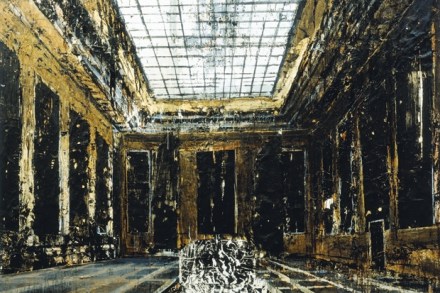
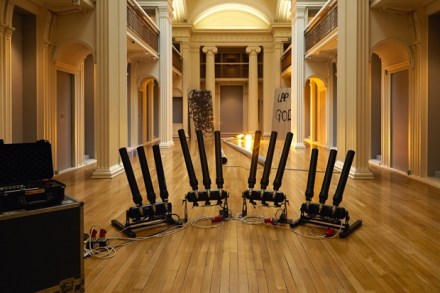
At the entrance to Anselm Kiefer’s forthcoming exhibition at the Royal Academy visitors will encounter a typically paradoxical Kiefer object: a giant pile of lead books, sprouting wings. When I asked Kiefer to explain this strange object, he immediately — and characteristically — began talking about alchemy. Lead, of course, was the material from which alchemists hoped to make gold. ‘But at the beginning,’ Kiefer explained, ‘it wasn’t just a materialistic idea, it was a spiritual one: to transform matter into a higher spiritual state.’ So, I suggested, in a way all art is alchemy: transforming one substance — paint and canvas, for example — into something else entirely. ‘Yes, certainly,’ Kiefer replied.

Michelangelo’s vision was greater even than Shakespeare’s

It is 450 years since the birth of William Shakespeare. The anniversary has been hard to avoid in this country, which is entirely appropriate. Shakespeare helped to shape not only our language but also our conception of character and our understanding of the human condition. Our experience of love, of facing death, of loss and of glory, contains echoes of Shakespeare, even if we hardly ever read him or see his plays. It is also 450 years since the death of Michelangelo. That anniversary has hardly been noticed here — although Michelangelo had as great an impact on visual arts in the West as Shakespeare has had on its literature. For centuries, every painter and sculptor felt the need either to emulate Michelangelo, or to escape his influence. Many still do.

How independence will impoverish Scottish culture

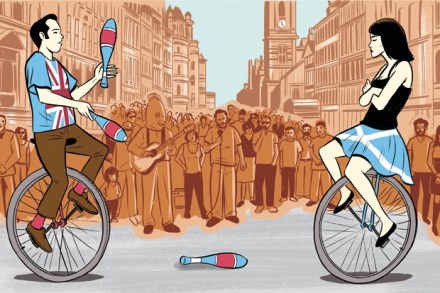
[audioplayer src="http://traffic.libsyn.com/spectator/TheViewFrom22_11_Sept_2014_v4.mp3" title="Fraser Nelson, Tom Holland and Leah McLaren discuss how we can still save the Union" startat=50] Listen [/audioplayer]An explosion of confetti will greet the announcement of Scottish independence. This isn’t another one of Alex Salmond’s fanciful promises, but an installation by a visual artist named Ellie Harrison. She wants Scotland to become a socialist republic. She has placed four confetti cannons in Edinburgh’s Talbot Rice Gallery. They will only be fired in the event of a Yes vote. Most artists in Scotland favour independence. Harrison’s installation is typical of the pretentious agitprop they produce. This isn’t a uniquely Scottish problem.

Pizza, choc-ice and Leonardos – the treasures of Turin

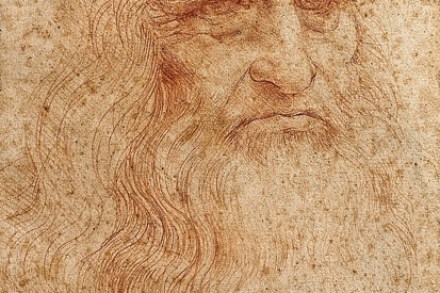
To most non-Italians Turin spells Fabbrica Italiana Automobili Torino (Fiat). But this subalpine city has a longer history than the internal combustion engine. It may be twinned with Detroit, but its cavalcade of equestrian monuments testifies to an older sort of horsepower — the sort harnessed by the condottieri of the House of Savoy to turn their little Duchy into a major player on the European stage and, for four brief years from 1861 to 1865, into the capital of the Kingdom of Italy. So while Detroit has the Detroit Institute of Arts, Turin has 55,000 sqm of royal museums, currently undergoing unification into a single complex called the ‘Polo Reale’.

The enigma of Werner Herzog

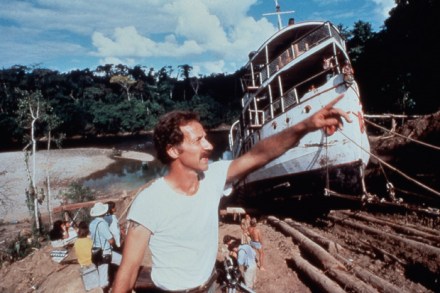
Strange things happen to Werner Herzog — almost as strange as the things that happen in his haunting, hypnotic films. In 1971, while making a movie in Peru, he was bumped off a flight that subsequently crashed into the jungle. Years later, he made a moving film about that disaster’s sole survivor. In 2006, while filming an interview with the BBC in Los Angeles, he was shot in the belly by some nutter with a small calibre rifle. Most film-makers would have been turned to jelly by this terrifying interruption; Herzog simply laughed it off, cheerfully dropping his trousers to reveal a bleeding bullet wound, and a natty pair of Paisley boxer shorts. ‘He has become a catalyst for extraordinary events,’ says his British producer Andre Singer.

Alex Salmond has already lost — if the Edinburgh Festival is anything to go by

Scotland’s on a knife-edge. Like all referendum-watchers at the Edinburgh Festival I grabbed a ticket for The Pitiless Storm, a drama about independence, which attracts big crowds every lunchtime at the Assembly Rooms. The play draws its inspiration from the passion and fury of Red Clydeside. David Hayman, an actor and lifelong leftie, plays a Glaswegian trade unionist who reflects on the troubles of Scottish socialism as the referendum approaches. Some of his rhetoric captures the best of the independence movement. ‘We’re not leaving the union, we’re joining the world.’ And he flavours his optimism with a dash of local irony.

My addiction to the bullet train

In 1963, Dr Richard Beeching, an ICI director with a PhD in physics, a qualification that clearly boondoggled his credulous political patrons, published a government report called ‘The Reshaping of British Railways’. It identified 8,000km of painstakingly created track for closure. At the time, road transport seemed just the thing. Lorries? Bring them on! Commuting by car? What could possibly be the objection? Beeching was a tragic case-study in mandarin myopia. It was not so much that he did not hit the target. He couldn’t even see it. The year after Beeching, Japan inaugurated its Shinkansen, the world’s greatest high-speed railway. The year after the Shinkansen, work began in Bristol on the prototype Concorde.

‘They took me in like I was their son’: Wynton Marsalis on jazz’s great tradition

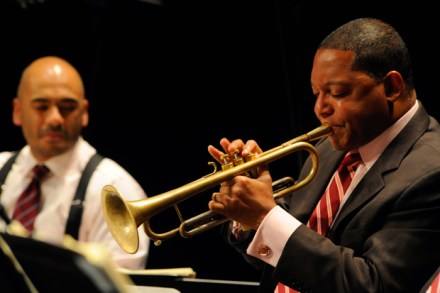
At the end of his performance at the Barbican with the Jazz at Lincoln Center Orchestra, Wynton Marsalis made a little speech. The next piece, he announced, was a number that Art Blakey’s Jazz Messengers used to play. Marsalis then recalled how he himself had played with the Jazz Messengers as an 18-year-old trumpet prodigy. He described how much he had learned from the drummer, who was then approaching 60, and especially about ‘the sacrifices you have to make to play this music’. Then the band roared into ‘Free for All’ by Wayne Shorter. A couple of days before, I had met Marsalis for a chat — it wasn’t precisely an interview because I’ve interviewed him so many times over the years we’ve turned into friends.

Home Front: Radio 4’s first world war drama will fight out the full four years

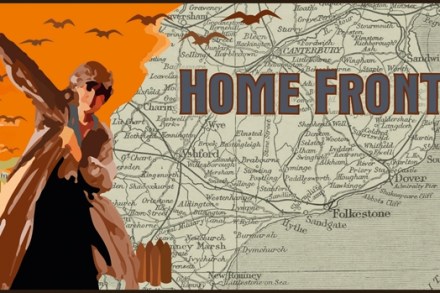
In a studio in Birmingham, there’s an air of excitement. Jessica Dromgoole and her team are recording new scenes for Home Front, Radio 4’s specially commissioned drama commemorating the first world war. They know that they’re about to launch on to the airwaves the boldest, most creative and enterprising venture yet heard on the station. The years of planning, of making endless decisions about how to do it, what to focus on, where to set it, which real stories to fictionalise, which to abandon, have paid off. A random scene between a volunteer at a makeshift hospital and a wounded soldier is being recorded. There’s no preamble, no explanation, just two people having a conversation.

I think I’ve found the new Maria Callas

Some of my most enjoyable evenings, when I reviewed opera weekly for The Spectator, were spent at the Royal College of Music, in the tiny but elegant and comfortable Britten Theatre. The performers, onstage and in the pit, are mostly current students of the RCM, led by one or another expert but puzzlingly little-known conductor. Repertoire is reasonably adventurous, but Handel, Mozart, Britten are perhaps the backbone. One of the pleasures of those performances is spotting the singers that one is sure will go on to big operatic careers, if they choose to. I spent a lot of time doing that, and almost always got it wrong. You have to remember that voices that sound well there may not prosper in Covent Garden or other theatres of comparable proportions.

Natalia Osipova interview: ‘I’m not interested in diamond tiaras on stage’

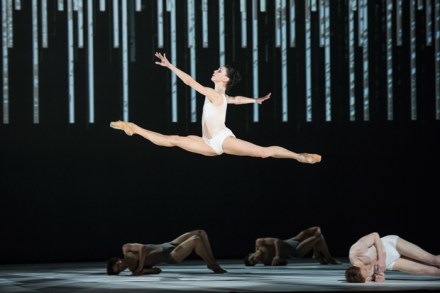
‘I am not interested in sporting diamond tiaras on stage, or having my point shoes cooked and eaten by my fans,’ muses Natalia Osipova, referring to two old ballet anecdotes. ‘Ballet has evolved and the ballerina figure with it. The world around us offers new challenges, new stimuli and new opportunities, and I believe that it is the responsibility of every artist to be constantly ready to respond to these. There is simply no reason, nor time, to perpetuate century-old clichés, such as the remote, semi-divine figure of the 19th-century ballet star.’ Osipova, now a Royal Ballet principal, is still remembered by many as the Bolshoi Ballet’s soloist, who, only a few years ago,  dazzled dance-goers all over the world.

How conductors keep getting better at 90

‘It’s a bad week. I gather we’ve lost one.’ Sir Neville Marriner, himself a huge name, is talking about the death of one of the world’s top conductors. Lorin Maazel, who died at home in Virginia at the age of 84, had led orchestras including the New York Philharmonic. He was still conducting this year. Last month, the Spanish conductor Rafael Frühbeck de Burgos died in Pamplona at the age of 80. Only a week earlier he had announced he had cancer and would have to retire. Conductors, it is no secret, enjoy long working lives — some have even passed away mid-performance. But what’s their secret? This summer’s BBC Proms are celebrating four ‘birthday batonists’.

The home of Holland’s celebrity paintings gets a makeover

If things had turned out differently for Brazil — I don’t mean in the World Cup — Recife might now be known as Mauritsstad. But when the Portuguese expelled the Dutch in 1654, the name of the new capital of Pernambuco built by governor Johan Maurits van Nassau-Siegen was lost to history. Today Johan Maurits is remembered for a house, not a city: the splendid private mansion he had built for himself in The Hague right next to the Dutch parliament in the Binnenhof. Designed by the architect Jacob van Campen, the Mauritshuis is a Dutch Classicist doll’s house of a palace that took 11 years to build and was only lived in by its owner for three after his return from Brazil in 1644.

Indiscretions from two veteran producers

Stars, playwrights and even set designers are constantly being lionised in the papers. But why not producers? They, after all, are the ones who choose the plays, the stars, and then make it all happen. Duncan Weldon and Paul Elliott are two veteran cigar chompers who’ve been in the business for 45 years. They’ve made and lost a packet, over and over again. They never seem to learn. Like all producers, they love their wives almost as much as they love a hit. Over lunch in the West End, I discussed the knack of being and staying a producer. Great exponents such as Cameron Mackintosh and Bill Kenwright have always had loyal teams. But Elliott and Weldon are in a way the true odd couple. They shared an office on the Aldwych (Ivor Novello’s old suite of rooms) for 37 years.

‘I would find myself forging my own work’: Quentin Blake on how he came to found the House of Illustration

The illustrator Quentin Blake is uncannily like one of his own creations: tousled, bright-eyed, quizzical, and apologetic about his summer cold. He greeted me warmly and conducted me down a dimly lit hallway into his lair, a studio giving on to a leafy London square, piled high with the tools of his trade: papers teetering on plan chests, jars of brushes, palettes of paints, toppling books — all the shambolic clutter of a busy artist’s life and work. I was there to find out about the eagerly anticipated House of Illustration, which opened this week in the old railwaymen’s house on Granary Square, that ineffably cool destination north of King’s Cross, home to Central St Martins College of Art and just over Regent’s Canal from Kings Place.

John Bishop interview: ‘My dream was to be Steven Gerrard, but he got there first’

John Bishop doesn’t just tell funny stories. He also tells the sort of life story that makes you sit up and listen. He grew up on a council estate outside Liverpool and, at the age of six, visited his father in prison. By the time he was in his mid-thirties he was working in middle management at a pharmaceutical company, had three children and was going through a divorce. Today he sells out 15,000-seat arenas, is still married to his wife and no longer works in middle management. It was a Monday night and Bishop was looking for something to do. His friends were tired of him ‘crying into his beer’ about his divorce. So, aged 34, he decided to visit a comedy club for only the third time in his life.

Alex Jennings interview: the new Willy Wonka on Roald Dahl’s ‘child killer’

‘Oompa Loompa juice,’ says the actor Alex Jennings when I ask if he takes any supplements to preserve his looks. He’s 57 but could pass for a decade younger. We meet backstage in his Drury Lane suite, which boasts a fridge crammed with pink champagne, where he’s preparing to play the lead role in Charlie and the Chocolate Factory. His relaxed demeanour and silky voice create an air of instant geniality that is reinforced by his towering figure. He’s six foot four and as lean as a fast bowler. Though he’s due on stage in 90 minutes, he lounges semi-horizontal in an armchair showing no trace of anxiety. ‘I do get nervous before the first big number. The great thing is, once the music starts, it don’t stop.

Modernism’s dreams – and nightmares – at the Venice Architectural Biennale

An eccentric English aristocrat who constructed a 20-mile network of underground corridors to avoid coming into contact with his fellow humans on his country estate; a Japanese dentist who has amassed an enormous collection of decorative details from buildings spanning a century, retrieved from Tokyo demolition sites; the German inventor of ‘Scalology’, who has spent 60 years studying staircases; and Inuit soapstone carvings of a Cold War early-warning station and of an airport terminal are among the surprises offered by the 14th Venice International Architecture Biennale. The Dutch architect Rem Koolhaas is this year’s artistic director.

Nicola Benedetti interview: Bruch, boyfriends and Scottish independence

On  18 September, the Scots will decide whether they want to become independent. But it is only a coincidence that Scotland’s most celebrated violinist is launching an album that brings together Scottish folk music, the tunes of Robert Burns and Max Bruch’s Scottish Fantasy. Nonetheless, I want to know where Nicola Benedetti stands on the most fundamental question the Scots have asked of themselves since the Act of Union in 1707. I’m  sitting opposite her in the west London flat she shares with her German cellist boyfriend Leonard Elschenbroich. The late morning light from the window is catching her rich brown hair and turning it blonde. Is she, I ask, excited about the Referendum? ‘No. Terrified. I’m terrified either way.