Arts feature

Mistress of modernism

Everyone keeps talking about classical music’s image problem, and proposals on the table designed to rescue the music from apparent extinction have included the suggestion that conductors ought to face audiences rather than orchestras, and the cunning plan, mooted by Julian Lloyd Webber, that we stop calling it ‘classical music’. But what classical music really needs right now are more performers like Barbara Hannigan, whose embrace of music is absolute; whose solution to the problem of what classical music might represent in our increasingly fragmented culture is not to go into denial but to dive deeper, forever deeper, inside music. Hannigan has anchored her reputation around high-wire modernism.

Cathedrals on wheels

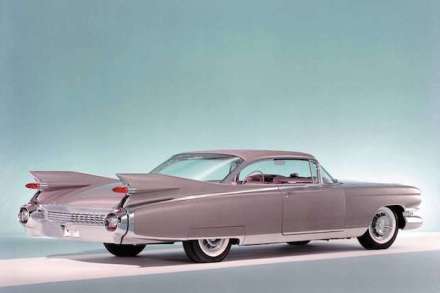
Imagine for a moment Harley Earl, head of design at General Motors, Detroit’s wizard of kitsch. Standing before him, in his studio, is the cetacean bulk, nipple-coloured pink paint, churrigueresque chrome ornaments and rocket-ship details of his 1959 Cadillac Eldorado Brougham Seville Convertible. He is talking to his acolytes, as attentive as Rubens’ studio assistants in Antwerp 300 years earlier. Earl is describing his stylist’s art, the astonishing formal achievement of the pink Caddy. He says, pointing perhaps to a tail fin: ‘I want that line to have a duflunky, to come across, have a little hook in it, and then do a rashoom or a zong.’ Our language lacks a vocabulary to describe what cars do to us. So Harley Earl had to invent his own.

Boris’s London legacy

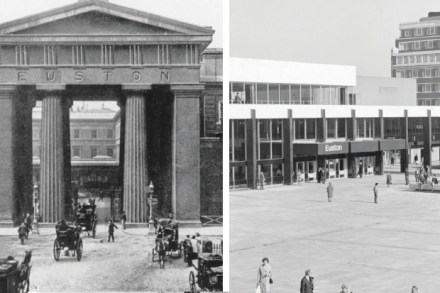
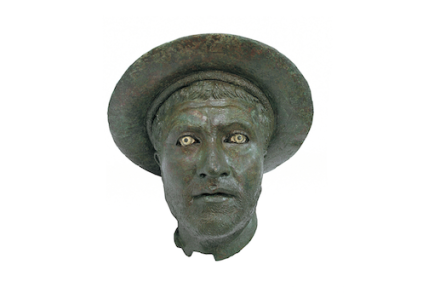
Overseeing Boris Johnson’s futuristic office, with its spectacular view of the increasingly culinary skyscape of the City of London with its Gherkins and Cheesegraters, is a bust of Pericles, distinctive in his helmet. It is no surprise that the Mayor should hold himself up to the gaze of the Athenian general and politician because he instituted the greatest programme of public works in the ancient world in Athens in the middle of the 5th century bc. Since Boris was elected Mayor in 2008 there has been an enormous amount of development in London. The demand that fuels growth is ever present. The south bank of the Thames is bristling with cranes and after years of stalemate Battersea Power Station is in development.

The dreamer

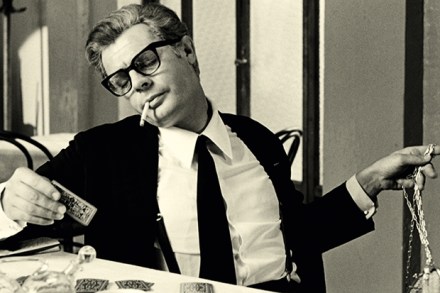
Federico Fellini’s La Dolce Vita was a box-office triumph in Italy in 1960. It made $1.5 million at the box office in three months — more than Gone With the Wind had. ‘It was the making of me,’ said Fellini. It was also the making of Marcello Mastroianni as the screen idol with a curiously impotent sex appeal. No other film captured so memorably the flashbulb glitz of Italy’s postwar ‘economic miracle’ and its consumer boom of Fiat 500s and Gaggia espresso machines. Unsurprisingly, the Vatican objected to the scene where Mastroianni makes love to the Swedish diva Anita Ekberg (who died earlier this year at the age of 83) in the waters of the Trevi fountain. Sixties Rome became a fantasy of the erotic ‘sweet life’ thanks in part to that scene.

The audio anoraks bringing the great vintage recordings back to life

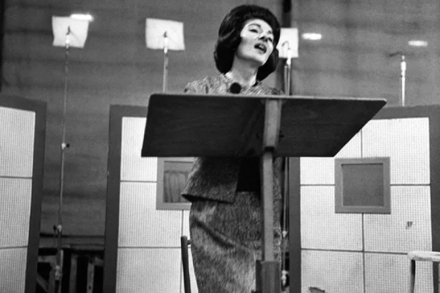
If there’s one thing people find annoying about classical music anoraks, it’s our passion for vintage recordings. ‘Listen to that ravishing rubato,’ we gush, as an elderly soprano swoops and scoops to the accompaniment of what sounds like a giant egg-and-bacon fry-up. And if non-anorak listeners do manage to ignore the pops, scratches and static, what do they hear? Wrong notes. Plenty of them. Is that really Artur Schnabel murdering the mighty fugue of Beethoven’s ‘Hammerklavier’ Sonata or is it Les Dawson? There are actually two problems here — a disconcerting style of performance and crappy recorded sound. It’s important to distinguish between them.

Reimaging the lost masterpieces of antiquity

For centuries there has been a note of yearning in our feelings about ancient Greek and Roman art. We can’t help mourning for what has irretrievably vanished. In 1764 Johann Joachim Winckelmann wrote that we have ‘nothing but a shadowy outline left of the object of our wishes, but that very indistinctness awakens only a more earnest longing for what we have lost’. In the same spirit, Power and Pathos, an exhibition of Hellenistic bronze sculpture at the Palazzo Strozzi, Florence, begins with an empty plinth. It is the marble base of a statue, found in Corinth, on which are written the words ‘Lysippos made [this]’. The inscription is poignant for a series of reasons.

Will you miss Mad Men? James Delingpole won’t

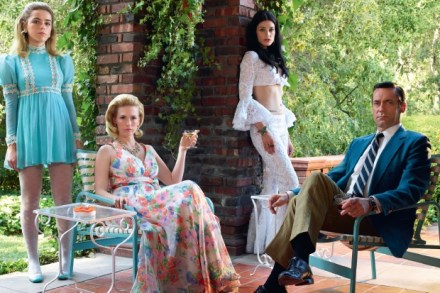
There’s a scene in the finale of season six that embodies everything that’s so right and so wrong with Mad Men. Don Draper, that fathomless enigma of a Madison Avenue copywriting anti-hero, is pitching for the Hershey’s chocolate account. Hershey’s represents that dream combination — an American brand legend that has never really advertised before. So winning this deal really matters. Draper — as always — is pitch-perfect. Selling products is about telling stories. And the story here is about how good the young Don Draper felt when his Daddy took him into a store and offered to buy him anything he wanted. Naturally he chose a Hershey’s bar. The clients are desperately impressed and on the verge of signing a deal.

Alexander McQueen may have been a prat but at least he was an interesting one

Alexander McQueen famously claimed to have stitched ‘I am a c***’ into the entoilage of a jacket for Prince Charles. The insult was invisible behind the lining and his tailor master later investigated and found nothing. So what was this? An invention, an embroidery of the truth? It certainly became a good source of publicity as he spread the story — step one in the creation of his bad-boy image. McQueen wore his counterculturalism loudly on his sleeve. Often tediously. He wanted to be dark, dark, oh so dark. Great. I think it’s pratty, but there are millions of people who don’t, so good for him — good for them.

How Ridley Scott’s sci-fi classic, Blade Runner, foresaw the way we live today

In 1977 a journeyman actor called Brian Kelly optioned a science-fiction novel called Do Androids Dream of Electric Sheep? The book’s author, Philip K. Dick, had been writing science fiction since the early 1950s. He was 49 years old, with 30 novels behind him. He had a cult reputation, but he barely scraped a living. Kelly only paid him $2,500, but Dick was happy with this windfall. He’d written this book for half as much, back in 1968. After five more years, and many rewrites, Dick’s book finally became a film. Directed by Ridley Scott and renamed Blade Runner, it’s now commonly — and quite rightly — regarded as one of the greatest science-fiction movies ever made.

The Spectator declares war on bad public art

Like peace, love and lemon-meringue pie, ‘public art’ seems unarguably attractive. Who but a philistine curmudgeon would deny the populace access to the immediate visual thrills and the enduring solace of beauty that the offer of public art seems to promise? Public art is surely a democratic benefit. Never mind that in the past century its most forceful expression was the grim and malignantly deceitful narratives of Soviet socialist realism, with their ruddy-faced, grinning and buxom tractor drivers disguising a more real reality of starvation, intolerance and torture. Public art is here to be enjoyed at a desolate piazza near you. And then you begin to think about it. Has public art ever achieved any level of popular approval or intellectual respect?

Will the real Swan Lake please stand up

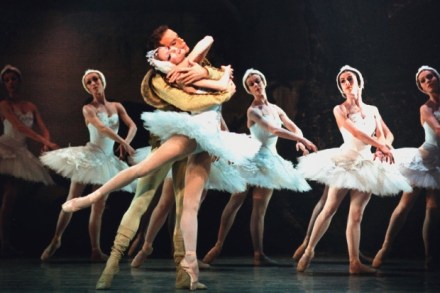
It is the end of an era — the Royal Ballet’s extravagant Fabergé-egg Swan Lake production by Anthony Dowell is on its last legs. When this 28-year-old production finishes the current run on 9 April, that will be it for one of the most controversial classical productions of the past half-century. It’s the one set in Romanov Russia, festooned with ribbons and golden squiggles, with swans in champagne ball-gowns rather than pristine white feathers. Hallucinatory, glamorous and opulently symbolist? Or hectic, fussy and tatty? Adjectives divide between the adoring and the withering for Yolanda Sonnabend’s Gustave Moreau-esque designs and for Dowell’s hyperactive staging.

Where Van Gogh learned to paint

In December 1878 Vincent Van Gogh arrived in the Borinage, a bleak coal- mining district near Mons. He was 25 years old. He’d failed to become an art dealer. He’d failed to become a schoolteacher. Drawing was just a hobby — an artistic career was the last thing on his mind. He’d come here as a preacher, full of evangelical fervour, yet he proved a failure at that too. The problem was, he was far too pious. He gave away everything he owned. These miners didn’t know what to make of him. They called him ‘the Christ of the coal mines’. After six months, he was fired. With nowhere else to go and nothing else to do, during the next 18 months Vincent taught himself the rudiments of draughtsmanship, anatomy and perspective.

The art of Coke

In 1915 D.W. Griffith’s Birth of a Nation was premièred, Henry Ford manufactured his millionth Model-T (‘a million of anything is a lot’, he said), Kafka’s Metamorphosis was published and so, too, was one of Einstein’s critical contributions to his own general theory of relativity. Mixed into this modernist cocktail of extreme achievement and harrowing perceptions was something more banal, but just as enduring: the Coca-Cola ‘contour’ bottle. A century old this year, it is, in a disputed field, an undisputed ‘design classic’. And, like any classic in any genre, it can be read in many ways. Long before Apple and the Messianic Steve Jobs, Coca-Cola developed a business model that was the proxy of a larger belief system.

How Japan became a pop culture superpower

There is an island nation, just off the main body of a continent. It gained an empire from the force of its military and the finesse of its trading contracts. The empire withered, as they all do, under the gaze of history. But that didn’t finish the island nation off. It simply took over the world in a different way, with something greater than arms and economics: popular culture. Its territory is now the television in your lounge, and the headphones in your ears. Sounds like Britain, doesn’t it? We often boast of how, from the Beatles to this year’s Oscar nominations, our country punches above its weight culturally. But I had another island nation in mind. One with twice as much weight, in terms of population, and a hell of a lot more punch: Japan.

How will the British public take to Rubens’s fatties?

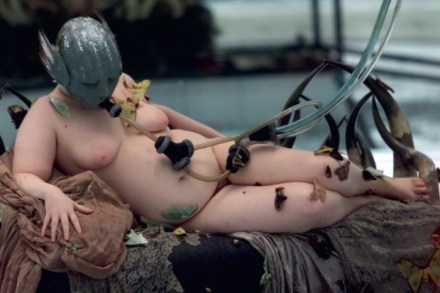
This week a monumental exhibition, Rubens and His Legacy, is opening at the Royal Academy. It makes the case — surely correct — that the Flemish master was among the most influential figures in European art. There are few painters of the 18th or 19th century — from Joshua Reynolds to Cézanne, Watteau to Constable — who were not affected by his work. It will be interesting, however, to discover what the London art public feel about Rubens himself. The British have had a complicated relationship with the great man. Its apex is represented by his residence in London — admittedly for a brief nine months in 1629–30 — his knighthood and the pleasure expressed by Charles I at meeting ‘a person of such merit’.

Mohammed — in pictures

Two months ago I was sitting beside the tomb of a descendant of the Prophet Mohammed, telling a story about the last week of the Prophet’s life. It was detailed enough to paint an imaginary portrait of him and included a mildly ribald joke from one of his wives, told to him on his deathbed when he was racked with fever. This kind of story often perplexes my rationalist friends back home. ‘Why can you describe the Prophet but not draw him?’ ‘Why can you make jokes but not draw cartoons?’ Where does this idea that it is forbidden to represent the Prophet come from? There is no line in the Koran that forbids it.

Shirley Williams: Saving my mother from the scriptwriters

Shirley Williams sits at the head of a table in a large conference room in Lib Dem HQ. She will be 85 this year, but still has a finger in many a pie, most of which we’re not to talk about here, including the predicted wipe-out of a generation of her party’s MPs at this year’s election. It’s one of the reasons she never made it to see the Tower of London poppies. Too busy. She also had to dash to Russia where she is on the board of the Moscow School of Political Studies. ‘It is all about teaching people about democracy and has fallen under the frown of Mr Putin, which is why I had to go.

What unites Churchill, Dali and T.S. Eliot? They all worshipped the Marx Brothers

‘I had no idea you were so handsome,’ Groucho Marx wrote to T.S. Eliot in 1961 on receiving from him a signed studio portrait. The Missouri-born Eliot was the Marx Brothers’ devoted fan; three years later, in June 1964, Groucho called on the 75-year-old poet at his home in London. Eliot was interested in the Marx Brothers’ first undisputed film masterpiece, Animal Crackers (1930), while Groucho wanted only to quote from ‘The Waste Land’; however, the men agreed that they shared a love of cats and fine cigars. Winston Churchill was another who admired the Marxes and their deliciously mad repartee. During an air attack on London in May 1941 he found himself watching Monkey Business (1931), and was ‘glad of the diversion’.

2015 in exhibitions – painting still rules

The New Year is a time for reflections as well as resolutions. So here is one of mine. In the art world, media and fashions come and go, but often what truly lasts — even in the 21st century — is painting. Over the past 12 months, there has been a series of triumphs for pigment on canvas, including the glorious Veronese exhibition at the National Gallery, and a demonstration by Anselm Kiefer at the Royal Academy that we still have painters of towering stature among us. What will 2015 hold? Well, as far as painting is concerned — both old master and contemporary — there are some extremely promising items.

Climate change, Bruegel-style

It is cold, but not in a cheery, robin-redbreast kind of way. The sky is slate blue; the sun, a red ball, is slipping below the horizon, figures carrying heavy burdens trudge across the frozen water. Yet this far- from-festive painting, ‘The Census at Bethlehem’ by Pieter Bruegel the Elder, is one of the earliest — perhaps the very first — to set the Christmas story in a northern winter landscape. There is no attempt to pretend that this is the Holy Land. The setting is a village in the southern Netherlands. The houses are brick-built, one with a northern European crow-stepped gable. In the foreground, a pig is being slaughtered, an improbable sight in Palestine. In his poem ‘Musée des Beaux Arts’ W.H.