Arts feature

Contours of the mind

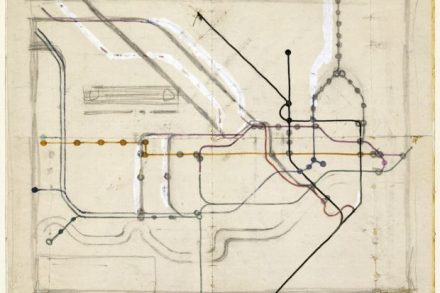
In Australia, I have been told, the female pubic area is sometimes known as a ‘mapatasi’ because its triangular shape resembles a map of Tasmania. And since we are discussing cartography and the nether regions, it is wonderful to find in the British Library’s new exhibition, Maps and the 20th Century, that Countess Mountbatten wore knickers made out of second world war airmen’s silk escape maps. Maps certainly colonise our imaginations in many different ways. The allies in Iraq had a ‘road map’ rather than a strategy. So much of personal value can be lost in the creases and folds of our own ‘mental maps’.

Shady past

David Hockney: It is a kind of joke, but I really mean it when I say Caravaggio invented Hollywood lighting. It is an invention, in that he quickly worked out how to light things dramatically. I’ve always used shadows a bit, because that’s what you need below a figure to ground it, but mine are more like Giotto’s than Caravaggio’s. I use shadows that you see in ordinary lighting conditions; you don’t find ones like Caravaggio’s in nature. But there are other varieties of Hollywood lighting. The ‘Mona Lisa’ is one of the first portraits with very blended shadows. That face is marvellously lit, the shadow under the nose, and that smile. The soft transition from the cheekbone down to underneath the jaw is extraordinary.

Muslim magic

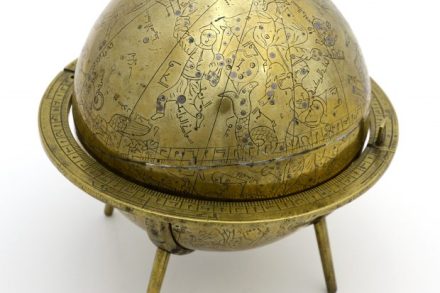
In 1402, when the Turkic conqueror Temur, better known in the West as Tamerlane, was poised to do battle with the mighty Ottoman Sultan Bayazid I, the greatest power in the Muslim world, he called in the astrologers. Knowing which side their bread was buttered on, the court officials duly pronounced that the planets were auspiciously positioned and gave a green light to attack. Temur was victorious. Not for nothing was he known as lord of the ‘Fortunate Conjunction of the Planets’. Half a century later, in 1453, Bayazid’s great-grandson Mehmet II stood at the gates of Constantinople. Anxious to galvanise his siege-weary troops, he summoned court astrologers, diviners and holy men to do their business.

Kids’ stuff | 6 October 2016

When a new TV channel calls its flagship food show Fuck, That’s Delicious, we might surmise that the Reithian ideals are not foremost in its corporate philosophy. You probably haven’t heard of Viceland. You certainly haven’t watched it. It seeped on to the airwaves with little fanfare and few viewers. Viceland is the new 24-hour TV channel of Vice Media, the Canadian-American outfit that describes itself as the ‘world’s preeminent youth media company and content creation studio’. Vice began in 1994 as a magazine but now encompasses a news division, a record label, a film studio and myriad digital ventures.

American beauty | 29 September 2016

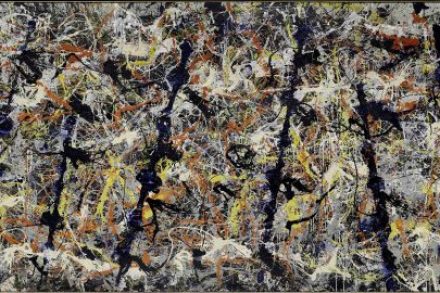
‘At last,’ wrote Patrick Heron, a British painter, in 1956, ‘we can see for ourselves what it is to stand in a very large room hung with very large canvases by Jackson Pollock, Willem de Kooning, Mark Rothko, Clyfford Still, Franz Kline and others.’ Just over 60 years later, we, too, can stand in a series of grand galleries at the Royal Academy’s Abstract Expressionism and see what Heron saw, and much more. He was at the (greatly anticipated) first showing of those fabled American artists in Britain. Since then, they have frequently been exhibited individually, but there has been just one collective show of the movement. Now Pollock, de Kooning and co. are back in town. Cumulatively, the result is majestic, exhilarating and visually overpowering.

Root and branch

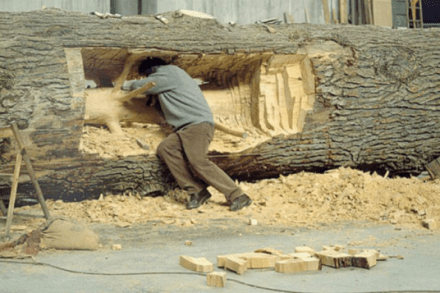
Eventually,’ said Michelangelo Pistoletto, ‘it became a movement. In fact, I believe that arte povera was the last true movement. Since then all artists have been individuals.’ We were sitting one baking hot day last month in his cool study in Biella, a small town in the foothills of the Alps where he has established a huge museum and foundation in a series of disused 19th-century textile mills. He was discussing the group of Italian artists of the 1960s of which Pistoletto himself was a founding member. Arte povera is an umbrella phrase that covers a number of diverse artists, several of them marvellous, who emerged in Italy about half a century ago. What they had in common was more a mood than a style exactly.

On the money | 8 September 2016

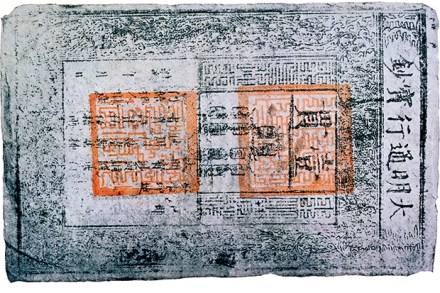
Kublai Khan, said Marco Polo, had ‘a more extensive command of treasure than any other sovereign in the universe’. There were no jangling pockets of coins in Kanbalu. Bark had been stripped from the mulberry trees and beaten into paper notes. The notes carried delicate little pictures of earlier currency — long, frayed ropes weighed down with coins. It was as though they were mocking the old ways. Paper money had been produced in China from as early as the 7th century, but that did not stop Marco Polo from gushing that the Great Khan had discovered ‘the secret of the alchemists’. Back home, there was much curiosity but apparently little urgency. Only in 1661 did the first banknotes circulate in Europe.

Wet dream

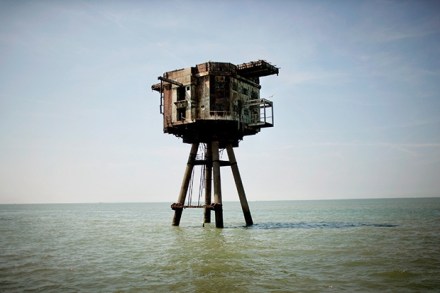
Utopia dons some unlikely guises, crops up in some odd places. On the sea wall a couple in their teens stood clutching their baby and gazing half a mile across the opaque river to where streets run down to the shore: spires and warehouses, inns and gables announced a town. The boy asked me if I knew over there. He said that that was where they wanted to go to, where they wanted to be. There’s so much happening over there. Not like here. Here there were only vast ships, big sheds, cranes, mean houses. And nothing to do. No life. We were between Tilbury Fort and a pub called the World’s End. On the other side of the water was hope. These kids were on the money. The object of their longing was Gravesend.

House style

Last Sunday, I went to see two of the greatest paintings in Britain — at least in the estimation of our Georgian ancestors. When they first arrived here, in 1790, they were accompanied by a special naval escort. After Turner saw one of them, he said the experience made him both ‘pleased and unhappy’, because it seemed beyond his powers to imitate. These are the so-called ‘Altieri’ Claudes, by any reckoning among the most spectacular pictures produced in late 17th-century Rome. Today they hang at Anglesey Abbey, Cambridgeshire, where — at least on the afternoon I was there — few others had found their way to see them. Not that the place lacked visitors.

Out – and not proud

‘Many people are mourning,’ said Sam West on a BBC panel show discussing the response of the arts world to Brexit. According to West’s figures, ‘96 per cent of those polled were for Remain. Collaboration and connection are our bread and butter.’ The atmosphere of bitterness and anger was palpable at the Edinburgh Festival. I spent four days immersed in comedy shows and I heard only one pro-Brexit gag. The excellent Geoff Norcott said he was puzzled to meet Remainers who told him the result had been swung by ‘thick’ Leave voters. ‘Thick?’ he said. ‘The Remain campaign waited until after 23 June to stage their street protest.

Requiem for a designer dream

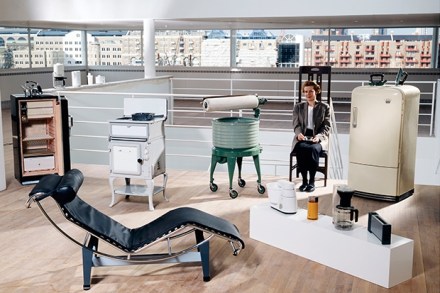
Threnody. Dirge. Lament. Epitaph. Elegy. Wake. There are so many English terms to describe the passing of people and things that you wonder if introspection about demise might be a national characteristic. All these words are on my (doggedly cheerful) mind as staff have moved out of London’s Design Museum, securing the last open door with a padlock on 30 June and leaving inside cavernous spaces with rusting memories of designer people and designer things. So what was the old Design Museum? It arose from a conversation between Terence Conran and me in 1978. He was the proprietor of Habitat, whose decent, modern merchandise revolutionised popular taste, and I was the author of a book about design he had just discovered.

Visions of suburbia

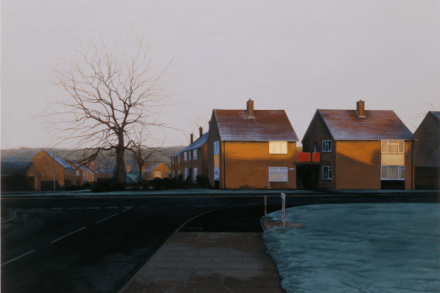
Art is aspiring; hungry; acutely aware of what it could become, and of what it could lack; longs for safety and reaches out in speculative attempts to do something new; exists on the outer edges of lives, looking inwards with hopes, some day, to be more essential. Art, literature and music are, in short, suburbs to the grands projets of our lives at their most significant. Over the next year the Architecture Foundation will present new films, walks, talks and another instalment of the Doughnut Festival, to contemplate the transformation of London’s outer ring. It’s an interesting moment. The capital is not physically expanding, but the relationship between inner and outer is significantly altering and will go on altering.

Everything is illuminated

One could honour God with prayer, of course, and build cathedrals, amass treasuries, turn choirs into stained-glass jewel boxes, carve portals with saints and sinners. But for the medieval monks bent over vellum in chilly scriptoria colour, too, was devotion: offertories of lapis lazuli, azurite, cinnabar, silver and gold, gold and more gold. Silver tarnished on the page, but gold remained exquisite, inviolable, and monks and scholars found a dragonish greed for it. War, weather, revolution, Henry VIII, Oliver Cromwell, acquisitive magpies, trophy-hunters and time have stripped gold and pigment from sculptures and ivories.

Losing their religion | 21 July 2016

Scriabin once suggested that the audiences for his music should be segregated according to their degree of personal enlightenment, with the ‘least spiritually advanced’ in the worst seats. Unsurprisingly it didn’t happen. But perhaps the Southbank Centre should take up the challenge. For its 2016–17 season, the centre has devised a series of concerts and talks entitled Belief and Beyond Belief. This ‘festival’, as it grandly styles itself, could have been an exploration of the enormous and neglected influence of faith on the great composers. Could have been — but, predictably, won’t be. Instead, the Southbank has chosen to subsume religious faith into ‘belief’, whatever that is, and then tacked on a smug little cliché.

Taking the pissoir

You have to imagine the lines that follow in separate fonts to get the full sense of the nonsense in ‘Karawane’, one of Hugo Ball’s ‘verses without words’: jolifanto bambla ô falli bambla grossiga m’pfa habla horem égiga goramen And it ends not with a bang, but with ... ‘ba-umf’. See the original and it’s impossible not to be impressed by the industrial-strength madness of Ball’s absolute certainty. His poetics of nonsense claimed to drain words of meaning, but quite the opposite effect was achieved. The meaninglessness is itself meaningful: cognition is on an infinite loop. Sense or nonsense, Ball intended to show that ‘this humiliating age has not succeeded in winning our respect’.

Death of the auteur

From the Oscar winning classics of the early Seventies — The French Connection (1971) and The Exorcist (1973) — to the southern trailer trash noir Killer Joe (2011), William Friedkin has been behind some of the darkest films ever to come out of Hollywood. He has also had a famously bumpy career, careening from great successes to big flops (does anyone remember Jade?). Somehow, he’s always rebounded. Currently, the 80 year old director is developing Killer Joe into a television series, set to star Nicholas Cage as the cowboy hat wearing detective/hitman played so mesmerisingly in the film by Matthew McConaughey. At the Cannes Film Festival in May, Friedkin was basking in the sort of adoration he hadn’t known for half a lifetime.

Holy visions and dustbins

Woolworth’s spectacles. Pudding-basin haircut, rather sparse. Norfolk jacket. Pyjama cuffs below trouser legs and sleeves. Paints and brushes in an old black perambulator. And a sign propped up on a gravestone: ‘As he is anxious to complete his painting of the churchyard Mr Stanley Spencer would be grateful if visitors would kindly avoid distracting his attention from the work.’ This was Spencer in his Cookham dotage, a picture of wilful eccentricity, painting the church, cottages, meadows and Thames banks he had known since childhood. An odd little fellow, with the emphasis on little. He was 5ft 2in, by his family’s estimation, and better suited to the ambulance service than he was to the infantry when he volunteered in 1915.

Show business

Sport has never held much appeal for me, so I rarely venture into stadiums. But I do appreciate their peculiar power: I was present at the 2012 Paralympics when George Osborne ill-advisedly turned up to award a medal while engaged in a campaign against disability benefits, and was roundly booed by the entire stadium. It was a transporting lesson in the joy of crowds and the proudest I have ever felt to be British. The stadium, ostensibly a facilitator of mass spectatorship, is actually a machine for producing such feelings. The Greeks were explicit about the ritualistic, community-forming function of their games, but it was the Romans who secularised the stadium and gave it its current form.

Out of this world | 16 June 2016

It is London in the summer of 1871. Queen Victoria has just opened the Royal Albert Hall in memory of her beloved husband; Lewis Carroll’s sequel to Alice in Wonderland has just been published, and French refugees from the Franco-Prussian war continue to arrive in the capital. Among them is Claude Monet, who is having a miserable time in the fog and mist. Not far from the Thames views that he had been painting, a fellow artist has just opened her first exhibition of 155 ‘Spirit Drawings’ in a gallery on Old Bond Street, in the heart of London’s art quarter.

These foolish things | 9 June 2016

No reliable statistics exist — it’s not the sort of thing you can audit — but England is surely the most haunted country on earth. And haunted not just by white ladies, ghosts, headless highwaymen, spooks and phantoms, but by a recurrent dream of Eden and other more recently lost pre-industrial worlds. Thus follies and summer houses, Eden’s buildings, are among the nation’s most distinctive contributions to world architecture. They might be ‘fragile and neglected trivia’, according to Clough Williams-Ellis, but their ghosts remain and every garden centre pays tribute to a collective yearning for open-air theatricality, so that dreams dreamt in Shugborough might be replicated in Solihull.