Spectator Life

Spectator Life

An intelligent mix of culture, style, travel, food and property, as well as where to go and what to see.

Hell is a heat pump

‘So, as Rishi Sunak has announced that we’re now allowed to keep installing new gas boilers till 2035, and they last about 15 years, that means I’ll be able to keep a gas boiler till 2050, so I might even be allowed to die with a gas boiler still going in my house, and may never have to switch to an ugly, expensive air-source heat pump which makes an annoying fridge-like hum in the garden, vibrates through the bedroom wall and keeps the house at a weird, lukewarm temperature all day and night.’ I think many of us were making that kind of calculation last month. Were we tempted by Sunak’s raised offer of a government grant of £7,500 for switching to a heat pump, up from £5,000, to reward us for doing our bit towards net zero? I don’t think so.
Dodgy developments deserve the wrecking ball

It used to be that an ‘artist's impression’ of a proposed building development was just that; an architectural drawing designed to give planners an idea of what to expect. Then along came CGI and a new era of photorealistic visualisations. On the surface, these glossy new artist's impressions are anything but impressionistic. Indeed the renderings are so lifelike it's virtually impossible to tell if they are actual photographs. Ironically, as we are now discovering with AI, hyperrealism is rarely as real as it purports to be.

Inside the Cornish home of John le Carré

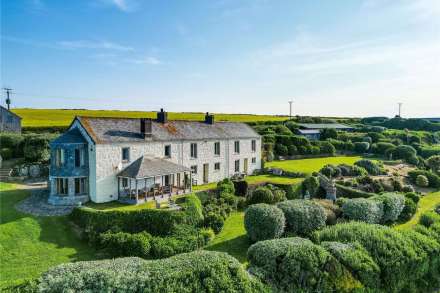
Every writer needs a bolt hole. Novelist John le Carré’s was particularly picturesque, perched high above the waves on one of south Cornwall’s most glorious coastal stretches, between Lamorna and Porthcurno.  Tregiffian Cottage, made up of a trio of former fishermen’s homes, was where Le Carré conceived and wrote some of his most famous novels, including Tinker Tailor Soldier Spy, Smiley’s People, The Spy Who Came in from the Cold and The Constant Gardener. ‘I love it here, particularly out of season,’ Le Carré, real name David Cornwell, who died in 2020, told a local newspaper. ‘The empty landscape, walking on the cliff, and the light, which of course everyone always mentions... but it seems that I can think well here.

The tyranny of the tidy

A few years ago, James Delingpole and I were two-fifths of ‘The Manalysts’ a clique of agony uncles employed by a women’s magazine. The idea was to provide five answers to each problem from five disparate standpoints. James was the trenchant intellectual, I was (supposedly) the metrosexual adman and the other three were a practising psychotherapist, a blokey builder from Essex and a gloriously camp hairdresser. The great fallacy about untidy people is that we’re always losing things A fair few of our correspondents were, unsurprisingly, complaining about a boyfriend or husband’s untidiness but I remember being struck by how many wrote in to bemoan the very opposite – the strain of living with someone tyrannically tidy.

Inside the Glastonbury home of Mulberry’s founder

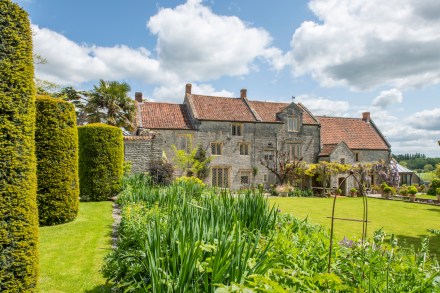
Roger Saul founded Mulberry in 1971. He created their now iconic range of bags, belts and purses, but was ousted from the designer label’s board in the early Noughties. Undeterred, he reinvented himself as the purveyor of organic spelt cereal and flour brand, Sharpham Park. His range of products is de rigueur on every health-conscious Waitrose shopper’s weekly list. There have been some intriguing historical discoveries over the past 45 years Saul, now 73, can put many of his triumphs in both fashion and food down to Abbots Sharpham, his 268-acre Somerset estate, just outside Glastonbury, made up of a Grade II* Listed 15th-century eight-bedroom main house, two cottages, a deer park, indoor swimming pool – and field upon field of spelt.

The irritating rise of home renovation influencers

Fifteen years ago there was no such thing as a social media influencer, but fast forward to 2023 and there are now an estimated 50 million full-time ‘creators’ worldwide. It isn’t hard to understand the appeal; no nine-to-five, no domineering boss, no skills, experience or talent necessary. Little input for potentially incredibly high returns, especially if you successfully find a niche.  I cannot think of anything less appealing than broadcasting images of where I sleep to the world A cleanfluencer from Northern England went from working at M&S to sharing her cleaning tips full time which led to a book deal with Penguin; Live, Laugh, Laundry (I kid you not).

There’s nothing scarier than a panic room

It’s not crazy to worry about getting home. It’s not crazy to lock your doors at night and check that the alarm is set. It’s not crazy to avoid the man who keeps gurning at you on the bus every time you look his way. It’s not crazy to worry. But is spending £50,000 to £500,000 on a bespoke panic room a little… crazy? Probably. But who am I to judge? I still find it hard to answer the phone to a withheld number.    What if your poor cat sitter was feeding your tabby just as your panic room decided to spray chlorine gas all over the place? I could only find one advert from a panic room installation company in the UK. The video shared on the firm’s website is set in London and has a B-movie feel to it.

What it takes to build a modern home high on the Dorset cliffs

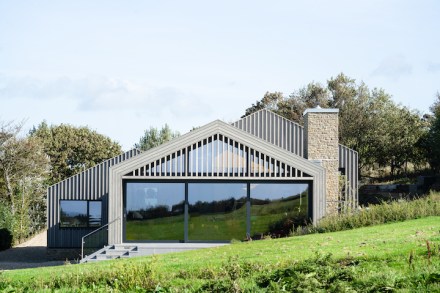
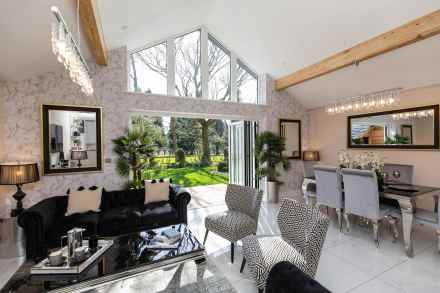
With its golden sand sweeping along the bay towards Lyme Regis, the young river bubbling into the surf and the weathered limestone cliffs rising and falling along the Jurassic coast, there are few more picturesque beaches in the country than the one at Charmouth. And it was, of course, that view that Allan and Ali fell in love with. Ali, who works as an advisor on catastrophic injury awards, and Allan, a retired KC who had spent most of his working life travelling around the north of England dealing with criminal cases, just happened to be passing an estate agents and saw a picture in the window. It wasn’t just love, it was love at first sight. 'We weren’t even looking for a house,' Allan says. All the rooms except two have cathedral ceilings.

Why Crete is the ideal island for a second home

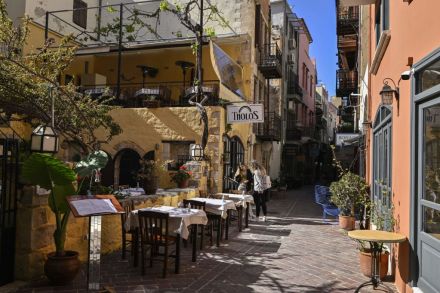
Crete has a long and illustrious history: birthplace of Zeus, king of the Greek gods, and the seat of the Minoan ruler King Minos who is said to have ruled from a palace of 1,000 rooms.  The largest Greek Island, and nearly the one nearest to Africa (bar it’s tiny neighbour Gavdos) it’s also the best for year-round living, with its mild winters allowing the odd December dip in the sea. Thankfully it has not had any of the forest fires that Rhodes and Corfu are experiencing and its busy beaches and restaurants this week suggest it might be a beneficiary, according to local news.

Solar panels in, swimming pools out: 2023’s property trends

Inflation has finally dipped a little but is still riding high, and mortgage rates may still rise further: Britain’s households are suffering a pay squeeze. But what are home-owners still spending their money on – and what has fallen out of favour? Here is Spectator Life's guide to the winners and losers in the property market this year so far... The winners... Solar panels High energy bills have kickstarted British householders into going green. During the first half of this year, sales of solar panels were up 82 per cent on the same period last year, according to MCS, the standards body. The hot spots of solar installations? Cornwall, Wiltshire and Aberdeenshire. Home-buyers are also keen on them, says Surrey buying agent Richard Winter.

The growing appeal of the outdoor kitchen

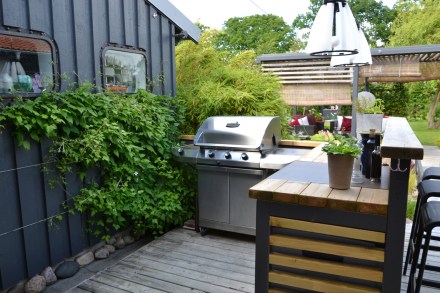
For most of us the main ingredients of outdoor cooking are a smouldering barbecue grill, slabs of alternately under- and over-cooked meat and a light sprinkling of frustration. But these days, it seems, there is another option on the menu. Ever since the pandemic, more and more homeowners have been investing in lavish outdoor kitchens – keeping up with the Joneses with garden wine fridges, rotisserie grills, pizza ovens and professional-quality prep areas so they can cook and eat outside in comfort. The concept has been enthusiastically adopted by the likes of David and Victoria Beckham, who are reportedly awaiting a verdict on a planning application for an all-singing, all-dancing outdoor kitchen at their Cotswolds barn.

What’s behind the bungalow boom?

‘Bungalows are almost perfect,’ as the old gag goes. ‘They only have one floor.’ But these once unfashionable properties are rapidly becoming anything but a joke. While the mortgage crisis is cooling most sectors of the housing market, demand for bungalows is growing. Estate agents report the properties receiving dozens of offers, selling for tens of thousands over the asking price or being snapped up before officially going on the market. The usual breed of downsizers and retirees looking to replace large family homes with something all on one level are facing stiff competition from budget-conscious purchasers seeking to renovate single-storey homes – and often turn them into family homes with stairs.

In praise of the suburban semi

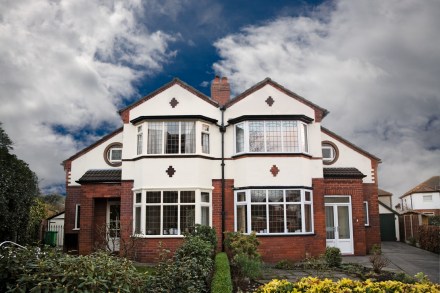
In 1939 George Orwell took aim at burgeoning British suburbia and its population of lower middle class lackeys in his novel Coming Up for Air, memorably describing the new homes being built on the fringes of cities as ‘semi-detached torture chambers where the poor little five-to-ten pound a-weekers quake and shiver'. More than eight decades on and the Office for National Statistics reports that one in three of us lives in a semi-detached home, an architectural style with a far longer and more interesting history than Orwell may have been aware of. They are also – officially - the hottest property type on the market. Analysis of more than 100,000 house sales over the past year by sales firm Property Solvers found that semis took an average of 150 days to sell.

What Japanese cities can teach us about architecture

There are three things that occur to you when you travel the length of Japan: that kimonos are surprisingly good for any occasion; that the country’s reputation for cruelty may partly derive from breakfasts comprising tea porridge and prawn soufflé; and that the hordes of camera-wielding Japanese tourists taking thousands of snaps – a comic trope in the 1980s, at least – were really just ahead of their time and the rest of us are only now catching up thanks to our iPhones.

Move over Brighton: is Folkestone the next coastal property hotspot?

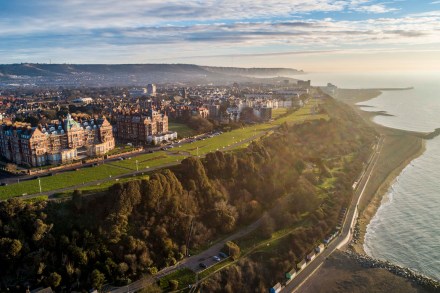
As the recent heatwave simmered on, tempura oysters were being washed down with chilled rosé on the beachfront tables at Little Rock, an offshoot of Folkestone’s Michelin starred Rocksalt restaurant. Looking from the shipping container that houses it past a handful of palm trees down the long shingle beach, a huge crane punctuated the clear blue sky above the bright white curves of the town’s biggest new development. The Folkestone Harbour and Seafront Development Company is hoping to woo a wave of home-buyers to the Kent Channel town’s seafront, with the first phase of 1,000 new homes planned along the beach. The seaside resort and port, in the same vein as Margate and Hastings, has been trying to rebrand itself as a thriving arts centre.

Has the regeneration of Elephant and Castle been a success?

It has been ten years since work began in earnest on the regeneration of one of the few surviving sections of old-school central London. While the rest of Zone 1 seemingly saw wall-to-wall gentrification, Elephant and Castle remained an outpost of stubborn, scruffy ordinariness, an oasis of discount stores, greasy spoons and traditional boozers. Over the past decade, billions of pounds have been lavished on sprucing up the Elephant. But while the old place certainly looks quite different – a cluster of new towers, thousands of new homes, a gaping hole where the 1960s shopping centre once stood – this is a regeneration that has had its fair share of troubles.

The invasion of the wheelie bins

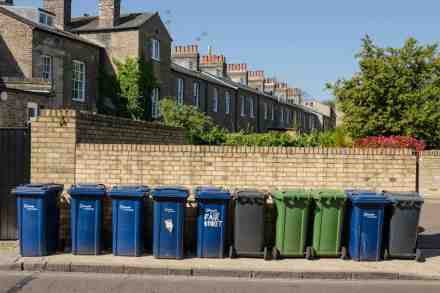
Once I thought nothing could make residential Britain look uglier than pebble-dashing, PVC windows and satellite dishes. I was wrong. As if the country had not been brutally homogenised enough by the fact that every high street has the same shops, now every residential road is reduced to being an identical backdrop for a very persistent invader: the wheelie bin. Lined up like Daleks, they are breeding in my North London neighbourhood, blocking front gardens and pavements. Outside houses split into flats, where each has its own set, there are actual crowds of these 4.5ft graceless plastic buckets, which come in multiple colours for different sorts of rubbish. When wheelie bins first started infiltrating our streets just over a decade ago, we valiantly tried to fight back.

The mysterious history behind an 11-bedroom country manor that’s up for sale

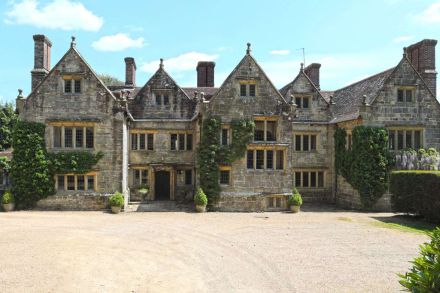
With its perfectly soaring Jacobean-style architecture, leaded windows and enchanting walled garden, all set within 17-plus acres of East Sussex countryside, Grade II* Listed Possingworth Manor is the rural idyll of an English country house.   Despite its tranquil appearance, however, the 11-bedroom, 8,500 sq ft manor near Uckfield has had a disproportionate share of drama over the years, as the site of some legendary lovers’ tiffs, and with links to royalty past and present, literary and artistic icons and wartime heroes, to boot.

The strange intimacy of flat-sharing

When I was younger, I dreamed of being a Jane Austen heroine. Nearly two decades on, in my late twenties, I am living in the guest room of a married older cousin in a leafy suburb of London, house-hunting in the middle of a housing crisis, waiting on a security clearance for a public-sector job, and wending my way through a dizzying array of balls, dinners, and public talks while I wait, observing a long-decaying society in the fullest bloom of its collapse. The 1990s dream of single professional womanhood, complete with uptown apartment, financial independence, and unlimited opportunity has been unmasked as an illusion, while the underlying realities of the world remain as they always were. Doing things alone is difficult.

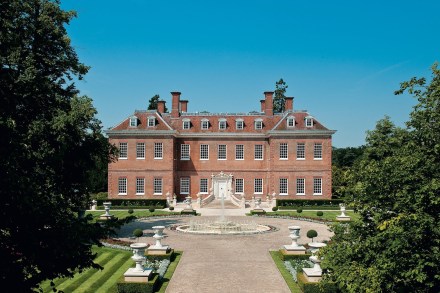
Inside Denham Place, inspiration for the early James Bond films

House hunters nearly always have to make a compromise to suit their budget – the size of the garden, say, or those dated avocado bathroom suites, or the slightly inconvenient distance from the station. You might think that being a multi-millionaire would exonerate you from such stresses, making finding your dream home trouble-free.   Not so, according to Mike Jatania, the British Asian cosmetics tycoon who reportedly sold personal care brand Lornamead to Li & Fung Ltd for $200 million a decade ago and who regularly tops charts of Britain’s richest Asian people.

Can we know an artist by their house?

Show me your downstairs loo and I will tell you who you are. Better yet, show me your kitchen, bedroom, billiard room and man cave. Can we know a man – or woman – by their house? The ‘footsteps’ approach to biography argues that to really understand a subject, a biographer must visit his childhood home, his prep-school boarding house, his student digs, his down-and-out bedsit and so on through barracks, shacks, flats, garrets, terraces, townhouses and final Georgian-rectory resting-place. Walk a mile in their shoes – then put on their carpet slippers. So, to know Horace Walpole, we board the 33 bus to Strawberry Hill. For Henry Moore, it’s Hoglands and its cactus house. For Barbara Hepworth, St Ives and sculptor’s dust.

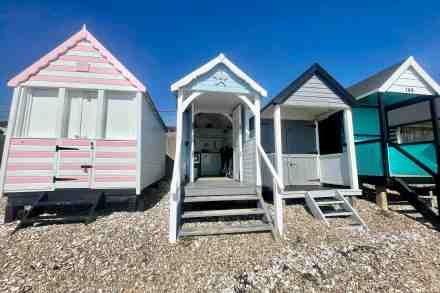
How to join the beach hut brigade

They are expensive to maintain, plagued by tourists and influences seeking picture-postcard holiday snaps and cost more per square foot than houses in some of London’s most affluent neighbourhoods – despite lacking basic amenities such as running water. And yet such is the allure of the traditional seaside beach hut that, amid an otherwise shaky housing market, prices for these modest timber shacks just keep rising.  According to research by Moverly, which provides digital home information packs, the average asking price of a beach hut in England stands at £49,290 – up 43 per cent in the past year. In Dorset prices are up 101 per cent to more than £120,000.

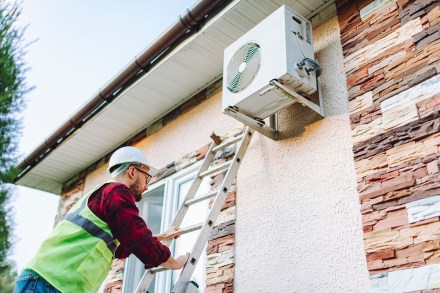
The inconvenient truth about heat pumps

In Britain’s battle to cut carbon emissions, the government sees heat pumps as a key weapon. Unveiling the latest energy efficiency plan in March, energy secretary Grant Shapps doubled down on Boris Johnson’s offer of a £5,000 grant for anyone willing to install one. These smart bits of home technology work by transferring thermal energy from the air, ground or water. They are powered by electricity, which can be generated from solar or wind power, providing cheap and fossil fuel-free heating and hot water. So what's not to like? The concept is nothing new.

Blooming expensive: the growing cost of a garden

As Cicero is often (mis)quoted as saying, if you have a garden and a library, that is all you need. And since the pandemic, our love of a garden has only got greater. Yet these days it’s often less about getting your hands dirty in the flowerbeds and more about having somewhere to kick back and enjoy a good book or drink rosé with friends. But while visitors are swooning over raised beds and begonias at the RHS Chelsea Flower Show this week, the price of having a garden of one’s own is higher than ever – especially if you want a generous one.

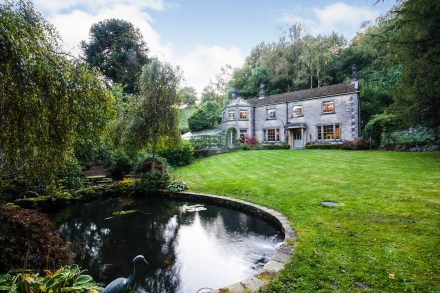
Why house-hunters are heading to Derbyshire

You don’t get much further from the seaside than Derbyshire, a county landlocked at the heart of England. During lockdowns house-hunters simply couldn’t get enough of coastal property, and prices in Wales and the West Country boomed. But three years after the start of the pandemic, a new property powerhouse is emerging.  According to the latest UK House Price Index, prices in North East Derbyshire are up by almost 20 per cent year on year, to £259,000. Across the way, prices in the Derbyshire Dales are up 18 per cent year on year, to an average of £362,000. This performance would be impressive in a strong economy, never mind against the backdrop of rising interest rates and spiralling inflation.

Why are Americans buying up our castles?

You might think someone who grew up in the 356-room Belvoir Castle wouldn't be too worried by a traffic fine. But when Lady Eliza Manners was caught speeding, she avoided paying off the full £100 ticket by claiming ‘financial hardship’. And apparently she’s not the only budget-conscious occupant of the Leicestershire property. Her mother Emma, the Duchess of Rutland, recently claimed she shops in Asda. While it might be hard for those on the actual breadline to sympathise with the troubles of the titled and entitled, such states of affairs do stand to some sort of reason.

The Eurovision effect: how Liverpool is changing its tune

Few British cities can rival the musical heritage of Liverpool – and as the Eurovision Song Contest arrives back in the UK after 25 years, Merseyside is getting ready for its moment in the spotlight. An extra 150,000 visitors are expected to descend on the city for the sell-out event this weekend. While the world’s eyes will be on the M&S Bank Arena for Saturday’s final, the Liverpool area will enjoy a whole week of club nights, raves, live screenings, concerts and after-parties.

How to speed up buying a house

Everyone has a story about the stress of moving house. For those buying a new home, the process of exchanging contracts is perhaps even more nerve-racking than loading their worldly possessions into the back of a van. When I started in the property game in the late 1970s, buying a property – that’s when you pay your 10 per cent deposit and your sale becomes irrevocable, not when your agent says ‘well done, your offer has been accepted’ – took roughly eight weeks. It now takes over 20, which is absurd. This extra time contributes the lion’s share of stress and seems to be getting worse.

A beginner’s guide to (legally!) avoiding tax

You have to feel a little sorry for Rishi Sunak. When you have a wife as rich as Akshata Murty, just how do you keep tabs on all her investments, making sure that each one of them is properly declared as an interest in the House of Commons Register? The Prime Minister has suffered the embarrassment of being investigated by parliamentary authorities over an apparent failure to declare his wife’s holdings in a childcare firm Koru Kids, which potentially stands to benefit from changes in the Budget. Sunak previously nearly had his political career derailed thanks to revelations that his wife, who is an Indian citizen, was living in Britain as a non-dom – a status she later gave up.