Peter Tonguette

Peter Tonguette is the author of Orson Welles Remembered and The Films of James Bridges.

Drowning in the neon swamp of Tron: Ares

Sitting in the nearly empty movie theater at which I saw Tron: Ares, I found myself swamped by neon. Its hues are unappealing in real life – redolent of dive bars, arcades and other unsavory venues – but neon is downright unbearable when experienced in a movie theater, where you have no choice but to stare at the screen unless you want a perfectly good $21.51 to go to waste.


tron ares

Spinal Tap II is an amusing, honorable successor to the original film

The story of the made-up English heavy-metal band Spinal Tap is, in every way but its particulars, the story of Joe Biden. Consider the parallels: a group of not-very-bright Baby Boomers – or, in Biden’s case, a single not-very-bright old man – manage, through sheer dumb luck, to reach the peak of their professions – selling out stadiums, in the case of Spinal Tap, or being elected to assorted high offices, in the case of Biden. Essential to the film’s success is the characters’ persistent ignorance of their own deficits in intelligence and logic Then, as time marches on, neither the band nor the politician acquires wisdom or sagacity but merely becomes older, weaker, and ever more enfeebled.

Spinal Tap

Splitsville defends monogamy

The new comedy Splitsville amusingly diagnoses several urgent social ills. The film mocks those who treat marriage not as an expression of solemn vows but as a ticket to unfettered happiness to be discarded at the first sign of discontent; it also excoriates those who view the institution as so meaningless – just a piece of paper – as to persist in the midst of openly acknowledged affairs, romances and one-night stands. In its own coarse, fumbling way, Splitsville has an instinctive sense of how human beings long for monogamy and order even while they court freedom and licentiousness. Splitsville stars Kyle Marvin and Adria Arjona as Carey and Ashley, a young couple who, 14 months after getting hitched, find themselves with different notions about the success of their union.

Highest 2 Lowest is the summer’s best movie

Surely it is a sign of these hard cinematic times that an auteur-helmed remake of a midcentury international cinema classic is also the most exciting, engaging movie of the summer. Before Apple Original Films removes it from theaters for its future life on streaming, Spike Lee’s Highest 2 Lowest appears in US cinemas amid the usual summer commotion: comic-book movies and assorted remakes or sequels. As noted, Highest 2 Lowest is a remake too, but a remake of a work so remote from the cultural consciousness of most 21st-century moviegoers (Akira Kurosawa’s 1963 masterpiece High and Low) that it feels fresh.

Barcelona turns thirty

Released thirty years ago this year, Barcelona is the movie with which Whit Stillman came of age. The New York-born cinematic portraitist of the well-mannered and well-heeled launched his career in 1990 with Metropolitan, which charted a course deep into J.D. Salingerdom with its cast of demure debutantes and their callow escorts. For all its wit and winsomeness, the movie has a certain undeniable post-adolescent soppiness: a girl is driven to tears by a cruel remark by her brother; a young man clings to the toys of his youth; there is a paean to Babar and a lament for absentee fathers. The film’s much-loved Christmastime setting actively contributes to this tone of teenage melancholia.

Barcelona

Peter Duchin makes us happy 

If I could be like anybody, I would wish to be like Peter Duchin. The pianist and bandleader — who, each year during his prime, oversaw from his perch at the piano dozens of debutante balls and scores of society events — has always seemed to me to embody style, dignity and grace.  Arguably Duchin came by some of these qualities as a consequence of his heritage — his father was the equally famous bandleader Eddy Duchin — but it has always been obvious that he must have worked hard at them, too. He had certainly had his share of reversals: his mother, the former Marjorie Oelrichs, succumbed to complications experienced during childbirth; about thirteen years later, his father was felled by leukemia. He was raised in large part by diplomat W.

peter duchin

Barnes & Noble and me

Call it a gift from the book gods: my literary coming of age coincided with the last decade when the existence of good bookstores could be taken for granted. In the mid-1990s, when I was an adolescent who read every new novel by Updike, Roth and Vonnegut, Amazon was still a novelty. Chain bookstores, such as B. Dalton and Waldenbooks, were as ubiquitous in shopping malls as food courts, cheap jewelers and eyewear vendors. And growing up in a suburb of New Orleans, I also had access to an astonishing number of antiquarian bookstores, including what is still officially my favorite bookstore: Faulkner House Books, the teeny-tiny bottom level of a townhouse in the French Quarter in which William Faulkner set down on paper what became his first novel, Soldier’s Pay.

barnes & noble

Admit it — you love Rudy

As we wander our way through life, we encounter all manner of guilty pleasures. Some — say, watching reality television or consuming fast food — can be said to properly induce feelings of guilt, but many others really ought to make no claim on our conscience. Surely the least guilty of all guilty pleasures is the cinematic subgenre known as the inspirational sports movie. This perfectly respectable form has spawned countless enduring films, from National Velvet to Rocky. Their makers recognized that few things rouse an audience like the spectacle of an underdog mastering an athletic pursuit. With the 1986 release of Hoosiers, filmmaker David Anspaugh presented himself as the most gifted modern practitioner of the form.

rudy

Richard Press on J. Press and the art of getting dressed

Have you noticed that everyone is forever doing his or her own thing these days? Walk down any city street: this person is buried in their phone, that person is wearing headphones and the person over there is smoking some once-illicit substance. Uniformity is out; individuality is in. This applies doubly — triply? — to styles and standards of dress. Once upon a time, a majority of the public agreed on one way to dress for work, another way to dress for a religious service or wedding, yet another way to dress for a dinner party. Suits were de rigueur for men in most professions, and, no matter the occasion, women wore gloves, hats, and stockings — not as a marker of social standing, because women from all classes did so, but as an acknowledgment of femininity.

J. Press Store

So long, Orson Welles

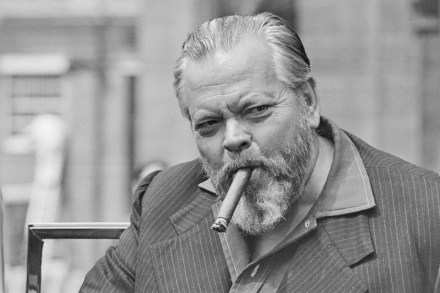
During his seventy years on Earth, and for much of the nearly forty years since he left it, Orson Welles has managed to rub people the wrong way.  Welles, who was born in 1915 and died in 1985, was plainly a genius: a theatrical impresario whose Mercury Theatre was legendary in its own day; a puckish conjurer whose War of the Worlds radio broadcast misled millions; and a so-called one-man-band who, like few filmmakers before him, combined the jobs of director, producer and actor in such masterpieces as Citizen Kane, Chimes at Midnight and F for Fake.  But this record earned him little credit among the naysayers who hounded him and told us to believe them rather than our lying eyes.

orson welles

The case for remaking great films

From our UK edition

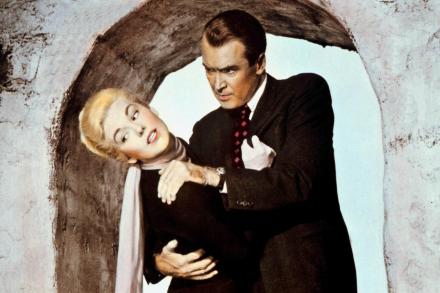
Afew weeks ago, news broke that Paramount was planning to embark on a remake of Alfred Hitchcock’s Vertigo with a starring role for Robert Downey Jr. You are forgiven if your reaction is one of deep scepticism. What can possibly be gained by remaking a film widely regarded as the apex of the art form? What director today can step into the shoes of the Master of Suspense? And who would ever mistake the star of Iron Man for Jimmy Stewart?  Gut reactions of this sort remind us of the scorn with which remakes in general are usually – sometimes unfairly – met. After all, remakes are considered by all fair observers to be inherently synthetic and unoriginal, right?

Confessions of a Sight and Sound voter

As a film critic and historian who's written for Sight and Sound since 2011, I like to think that the greatest films of all time are always on my mind, but, in truth, they were particularly on my mind last summer. Last July, I received the official word that I was among the select group of critics picked to partake the Sight and Sound critics' poll to decide the greatest films ever made; a survey the British magazine first convened in 1952 and has repeated on a once-per-decade basis ever since. In the weeks before my deadline to vote, I meditated on what constituted a great film with unusual intensity and self-reflection.

sight and sound

At eighty, Casablanca embodies Hollywood high style

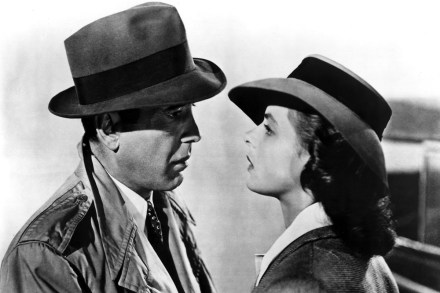
In considering what makes a masterpiece of film, the critical community has its shortlist of highly artistic favorites: Citizen Kane, Vertigo, Battleship Potemkin, the like. But in the hearts and minds of average moviegoers, another kind of picture has come to encapsulate “the big screen”: one with less aesthetic ambition, perhaps, but an exceptional dose of romance and style. For this set, Casablanca remains something like the main attraction. Eighty years ago this November, Warner Bros.

casablanca

Bullet Train is an unabashedly manly palette cleanser

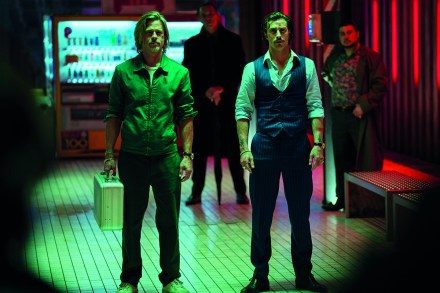
David Leitch’s new action movie Bullet Train is noisy, bloody, jokey, highly derivative and, in its plot machinations, positively Delphic. It has the character of a cinematic testosterone injection. Yet, in the Year of Our Lord 2022, when American mass media has been overtaken by a spirit of androgynous wokeness, this unabashedly manly flick works more like a palette cleanser. Based on the novel Maria Beetle by Japanese author Kotaro Isaka, Bullet Train stars Brad Pitt as an American assassin living in Japan. As the picture opens, the executioner has a run of bad luck and wants to get out of the whole shady business.

train

The delight of Only Murders in the Building

We live in an age in which everything sounds so grave. Our democracy is in peril! Covid numbers are going up! It’s a cause for rejoicing, then, that one of the best new series treats that most serious of subjects — namely, homicide — with such a deft and delightful touch. Hulu’s Only Murders in the Building, which was created by co-star Steve Martin and John Hoffman, expands the honorable tradition of the Thin Man series and Woody Allen’s Manhattan Murder Mystery, movies that used the murder-mystery format as a pretext for their sophisticated urbanites to poke around in other people’s residences and speculate wittily on who done it. The series wraps up its second season on Tuesday.

only murders in the building

Charlie Rose, comeback king

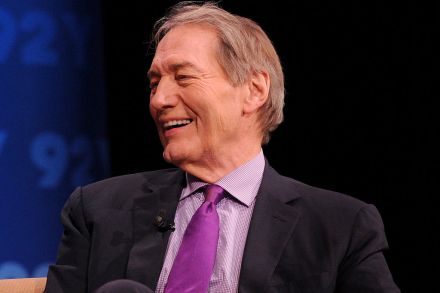
For some of us, Charlie Rose serves the same function as Proust’s madeleine. His eponymous public television interview program, which began airing in 1991, was a fixture of the pre-millennium media landscape, a halcyon age in which newspapers carried the news, Amazon was a mere purveyor of books, and “woke” referred to a state of wakefulness rather than political correctness. Such nostalgia augurs well for the carefully managed reemergence of the disgraced broadcaster, who has ended his exile with new conversations thrown up on his website, charlierose.com. But we’re getting ahead of ourselves. Five years ago, Rose — by then, also the co-host of CBS This Morning — first became the subject of sexual misconduct allegations.

Buster’s land stand

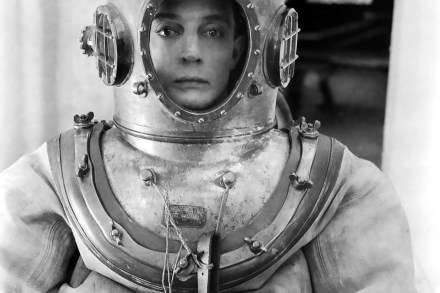
When Shakespeare wrote that “some men are born great, some achieve greatness and some have greatness thrust upon them,” the Bard could not have been thinking of Buster Keaton, who was born nearly three centuries after his death. Yet the idea expressed in that famous line from Twelfth Night — that some men guide their fate while others are controlled by it — carries a curious resonance for fans of the legendary silent performer known for his notably impassive, even indifferent comic persona in masterpieces including The Navigator (1924) and The General (1926). If ever there was a man on whom life, if not greatness, was thrust, it was the one they called the “Great Stone Face.

keaton

Richard Lester at ninety

No matter how many years have passed since they first hit American airwaves, or how many of its members have died, or how aged its surviving members have become, the Beatles will always be, in our minds, forever young. To a large extent, the public perception of John, Paul, George and Ringo as personifications of youth, zest and zeal was a byproduct of their classic faux-documentary musical comedy, A Hard Day’s Night, released in the summer of 1964, just months after their appearance on The Ed Sullivan Show. It comes, then, as something of a shock to note the ninetieth birthday this month of the film’s prodigious and gifted director, Richard Lester. The maker of the Beatles movies (he also directed 1965’s Help!) a nonagenarian? It can’t be! But so it is.

lester

Vacation time

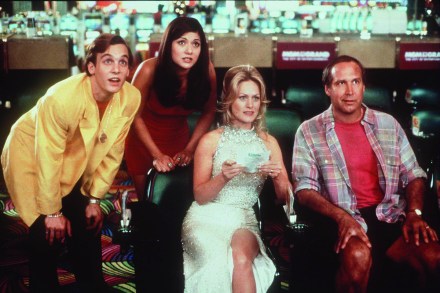
Americans are a vacationing people. We are those who mark the start of the summer with a ticket to a theme park, the end of high school with a tour of Europe and the commencement of retirement with a cruise trip. In fact, it is entirely fitting that the coronavirus pandemic first gripped the American consciousness thanks to reports of travelers marooned aboard cruise ships, or that, as virus cases at last start to flatline, many long for nothing more than for a few weeks at sea in the company of, say, Tony Orlando or Marie Osmond. Some would say that this vacationing spirit is an inheritance from our empire-making ancestors in Great Britain.

vacation

Fear thy neighbor

In an age of rancor, one thing we can all agree on is that it makes a certain amount of sense to fear the police. What other force in civil society is authorized to intrude on private life, and deny its benefits and freedoms, in quite the same way? It may be the law-abiding members of society who fear the police most palpably. While actual criminals carry knowledge of their own guilt, the innocent must live with the knowledge of how easily we could be wrongly accused, misidentified or railroaded. Alfred Hitchcock did more than any other popular artist in the last century to help form a certain image of the police in the public consciousness.

hitchcock