Spectator Life

Spectator Life

An intelligent mix of culture, style, travel, food and property, as well as where to go and what to see.

The strange allure of wine tinnies

Some years ago, on a trip up America’s Pacific Northwest, I spent a night in Portland in a hotel that was depressing in the way that not-quite-posh, not-quite-cool hotels can be. As part of its attempt to inject a sense of pizzazz into my cavernous room, there was a welcome pack whose starring feature was a can of Pinot Noir – the size and shape of a Diet Coke can, with a joke on the side about this being ‘soccer mom’ wine. The reference to hassled housewives ferrying their progeny about to games, desperate for surreptitious booze, depressed me further and I added ‘wine in tins’ to the list of vulgar American inventions I’d forever resist.

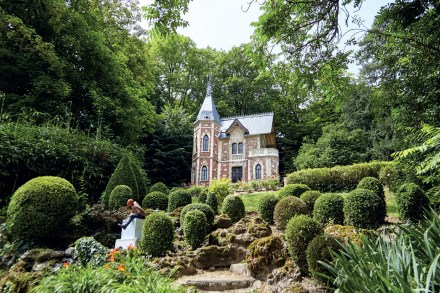
Can we know an artist by their house?

Show me your downstairs loo and I will tell you who you are. Better yet, show me your kitchen, bedroom, billiard room and man cave. Can we know a man – or woman – by their house? The ‘footsteps’ approach to biography argues that to really understand a subject, a biographer must visit his childhood home, his prep-school boarding house, his student digs, his down-and-out bedsit and so on through barracks, shacks, flats, garrets, terraces, townhouses and final Georgian-rectory resting-place. Walk a mile in their shoes – then put on their carpet slippers. So, to know Horace Walpole, we board the 33 bus to Strawberry Hill. For Henry Moore, it’s Hoglands and its cactus house. For Barbara Hepworth, St Ives and sculptor’s dust.

The Britishness of Bordeaux

Burgundy or Bordeaux? We were discussing that unending question during dinner over the weekend. I think that there is only one answer: ‘Yes.’ ‘But which, you clot?’ ‘Either. Better still, both.’ It is so much a matter of sentiment, and of which great bottle you have been lucky enough to drink most recently. But there is an argument, which is nothing to do with quality, that Bordeaux – claret – is more British. This is as true in North Britain as in England. There are various versions of a well-known piece of doggerel. My favourite is: ‘Proud and erect the Caledonian stood / Auld was his mutton but his claret good.

The case against Ulez – by a cyclist

Whether you’re more afraid of the forces of order or the forces of chaos is generally a matter of disposition. A natural anti-authoritarian who despises being told what to do – especially when told to do something stupid – I’m more horrified by excesses of order. Granted, my greater fear of the state may simply betray that I’ve largely lived in an orderly western world, and after a few dog-eat-dog nights of mayhem and carnage I might change my tune. Nevertheless, during the Covid lockdowns, for example, I was less distressed by the odd neighbour who dared to invite a friend to tea than by most Britons’ blind, bovine compliance with an economically self-destructive, socially disastrous, politically despotic and medically idiotic regime.

Bud Light fought the blue-collar culture war – and the war won

If Budweiser is the King of Beers, as its slogan claims, then Bud Light has long been the Queen. Launched over 40 years ago, in 1982, and now the world’s most successful low-calorie beer, ‘B Minus’ occupies a funny sweet spot in America’s sprawling consumer conscience. Also known as ‘redneck soda’, ‘frat water’ and ‘turtle jiz’ – Bud Light is a product that conveys a mass-marketable sense of irony. That’s what ad men dream about.   But then, two months ago, Anheuser Busch, Bud’s parent company, did something stupid. Some marketing whizz decided it would be super-provocative to ‘partner’ – as marketing drones like to say – with the trans influencer Dylan Mulvaney.

In defence of the boozy office party

I’m not big on nostalgia – if the past was so great, how come it’s history? - but I allowed myself a smirk of reminiscence on reading recently that Ann Francke, chief executive of the Chartered Management Institute (‘a professional body focusing on management and leadership’) has put the damper on the age-old tradition of getting blotto at work parties. Francke told the BBC that while hanging out after-hours with workmates is ‘a great team-building opportunity’, managers have a responsibility to keep inappropriate behaviour in check. ‘That might mean adding additional activities alongside alcohol, limiting the amount of drinks available per person or ensuring that people who are drinking too much are prevented from acting inappropriately towards others,’ she said.

The joy of cheese rolling

It’s unnerving being surrounded by a crowd in the woods. You can hear people but only glimpse their limbs or faces through the leaves. It triggers something primordial, similar to the feeling of being watched. Ideally, someone with a big strimmer would have given Cooper’s Hill a good going over before the cheese rolling. But cheese rollers don’t concern themselves with ideals.  My friends were shocked by the brutal pitch of the hill. Could someone really hurl themselves down that? On the last Monday of May, and for reasons lost to time, a wheel of Double Gloucester is thrown down the hill and a group of runners throw themselves after it. The first to reach the bottom gets the cheese.

Do we still need Pride Month?

With Pride Month beginning tomorrow, how proud are you of your sexuality? As a white cis-gendered male, I am frankly a little embarrassed about mine. I mean, it’s not exactly cool to fancy the opposite sex these days, and many of us hetero-normies have become increasingly wary of appearing ‘inappropriate’ when making a move on someone we like the look of. So don't expect me to be parading my vanilla-flavoured proclivities through central London any time soon. What would I even wear to signal hetero-pride – baggy cords and a neatly tucked-in shirt? That said, you might well spot me at some of this year's shenanigans; after all, the organisers certainly know how to put on a show.

I loved Succession. I’m glad it’s over

There has always been something fitting about the idea that Succession will be the last great show on television. Logan Roy, the patriarch, is old media made flesh, slowly declining into debt and dementia. The show revelled in the fact that none of the next-in-line knew how to replicate him.  From its premiere in 2018 to its last episode this week, HBO’s dynastic drama stood out from a crowd of forgettable spin-offs and interchangeable franchises, amassing countless awards and millions of viewers.  Succession was tragically hilarious and hilariously tragic Succession fast became appointment viewing: you couldn’t actually wait for the next episode to land.

How to join the beach hut brigade

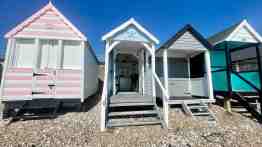
They are expensive to maintain, plagued by tourists and influences seeking picture-postcard holiday snaps and cost more per square foot than houses in some of London’s most affluent neighbourhoods – despite lacking basic amenities such as running water. And yet such is the allure of the traditional seaside beach hut that, amid an otherwise shaky housing market, prices for these modest timber shacks just keep rising.  According to research by Moverly, which provides digital home information packs, the average asking price of a beach hut in England stands at £49,290 – up 43 per cent in the past year. In Dorset prices are up 101 per cent to more than £120,000.

Is it time for the £100 note?

Thanks to the recent spike in inflation, never have indisputable luxuries such as Sharwood’s mango chutney or Anchor butter quite so tested the domestic purse strings. The sad truth is, however, that it’s much worse than you think. Because unlike the watched kettle, the frog of devaluation hasn’t just arrived at a nice simmer, it’s begun to boil over. And mango chutney at £4.10 a jar is but the tip of the iceberg. For the long view consider the BBC’s new drama, Ten Pound Poms, about Brits who emigrated to Australia in the 1950s for the princely sum of a £10 processing fee. These days the closest you’ll get to Australia for a tenner is a four-pack of Castlemaine XXXX – and there probably won’t be much change from that either.

Why The Little Mermaid is bad news for cinema

It is disappointing to learn that, after critics and cynical audiences everywhere had sharpened their fish knives in the expectation of the new live-action Little Mermaid film being a catastrophic disaster, early reviews have suggested that it is… fine. It attracted a great deal of attention, and some criticism, for the casting of the black singer-actress Halle Bailey in the lead role of Ariel, on the grounds that sea-dwelling mermaids must, after all, be white-skinned redheads, as she was in the seminal 1989 animated film. Yet Bailey’s performance has been universally acclaimed, with her delivery of 'Part of Your World' being singled out for particular praise. The reason why so many are disappointed that we do not have a Cats­­-level disaster on our hands is twofold.

The architecture of the Elizabeth Line

There was much to celebrate last year on the architecture front – the end of the pandemic brought the opening of long-delayed projects ranging from the Academy Museum of Motion Pictures in Hollywood to the Taipei Performing Arts Centre in Taiwan. But there was one construction project that stood head and shoulders above the rest in size and ambition, and that was the transport link formerly known as Crossrail.  The Taipei Centre may have been seven years late and the Academy Museum (now home to Judy Garland’s red slippers and R2D2, among other artefacts) more than a couple of decades in gestation, but that is nothing compared with London’s Elizabeth Line, which was first proposed in the 1940s.

How to make your own burger buns

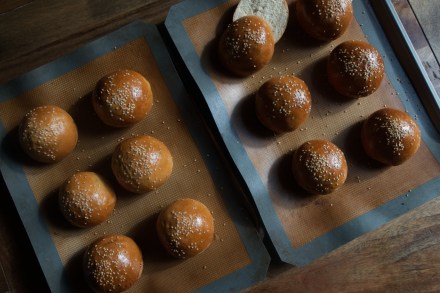
Do you ever find yourself holding forth on a topic you hadn’t realised you cared about? You know, someone asks you an innocuous question in passing about the merits of slow cookers, or the best way to grow cabbages, and before you know it, 20 minutes has passed and you're still grandstanding. There are a few topics that have crept up on me like this during my life: I have found out that I feel extremely strongly about pyjamas (pro), low-calorie cooking spray (anti) and the TV show Stars in their Eyes. And, it turns out, burger buns. I truly didn’t believe I had anything approaching an opinion on burger buns. But the moment I turned my mind to it, I realised that, to the contrary, I had very strong opinions on this apparently benign subject. So what is required of a burger bun?

A 6-1 tip for the Temple Stakes

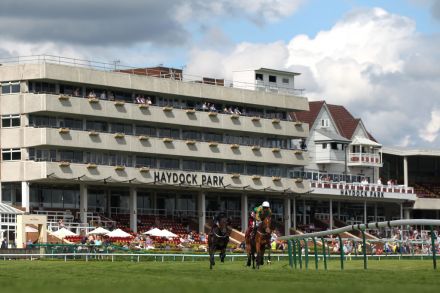
James Tate is an accomplished young trainer who has won several top races in his time but landing a Group 1 contest is still missing from his CV. That will undoubtedly change at some point and the horse currently in his care most likely to achieve it for him is ROYAL ACCLAIM. Aged four, this likeable filly has only had five races in her career, which means there is still plenty of scope for improvement – particularly as the Newmarket handler has been patient with her to date. Tomorrow (Haydock 3.30 p.m.) Royal Acclaim will line up for the competitive Group 2 Betfred Temple Stakes. I am usually loath to tip horses which have not run this season but I will make an exception for this filly.

How to combine city break and safari in Kenya

Nairobi is blossoming. With its vibrant art world, nascent farm-to-fork restaurant scene and unique hotels, east Africa’s biggest city is increasingly on the radar of international travellers. ‘We’re definitely seeing people wanting to stay longer in Nairobi,’ says Rose Hipwood of the Luxury Safari Company. ‘It’s absolutely a cosmopolitan city now. Rather than flying in and flying straight out on safari, people are wanting to extend their stays and see what restaurants, bars and museums there are.’ The country's safari offering is developing, too. Away from the crowds of the Maasai Mara, lesser-known hotspots are finding a following – devoid of people but brimming with nature.

The case for culling friends

Since I’m so old – 64 this summer – Facebook has always been my preferred form of social media. But if I was a softer soul there’s a feature on it that might really tug at my heartstrings: 'See your memories.' Because many of mine – going back more than a decade – are now blank of any actual memory: 'Content not available.' I know what these were: photographs of me with ex-friends (they’d always take the selfies, as I don’t have a camera-phone) who I’ve fallen out with and who have since deleted the photographs. In 90 per cent of cases, I’d say that I was the one who caused the falling-out.  If I’m being honest, I don’t miss any of them.

In celebration of Gilbert and George

I'd always questioned the creative genius of self-confessed 'living sculptures' Gilbert and George. Their dogged determination to be seen as 'different' felt archly self-conscious and not particularly interesting. Like so many fly-by-night avant-gardists of the 1960s, the duo's 'originality' tended to hang on hoary old controversies such as scatological imagery, sex and nudity – hardly revolutionary even back then. But listening to the pair's touching interview with John Wilson on BBC Radio 4's This Cultural Life recently made me reassess their contribution not just to art, but to the gaiety of the nation.

Confit: the best (and most delicious) way of cooking duck

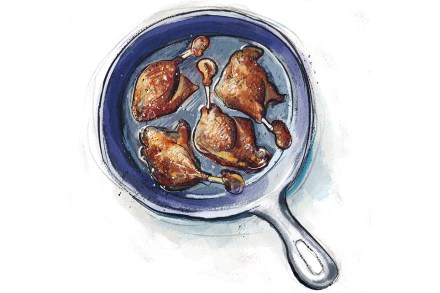
Of all the myriad ways of preserving, confit always strikes me as wonderfully improbable. The ability to preserve meat just through cooking it slowly in its own fat feels particularly wild. And the fact that this simple, unlikely process makes the meat more tender, more flavoursome than any other way of handling it only adds to the magic. Of course, if I pause for a moment and engage my brain, it’s very obvious why it’s such a successful method: most preservation relies on salting to reduce water levels, or excluding oxygen from the preserved food, both of which prevent bacteria from growing. Duck confit takes a belt and braces approach. The duck is salted (and sometimes spiced) for 24 hours – and once cooked, it is entirely submerged in fat, which protects it from air.

Wuthering Heights in Devon: the Pilchard Inn, Burgh Island, reviewed

The Pilchard Inn sits at the entrance to Burgh Island, a minute tidal island off the coast of south Devon. The island is home to the Burgh Island Hotel, an eerie Art Deco masterpiece built by the son of a screw mogul, which dominates the view from Bigbury-on-Sea like Coney Island: it is more apparition than hotel. The hotel is faded, fascinating, plated in Art Deco and decorated with vast screws. I wonder if this is a joke: there is little information about the early years of the house, which vibrates with depravity and things unsaid. To compound the mystery, Agatha Christie wrote here in a shack by the sea, eating cream from a tub as she murdered people in her head, and wrote it down for money. The hotel inspired And Then There Were None and Evil under the Sun.

Is Uefa just useless – or is it worse than that?

It’s not clear how many readers of this journal will be affected, but anyone planning a stag weekend in Prague ought to steer clear of the first week of June. That’s when the city hosts the Uefa Conference League final at the 20,000-capacity Eden Arena, home to Slavia Prague. The finalists are West Ham – average home gate a 60,000 sellout – and Fiorentina, average gate 25-30,000. Which raises the question: is Uefa just utterly useless or is it worse than that? This game could have filled Wembley twice over; now it’s like holding the coronation in a parish church Both finalists have been allocated 5,000-odd tickets, with the remainder going to assorted sponsors and what is laughably known as the ‘Uefa family’. This is insane.

Chelsea Flower Show: the winners, the losers and the weeds

If you’d read the advance coverage of this week's Chelsea Flower Show, you might be forgiven for thinking the entire event had been choked by bindweed, dandelions and nettles. Yes, there are some show gardens that use plants commonly called ‘weeds’ as part of their designs, but the show gardens this year really aren’t radically different to the traditional Chelsea model. And regardless of the planting choices, there are some real gems to be seen. The highlights The RHS’s Best in Show award went to Charlotte Harris and Hugo Bugg's magnificent Horatio’s Garden design. This is the eighth garden provided by the charity to hospital spinal injuries units across the country, and the first full show garden that it has sponsored.

The inconvenient truth about heat pumps

In Britain’s battle to cut carbon emissions, the government sees heat pumps as a key weapon. Unveiling the latest energy efficiency plan in March, energy secretary Grant Shapps doubled down on Boris Johnson’s offer of a £5,000 grant for anyone willing to install one. These smart bits of home technology work by transferring thermal energy from the air, ground or water. They are powered by electricity, which can be generated from solar or wind power, providing cheap and fossil fuel-free heating and hot water. So what's not to like? The concept is nothing new.

Save our cheese sandwiches!

Sad things, cheese sandwiches, especially in their most basic form. Most would add a garnish: pickle, tomato and onion are the most popular. Cowards. The point of a cheese sandwich is its beigeness. This is fuel, not food. Consoling sad corporate workers at their desks. Rows upon rows of sandwiches on Tesco shelves: ‘Cheese – no mayonnaise.’ No mayonnaise is important. That would be too much fun. Everyone knows how the Earl of Sandwich repurposed bread and beef and started an eating revolution. No one really knows who first put cheese into the mix, however. The first mention seems to be from William Shakespeare’s The Merry Wives of Windsor, where Nym refers to a dish of ‘bread and cheese’. It’s hard to tell whether he meant a sandwich, of course.

Blooming expensive: the growing cost of a garden

As Cicero is often (mis)quoted as saying, if you have a garden and a library, that is all you need. And since the pandemic, our love of a garden has only got greater. Yet these days it’s often less about getting your hands dirty in the flowerbeds and more about having somewhere to kick back and enjoy a good book or drink rosé with friends. But while visitors are swooning over raised beds and begonias at the RHS Chelsea Flower Show this week, the price of having a garden of one’s own is higher than ever – especially if you want a generous one.

Why now is the time to visit Aldeburgh

I have been reading Ronald Blythe’s Next to Nature which came out in October, just a few months before the great man’s death aged 100. And so a weekend holiday in Suffolk was calling to me. I went to Aldeburgh, on the coast, north of the river Alde. The town appears to be thriving – full of bustling cafés and London money. It is fashionable and chic. In many respects it is a world away from Blythe’s Akenfield. But there is much here to charm you. I lingered by a wonderful second-hand bookshop, Reed Books 4, its window display with Peter Kent’s Fortifications of East Anglia, George Ewart Evans’s The Farm and Village and Hugh Barrett’s recounting of a rural Suffolk morning in Early to Rise. Is this what Scruton meant by oikophilia? Here was heart-warming local pride.

Killers of the Flower Moon could be Scorsese’s best film yet

There are a few things in this world that you can truly count on: death, taxes and Taylor Swift’s love life attracting headlines. To their number can be added the certain knowledge that, when Martin Scorsese collaborates with either of his two muses, Robert De Niro and Leonardo DiCaprio, the results are somewhere between fascinating (Gangs of New York; New York, New York) and stone-cold cinema classics (Goodfellas; The Wolf of Wall Street). Yet apart from a droll promotional film for a Macau casino (The Audition), the three men had never worked together. This has, finally, changed, as the trio unite for what looks like another Scorsese crime classic in the form of the three-and-a-half-hour epic Killers of the Flower Moon.

It’s time to ban young children from restaurants

When you have small children just getting them out of the door can be traumatic. Finding and applying each shoe can be enough to provoke a tantrum – and not just in the parent. And no, they can’t bring their Power Rangers swords, because we are going out to lunch and everyone knows that plastic swords and restaurants don’t mix.  Eventually you will arrive at the restaurant, although it will 20 minutes later than the booking. As you push the buggy inside, the establishment falls quiet like the Slaughtered Lamb in An American Werewolf in London. There’s a scrape of chairs – a pause – then the chatter resumes. But in that moment everyone is thinking the same thing: please don’t sit next to us.