Spectator Life

Spectator Life

An intelligent mix of culture, style, travel, food and property, as well as where to go and what to see.

The trouble with supermarket self checkouts

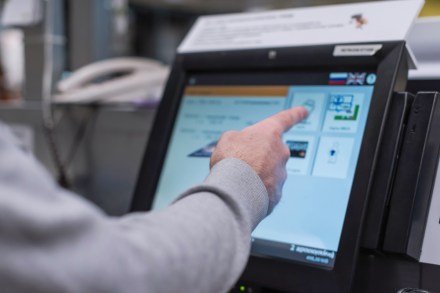
Finishing my latest mini-shop at my closest mini-supermarket, I witnessed something I hadn’t seen before. A couple who had used the self-checkouts were stopped at the exit by a staff member who asked to see inside their (store-branded) plastic bag. The customers obliged without demur and a half-smile sent them on their way. But it could have been different. Recent reports suggest strongly that aggression towards staff at supermarkets is on the rise.  Whatever the reason for the check, I have to confess – as an observer – to a tiny frisson of satisfaction. This was partly that someone was checking; I have seen people quite brazenly leave past the machines without paying, which means higher prices all round, does it not?
A beginner’s guide to buying a guitar

Thinking of adding another six strings to your bow? You wouldn’t be alone – lockdown inspired plenty of people to learn the guitar. The trend may have lessened as people return to the office, but it has still meant UK and European sales for the guitar maker Fender are £5 million higher than before Covid. The company say that almost half of its guitars are sold to people playing the instrument for the first time. Should you follow their example? The short answer is ‘yes’. The same instinct that gets you holding a tennis racket in front of the mirror means that when you progress to the real thing, the one you want is a Fender Stratocaster. Buddy Holly played one, which was why Eric Clapton wanted one. And after Eric Clapton played one, every guitarist since has wanted one.

An ante-post wager for the Cambridgeshire

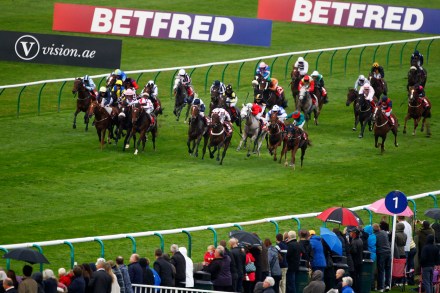
My beloved late father, who was responsible for my love of horse racing, made an annual attempt to land the so-called ‘autumn double’: the two big Newmarket’s handicaps run towards the tail-end of the Flat season. For the best part of half a century, I have followed his lead with a fair degree of success in both contests but never landing the double at the same time. The duo of races involved are the Cambridgeshire, a ‘cavalry charge’ run over a mile and one furlong on Newmarket’s straight course, and the Cesarewitch, run over twice that distance at the same track. Because of their large fields, both races are usually run at a fast pace and so it is essential to have horses that are true stayers over the very different distances of both races.

Why children shouldn’t go vegan

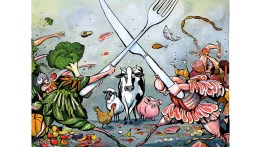
In an attempt to sell vegan diets to parents and children, Team GB, recently partnered with Birds Eye’s vegan food brand Green Cuisine. The programme will be delivered in primary schools across the UK. Now, the Guardian is reporting that hundreds of academics are urging British universities ‘to commit to 100 per cent plant-based catering’. Why? You guessed right: ‘to fight the climate crisis’.  Some reports suggest that as many as one in 12 British parents are now raising their children vegan Research shows that veganism is intimately associated with nutritional deficiencies. A vegan diet negatively affects a developing brain, whether child or late adolescent.

We need an English folk revival

The cellist Sheku Kanneh-Mason recently expressed a preference for ‘folk tunes’ at the Last Night of the Proms over the singing of Rule Britannia! – and, whatever one may think of jettisoning Thomas Arne’s celebrated anthem of British liberty, Kanneh-Mason’s suggestion raises the question of what exactly English folk music is. England is not the first country that springs to mind when we think of a nation for whom traditional music is central to identity. The importance of folk music to the self-understanding of many countries in Eastern Europe is so prominent that we encounter their traditional melodies and instruments annually in more or less embarrassing entries to the Eurovision Song Contest.

Is this the end of Burning Man?

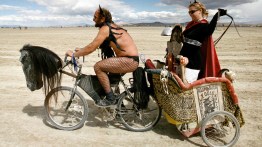
In the summer of 1986, two men, Larry Harvey and Jerry James, built an eight-foot-tall wooden effigy of a man and set fire to it on a beach in San Francisco. The event – an impromptu bonfire attended by several dozen of their closest friends – spawned what has since become a cultural phenomenon: an event seen by some as the ultimate rejection of capitalism, and by others as a giant drug-fuelled knees-up in the desert.  I’ve noticed the changes in the six years that I have been going to Burning Man Thirty-seven years on, Burning Man still culminates in the razing of a wooden sculpture, but since then both ‘the man’, and the event itself, have grown exponentially.

Click bait: confessions of a Lego addict

The empire of Lego has many dominions and protectorates, with every year, it seems, new territories to conquer. There are theme parks; there are films of excruciatingly ironic sophistication; there are competitions to make bizarre tableaux that grip nations; there are highly controlled TV documentaries about life at the heart of Lego in Denmark. I don’t feel my life will be complete until I’ve spent a week constructing Hagia Sophia out of plastic bricks It is an astonishingly powerful brand and its growth has been extraordinary to watch. Many years ago, it was just one building toy among many, like Meccano or Fischer Technik. Now, it is supreme. Some tremors were, however, observed last week when a plunge in profits was reported.

Is your pet killing the planet?

As a travel writer, I used to joke about the so-called ‘downsides of the job’. The stupidly complex shower-fixture in the five-star Maldivian Paradise. The unexpected commission to go to Denmark in winter. The vague but real sting of disappointment upon realising that the free hotel pillow-chocolate is actually a mint. But in recent years a genuine and troubling downside has arisen. When I meet someone and tell them what I do, the listener often winces, perhaps with a hint of moral superiority, and says something like: ‘Don’t you feel guilty about your carbon footprint? You’re killing the planet!

TikTok is giving our children Tourette’s

Shortly after the first Covid lockdown ended, doctors began to notice something so strange that at first they struggled to explain it. There appeared to be a sudden rise in the number of children being referred with Tourette’s syndrome. Tourette’s is a rare neurodevelopmental disorder characterised by repetitive, involuntary movements or sounds called ‘tics’. While mild tics are relatively common in children, specialists suddenly started seeing large numbers of children displaying complex and debilitating symptoms. Dr Alasdair Parker, president of the British Paediatric Neurology Association, said in 2021: ‘The most severe tics disorders I have seen over the past 20 years have all presented in the last five months to my practice.

A perfect slice of Calabria 

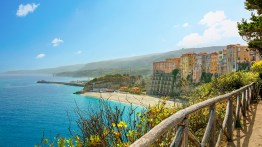
The Romans wrote the history, or at least the myths. But long before Romulus murdered Remus, the Mediterranean – the Great Sea – was the principal conduit of civilisation. The Greeks spread their wings across the wine-dark seas, to the extent that even later Romans accepted that much of southern Italy was actually Magna Graecia. The Greek settlements included the city of Sybaris. Although it was destroyed around 2,500 years ago, it has passed into the language. Sybaritic – the very word is expressive – denotes ease and pleasure, the beauties of nature amid the adornments of art and architecture: champagne and dancing girls. Sybaris is in Calabria, the toe of Italy. In more recent times, history has not been kind to the region.

The tyranny of the tidy

A few years ago, James Delingpole and I were two-fifths of ‘The Manalysts’ a clique of agony uncles employed by a women’s magazine. The idea was to provide five answers to each problem from five disparate standpoints. James was the trenchant intellectual, I was (supposedly) the metrosexual adman and the other three were a practising psychotherapist, a blokey builder from Essex and a gloriously camp hairdresser. The great fallacy about untidy people is that we’re always losing things A fair few of our correspondents were, unsurprisingly, complaining about a boyfriend or husband’s untidiness but I remember being struck by how many wrote in to bemoan the very opposite – the strain of living with someone tyrannically tidy.

A guide to London’s hotel restaurants

Hotel restaurants have come a long way since they were dingy add-ons geared towards a captive audience, once the preserve of holidaymakers too lazy to leave the lobby. London is in the midst of a literal feeding frenzy of swish new hotel restaurant openings. The whole ‘dining experience’ – what is dining if not an experience? – has become a way for hard-pressed hoteliers keen to make a bit of extra cash. My dream has always been to live in a grand London hotel with every whim catered for. The dowdy old Dorchester, once a second home to reprobates such as Burton and Taylor, always held a particular appeal, even more so now that the hotel has finally received the facelift she deserves and with it the launch of two celebrity chef offerings.

How much rum can you drink on St Kitts?

It all proved too much for Mrs Ray. We were in St Kitts and Nevis for a week-long Caribbean break and on the flight over I’d wondered aloud how early each day it would be acceptable to start on the rum. I soon got my answer.  Having misguidedly checked in to the St Kitts Marriott Resort – a vast, half-empty hangar of a place complete with plump, elderly Americans whirring by on mobility scooters; an over-priced restaurant serving only that which was deep-fried; and a deserted poolside bar peddling watery rum punches and a casino that smelt of damp and despair – our spirits were further flattened by finding that the restaurant we’d been recommended for dinner and to which we’d walked in the driving rain was shut.

What’s wrong with calling food Israeli?

The service was stylish, the menu superb, the vibe effortlessly chic. This was the Coal Office, one of London’s best Israeli restaurants, situated in the old Victorian goods yard at King’s Cross. My fiancée and I dined there last week. It was a blast. But something didn’t feel right.  Fish and chips was invented by an Ashkenazi Jew, and we all like a good kedgeree or a korma, yet British food is no fiction In many ways, you couldn’t find a more Israeli establishment. Weeks earlier, In Jerusalem, I had taken my children to the Coal Office’s sister restaurant, Machneyuda. The same type of stuff was on the plate: Sephardi spices, chickpeas and aubergines, matched with Ashkenazi bread and fish. The atmosphere was similar, too.

Alone in Dartmoor’s haunted woods

Wistman’s Wood is one of the UK’s last remaining temperate rainforests. It came within Prince William’s purview after he inherited the Duchy of Cornwall, the largest privately owned portion of Dartmoor National Park. He has since visited the site, a seven-acre strip of oak woodland on the eastern slopes of the West Dart Valley, posing for photos in a waxed jacket and tweed cap. Wistman’s is a unique habitat. It has a number of rare mosses and lichens which attach themselves to and around its stunted, gnarly oaks and the large boulders dotted among them. But it is as much its place in folklore as natural history that makes Wistman’s so important.

Inside the Glastonbury home of Mulberry’s founder

Roger Saul founded Mulberry in 1971. He created their now iconic range of bags, belts and purses, but was ousted from the designer label’s board in the early Noughties. Undeterred, he reinvented himself as the purveyor of organic spelt cereal and flour brand, Sharpham Park. His range of products is de rigueur on every health-conscious Waitrose shopper’s weekly list. There have been some intriguing historical discoveries over the past 45 years Saul, now 73, can put many of his triumphs in both fashion and food down to Abbots Sharpham, his 268-acre Somerset estate, just outside Glastonbury, made up of a Grade II* Listed 15th-century eight-bedroom main house, two cottages, a deer park, indoor swimming pool – and field upon field of spelt.

Should I become a microdoser?

Microdosing, the practice of taking a very small amount of a mood-enhancing drug, has been happening in America for a long time. But in the UK, microdosing was, until recently, a fringe activity. Now everyone – teachers, techies, lawyers, hedge fund managers and hipsters – is doing it. Microdosing is moderation in pursuit of moderation. It’s the perfect leisure activity for our health and safety obsessed times It seems like half of London is stoned on something. You’re having a perfectly normal conversation with someone who seems perfectly normal – and then they mention, in passing, that they’ve been microdosing either mushrooms, ketamine, LSD or some other weird drug.

The irritating rise of home renovation influencers

Fifteen years ago there was no such thing as a social media influencer, but fast forward to 2023 and there are now an estimated 50 million full-time ‘creators’ worldwide. It isn’t hard to understand the appeal; no nine-to-five, no domineering boss, no skills, experience or talent necessary. Little input for potentially incredibly high returns, especially if you successfully find a niche.  I cannot think of anything less appealing than broadcasting images of where I sleep to the world A cleanfluencer from Northern England went from working at M&S to sharing her cleaning tips full time which led to a book deal with Penguin; Live, Laugh, Laundry (I kid you not).

Two ante-post tips for the Ayr Gold Cup

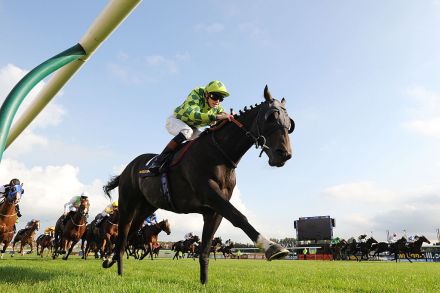
The last of this season’s big six-furlong sprint handicaps takes place in Scotland three weeks tomorrow. The Virgin Bet Ayr Gold Cup is always a competitive affair with up to 25 runners spread across the course, often splitting into two distinct groups on the near side and the far side of the stands. Last year, the race was won by the hugely-admirable Summerghand at the age of eight. This wonderful old warrior has been at the peak of his powers again this season winning his most recent race at York and being runner-up before that in the William Hill Great St Wilfred Handicap at Ripon. He will surely return to Ayr on 23 September to try to defend his crown and he could well do it off a lofty rating of 107, including a penalty for his York win.

I watched society collapse at Stansted Airport

As I gazed upon the first circle of hell, otherwise known as Stansted Airport, I felt as though I was witnessing a microcosm of everything that has gone wrong with our hapless nation. Thousands of desperate flyers were left stranded across the UK earlier this week after what appeared to be another air traffic control cock up. The utter confusion seemed to reflect the growing ineptitude inherent in so many of our institutions, where despite huge leaps in technology, nothing works, no one is accountable and no one cares. As the delicate tendrils of civil society withered around me, the thing I found most unnerving was the reaction of my fellow travellers.

The all-American roots of the Moscow Mule

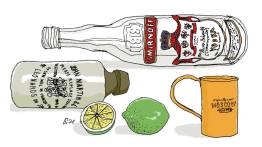
If called upon to declare the seven greatest cocktails of all time – a Magnificent Seven, as it were – what would be your line-up? The struggle is less in naming seven than in sticking to so few. The ubiquitous gin and tonic must be on the list, of course, along with the Old Fashioned. And surely the Bloody Mary deserves a place… but can the Bellini be left out? And is it legitimate to include not one but two brunch cocktails, when we haven’t even mentioned the mighty Ms – martinis, mojitos, margaritas and Manhattans? We’re already past seven, and what about the whisky sour, the Negroni and the Long Island iced tea?

Flavour of the month: September – Beyoncé, Gaddafi and Dr. Seuss

This month’s dose of trivia and anecdote sees a Yorkshireman insulting an England cricketer, the young Beyoncé training her voice in an unusual way, and Keith Floyd taking revenge on a table of diners who’d made one of his waitresses cry... All three female Prime Ministers of the UK have had the same initials, albeit one of them with the order reversed 1 September 1969 – Muammar Gaddafi seizes power in Libya. He subsequently abolished all military ranks above his own one of Colonel, because he was fearful of people launching a coup against him. 2 September 1666 – The Great Fire of London breaks out. It famously started in a baker’s shop on Pudding Lane, which might lead you to assume that the lane was named after the shop.

My fight to get screens out of schools

It was gratifying to see the recent Unesco report recommending moderation on the topic of tech in the classroom. I do hope the Department for Education, Ofsted and every school head in the country has read it. Britain seems to have submitted to the tidal wave of digital learning without so much as a minnow of doubt. The switch to online lessons during the lockdowns should have been temporary, an emergency measure – not something we then accepted wholesale. Personally, I find the sight of 26 bright faces glued to 26 bright screens for lesson after lesson indefensible. The argument that these platforms are ‘adaptive’ is unpersuasive – a good teacher is adaptive.

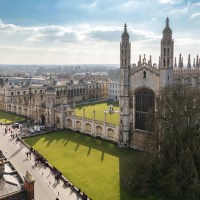
The Oxbridge Files: which schools get the most pupils in?

Oxford and Cambridge have released figures showing how many offers they gave to pupils from schools in the 2022 Ucas application cycle. We have combined the figures in this table. It shows how well state grammars and sixth-form colleges compete with independent schools. Over the years, both universities have increased the proportion of acceptances from state schools: 69 per cent, up from 52 per cent in 2000. Of the 80 schools, 33 are independent, 26 grammar or partially-selective, 18 sixth-form colleges and three are comprehensives or academies. (Schools are ranked by offers received, then by offer-to-application ratio. If schools received fewer than three offers from one university, this number has been discounted due to Ucas’s disclosure control.

The hidden private school fees

Are you totting up the cost of school fees? Are you turning your piggy bank upside down, white-faced? Yes, the cost of private education is the ultimate first-world problem. But even among the ‘haves’, some are luckier than others. The global super-rich pay school fees from lavish earnings or trust funds. The rest of us, having failed to take the elementary precaution of being (or marrying) a hedge-fund manager, must save up. The financial pressures on middle-class families can be gruelling.  ‘Overseas trips are crippling. Why can’t they tour to Ipswich?’ fumes a father As a rough starting figure, a recent newspaper investment advice column told a young couple to budget for private school fees at around £30,000 a year.

The sex education scandal

This summer an independent panel of experts assembled by the Department for Education will assess the state of Relationships and Sex Education (RSE). And what a state it is. Another lesson plan asks children to consider whether ‘virginity is made up by society’ Now compulsory for all secondary-school pupils, RSE is authorised by recklessly loose government guidance, delivered by an unregulated industry and influenced by radical gender studies academia. There are worrying cases of third-party sex education providers handing schools lesson plans on wildly age--inappropriate topics or pushing controversial ideas about gender. More worrying still, as I discovered first hand, concerned parents do not always have full access to what their children are being taught.

What’s in a school nickname?

‘Have you met Sperm?’ a friend from Westminster School asked me at a teenage party once. Sperm was a charming, pretty, confident girl but, still, I didn’t feel quite ready to use her startling nickname on our first meeting.   My own nickname – Mons, Latin for Mountain or Mount – seemed unadventurously fogeyish by comparison. I didn’t pass it on to Sperm.   Old school nicknames can be fantastically rude – but the ruder they are, the more affectionate Old school nicknames can be fantastically rude – but the ruder they are, the more affectionate. Sperm happily responded to the nickname – and her friends used it in an utterly friendly way. They had long detached the word’s meaning from its use as a name.

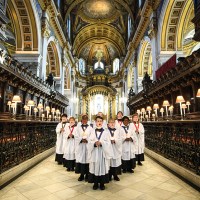
Why are cathedrals cutting ties with choral schools?

There’s worrying news for all who care about the incomparable cultural phenomenon that is the singing of choral evensong in British cathedrals every day of the week. Canterbury cathedral announced in March that it’s cutting ties with its local independent choir school, St Edmund’s, ending a happy relationship that has lasted for 50 years. St Edmund’s was only informed about the end of the contract a few days before the public announcement.  If these small powerhouses of excellence are lost, the nation will be culturally the poorer for it From now on, Canterbury’s choristers will be drawn from any and all local schools, and they will sing just three services each per week.