Spectator Life

Spectator Life

An intelligent mix of culture, style, travel, food and property, as well as where to go and what to see.

Confessions of an English teacher abroad

The English teacher abroad is a generally peripatetic animal. He moves somewhere for a year or two and then gets bored, runs out of money or fathers an illegitimate child before moving along. Meet him and he has a thousand stories about Mexican border guards, Thai prostitutes and Russian oligarchs. Enjoy the conversation. He won’t be there for long. The good Japanese schools didn’t want a random English kid with no experience Not me, though. This weekend marks ten years since I moved to Tarnowskie Góry in Poland. Tarnowskie Góry is an hour from Katowice, in Upper Silesia. It’s a charming town of about 60,000 people, built round a historic silver mine and ringed by forests.

The previous lives of London hotels

Some of London’s best places to stay are buildings that used to be something else altogether. Join us as we examine the London hotels with fascinating previous lives … The NoMad  Not enough hotels have their own museum. The NoMad does. It’s set in what used to be the Bow Street magistrate’s court, where the likes of Oscar Wilde and Dr Crippen were committed for trial. It has skilfully reinvented itself from being a working court as late as the early 1990s – complete with grim-looking holding cells and even a drunk tank – into one of the city’s most stylish and elegant luxury hotels. Designed by the New York architects Rowan and Williams, it manages to marry Manhattan chic with British eccentricity.

The simplicity and joy of recorded conversations

Recently I stumbled across a file of conversations I’d recorded with my seven-year-old son Frank back when he was four. Topics include his travels through wormholes, why he finds planet Earth ‘boring’, the tragic story of how his ‘first family’ died and how he got his ‘laser eyes’. It was only by listening to these voice notes three years later that I understood just how precious audio recordings are, and also how under-used. The conversations I taped illustrate the nuances of Frank’s four-year-old self more vividly than any photo or video could. Anyone attempting to write fiction should take note of the power of audio – conversation and voice are how character is built. A physical description tells you relatively little.

The murky world of bloodstock agents

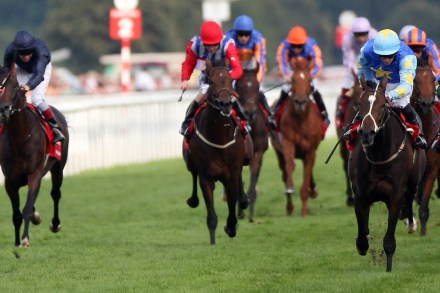
Top owners are quitting horse racing because bookmakers nervous of a government and a Gambling Commission that know remarkably little about the horse-racing industry and ignore even the modicum they do know are making it harder and harder for them to have a significant bet, closing the accounts of those who refuse to acquiesce to ever more intrusive demands about their personal finances. The biggest bets, though, are made without interference from officialdom by those who buy unridden, untested and expensive racehorses before they ever set foot on a racecourse purely on their looks and their breeding.

You have to be truly incompetent to eat badly in Paris

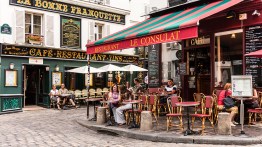
Paris has enough great restaurants to maintain its claim to be the world capital of gastronomy. That said, Parisian residents insist that these days, it is possible to eat badly in their city. Yet I still think that this would require especial incompetence. In Brussels, a strong second in the pecking order, it would be even harder. There is a splendid establishment called Comme Chez Soi. Almost 100 years old, it has established a worldwide reputation without losing contact with its roots. The last time I was there, I observed a couple of ladies-who-lunch, Brussels fashion. There was no question of a watercress salad on a bed of lettuce leaves, washed down with Perrier water.

Parent trap: the relentless rise of children’s speaker Yoto

If you want a handy metaphor for contemporary childrearing, it’s a colourful plastic box with big red buttons on it. Yoto is the name, and before long, you’ll be seeing it where you already see children using screens – so pretty much everywhere. One in 50 British homes with a child under 12 is said to have one. It’s like a CD player-cum-iPad with ambitions to run your child’s life. The essential bits of it are plastic cards that you or the child – the idea is that the child has agency here – slot into the player to listen to a story, but there’s a whole range of other options – radio, podcasts, night lights, sound effects.

Be more Karen

In case you were under the apprehension that ‘Karen’ is simply an attractive name popularly given to girl babies in the early 1960s (my best friend as a child was called Karen, and there were three more in our year at my sink-school comprehensive) I’ve got news for you. To quote dictionary.com: Karen is a pejorative slang term for an obnoxious, angry, entitled, and often racist middle-aged white woman who uses her privilege to get her way or police other people’s behaviours. As featured in memes, Karen is generally stereotyped as having a blonde bob haircut, asking to speak to retail and restaurant managers to voice complaints or make demands.

The pointlessness of being early

We all know that the saddest words in the English language are ‘too late’. We also know that ‘procrastination is the thief of time’ and that ‘punctuality is the politeness of kings. However, since this piece was published a couple of weeks ago, many have got in touch to point out that, very often, ‘the tidy’ are also ‘the early’. Their irrational obsession with being tidy is matched by an equally irrational terror of being late. They’re missing out on the joy of spontaneity, the thrill of uncertainty and of going with the flow I’m not advocating a slack attitude to timekeeping. If you’re late for your train, your plane or your appointment at the Palace to receive your OBE, you really will miss it.

Inside the Cornish home of John le Carré

Every writer needs a bolt hole. Novelist John le Carré’s was particularly picturesque, perched high above the waves on one of south Cornwall’s most glorious coastal stretches, between Lamorna and Porthcurno.  Tregiffian Cottage, made up of a trio of former fishermen’s homes, was where Le Carré conceived and wrote some of his most famous novels, including Tinker Tailor Soldier Spy, Smiley’s People, The Spy Who Came in from the Cold and The Constant Gardener. ‘I love it here, particularly out of season,’ Le Carré, real name David Cornwell, who died in 2020, told a local newspaper. ‘The empty landscape, walking on the cliff, and the light, which of course everyone always mentions... but it seems that I can think well here.

The myth of Sandhurst

On one of summer’s rare dry days, I spent an evening watching The Rakes Progress at Glyndebourne’s Festival Opera. I’m a big opera fan and have travelled to Italy, Spain and Germany to see some fantastic performances but had never felt the urge to go to Glyndebourne. I am not sure why. I guess the idea of all that pomp and dressing up, instead of just listening and enjoying the performance, felt a bit up itself and initially put me off. Plus, this performance was in English, and I always assumed Italian and German operas would flow more easily in song. It was, as it turned out, completely worth dusting off my black tie. It was an outstanding performance and an English aria is just as thrilling as any in Italian or German.

How I rid myself of a Hindu priest

Hinduism is diverse. Every region, caste and devotee worships differently which means that when there’s a big event no one knows what to do. Practices vary between communities. Sindhis do things differently to, say, Sikkimese. And they vary across different regions too. Sindhis in the Indian city of Pune, where my grandparents were from, do things differently from Sindhis in London, where my mum lives. After a lengthy discussion, which involved a séance-like conference call with overseas relatives, we persuaded ourselves to ditch him Everyone knows the main rituals of a Hindu funeral: you feed cows each day before breakfast, you are expected to be, at least temporarily, a teetotal vegetarian, and the deceased is always cremated. But that’s where the agreement ends.

There’s nothing more delicious than a table for one

I was invited to speak at a conference in Barcelona in the late 1990s. At the end of a very long, hard day, my genial Spanish feminist hosts invited me to dinner, telling me they would meet me in the hotel lobby at 10.30 p.m. I almost went into some sort of traumatic shock. I was aware of the Catalonian reputation for eating late – sometimes as late as midnight, at weekends – but I was having none of it. I have been told by waiters that a bottle of wine is ‘too much for a lady on her own’ I bade my colleagues farewell and found myself a gorgeous little tapas bar that was open at 7.30 p.m. I ate bread with deep green olive oil, deep red tomato and roasted garlic, octopus salad with waxy potatoes, jamon croquettes, and a plate of marinated anchovies.

Inside the weird world of real tennis

When John Lumley was a baby, his mother placed him in his carrycot at one end of the tennis court in the leafy village of Holyport in Berkshire, and drove balls at him. I should clarify that John was perfectly safe. The tennis in question was real tennis: the old-fashioned version of the game, which is played indoors, with a window at one end fitted with string netting.  Nevertheless it’s easy to picture the infant John, secure behind that safety net, being jolted awake as ball after ball thudded into it, and waving his arms wildly in the way that babies do, before lapsing back into unconsciousness. Few sportsmen can ever have been so intimately introduced, at such a tender age, to the sport that would define their lives.  Lumley is a retriever.

Leave my pumpkin spice latte alone

It didn’t matter that it was 33˚C. Starbucks staff across Britain spent the beginning of September putting out pumpkin-themed menus, selling customers pumpkin spice lattes in pumpkin-shaped mugs, to be drunk alongside a slice of pumpkin-flavoured loaf cakes, a pumpkin seed cookie, or a brownie cut into pumpkin shapes and frosted in hazardously orange icing. Happy fall, y’all.   The minor humiliations don’t stop me – I'm a creature of nostalgia and these drinks don’t taste bad, either The hot early autumn didn’t stop us obsessives: there is, inevitably, an iced pumpkin spice latte. The spice mix in question, of cinnamon, ginger, nutmeg, clove and sulphur-based preservatives doesn’t necessarily have to include any pumpkin.

What happened to Ronaldinho?

Cast your minds back to 2005, a time when it was considered cool to record your favourite song to use as a ringtone on your phone, iPod Nanos were everywhere, the Crazy Frog drove every parent in the country crazy, and Ronaldinho was named the best football player on the planet. A lot has changed in the 18 years since, The Crazy Frog has been permanently silenced, no one (except yours truly) still records songs to use as ringtones, and Ronaldinho has served time in prison. What happened to him, a man who was, for sheer entertainment value, arguably the best football player to ever walk the face of the earth? When it comes to derailed careers, there appears to be something in the Brazilian water The Brazilian legend, now 43, once appeared solely on the back page of newspapers.

Two tips for Doncaster tomorrow

The Saturday of Doncaster’s St Leger meeting offers something for everyone: the fifth and final ‘classic’ of the season and a ridiculously competitive sprint handicap for starters, with much more besides. I will start by looking at the Group 1 Betfred St Leger (tomorrow 3.35 p.m.), which is the longest flat racing classic over a distance of more than one mile six furlongs. Given that most racehorses are bred for speed these days, this means that, at only three years old, many talented thoroughbreds do not have the stamina to last the trip. With the ground likely to be on the soft side of good tomorrow, backing a strong stayer is a must in this race, which has a first prize of more than £420,000.

French food is the worst in the world

There are certain things that are so shocking they can only be said by close friends. And as the British have been in a close friendship – an entente cordiale – with the French since 1904, I am here to say it to our neighbours across the Channel: I’m sorry, mes amis, but your food is the worst in the world. There are more McDonalds in France, per head, than anywhere in Europe Such a claim needs evidence. So let’s start with that essential emblem of aspirational French cooking: the menu degustation. Over the years, as a travel hack, I have learned to shudder when I see this phrase – ‘tasting menu’ – on le carte of any restaurant, but particularly a striving restaurant in the French regions. Why?

Stop paving over front gardens

It’s a pretty typical 1930s-built semi in the outer London suburbs: four bedrooms, living room, dining room, kitchen, average back garden and unusually large front garden with a lawn and mixed shrub borders. Or rather that’s what it was until it changed hands earlier this summer and the new owners had different ideas. Now that that front lawn and its surrounding borders are gone. In their place is an extended paved area that has enough space to park at least six cars, maybe eight. Not a blade of grass has survived. The bulldozing of this domestic garden in north London coincided with the Ulez expansion, joining other recent anti-car measures like 20mph speed limits and LTN-closed streets, in an effort to reduce air pollution.

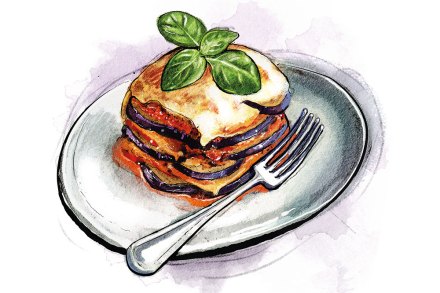
My two tips for perfect aubergine parmigiana

In the middle of an unpredictable Indian summer, here is a recipe from sultry southern Italy which is suitable for the changing seasons. While aubergine parmigiana (or parmigiana di melanzane) was born of hot Italian summers, it is also perfect for autumn, as the days shorten and darken. There is inherent comfort in the hot, almost-melting aubergine, covered in a rich sauce and blankets of cheese. Aubergines, tomato sauce, mozzarella and parmesan, all layered until they meld and transform The name is possibly a red herring, possibly not. Aubergine parmigiana is most associated with Naples, and is also beloved in Sicily and Calabria.

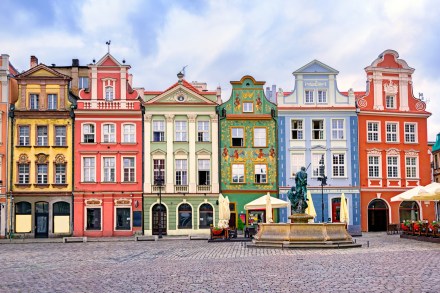
As gaudy as Versailles: The Duchess of Cornwall in Poundbury reviewed

Poundbury is the King’s idealised town in Dorchester, built on his land to his specifications: the town that sprung out of his head. (‘My dream,’ says Harry Enfield in The Windsors, ‘was always to build a mixed-used residential suburb on the outskirts of Dorchester.’) It is so fascinating that I dream, briefly, of moving in for the completeness of the vision – who doesn’t want to live inside art? – and the portrait of the British class system in housing. Here it is, at last, laid out like a textbook: journey’s end. We order via app and pay in advance: there is a shortage of what tabloids call flunkeys It is becalmed on a Sunday evening, and sun saturated: there is almost no one about. Perhaps the residents are indoors, enjoying the lushness of their fittings.

Novak Djokovic, the man who won’t go away

‘What are you still doing here?’ joked Daniil Medvedev to Novak Djokovic after their US Open tennis final – a lung-busting baseline slugfest featuring jaw-dropping athleticism and brilliant shot-making – had ended in a straight sets win for the Serb. It was his 24th Grand Slam victory. There’s no sign that Djokovic wants to slow down. After all, he’s only 36 The Russian’s good-humoured question is one that many elite tennis players will be asking. But there’s no sign that Djoko wants to slow down. After all, he’s only 36. His coach Goran Ivanisevic said that Sunday’s win was one of the greatest feats in all sport – adding: ‘If he wins 25, he’s going to think, “Why not 26?” He’s taking care of his body, he’s taking care of everything.

Britain is now a nation of shoplifters

I was a teenage shoplifter. I had a good run at it, from 12 to 14, and found it as addictive as any drug: the anticipation, the antsiness, the sharp stab of joy on completion. But all it took was getting caught, spending an hour in a police cell before being grimly collected and yelled at by my dad, to make sure I never went looking for a five-finger discount again. Shoplifting used to be something which, with the help of stern parents and the police, people grew out of. No longer. Now we are in a world of, as the Gail’s Bakery boss Luke Johnson has put it, ‘widespread, really widespread aggression, abuse and shoplifting’. Asda chairman Stuart Rose says that shoplifting has effectively been decriminalised due to lack of police action.

How to make excuses and infuriate people

It started as a fairly pleasant train journey. A woman with a half-shaved head and multiple tattoos got on pulling a French bulldog on a lead. We got to talking about dogs, and breeds, and whether Staffordshire Bull Terriers had an unearned bad reputation, and about her cats too, and was she a dog or a cat person? She said she was both, and I agreed it was hard to choose, and soon we were swapping pictures of our cats and discussing different Norfolk villages, and was Swaffham a nice place did she think or not? Both of us, I suspect, enjoyed connecting on the topic of animals with someone so unlike ourselves. In fact, we were chattering away so cordially that we didn’t notice that 15 minutes had gone by and our train – usually punctual - was seriously late leaving the station.

The rise and rise of the centrist bore podcast

It doesn’t seem like 13 years since I strolled down to the Cabinet Office after work on a May evening to enjoy a bit of protest tourism. A largeish crowd of the usual malcontents – students, crusties and the Socialist Workers’ party – had gathered to harangue the Tory and Lib Dem representatives who were hammering out the coalition agreement. The government that emerged from those talks made reducing the deficit its priority, and in those far-off halcyon days, before Brexit and Corbyn and Covid, when Donald Trump was still hosting The Apprentice, ‘austerity’ was the great political battleground. And for almost all of the subsequent five years, it was Ed Balls and George Osborne who fought each other over government spending.

How to beat the crowds in Rome

Rome is Europe’s most beautiful city, but there’s a downside: the most famous attractions are nearly always overwhelmed with crowds. The line for the Colosseum bakes under the unbearable Roman sun; the Sistine Chapel queue snakes through the Vatican; the Trevi fountain is spoiled by selfie seekers. Fortunately, though, there is a way of avoiding the mob – and seeing a side of the Eternal City that captivated generations of travellers before the modern tourist industry took hold. The best advice for avoiding the throngs is, when in Rome, do as the Romans don’t – and wake up early The best advice for avoiding the throngs is, when in Rome, do as the Romans don’t – and wake up early.

The perverse greed of Jamie Oliver

I hoped that we would soon see the back of Jamie Oliver, once a ubiquitous presence on television, as his youthful Golden Labrador-ish appeal waned and his mouth increasingly looked like something you’d find on the end of a fishing rod. But regrettably, like many of the cor blimey pretend meritocrats of his era – from David Beckham to Jonathan Ross – he has proved as determined to hold on to his place on the dung heap of fortune as any old landed toff. It seems the ceaselessly acquisitive Oliver clan want some more of whatever pie is being divided. Is the world ready for Buddy, his 12-year-old son, who has just been awarded his own BBC cooking show?

The sad decline of weak beer

For those of us who like kicking back a few pints in the summer sun, Samuel Smith Brewery’s decision to increase the strength of their Alpine Lager from 2.8 to 3.4 per cent has sparked much weeping and gnashing of teeth. Brits may be renowned the world over as lager louts, but there are some of us who actually enjoy the drink itself and want to rejoice in it without getting absolutely wrecked. Drinking for pleasure and refreshment rather than drunkenness is a novel idea for some, but the ‘weak’ Alpine Lager has sat at the apex of the quaffability index. The craft beer revolution of the 2010s has changed the game Lamentable though Sam Smith’s decision is, the situation has been infinitely worse in the past.

Ashton Kutcher and Mila Kunis’s peculiar apology

Not since the then-couple Johnny Depp and Amber Heard released a pained, hostage-style video in 2016 apologising for bringing their dogs into Australia illegally has there been such an awkward public statement by A-list stars. Now is the turn of actors Mila Kunis and Ashton Kutcher over the weekend. In the minute-long video, they half-apologise for their statements of support for their erstwhile That 70s Show co-star Danny Masterson, who has been sentenced to 30 years in prison after being convicted of raping two women. https://twitter.com/MilaKunisv/status/1700616135408763257?

Confessions of a sperm donor

I first became aware of the London Sperm Bank after seeing an advert on Instagram. ‘Help someone achieve their dream of a family. Become a sper­m donor and get compensated up to £420 a month’. Why not get paid to do something that I was going to do anyway in my spare time? In the past, I’ve donated blood and have looked into giving bone marrow, so sperm donation just seemed like another form of biological socialism: from each according to his ability, to each according to her need. But I also felt I might be hedging an existential bet. If the name of the game is to multiply, then donating my DNA seemed like a rational genetic insurance policy.