Spectator Life

Spectator Life

An intelligent mix of culture, style, travel, food and property, as well as where to go and what to see.

An ode to Blackpool

Ballroom dancers, suicide cases, charlatans: Blackpool has them all. No place has so much possibility or holds so much of the British soul on one bright, windswept drag. I first came here for Conservative party conference, where the cognitive dissonance of pre-Coalition Tories in funeral suits and the reality of the country they sought to govern – love, loss and candyfloss – felt wild. Did these people even know each other? It turns out they didn’t. Then I came to watch Russell Brand pretend to be Jesus Christ at the Winter Gardens for people alienated enough to think Russell Brand is a viable alternative to anything. They all meditated together.

Why the ‘school wars’ are overblown

The recent ‘school wars’ farrago was an act of madness – or, more accurately, Madness. ‘All the kids have gone away/Gone to fight with next door’s school/Every term that is the rule’. So the Camden ska band sang on ‘Baggy Trousers’, their 1980 classic about their school days. Schoolchildren organising to duff up their contemporaries is not new; social media has made it easier for pupils to connect, parents to panic.   For the uninitiated, a TikTok trend thought to have begun in Hackney last month has seen posts pop up across the country – from Nottingham to Watford – encouraging children to meet for clashes between different schools organised into ‘red’ and ‘blue’ teams.

Four bets for Gold Cup day at the Cheltenham Festival

It’s surprising that champion jumps jockey Sean Bowen is still looking for his first winner at the Cheltenham Festival and so it would be fitting if he rode it for his former babysitter, trainer Rebecca Curtis, in today’s Boodles Cheltenham Gold Cup (4 p.m.) The Grade 1 race over more than three miles and two furlongs is the highlight of the whole week, four days of superb racing which, however, continue to be blighted by problems at the start that have frustrated jockeys and many others besides. Hopefully, Bowen’s mount in the Gold Cup, Haiti Couleurs, put up each way at 14-1 two months ago, will get away at the front of the field and stay there. This nine-year-old gelding is a game front runner and a superb jumper so he is always going to be a difficult horse to pass.

We’re all ‘sapiosexual’ now

What do you think of when you think of Jameela Jamil? (I realise that I may be talking to the wrong demographic here, but bear with me, and I promise I’ll broaden it out.) I think of hair – lots and lots of shiny, black, beautiful hair. Personally – and I thought this long before telogen effluvium, caused by the trauma of spinal surgery, made half of mine fall out and turn the rest grey – I don’t believe I’ve ever seen hair as lovely, not even on the great stars of Hollywood like Veronica Lake. If ever anyone had ‘pretty privilege’ (a term which I find censorious and covetous; attractive people should get prizes, just like brainy ones do) it’s Jamil.

England’s rugby team and Labour are both set to lose

Humiliated, disparaged and the object of global scorn for their lily-livered incompetence. But enough about the England rugby team. Last week was also deeply embarrassing for Sir Keir Starmer and his government. As President Donald Trump said of Britain’s Prime Minister: ‘This is not Winston Churchill we’re dealing with.’ One might say something similar about Steve Borthwick, England’s head coach. This is not Clive Woodward we’re dealing with. You remember Woodward, the man who in 2003 guided England to World Cup glory.  Those were the days when the England rugby team were the envy of the world; now they are the inept of the world.

Four more bets for day three of the Cheltenham Festival 

Wiltshire trainer Emma Lavelle knows what it takes to land the Grade 1 Paddy Power Stayers’ Hurdle having won it seven years ago. Her pride and joy, Paisley Park, then aged seven, went off the 11-8 favourite in March 2019 having already won all four previous starts that season.  MA SHANTOU, also trained by Lavelle, has a similar profile to Paisley Park except he has won only three of his four starts this season, bombing out for no apparent reason at Haydock. However, the seven-year-old gelding clearly loves Cheltenham having won three times from three runs at the course this season.  Today’s Stayers Hurdle (3.20 p.m.

You can judge a private school by how it cares for its chapel

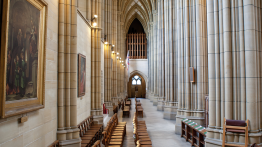
I can still just about recall the exact angle of rotation required of the metal hymn-book casings in the Tonbridge School chapel to produce a piercing scraping sound – perfect for putting any preacher off his stride. God, as St Paul tells us, is not mocked, and as I ascended the pulpit when I returned 12 years later as the school’s assistant chaplain, I heard the old familiar scrape once more, now deployed to distract me. Chapel was the central experience of our school years, the place we remember most clearly In many ways it was comforting. Generations of pupils praying and singing in the same space and inevitably learning the same techniques to distract or annoy. They are teenagers after all.

I was a girl at Eton

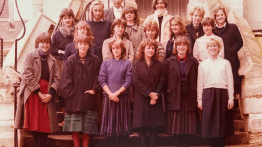
The godson of a friend of mine started at Eton last Michaelmas, and she recently told me how wonderfully it was suiting him. He’s a boy who has suffered from some academic and behavioural challenges, but very quickly these seem to have been ironed out. That school really knows its onions, my friend said. Of course I was pleased for the boy; but my reaction was mixed. Good old Eton, I thought, working its magic again. But why is this magic available to so few – for the most part, only those able to raise fees just shy of £65,000 per year – and none of them girls? Well, not quite none. You might think my reaction somewhat ungrateful if I tell you that I was briefly a girl at Eton, and that it changed my life.

Woodcote House survived the Blitz, but it couldn’t survive Rachel Reeves

Woodcote House, an all-boys’ independent preparatory school of 76 pupils, closed its doors for the last time on 4 July last year. Asked by the editor to write an elegy for the school, I set about making enquiries. Many ran cold. The website had been shut down. Requests to friends who lived in Surrey fizzled out. Not a year after the closure of the 150-year-old institution, all that remained were digital embers: a sad Instagram post in which former parents and friends of the institution mourned its loss; an online Telegraph article detailing the headmaster’s final letter to parents in which he cited the ‘buffeting headwinds’ and a ‘drop in pupil numbers’ of the independent school sector in the aftermath of Labour’s VAT raid.

The invaluable lessons of school mock elections

The 2005 election campaign was brutal. All the major parties succumbed to infighting, the hustings were hostile and the drip-drip of poisonous briefings reached a nadir when a Ukip candidate was compared to Hitler. One special adviser was found crying in the loos. More than two decades may have passed, but the Sherborne School mock election certainly left its mark on those who witnessed it first-hand. I remember it well. In fact, I was that tearful special adviser. I was working for the Labour party (sadly not endorsed by Tony Blair) and during one hustings managed to persuade the crowd to walk away when the Ukip candidate – a close friend of mine in the same boarding house – stood up to speak. I stayed back to watch him deliver his carefully crafted speech to an empty courtyard.

History of art is not a ‘soft’ subject

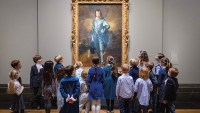
I may be biased because I teach it, but history of art A-level often feels like the greatest, yet most dismally undervalued, subject in the curriculum. It explores history’s most innovative thinkers, enhances visual literacy, teaches history through the prism of creativity and emotion, sharpens critical thinking, and fosters empathy and open-mindedness. Yet it languishes as a minority character in the pantheon of school subjects. It has always been chronically underappreciated by students, teachers, school heads and governments. I worry that its disparagement tells us something rather depressing about our own cultural values and even our sense of what education is for. Just to scotch a popular misconception from the outset – history of art is not a ‘soft’ subject.

Textbooks will always beat screens

Is the page finally beginning to turn on children and screens? For the first time since the advent of social media, we are seeing a burgeoning alliance across all political divides to protect children from digital harm. In 2024 Jonathan Haidt delivered an urgent manifesto for change in The Anxious Generation, and at the beginning of this year Australia responded with a ban on social media for under-16s. Now even Britain is finally recognising the scale of the problem. Despite this week's decision by MPs to consult rather than enforce, the fight will rage on. Deliberation doesn’t work in the arena of addictive substances. However, the war on classroom screentime has yet to be properly waged, let alone won.

The rise of the Oxbridge AI admissions cheat

‘This is the future, my wife says./ We are already there, and it’s the same/ as the present.’ So begins Ciaran O’Driscoll’s poem ‘Please Hold’, about a husband talking to a telephone robot and becoming ever more frustrated at the mind-numbing automation of modern-day life. There’s a lot of ‘Your call is important to us’ and Eine Kleine Nachtmusik and ‘We appreciate your patience’, until eventually the speaker resigns himself to the fate of growing old while on hold. This same reluctant acquiescence can be seen with AI: this is the future, and we are already there. Except instead of asking us to hold, it’s always asking us how it can help, how it can further infiltrate our lives. AI has already transformed how students learn and schools evaluate.

The cut-throat world of school magazines

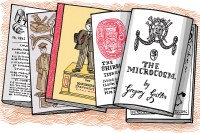
In my mind, there was always a sense of hubris in the air of our tucked-away offices at the Chronicle, Eton’s main student magazine. As in many other domains of our school’s life, we idly assumed ours was the first, as well as the only really consequential, example of a public-school magazine. The early 2000s, when I was a boy there, were a particularly suitable time in which to indulge in such a view; we were all acutely aware of the rise of Boris Johnson. If you were devoid of athletic, dramatic or musical talent, editing the Chronicle was the obvious crown The record for first school magazine does belong to Eton, but it is in fact for a much earlier and odder production, puckishly called the Microcosm, which ran for 40 issues in 1786-7, published as a book the next year.

I’m a Screen Grinch – and proud

He’s 12 next month, my eldest son, but he’s rejected the ‘movie night’ party I’ve suggested, and he doesn’t want any of his new friends from senior school to come for a sleepover. And I know why. Our television is a modest one, not the size of one of the screens flanking the main stage at Glastonbury. I recently went to pick up my son, who was at a new friend’s house. They were playing Mario Kart on a screen that took up about half a wall of the living room. Neither looked up when his mum let me in, so I stood in front of them. ‘Hello? Hel-LO?’ ‘It’s so hard when they’re on screens, isn’t it?’ exclaimed the other mum, as her son manoeuvred Luigi around Brain Rot circuit on Bilge Island with slack-jawed expertise.

‘If you’re inspired by music, you’ll do better in exams’: Conductor Ralph Allwood on why music matters for children

Here’s some life advice Ralph Allwood gives to the teenagers who attend his week-long residential Rodolfus Choral Courses, held all through the summer at various schools and colleges across the country. Some of the singers are being pressured by their parents to take just maths and sciences, or other lucrative career-oriented subjects, for A-level or at university, and to give up music. ‘Right,’ he says, as the teenagers assemble for a final rehearsal, ‘this is how you decide what you’re going to do next. Get advice from everyone you can: from your teachers, your parents, the universities, that aunt who wants you to do a sensible subject. Say thank you, then go into your own room and close the door. There, make up your own mind about what you want to do.

School choir music is in peril

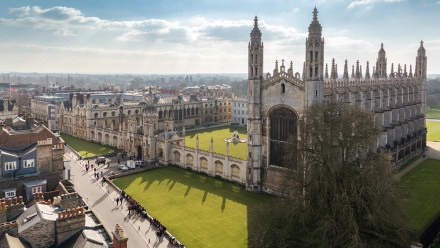
You’d be hard pressed to find a more continuous strand in British culture than the chorister. They’ve been warbling in Westminster Abbey since the 1380s. Every national occasion is marked by choirs, the choristers dazzling in their splendidly anachronistic ruffs and robes, present at moments of collective joy or sadness. Funerals, memorial services, royal weddings, carols from King’s College, Cambridge. They are ornaments to our culture. Oodles of composers, musicians and singers, professional or not, have, over hundreds of years, stood in the choir stalls at dawn, at midnight, and lifted their voices to the vaulting roofs. Some of the most beautiful music in the canon was written for choirs: Gregorian chants, Thomas Tallis.

School portraits: Snapshots of four notable schools

Hurtwood House, Surrey Set in the Surrey Hills, Hurtwood House is England’s only independent boarding school exclusively for sixth-formers. Renowned for its performing arts, the school’s annual Christmas musical is no ordinary affair. The ten-night production is staged with a full West End orchestra and professional directors, choreographers and lighting designers. It is no surprise that alumni include Emily Blunt and Hans Zimmer. Hurtwood can also boast a high level of academic achievement: last year 54 per cent of A-level results were graded A*-A.

My burning ambition for my old school

Every boy longs to see his school burn down and for me the dream came true twice. In February 1977, I was walking to Sunday Mass when I spotted a cluster of teachers at the school gates. The old Victorian hall had caught fire overnight and collapsed. I couldn’t believe it. This was my personal Towering Inferno and I’d missed the whole thing. In my mind’s eye I could see it all: the leaping flames, the burning joists, the black columns of ash rising over south London, and the thunderous roar as the roof crashed to the ground. Nothing was left but a few pathetic wisps of smoke rising from a pile of charred beams. The teachers were standing around looking shocked and miserable – as if mourning the death of a pet rabbit. Why so glum?

Five wagers for day 2 of the Cheltenham Festival 

Irish maestro Willie Mullins runs a duo of talented two-mile chasers today in the BetMGM Queen Mother Champion Chase (4 p.m.), the highlight of day two of the Cheltenham Festival.  However, both Majborough and Il Etait Temps have displayed jumping frailties and so neither appeals at their respective odds. The former will almost certainly win if he jumps as well as he did last time out when landing the Grade 1 Ladbrokes Dublin Chase at Leopardstown, but that is not guaranteed.

A literary guide to how to pay your school fees

Another day, another report on how many children have had to leave their private schools, thanks to Labour’s VAT raid on fees. This particular survey, by wealth management firm, Saltus, found that almost one in ten parents have had to take their children out of the independent sector altogether while 65 per cent of those questioned admitted to making ‘significant changes’ to their circumstances to keep their children in private education.    When belts can only be tightened so far, parents need to get creative.

Electric cars aren’t sexy

Does everyone fantasise about having sex in a Porsche? Or is it just middle-aged men? The middle-aged women I know are much more interested in having sex in grand hotels rooms than on the backseat of a sports car but then perhaps that’s because they haven’t considered the Porsche Macan, which is as sleek, luxurious and sexy as a Porsche but as practical and spacious as an SUV. I invite a man for a spin and he instantly agrees. Then I deliver the bad news: it’s electric.

Three more bets for day 1 of the Cheltenham Festival

The decision by connections to run Lossiemouth in today’s Unibet Champion Hurdle (4 p.m.), rather than the Close Brothers Mares’ Hurdle on Thursday, is good for racing but not ideal for my two ante-post bets in the big race, the highlight of day one of the Cheltenham Festival.  Irish trainer Willie Mullins’ talented mare is unbeaten in her three visits to the Cheltenham Festival, winning a Triumph Hurdle and two Mares’ Hurdles. This will be her stiffest task to date as she is probably even better over two-and-a-half miles than today’s trip of just over two miles. However, she is still going to be very hard to beat today, especially with cheekpieces fitted for the first time.

Al fresco dining is overrated

The daffodils are out, and so, therefore, are the optimistic diners. A couple of rickety tables and wonky chairs are dragged out from their storage and plonked on a bit of uneven concrete on what passes as pavement in London. They are a strange breed, this first flush of outdoor diners who think a tiny ray of weak sunlight breaking through the two-degree cold heralds the start of summer. I’m not talking about the people braving the elements under a leaky conservatory roof, crowded around outdoor heaters and wrapped in blankets, who are best known as smokers or vapers. No, I mean the hardy, ‘freezing fresh air is better than indoor air’ lot we are about to see shivering through their fake smiles as they push aside a bowl of freezing cold soup that can’t quite pass as gazpacho.

Britain is broken but the parking tickets keep coming

I live on a road where parking is forbidden. This has not stopped any of us from needing cars. Instead, we crowd each evening into the small cul-de-sac opposite, where ten vehicles can park legally, and 15 can park optimistically. The sign is unambiguous: ‘Three hours. No return within two.’  Most days I manage to comply. Some days I even set an alarm. The cruelty is that nothing happens for ages. Weeks pass. Months. You begin to suspect you have cracked the system or even that the sign is entirely ornamental, the sort of bluff recognisable to anyone familiar with the steady arrival of ‘Final’ notices.  Then, without warning, that little yellow envelope appears on your windscreen. The wardens have descended like a pack of seagulls on an unattended tray of chips.

Bring back the book launch

Last week, I had the pleasure of heading to the Freud Museum in Hampstead for the launch of Zoe Strimpel’s much-discussed new book Good Slut. Not only was the venue one of the most splendid I’ve been to for a party of this kind, but the guest list – which included The Spectator’s esteemed editor – was suitably glittering for a Thursday evening in early March. Everyone was on top form, much jollity was had, and by the time the author gave a suitably witty speech from the top of the staircase that Sigmund Freud once ascended and descended, a fabulous time had been had by all.  Would that this was the norm for all book launches.

Stop talking rubbish about Radio 3

‘Listen to this drivel’ is not the combination of words a radio presenter longs to see in reference to their exertions, but it’s what The Spectator associate editor Damian Thompson had to say about me on X recently. I’d provoked Thompson’s ire by telling people what was coming up that morning in my Radio 3 programme, Essential Classics, in a one-minute video delivered with a somewhat unserious tone. Thompson did later apologise for being rude but declared: ‘It’s just awful to hear the new house style of Radio 3.’   Thompson joins other Spectator writers who have their collective underwear in a twist about the style of presentation on Radio 3.