Spectator Life

Spectator Life

An intelligent mix of culture, style, travel, food and property, as well as where to go and what to see.

How the English invented champagne

Is champagne a wine region or a state of mind? The small bubbles have a way of getting into the bloodstream and the imagination, creating a slightly euphoric sensation which encourages pleasant chatter. But who put the sparkling genie in the bottle? Who pioneered the intricate process of secondary fermentation in a bottle strong enough to withstand six atmospheres of pressure and contains all those wonderful bubbles of CO2, about 20 million per bottle?  In France, it is claimed that it was Dom Perignon (1638-1715), ‘Come quickly. I am tasting the stars,’ he is supposed to have said. Very romantic, a convenient sales pitch. The only problem is that the story is cobblers. Even eminent French wine historians now agree that there is no written evidence for it.

Letting go of my mother’s house

My mother passed away last year and it fell to me to sort out her house. Returning from four years in Russia and the Caucasus, I moved into her Suffolk home to get it ready for selling. There was a huge amount to do. Alongside organising my mother’s headstone – no small or hasty business – there was an entire house and a life to sort through. This involved going through endless knick-knacks, glasses, crockery, clothes – and 15 or more rubble sacks of papers and old letters. The last was both cathartic and disconcerting. These are written relics of a life that existed before I came along, one that may well have been richer and more hopeful.

Six English sparklers to enjoy this Christmas

Before I started researching my book Vines in a Cold Climate, I had a particular image of English sparkling wine as consistent but rarely that exciting. It was all a bit formulaic, like big brand champagne but leaner. I am pleased to say that I could not have been more wrong as the wines now made all over southern England are incredibly diverse, offering a wide array of styles for every palate. If you’re spending between £25 and £50 then England actually offers, on the whole, much more interesting wines than Champagne. Here are six wines that show how different English sparkling wines can be. Westwell Wicken Foy NV (Westwell £27.50) I’m a big fan of Westwell not least because it’s one of the nearest vineyards to me.

Take an in-form trainer to deliver again

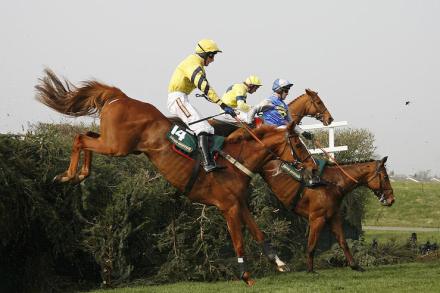
There are a lot of extremely able jump trainers in Britain but only a handful are really adept at successfully preparing a horse for a big target, such as a race at the Cheltenham Festival or one of the season’s most valuable handicaps. These are typically the contests in which the leading Irish trainers also enter their best horses and so they are fiercely competitive. Paul Nicholls, Nicky Henderson and Dan Skelton clearly all deserve a place on this ‘top target trainer’ list for winning so many top prizes, while the likes of Nigel Twiston-Davies, Venetia Williams and Jonjo O’Neill have also had more than their fair share of big-race success over the years.

Why the dying deserve illegal drugs

It was about a year ago when my dying father, diagnosed with terminal lung cancer, turned to me and said ‘Sean, can you get me some heroin?’. For a moment – understandably – I wondered if he needed this ultimate painkiller for some fairly ultimate pain, but he didn’t look like he was in agony. And when he followed that up, with a puzzled frown, and the remark: ‘Or maybe some opium, or weed, I’d like to try them,’ I realised that this was nothing to do with analgesics. Dad wanted some psychotropic fun. Dying is not recreation, it’s annihilation.

It’s time to ditch the Christmas turkey

This year A Christmas Carol is 180 years old, first published in December 1843. It had sold out by Christmas Eve. And it has a lot to answer for, not simply ­­because it ultimately spawned Kelsey Grammer’s Christmas Carol musical, but because it is credited with having popularised the idea of turkey as a festive staple. As you’ll recall, turkey is what Scrooge has sent to his clerk Bob Cratchit once he’s had his Damascene moment – and the idea took off. Within a few short years (1861 in fact), Mrs Beeton had declared that ‘a Christmas dinner, with the middle classes of this empire, would scarcely be a Christmas dinner without its turkey.

‘This is generous food’: The Salt Pig Too, reviewed

Swanage is a town torn from a picture book on the Isle of Purbeck: loveliness and vulgarity both. It is famous for fossils, Purbeck marble, a dangerous-looking small theme park, and Punch and Judy. My husband is very attached to Swanage, because it exists in a state of 1952 – in homage to this, it has a branch line with a station from The Railway Children. In the summer, on the beach, you see fat sunburnt people with handkerchiefs on their heads. I didn’t think they existed anymore: I thought they were all dead. Some parts of Dorset have gentrified, though this doesn’t really describe what has happened to Sand-banks, the Bishop’s Avenue of the coast. That is closer to calamity, or invasion by space aliens who love concrete and glass.

Alexa is gaslighting me

Amazon has teamed up with Disney to launch a new app, Hey Disney! – a joint voice assistant feature which will allow your child to ‘Interact with Mickey Mouse, or Dory from Finding Nemo’. Just what we need. Customers can use Hey Disney! at Disneyworld theme parks – 'ask “Disney Magical Companion” to request fresh towels or the forecast, and Olaf from Frozen might tell you it’s cold out.’ Thanks Olaf. My husband thinks she’s spying on us. ‘The Russians,’ he says with an ominous shake of the head I already fear that my Amazon Alexa is gaslighting me – now she can manipulate me using that awful Mickey Mouse voice. A cold war is brewing in my household, between us humans and the cyborg who lives in our Amazon Echo Dot.

Advent is a time of horror

At the age when most children are being read The Tailor of Gloucester or ’Twas the Night before Christmas, my father took a very different approach to bedtime stories during Advent, and read me my first M.R. James story. I can’t have been much more than five years old, and he was probably a few sherries to the wind, but I can recall with the utmost clarity the sheer, tingling chill of being exposed to Number 13 at such a formative stage.

Hong Kong’s fading Britishness

Not much of Hong Kong still feels British. There is the odd tube stop – Admiralty, Kennedy Town, Prince Edward – but that’s about it. On the car ride from the airport, I chatted to the driver as we passed under half-built concrete arches covered in green construction cloth. He told me the authorities were building another runway; we’ve been arguing over a third runway for the best part of 30 years, I said, and it still hadn't started. He laughed. ‘We used to be run by England. Now the communists are in charge, it’s much easier.’  I went to Java Road in search of the morgues and black bunting My cheapy British phone contract is allergic to Hong Kong networks and insists on gobbling up around £20 of credit a day. None of my bank cards seem to work either.

Is Conor McGregor the Irish Trump?

The flamboyant, ridiculous mixed martial arts fighter Conor McGregor is considering a run for the Irish presidency. ‘Potential competition if I run,’ he tweeted yesterday, along with a picture of Gerry Adams, Bertie Ahern and Enda Kenny, the three septuagenarian current favourites for the job. ‘Each with unbreakable ties to their individual parties politics... Or me, 35. Young, active, passionate, fresh skin in the game. I listen. I support. I adapt. I have no affiliation/bias/favoritism toward any party. They would genuinely be held to account regarding the current sway of public feeling. I’d even put it all to vote. There’d be votes every week to make sure. I can fund. It would not be me in power as President, people of Ireland. It would be me and you.

The strange life of Alvin Stardust

He had mutton chop sideburns, a vast quiff and was dressed in black leather, even down to murderers’ gloves, over which he wore enormous silver rings, which he then wiggled in a beckoning fashion while staring suggestively into the camera. Nevermind hiding behind the sofa during Dr Who – for me, in December 1973, as a six-year-old nurtured on bubblegum pop, the debut appearance on Top of the Pops of Alvin Stardust, with his rock’n’roll Child Catcher look, was the most menacing thing I had ever seen. In the 1990s he found God – at Waterloo Station apparently, a place where one might be more likely to experience a loss of faith Frightening in a dark panto way it may have been – but its performer was a concoction.

The growing appeal of dreary Düsseldorf

In the cavernous basement of Bilker Bunker, a second world war air raid shelter in downtown Düsseldorf, the staff of groovy events guide the Dorf are toasting the magazine’s tenth birthday. During the war, Germans sheltered here from the RAF. Today, their descendants come here to party. With an art gallery up above and DJs down below, this labyrinthine concrete relic is a symbol of Düsseldorf’s transformation – from industrial powerhouse of the Third Reich to Germany’s hippest city. Düsseldorf has always been a wealthy city, the buckle of the German rustbelt The Dorf is the size of a slim paperback. It fits neatly into your coat pocket. It started out online but its success soon spawned a print edition: art, music, fashion and loads of entertainment listings.

What fiction can teach us about terrorism

The first decade of this century, following Al Qaeda’s attack on the Twin Towers and the Pentagon in September 2001, was something of a golden age for films about terrorism, a spate of them following in quick succession. In the light of Hamas’s 7 October mass-killing of innocent Israelis, it’s interesting and informative to watch one or two again – and see how the nature of terrorism changes little. We get the terrorist as preening popstar, surrounded by women, whose every act of violence is like the release of a new album A good place to start is Antonia Bird’s The Hamburg Cell (2004), which tells the story of the terrorists who flew the planes that day and had made the west German city their base.

I’ve finally given up on physical books

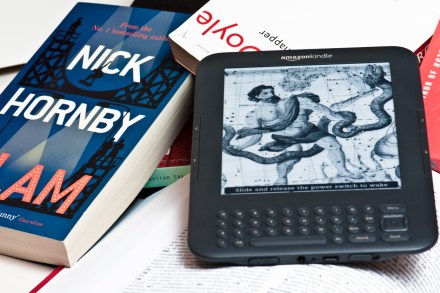
When I first heard about ebooks, I was horrified. Something deep within me flinched. Surely, I thought – my surface brain trying to rationalise this atavistic spasm – the tactile reality of books is an intrinsic part of the joy of books? Nowadays I only read a physical book if there really is no alternative The satisfying crack of opening up a new hardback (sorry to the timid but I love getting my thumbs in). The unmistakable aroma, from the vanilla hint of co-polymers in the freshly minted paperback to the cigar smoke and benzaldehyde in the second or possibly fourteenth-hand copy. The satisfaction of turning a page, being surprised by the unexpected ending of a chapter and shoving in a bookmark.

The lost world of MSN Messenger

Despite only being 30, the students at the school at which I work often make me feel old. They love nothing more than testing my knowledge of their Gen-Z slang: no, I don’t know what you mean when you say Romeo is a ‘simp’ or whether Macbeth’s behaviour is ‘sus’. My average 12-year-old student is far better at IT than I am and yet they’ve never seen an iPod before. The other day, a student asked me where txt speak came from, because they didn’t realise that SMS messages had a character limit. And despite their love of Y2K music and fashion, most of my students have never heard of the millennial rite of passage that was MSN Messenger.

Why companies should ditch personality tests

An increasing number of British companies are using personality tests to hire staff. Two of the more popular personality tests are the Big Five and the Myers-Briggs Type Indicator (MBTI). There's just one problem and it's a rather big one: both of these tests are utterly scientifically useless. And Brits are being hired (or not hired) based on the results of these dubious tests. Personality tests are a type of zombie falsehood. Despite their lack of scientific validity and numerous papers displaying their many failings, they just won't die Of the two, the MBTI appears to be more popular. The assessment comprises 93 forced-choice questions.

Ireland can land the Coral Gold Cup

The weather is going to play a key role in the outcome of tomorrow’s big race, the Coral Gold Cup (Newbury, 2.50 p.m.). To start with, the cold snap might even claim the card altogether with a course inspection due at 7.30 a.m. on race day. Secondly, after little rain over the past fortnight, the going is likely to be ‘good to soft’ or quicker when the frost covers come off and horses that prefer decent ground will be favoured. The top three horses in the market – Monbeg Genius, Complete Unknown and Mahler Mission – all look well-handicapped, particularly the former on his run in the Ultima Handicap Chase at the Cheltenham Festival. However, all three horses would also be happier with more cut in the ground.

Israeli nightlife is slowly returning

Tel Aviv is the size of Bristol, with about 400,000 residents each. While Bristol has 400 pubs and bars, and just shy of a thousand restaurants, the rough concrete charm of Tel Aviv yields no fewer than 1,750 cafes, bars and clubs and more than 4,000 places to eat. Tel Aviv is a dense, hedonistic city: friendly, creative and edgy without the nasty underbelly of European cities. It is known in Israel as ‘the bubble’, secular and in its own world of sun, sea, late nights and wine, apparently separated from the problems of wider Israel.

Flavour of the month: December – luna graffiti, Sinatra’s pockets and the voice of golf

This month’s timely trivia includes a canny England footballer, an endangered Lady Astor and a confused Nicholas Parsons. Oh, and we learn how many cups of coffee Steven Spielberg has drunk in his life … 1 December 1919 – Lady Astor becomes the first female MP to take her seat in the House of Commons. One of the regular visitors to her country house Cliveden was Baroness Trumpington, whose young son enjoyed sledging in the snow there. ‘Adam’s other main entertainment,’ wrote Trumpington in her memoirs, ‘was travelling up and down in the lift. He also, to my shame, headbutted Lady Astor.’ 2 December 1697 – St Paul's Cathedral is consecrated.

What’s wrong with eating dog? 

From my desk, as I write this, in a lofty room in a soaring new hotel in Phnom Penh, I can look down at the bustling streets and see the concrete, mosque-meets-spaceship dome of the Cambodian capital’s famous Central Market. Which also happens to be the place where, 20 years ago, I ate the single most disgusting thing in my life. A dried frog. This thing, this whole dried frog, was so repulsive in taste and texture – like eating a tiny, desiccated alien made of poisonously rancid rubber – that I seldom choose to recall it. But today I am forced to, because of the intriguing news from South Korea that the Seoul government is going to ban the eating of dogs.

The Swiss appetite for wine gives them a good name

A friend was in town, who rebuts two instances of dull conventional wisdom. The first is that although Swiss Germans may have many qualities – they make excellent bankers – they have no joie de vivre. The Calvinist heritage persists. Second, that the Swiss are an implacably martial race. Other armies, especially the British, use humour to palliate the rigours of serving. The Swiss would be appalled by such frivolity, which may explain why no one has been in a hurry to assail their mountains. There was a serious French restaurant across the border, so he borrowed a tank and set off In both respects, Nick Sillich is a triumphant exception. He is also a fellow who puts the trench into trencherman. That explains why he was the last Swiss soldier to invade France.

Hell is the multi-faith prayer room at Bristol Airport

When the Roman Emperor Justinian finished building the Hagia Sophia church in Constantinople in 537 he compared it to the great temple in Jerusalem. ‘Solomon, I have surpassed thee,’ he declared. Some 400 years later, as visiting ambassadors from Kyiv were led into the same ethereal structure, they remarked: ‘We did not know if we were in heaven or earth.’ There will be no such confusion when people enter the newly opened ‘multi-faith area’ in the free waiting zone car park of Bristol Airport. To the casual observer it looks like a bus stop with greyed-out Perspex glass windows and walls that do not quite reach the ground (presumably to prevent the homeless finding somewhere dry to sleep).

In praise of the späti, Berlin’s late-night corner shops

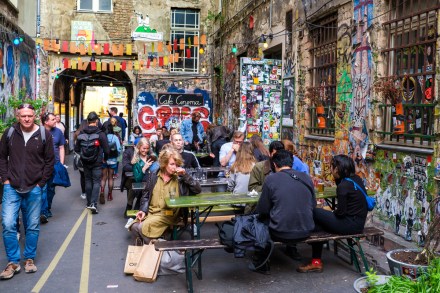
The späti is a Berlin institution. These late-night corner shops began popping up in the former German Democratic Republic for workers clocking off from their evening shifts. Serving as a mixture of mini-supermarket and meeting place, spätis have outdoor seating, often wobbly wooden tables and benches on which locals sit and drink cheap bottles of beer from the amply stocked fridges. Spätis are much cheaper than bars, with most beers going for around €1.50 a bottle Spätis are much cheaper than bars, with most beers going for around €1.50 a bottle (and some as big as half a litre). They continue a quiet and benign form of East German egalitarianism, attracting to their benches any character that can afford the low price of a drink.

I’m an Aga convert

I never thought it would be possible to feel such emotion about a lump of hot metal but I am in love and like all new passions it’s threatening to become all-consuming. I find reasons to drop it into conversation, I seek out others and join groups on social media that share the same predilection just for the joy of swapping photos and snippets of information. Admirers of the Aga will tell you it’s so much more than just a cooker The object of my adoration is the half-a-tonne of enamelled cast iron that squats at one end of the kitchen in my new house. Nestled firmly into a brick hearth, I call my Aga my green goddess and oh yes, she’s definitely a ‘she’. How do I know? For a start, she’s a consummate multi-tasker.

Britain’s curious pub naming conventions

The big London restaurant opening of the autumn has been The Devonshire in Denman Street, Soho, close to Piccadilly Circus. There was a run on bookings as soon as the reviews appeared. Giles Coren in the Times wrote: ‘What a place. What. A. Place.’ Jimi Famurewa's review in the Evening Standard appeared under the headline: ‘Nothing beats a good pub – and this is as good as it gets’. Because – as well as being an exciting new restaurant – The Devonshire is also very much a pub. What must foreign visitors make of all this confusing disconnection between pub name and location? There’s been a pub on the site since 1793.

Hungary, the autumnal civilisation

A couple of weeks ago, I made the dish I always make at this time of year. It’s a Hungarian gulyás – or more correctly, a pörkölt – a mixture of beef, onions, peppers, tomatoes and paprika, stewed very slowly and served with plenty of sour cream. It’s appropriate this dish should be from Hungary, as no season suits the country better. Come to that, no country suits the season better either. It isn’t just that the Buda Hills look ravishing once the trees start to turn rust and golden or that the city’s bridges look more graceful and melancholic than ever. It isn’t even the mist – not to say fog – that comes off the Danube, suspending buildings like their majestic parliament house or Citadella fortress in ghostly silhouette.

So long to the landline

So Debrett’s has really got behind the latest technology by issuing a guide to the appropriate use of the mobile phone, or rather, ten commandments. The oldies are warned that young people take fright at an unexpected call – text first to see if it’s convenient – and the young are told that they should give a caller their undivided attention on the basis that it’s perfectly obvious if you’re doing something else and ‘This can be very alienating for the recipient, who feels marginalised and deprioritised’.   The thing about the demise of landlines is that it’s pretty well impossible to get hold of anyone easily without it That’s all very well and bears out the weird ways communication is going.

Admit it, there’s nothing worse than restaurants at Christmas

We’ve all been there, dragged along to the office/company/feminist protest group/a cappella throat-singing-society Christmas meal out. The idea of sitting around a huge table eating bad food with a group of people who either bore you rigid or who you actively dislike doesn’t seem particularly appealing. Why will the food inevitably be terrible, wherever you go? Because ‘tis the season to be scamming – restaurants make a large share of their annual income around Christmas and New Year and the general idea is to part you from as much of your dosh as humanly possible while serving you food that would normally be rejected as staff gruel.