Marcus Walker

The Revd Marcus Walker is Rector of the Priory Church of St Bartholomew the Great, London.

Gen Z are turning to the Book of Common Prayer

From our UK edition

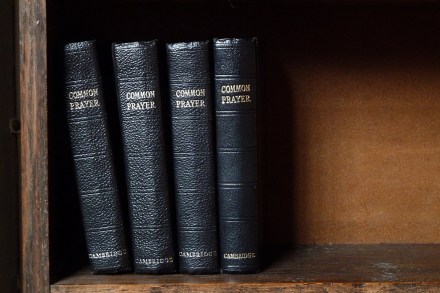
‘No one pretends that modern services will fill the churches. But adult converts ought to be able to step naturally into being worshippers. How absurd that a convert should be warned to undergo cultural orientation before he comes to church.’ These words of the arch-reformer Colin Buchanan in 1979 sum up the views of that post-1960s generation, who believed that all the prayer and thought which Anglicans had inherited was alien to the new generation. It was thought so alien, in fact, that a full cultural orientation would be needed to persuade people to come to church. Modernity was the answer to most questions, and most especially: ‘How do we get the young to come to church?’ Fifty years later, I am not sure anyone would call this experiment a success.
Sarah Mullally’s appointment gives me hope

From our UK edition

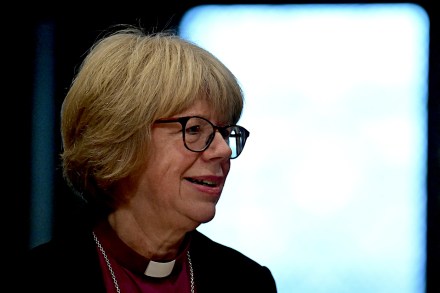
‘I look forward to spending the next seven years with you,’ said Bishop Sarah Mullally at the Diocese of London’s ‘Chrism Mass’ on Maundy Thursday this year. ‘Well, that’s her out of the race,’ said everyone – and everyone was wrong. Perhaps this is a modern twist on the old nolo episcopari rule: that those being considered for episcopal office had to make clear they didn’t want it. Which, frankly, would be wise right now. As the Bishop of Gloucester put it, anyone wanting to be Archbishop of Canterbury ‘needed their head examined.’ The church is in a mess. It is deflated and downhearted; the old issues of female ordination and whether we can ordain or bless the marriage of homosexuals still foster great disagreements across the church.

What can we expect from the first female Archbishop of Canterbury?

From our UK edition

19 min listen

Dame Sarah Mullally has been announced as the new Archbishop of Canterbury. Previously the Bishop of London, she becomes the first woman to lead the Church in its almost 500 year history. She also had a 40 year career as a professional nurse, rising to be the most senior nurse in England and Wales. The Rev'd Marcus Walker, rector at St Bartholemew the Great in the City of London, joins Damian Thompson to react to the news – what can we expect from her leadership? Produced by Patrick Gibbons.

Recovering the Sacred: listen to our unique Spectator event celebrating the rediscovery of tradition by young Christians

From our UK edition

75 min listen

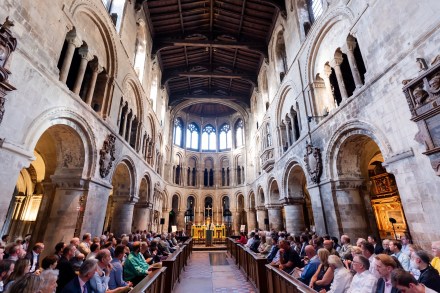
Last week The Spectator held a live event entitled ‘Recovering the Sacred’ in the glorious surroundings of St Bartholomew the Great, the oldest parish church in the City of London. The speakers included two London parish priests – one Anglican, one Catholic – who have contributed much to the growing interest among young people in traditional liturgy and Christian theology, a development that the hierarchy of their respective churches certainly didn’t foresee. They were the Rev Marcus Walker, Rector of St Bart’s, whose Prayer Book Evensongs and Eucharists attract large numbers of young professionals to his ancient church; and Fr Julian Large, the Provost of the Brompton Oratory, where an increasingly youthful congregation flocks to Latin Masses.

Henry Jeffreys, Marcus Walker, Angus Colwell, Nicolas Farrell and Rory Sutherland

From our UK edition

29 min listen

On this week’s Spectator Out Loud: Henry Jeffreys looks at the potential impact of Trump’s tariffs on British drinkers (1:31); on the 400th anniversary of Charles I’s accession to the throne, Marcus Walker explains what modern Britain could learn from the cavalier monarch (7:10); Angus Colwell provides his notes on beef dripping (13:55); Nicolas Farrell reveals he refused to accept the local equivalent of an Oscar (16:40); and, Rory Sutherland makes the case for linking VAT to happiness… with 0% going to pubs, Indian restaurants and cheddar cheese (24:08).  Produced and presented by Patrick Gibbons.

What modern Britain should learn from Charles I

From our UK edition

Next week marks the 400th anniversary of the accession to the throne of Charles I. This moment began what was described in England’s greatest work of history, 1066 and All That, as the ‘Central Period of English History… consisting in the utterly memorable Struggle between the Cavaliers (Wrong but Wromantic) and the Roundheads (Right and Repulsive)’. It is worth marking this accession because the constitutional and religious drama of the Civil War still plays itself out in our political and public imagination. ‘I judge a man by one thing,’ said Isaac Foot, the father of Michael. ‘Which side would he have liked his ancestors to fight on at Marston Moor?

Christmas II: Andrews Watts, Marcus Walker, Ali Kefford, Roger Lewis, Ayaan Hirsh Ali and Christopher Howse

From our UK edition

48 min listen

On this week’s Christmas Out Loud - part two: Andrew Watts goes to santa school (1:11); Marcus Walker reads his priest’s notebook (7:20); Ali Kefford spends Christmas on patrol with submariners (12:34); Roger Lewis says good riddance to 2024, voiced by the actor Robert Bathurst (20:57); Ayaan Hirsh Ali argues that there is a Christian revival under way (32:41); and Christopher Howse reveals the weirdness behind Christmas carols (38:34).  Produced and presented by Patrick Gibbons.

What The Spectator taught Benjamin Franklin

From our UK edition

Christmas came early this year. No, I’m not moaning about the carols that my local café started piping at the beginning of September (although that’s enough to enrage any priest). This year my first proper Christmas moment occurred two weeks early when a lovely couple chose to have not one but two Christmas carols for their wedding. We hadn’t even hit December before I found myself in the curmudgeonly position of muttering ‘Except Easter’ as a full church belted out the line ‘This holy tide of Christmas all other doth efface’. It was all very jolly, even if I felt momentarily Scroogelike. Not that this was the most amusing of the winter weddings that we’ve held at my church, St Bartholomew the Great in West Smithfield.

Why Justin Welby had to resign

From our UK edition

‘The scale and severity of the practice was horrific. Five of the 13 I have seen were in it only for a short time. Between them they had 12 beatings and about 650 strokes. The other eight received about 14,000 strokes: two of them having some 8,000 strokes over the three years. The others were involved for one year or 18 months. Eight spoke of bleeding on most occasions (“I could feel the blood splattering on my legs”, “I was bleeding for three-and-a-half weeks”, “I fainted sometimes after a severe beating”)… Beatings of 100 strokes for masturbation, 400 for pride, and one of 800 strokes for some undisclosed “fall” are recorded.’ I chose to open with this quote so nobody can be under any doubt why Justin Welby has resigned as Archbishop of Canterbury.

Why C of E bishops are so bland

From our UK edition

Nolo episcopari. These were the words a person was expected to say on being offered an episcopal see. It basically translates as ‘Don’t bishop me!’ and goes back to at least St Ambrose, who so wanted to avoid being made a bishop that he skipped town. The Church of England has worked itself into a new position, Nemo episcopari: nobody will be bishoped. In the past year, the process for appointing new bishops to Ely and Carlisle fell apart as the Crown Nominations Commission (CNC) decided not to appoint any of the shortlisted candidates. This has created a sense of crisis in the Church, and an emergency meeting of the House of Bishops was held after a report was hastily drafted by the Bishop of London.

The reckoning: it’s payback time for voters

From our UK edition

39 min listen

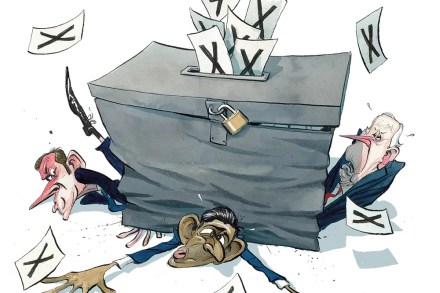
This week: the reckoning. Our cover piece brings together the political turmoil facing the West this week: Rishi Sunak, Emmanuel Macron, and Joe Biden all face tough tests with their voters. But what’s driving this instability? The Spectator’s economics editor Kate Andrews argues it is less to do with left and right, and more a problem of incumbency, but how did this situation arise? Kate joined the podcast to discuss her argument, alongside former Cambridge Professor, John Keiger, who writes in the magazine about the consequences that France’s election could have on geopolitics (2:32).  Next: what role does faith play in politics?

How liberal bishops are squeezing the life out of the Church of England

From our UK edition

28 min listen

Can the Church of England escape from the deadly grip of bishops and bureaucrats who spend their entire time genuflecting to the metropolitan Left? Why does Archbishop Justin Welby wade obsessively into secular political battles when his churches are emptying? And do worshippers realise that eye-watering sums of money are being siphoned off from their parishes in order to fund worthless exercises in social engineering? In this episode of Holy Smoke, the Rev Marcus Walker, Rector of St Bartholomew the Great in the City of London, reveals the scale of the crisis facing the Established Church. His analysis is devastating.

Hell is the multi-faith prayer room at Bristol Airport

From our UK edition

When the Roman Emperor Justinian finished building the Hagia Sophia church in Constantinople in 537 he compared it to the great temple in Jerusalem. ‘Solomon, I have surpassed thee,’ he declared. Some 400 years later, as visiting ambassadors from Kyiv were led into the same ethereal structure, they remarked: ‘We did not know if we were in heaven or earth.’ There will be no such confusion when people enter the newly opened ‘multi-faith area’ in the free waiting zone car park of Bristol Airport. To the casual observer it looks like a bus stop with greyed-out Perspex glass windows and walls that do not quite reach the ground (presumably to prevent the homeless finding somewhere dry to sleep).

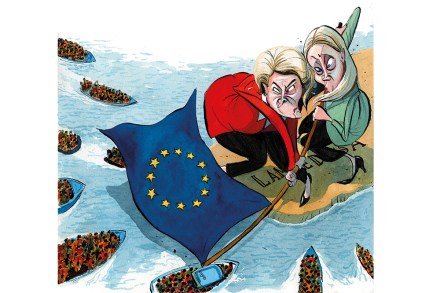
Italy’s new wave: Europe’s escalating migrant crisis

From our UK edition

45 min listen

This week: Christopher Caldwell writes The Spectator's cover piece on Italy’s new wave of migrants. This is in light of the situation in Lampedusa which he argues could upend European politics. Chris joins the podcast alongside Amy Kazmin, Rome correspondent at the Financial Times, to debate Europe’s escalating migrant crisis. (01:23) Also this week: In his column, Matthew Parris writes about Australia’s Voice vote, a yes/no referendum being held on whether to establish a new body which will advise parliament on matters relating to Aboriginal and Torres Strait Islander peoples.

Is the Church of England giving up on Sunday worship?

From our UK edition

What a clash of the titans we witnessed at the weekend. The Lionesses vs Divine Worship on a Sunday morning. An unfortunate conflict of timings meant that just as the England women’s football team were limbering up to kick the first ball in Australia, church services in England were launching into their first hymn. The Church of England knew which side it was on. ‘I know lots of people will want to watch the match live. That is fine from the Church of England’s point of view. Others will prefer to go to church and avoid knowing the score until they can watch the match on catch-up, and that is fine, too. Church services happen at different times in different places, so people can choose one that is right for them.

There is something truly counter cultural about Midnight Mass

From our UK edition

‘And girls in slacks remember Dad, And oafish louts remember Mum, And sleepless children's hearts are glad. And Christmas-morning bells say “Come!” Even to shining ones who dwell Safe in the Dorchester Hotel.’ ‘Christmas’. This poem by Betjeman conjures the magic of the season; conveys in its beat the sense of summons to the place where Christmas is celebrated and Christ is worshipped. This is a draw millions will soon feel, a tug on heart and soul that takes us to a place of candles and carols and babies and ritual and that musty smell of old stones and old books. Midnight Mass is, for many, the stand-out favourite.

The poignancy of preparing a service after the Queen’s death

From our UK edition

Thursday was a curious day for us all. Anyone watching the news was treated to the complexity of commentators trying desperately hard not to say the thing that everyone watching knew was happening: that the Queen was dying, and was possibly already dead. The black ties around the presenters’ necks, the emergency flights from London to Scotland, Parliament breaking up in a state of near disarray told everyone with eyes to see what was happening. That didn’t mean I accepted it; I can’t speak for anyone else but my brain went straight into bargaining mode, desperately hoping this was a false alarm, glued to the rolling coverage on the news. I was jumpstarted out of my reveries by a text message from a parishioner asking if we were putting on a service for the Queen.

Boris has Gordon Brown to thank for his bishop troubles

From our UK edition

Bishops are in the news at the moment. They have outraged No. 10 with their opposition to the policy of deporting potential asylum seekers and other migrants to Rwanda. Government ministers are said to be muttering darkly about evicting the Bishops from the House of Lords, effectively disestablishing the Church of England in revenge. This has been a long time coming, with the Bench of Bishops developing a worrying uniformity of political and theological opinion – all of a soft-left, soft-evangelical manner. The most startling example of this is the way in which a significant majority of Anglicans supported Brexit while one – only one – bishop, out of 113, did.

How bureaucrats are suffocating the Church of England

From our UK edition

14 min listen

In the latest Holy Smoke, I ask the Rev Marcus Walker, Rector of St Bartholomew the Great in the City of London, about the Church of England's plans to create a new breed of bureaucrat-bishop who will pontificate about climate change, Brexit, Covid or whatever without having to bother looking after a diocese. He also discusses a related proposal to put ordinary bishops on fixed-term contracts that will be renewed only if they toe the party line. If adopted, these ideas would lead to the biggest shake-up in the Church's government since the Reformation – with dreadful consequences for independent-minded bishops and ordinary worshippers.