Linden Kemkaran

The joy of rescuing battery hens

From our UK edition

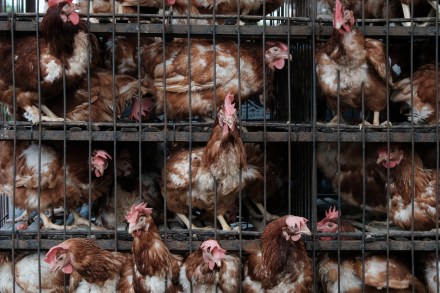
They came straight off the back of a lorry and were placed carefully – top to tail - in three cat carriers, two hens in each. Broken feathers stuck from the air vents, bright, suspicious, amber eyes peered out. We drove them home, listening out for any squawks of distress, but they were silent. Bemused, exhausted, probably wearily resigned to whatever fate awaited them next. These former battery hens, who’d spent the entirety of their short lives living in metal cages no bigger than a sheet of A4, should have been on their way to slaughter These former battery hens, who’d spent the entirety of their short lives living in metal cages no bigger than a sheet of A4, should have been on their way to slaughter.
The rise of the village vigilante

From our UK edition

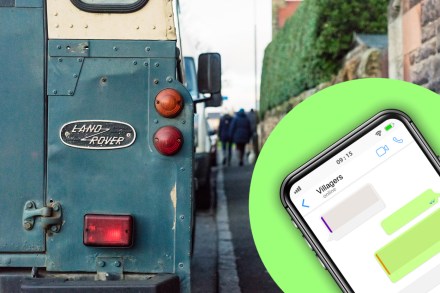
Living off the beaten track was idyllic until one night last November. At 1 a.m. during a particularly heavy downpour, a group of hooded men came onto our property and tried to burgle us. Lulled into a false sense of security after three months in our rural home, we’d casually left our 25-year-old Land Rover Defender next to our barn, rather than locked away inside as it would normally have been.  What if the crims refuse to leave and want a fight? What if one of them gets fatally injured on my property? What if I get banged up like Tony Martin? The thieves had come prepared. Two of them scaled the fence and disabled our electric gates, ready for a quick getaway. Another one waited in the lane, engine running.

One shark attack shouldn’t put you off Tobago

From our UK edition

Last week, the tiny Caribbean island of Tobago was left reeling after a British tourist staying there was attacked by a shark. Sixty-four-year-old Peter Smith from Hertfordshire was left with serious injuries to his left arm and leg, puncture wounds to his abdomen and injuries to his right hand after the attack. He is currently being treated at the island’s Scarborough General Hospital, where he is in a stable condition. The shark which bit him, believed to be a ten-foot long bull shark, has not yet been spotted or caught. Hotel staff, tour guides and boat owners will now be asking themselves if they could have done anything more to help prevent this terrible incident. The beach where the tragedy struck is in Courland Bay on the south-western edge of the island.

Should you buy a vineyard?

From our UK edition

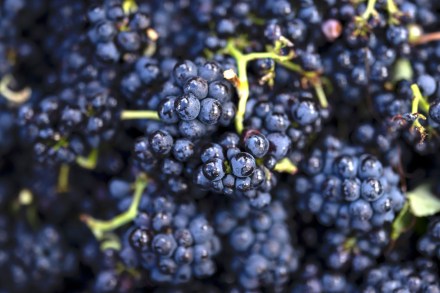
Sometimes you only realise a trend is happening when you inadvertently become a part of it. Last summer we moved house within the southeast from town to country, having deliberately sought out a property with land that would be suitable for planting a small vineyard. A lot of the big English wineries like Chapel Down procure good quality grapes from nearby growers We’ve since discovered that we are far from alone. So many others have had the same idea that most estate agents now employ a ‘vineyard specialist’ who can spot potential and match would-be viticulturists – people who cultivate and harvest grapes - with their future vineyard. The enthusiasm for English wines is growing apace.

I’m an Aga convert

From our UK edition

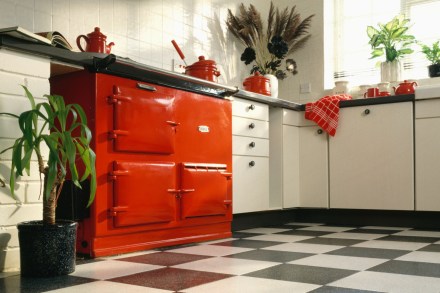
I never thought it would be possible to feel such emotion about a lump of hot metal but I am in love and like all new passions it’s threatening to become all-consuming. I find reasons to drop it into conversation, I seek out others and join groups on social media that share the same predilection just for the joy of swapping photos and snippets of information. Admirers of the Aga will tell you it’s so much more than just a cooker The object of my adoration is the half-a-tonne of enamelled cast iron that squats at one end of the kitchen in my new house. Nestled firmly into a brick hearth, I call my Aga my green goddess and oh yes, she’s definitely a ‘she’. How do I know? For a start, she’s a consummate multi-tasker.

A school phone ban is long overdue

From our UK edition

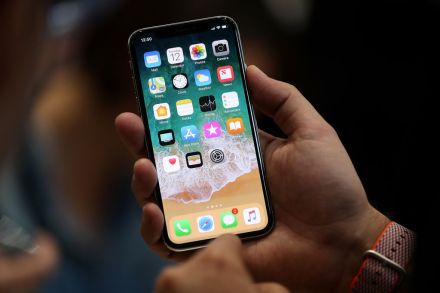
Around the time my eldest son started secondary school, I had a worrying glimpse into his private life. We’d put him to bed at 9 p.m. but asked that he leave his mobile, one of my old iPhones, downstairs next to me. I was horrified to see the non-stop barrage of messages coming in as late as midnight. These children – all just 11 or 12-years-old – clearly were not asleep as they should have been on a school night. Other parents, with children as young as six, say they’ve experienced similar realisations.   I heartily wish my son’s school had banned smartphones during the school day, something the government has now said it will ask schools to consider.

Country strife: the covert campaign against field sports

From our UK edition

41 min listen

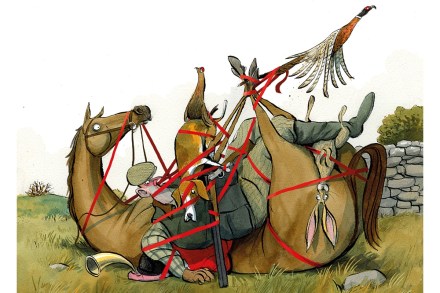
This week:  It’s a special episode of the Edition podcast because our very own William Moore writes The Spectator’s cover piece, on how rural pursuits are being threatened by lawfare from countryside groups. Jonathan Roberts, who leads the external affairs team at the Country Land and Business Association, joins us to discuss whether disillusioned rural Tories could look to Labour at the next election.  Also this week:  In his piece in The Spectator, journalist Andrew Kenny writes about the rise of Julius Malema and his Economic Freedom Fighters.

Testosterone transformed my life. Why won’t GPs prescribe it?

From our UK edition

Last summer, I became a participant in a covert drugs deal. I have never considered doing anything illegal, but I was desperate. This is how it happened. I was on a weekend away with friends, some of whom were women in their forties and fifties. I discovered that one friend, who lives an ex-pat life in a Middle Eastern country with fantastic private healthcare, had recently been given testosterone gel as part of her HRT medication. She had noticed a sharp and very welcome improvement. She reported feeling more alert, less forgetful, more able to get up off the sofa and be active and less likely to anxiously sweat the small stuff. I was fascinated. I had been on HRT (oestrogen and progesterone) for about six months, but I still felt terrible. Pre--menopause, I was full of energy.

Spare a thought for the A-level class of 2022

From our UK edition

If you have an 18-year-old in your life, as I do, or even if you vaguely know of one, please take a moment to think kindly of them and wish them well today. Today is A level results day and for my son and his peers, taking their A Levels in May and June was their first ever attempt at sitting a formal exam. Can you imagine just how unprepared most of them must have felt? In March 2020 they had the GCSE rug suddenly and unexpectedly whipped out from under their young feet, just as they were preparing to ramp up for the final push towards exams which never happened. I remember only too vividly the feeling of total freefall and bewilderment that descended following the government announcement that there would be no exams whatsoever for the foreseeable future.

My family and the scars of forced adoption

From our UK edition

I was nearly 40 when I discovered that I had an older brother. My lifelong family position as the eldest of four evaporated in a flash one Sunday afternoon in 2008 when my mother called us all together at her house, saying she had something she needed to tell us. She opened a box file and with trembling fingers pulled out a black and white photo of a baby. It turned out that my mum, who died suddenly and unexpectedly of Covid in February of this year, had been one of a number of unmarried women — there could be as many as 250,000 — forced to give up their babies for adoption between the 1950s and 1970s.

Britain is a tolerant country and a few football racists don’t change that

From our UK edition

The racist messages sent to England football players in recent days are shameful, but to suggest that the UK is a festering hotbed overflowing with racist thugs is a step too far. Out of the hundreds of thousands of social media posts about the Euro 2020 final, only a tiny number contained racist words. Of course, this doesn't mean we shouldn't speak out against such abuse. What happened is indefensible and the culprits should be dealt with by the police. But the frenzied debate the messages have generated risk giving those responsible the attention they crave and which they do not deserve.

Lockdown has added to the pain of my mum’s Covid death

From our UK edition

Last week, my mum died. In just a few short minutes, she went from being a living, breathing human, to a mere number on the list of daily Covid stats. She’d been on a ventilator in ITU for three weeks, unconscious and fighting for her life. But then, on Thursday, her organs failed, and the machines were switched off. Her name was Mary and she was 74. My overriding feeling is one of immense grief, obviously. No matter how old you are, nothing ever prepares you for losing your mum. But I also feel sadness that she had not been able to properly live her life for the past nine months, and then she died anyway. She got the call up for her vaccination just last week. It’s the kind of irony that would once have made us both laugh out loud.

It shouldn’t just be down to tech firms to keep our kids safe online

From our UK edition

When I’m not being a writer or a journalist, I often go into schools and talk to parents and young children about the benefits of taking a regular break from their phones. It’s the second year that I have co-presented an e-safety campaign for Safer Internet Week and whereas last year I felt we were slightly ahead of the curve, 2019 feels very different already. There’s been a recent spate of stories about young people who have taken their own lives. When I used to do my talk about how beneficial it is to switch off all tech at least an hour before bed, and keep it out of bedrooms, the most powerful example I could use that parents would definitely have heard of was the tragic case of Surrey schoolboy Breck Bednar.

What is it about Boris Johnson that makes his critics so angry?

From our UK edition

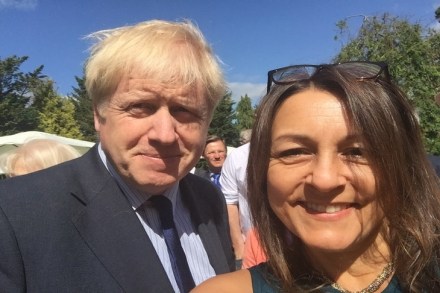
When I posted on Facebook a picture of me standing next to Boris Johnson, I expected a few likes and probably a few more harsh comments. What I didn’t anticipate were the hundreds of words of ranting vitriol posted by friends, some of whom I had known since school. My picture was harmless enough: a selfie, quickly snapped when Boris visited my hometown of Sevenoaks on Monday. It wasn't a ringing endorsement, or even an approval of him. And it offered no comment on what he stands for. It was simply a picture of us squinting at the camera with the caption: “kicked off the week with this guy, our next PM to be?” The first few comments were along the lines of “Well, let’s hope your week improves!” and “Oh no, not you as well?

What I learnt trying – and failing – to win election as a Tory councillor

From our UK edition

"I'll say this for you love, you've picked a great time to go into politics!" The man on whose door I had knocked guffawed loudly before adding kindly, "but I admire you anyway, I shan't be voting this time, can't trust any of them, but good luck to you all the same." At least it was a friendly encounter. Not all of them were. My timing was impeccable. With the Brexit mess obscuring everything and Parliament in meltdown, I decided to stand in a marginal seat for District Council election. As a Conservative candidate. Demonstrating the same great timing back in the summer of 2008, bang on the eve of the financial crash, I used my BBC voluntary redundancy money to go into property development.

Surviving Mothering Sunday when the bond with your mother is broken

From our UK edition

Just how hard is it to get through Mothering Sunday when you don't feel unconditional love and gratitude towards your own mother? Every year I am reminded of a friend who finds it one of the most difficult days of the year. My friend, let's call her B, breaks out in a cold sweat when the Mother's Day cards start filling the display stands in the shops. 'I hate it', she told me, 'the hypocrisy, the guilt trip, all of it. I literally feel huge anxiety when I have to choose a card to send.' B's difficult relationship with her mother started when she had children of her own. Until then she'd spent a lifetime being a parent to her own mother, a complex woman who'd endured a terrible childhood and an abusive marriage.

What’s the problem with Anthony Ekundayo Lennon identifying as black?

From our UK edition

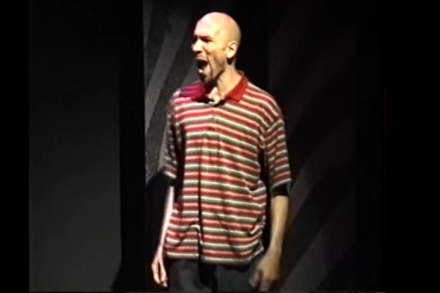
Anthony Ekundayo Lennon, the white director who has identified as black, is on the receiving end of a backlash from black and ethnic minority actors. They are aggrieved that Lennon has taken a black person’s place on an Arts Council England-funded programme. The Independent’s Paula Akpan lambasted Lennon, “you don’t get to pick and discard which signifiers of blackness you’re going to wear. Choosing when to don a cape of blackness is a luxury that black people do not have”. Yet substitute the word ‘black’ for ‘woman’, and you suddenly see why it was possible that Lennon felt he could simply become whatever it was he felt inside.

The delights of divorce

From our UK edition

Looking around at my immediate group of female friends I notice a marked difference between the seven or so of us who are married with kids, and the three who have left their husbands and are going it alone. Guess which group appears to be more content? Yes, it’s the divorcees. I have been a long term, close up observer of the lives that my newly single friends carve out for themselves and I have to say, I’m envious. The Sunday Times finds that 53 per cent of women report that they are “much happier” post-divorce. This does not surprise me.

The royal wedding exposed the media’s tokenism

From our UK edition

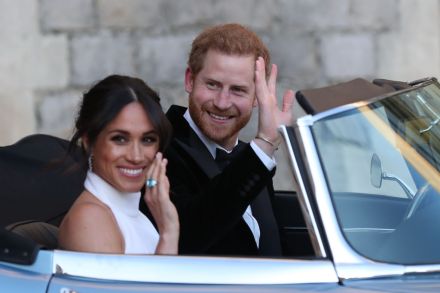
I was lucky (or unlucky, depending on your sensibilities) to be in a prime spot for Saturday’s royal wedding. Wearing my BBC producer hat, I worked on the huge outside broadcast on the Long Walk in Windsor. Thursday and Friday was all bunting, dogs sporting union jack collars and the Household Cavalry rehearsing. I interviewed people who’d come to camp out, weaving my way through the increasingly packed streets, observing, gathering material and soaking up the atmosphere. It seemed very much like any other big ceremonial occasion. But on Saturday, something changed. Colour. People of colour to be precise, at first just one or two, but as the clock ticked towards midday, everywhere I turned in the area behind the BBC and ITV purpose-built studios, I saw black and brown faces.

What Donald Trump can teach us about dealing with bullies

I’ve been watching with interest the way Donald Trump deals with ‘awkward’ folk. He doesn’t muck about, that much is clear, and you know what? It works. He’s threatened to take the trade war to China, he’s vowed to “rain down fire and fury, the like of which the world has never seen” on North Korea, and this week he’s basically told Iran it can ‘do one’ over its nuclear deal. Each time he makes one of his ‘my way or the high way’ statements, the world holds its breath. The news media goes into overdrive on what it might mean, what exactly the target of Trump’s venom may do in retaliation and then…nothing.