Spectator Life

Spectator Life

An intelligent mix of culture, style, travel, food and property, as well as where to go and what to see.

The depressing truth about January birthdays

You can change practically anything about yourself these days, from your appearance through to your gender. But one thing remains practically immutable: your birthday. And here some of us are markedly less fortunate than others, as those of us who made our entry into the world in early January well know. Having a birthday at this time of year means that, in birthday terms at least, you have drawn a very short straw (and it probably won’t have a cocktail attached).  We early January babies already face quite enough dampers on our celebrations without the addition of a prohibition clause The first difficulty is simply party fatigue. This was less of a problem when I was growing up than it is now.

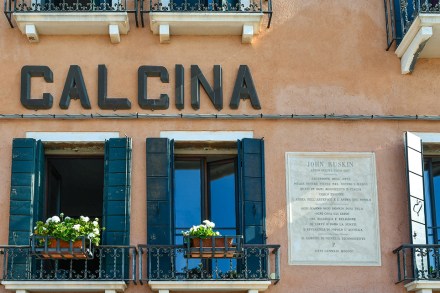
‘The lasagne is perfect’: Hotel La Calcina, Venice, reviewed

Pensione La Calcina is one of John Ruskin’s houses in Venice. He stayed here in 1877, after completing The Stones of Venice and going mad, and there is a plaque for him on the wall: a stone of his own. It is next to the Swiss consulate on the Zattere, but never mind them. I think the Zattere is for people who have tired of Venice. It has a view to the Giudeccacanal, and the waterbus to the airport: to the exit. You can breathe here. I am staying in San Marco, where I can’t. My son falls from a water gate into a canal, and Italian grandmothers tut at us, and we get sick, which my friend says is ‘very chic in Venice’. Before we get sick, we eat at La Calcina.

Would you sign a relationship contract?

What makes a relationship work? I look at the happiest, most stable couples I know and wonder what the trick is. Did they spot problems early on and talk them through? Do they simply accept each other’s flaws? We all have foibles; a relationship is simply a matter of deciding which ones we can live with. I came across a couple recently who had their own approach: a relationship contract. Americans Simone and Malcolm Collins are big names in the pro-natalist movement. They have made it their mission to convince people to take relationships more seriously, ideally with a view to having children. They are now married, but prior to doing so, they had in place their own contract.

Lesson one of ferret racing: don’t pick them up

The British are fond of ferrets. There is a portrait of Queen Elizabeth I at Hatfield House holding one on a collar and lead. For Yorkshire miners in the 1970s, tales of ‘ferret-legging’ – an endurance test whereby two of the rodents were put down competitors’ trousers – were legendary. (The world record is held by Frank Bartlett, a retired headmaster, who managed to endure the bites and scratches for five hours, 30 minutes.) So it feels a little odd that ferret racing was invented in the United States. Rather than being conceived in the backroom of some raucous Jacobean tavern, it was a Friday night distraction for rednecks laying oil and gas pipes through the North American wilderness.

Can England beat India at home in a Test series?

It is surely the ultimate challenge in international cricket: winning a Test series in India. It’s the pinnacle for a Test team, much harder than in Australia. India have lost only one home series in 19 years, in 2012, when Graeme Swann and Monty Panesar spun Alastair Cook’s England to an epic victory. The latest instalment of this marquee series is almost upon us, and will be a chance to see whether Ben Stokes, Brendon McCullum and their Bazballers can deliver when the odds look stacked against them. Or is it going to be one of the last rituals before Test cricket becomes a quirky occasional outing for a handful of countries?

The strange rituals of Taiwan’s bin men

The bin system in Taiwan is strange. There is no single bin day. A citizen retains responsibility for their rubbish until the moment the bin lorry arrives on their road, at which point they must take it upon themselves to put it into the appropriate receptacle or shredder. In my bit of Taipei, where my university sent me for a year to study Mandarin, the lorries came almost every evening. Each neighbourhood had two slots – mine were at 18.30 and 21.20. Before the lorries left, they would play loud warning jingles. Sometimes this was Beethoven’s ‘Für Elise’, and sometimes it was ‘A Maiden’s Prayer’, a Polish piano piece also heard on Taipei city buses.

In search of the perfect chocolate cake

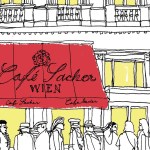
What Victoria is to a jam sponge, so is Sacher to chocolate cake. It’s a man, a hotel and a cake and, indeed, shorthand for a city. The lines of people outside the Sacher Hotel café in Vienna for chocolate cake with whipped cream on the side are looking for a Viennese experience, like schnitzel, Strauss waltzes or pictures by Klimt. Sacher cake is something you find everywhere, but this one is grounded in a particular place, the Café Sacher. The 360,000 Sacher tortes of varying sizes that are made yearly in its manufactory and dispatched in classy wooden boxes are the exemplars of a formula that has taken over the world. It’s not every hotel where you get chocolate cake for breakfast The cake predates the hotel.

Ten novels about flooding

Shropshire was named this week as an unlikely entrant in the top ten global dream travel destinations for 2024 – alongside more predictable contenders like Mauritius. This news received extensive media coverage, most of which featured serene, summery images of Ironbridge, the Georgian engineering marvel that is the county’s most recognisable attraction. There was something wonderfully British about the fact that, at the very moment this story appeared, Ironbridge itself was at the centre of flood defence efforts to stop the swollen River Severn bursting its banks.

How BA lost the plot

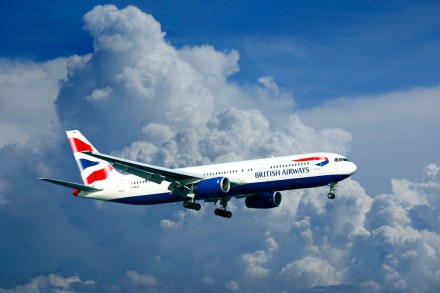
I am writing this from Nashville, Tennessee, where British Airways was supposed to have flown me and a planeload of Boeing 787 customers on a direct service from Heathrow. However, the night before our intended departure I received a terse message from the airline saying that the flight had been cancelled. A later email informed me that I would be flying on their code-share partner American Airlines (AA) to Charlotte, North Carolina. Then after a layover I would eventually be deposited at my destination. There is mounting frustration at what they say is BA’s ‘unreliability and general low standards’ Not surprisingly the American Airlines flight was rammed with passengers, many similarly bumped BA customers.

There’s something sad about Sandbanks

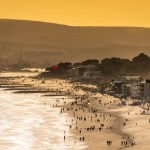
I’ve always had a soft spot for the English seaside. It’s idiosyncratic, a little kitschy, a little gross. There are those pre-war beach windbreakers. There are tuna and sweetcorn sandwiches in packed lunches. There’s a mangy dog nipping at your feet as you run into icy waters. It’s always windy, often pebbled, and full of litter. The spit of sand stretches out along the English Channel and unfurls into Poole Harbour We love it like we love mushy peas – that is to say we learn to love it. But Sandbanks is nothing like that. Sandbanks is considered a cut above, and it is. The chintzy aspects of seaside towns like Paignton and Bognor Regis are lost on Sandbanks and its £13 million bungalows.

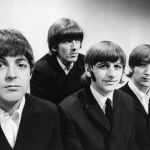
Flavour of the month: January – robots, Dr Who and The Beatles

Welcome to the month that faces backwards to last year and forwards to this – which is why it’s named after Janus, the Roman god of transitions, who himself has two faces. Read on to discover January’s trivia, including a joke from Stevie Wonder, a mistake by David Blunkett’s officials, and the reason Heather Mills thinks her daughter is musical … 1 January 1900 – Nigeria becomes a British protectorate. Today the country is home to approximately one-fifth of the world’s black population. (230 million out of 1.2 billion.) 2 January 1921 – premiere of the play R.U.R. by the Czech writer Karel Capek. The play gave us the word ‘robot’ – the roboti are artificial people used to perform tasks for humans. 4 January – World Braille Day.

How am I supposed to remember what happened in The Tourist?

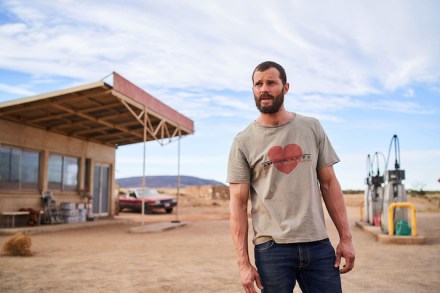
Hooray, I thought. There’s a new season of The Tourist. I remember liking that, I thought. It was that thing with the bloke in Australia, wasn’t it? And I was all set to settle down for a good binge, when I realised that I had almost literally no idea what had happened in the first season. This is a personal grumble, but I’d bet dollars to donuts I’m not the only one in this position.  One thing I knew is, it was confusing. There was a bloke in, yes, Australia, who had had a bump on the head and didn’t know who he was, except he was Jamie Dornan. I remember there was a bit with some LSD, and recalling the plot was quite like that too. Someone was trying to blow him up (or maybe he was trying to blow someone else up).

Have we just discovered aliens?

It’s one of the greatest puzzles of the universe, and one that has vexed humanity ever since we first gazed at the stars and thought of other worlds. Is our Earth the sole place that harbours life, or might it be found elsewhere, among the trillions of planets, star systems and galaxies? As Arthur C. Clarke put it: ‘Two possibilities exist: either we are alone in the universe or we are not. Both are equally terrifying.

The sad decline of Piccadilly Circus

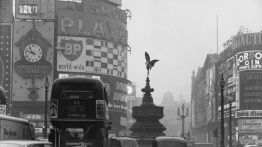
It’s always sad to see a beloved landmark lose its identity – but when the landmark in question is one of the most recognisable places on earth, it’s doubly troubling. In recent years, Piccadilly Circus, once described as ‘the hub of the world’, has descended into a shamefully hollowed out sideshow. Stately Edwardian buildings, once home to department stores, elegant restaurants and upmarket entertainment venues, lie empty or have been colonised by dubious landlords and cancerous ‘candy stores’. All of life seemed to congregate here – it really did feel like the epicentre of the world The West End has always been London’s beating heart but these days the old ticker is in need of a defibrillator.

What critics get wrong about Zulu

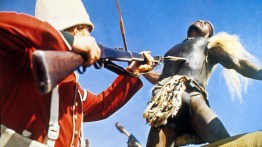
It is a great mystery how Zulu, a tale of imperial derring-do from the Anglo-Zulu war of 1879, has avoided being cancelled. On the face of it, this is a film that revels in one of the most heinous, most blood-thirsty chapters of our colonial past, one tinged with technologically enabled white supremacy. Here is a war film about 140 white Europeans who take on a Zulu force of 4,000 and defeat them, thanks largely to the rapid and orchestrated fire of short-chamber Martini-Henry rifles. (‘And a bayonet,’ as Nigel Green, as colour sergeant Bourne, puts it, ‘with some guts behind it.

Two bets for the Cheltenham Festival

At 8 a.m. this morning, my column was done, the ‘i’s were dotted, the ‘t’s crossed. I had even suggested a headline, ‘Three mudlarks for Sandown tomorrow’.  Within half an hour, I would be pressing the send button on my weekly email to my friends at Spectator Life. Sadly, just 20 minutes later, the whole column was redundant. My three fancies that loved heavy ground would not have the chance to lark around in the mud: tomorrow’s Sandown card, the highlight of which was due to be the final of the Unibet Veterans’ Handicap Chase, was abandoned due to waterlogging.

In praise of Israeli women

I’ve always admired Israeli women. Though I didn’t see any in the flesh before my first trip to the Promised Land 20 years ago, at Sunday School I far preferred the complex women of the Old Testament – Deborah the judge, Yael the assassin, Ruth the first philo-Semite – to the repenting hookers and grieving mothers of the New. The book of Exodus revolves around the actions of five women; the Talmud teaches that ‘the Jewish people were redeemed from Egypt because of the merit of the righteous women of that generation’.

The mystical power of Assisi

In the courtyard of the bishop’s palace, the young man who would become Saint Francis stripped naked in front of his parents and various town and church officials. He handed his clothes with a bag of money on top to his father, saying: ‘I give these back to you. From now on I have one father; the Father in Heaven’. Deep in the basilica is a striking painting depicting a six-winged Seraphim angel bestowing the stigmata with what looks like lasers It was a turning point in his life (not to mention devastating for his parents).

The joy of middle-aged football

I can tell when my life’s going OK. My stray thoughts are not about what a loser I am but about what a terrible footballer I am. Why didn’t I shoot when I had that chance? Why did I pass to the opposition? And, oh dear, I wonder how Diego’s knee is? For almost a decade I’ve been playing football on Saturday mornings in a local park in London. For the first few years I was a fair-weather visitor, shy about it. I’m not much of a joiner and I don’t have much chat about the transfer window, so I felt awkward and almost stopped going. A couple of others were middle-aged and rusty like me, so they probably didn’t really want another old guy getting in the way. But I gradually felt that they didn’t mind me being there, that I was a valid part of the mix.

My adventures in rosé

During the festive season, I usually spend far too much time thinking and talking about politics. But the latest was an exception. One hostess fixed me with a gimlet eye and announced that she had forbidden any discussion of Israel/Palestine. At a recent dinner party, the table had been repeatedly banged, someone had stormed out and others were now on non-speaks. I quoted the late Clarissa Eden. During the Suez crisis, she felt that the Canal was running through her drawing-room. This girl gave a hearty nod in agreement. I was happy to agree with the ban, but declared my surprise. How could anyone be so sure of the solution? The most I could come up with was ruminative gloom.

Il Est Francais really is something special

Some people seem to get all the bad luck. No Cheltenham Festival regular will ever forget the 2020 Triumph Hurdle when Goshen, trained by Gary Moore and ridden by son Jamie, came to the final hurdle coasting and 12 lengths in the lead, only to make a fractional misjudgment and hurl his rider into the turf. The communal ‘Oh my God, no’ gasp of horror that swept the stands lives for ever in my mind. But for the Moores things got worse. In December that year Jamie broke his back. In May 2022, brother Josh nearly died after a fall in which he broke his leg, many ribs and suffered a punctured lung – injuries which forced him to quit the saddle.

Could a 100-bottle limit help me cut down on drinking?

My New Year’s resolution is to cut down on my drinking. I’m not talking about bringing it within the NHS’s recommended limit, obviously. I’ve never met anyone who confines their alcohol intake to 14 units a week, which amounts to a bottle and a half of wine, ideally spread over many days. I’m thinking of something more in the region of two bottles a week. Why not simply stop altogether? Partly because I’ve tried that before and don’t have the willpower. The longest stretch I’ve gone without a drink was in the two years leading up to my marriage in 2001, because I didn’t think Caroline would go through with it if I didn’t take the pledge.

Farming is fighting its own culture wars

I have come late to farming. There was no epiphany, no eureka moment watching Clarkson’s Farm. The blame lies partly with my neighbour, who’s my running partner and a fellow Pony Club Dad. He’s an agronomist and would enliven our jogs along country lanes with talk of crop rotations. In the end, that other form of muck-raking – journalism – provided the shove I needed. After 24 years at Sky TV, I joined the first presenter line-up (of many) at GB News. I went in the hope of a fresh start at an exciting new channel, only to be thrown out of it when my ratings failed to pass muster. So, at 55, I am a student again. Or, as those who find themselves at the Royal Agricultural University in Cirencester prefer, an ‘agri’ at ‘siren’.

The strange return of Cilla Black

She was an unlikely contender for fame from the outset, with a pub singer voice and a nose so  prominent she would later have it surgically reduced. But, with her Scouser-next-door persona and trademark cropped hair, Cilla Black was in the right place at the right time: she rode the popular wave created by Beatlemania and its attendant appetite for all things Liverpudlian. This led to national stardom as a singer. Then, when her pop career waned, instead of disappearing into obscurity, Cilla managed to relaunch herself into a spectacular second career as one of the biggest names at the lighter end of TV light entertainment. Now, some nine years after her death, Cilla has achieved her most unlikely success yet – by becoming a household name among gen Z.

The mind-altering potential of fire walking

Thirty of us gathered in the upstairs room of a local hospice, subdued as we contemplated the imminent laying of our raw flesh onto fire. Steve from Peterborough arrived to give a pep talk to prepare us for what awaited us in the car park below. We sighed empathetically when Steve told us he had failed maths O-Level three times He was, he said, an expert fire walker, trained by the man who trained the most famous fire walker in the world – the American motivational guru Tony Robbins, an incredible-hulk of a man known for whipping people up into frenzies of self-belief and positivity. On YouTube you can see him booming, ‘Yes! Yes! Yes!’ as he steers a terrified Oprah Winfrey along a path of red-hot coals.

David Bowie: the man who fooled the world

In 1973, everyone loved David Bowie. Album buyers had put Ziggy Stardust, Aladdin Sane and Hunky Dory high in the charts, while singles buyers had bought similar success for ‘Drive In Saturday’, ‘Life on Mars’ and ‘Sorrow’. Then right in the middle of this, he released ‘The Laughing Gnome’. In truth, he probably didn’t. It was a twee little novelty song recorded six years earlier, featuring Bowie duetting with the eponymous gnome. Nobody could believe that Bowie had recorded it – less still that he’d written it – but the more you know about him, the less surprising it seems. In fact, ‘The Laughing Gnome’ says more about David Bowie than anything else he did. It was early evidence that he would do anything to be famous.

The joys of light verse

Coleridge defined poetry as the best words in the best order and at no stage did he ever suggest that being light-hearted in verse is any less worthy than the solemnest offerings of Milton or of his old pal Wordsworth. Nevertheless, there is a feeling among many who take their art seriously that anything in verse form liable to raise a good natured smile is somehow not the real thing, no matter how well it is executed and however perfectly it conforms with rhyme and metre. Since the earliest days of the quill pen, some our greatest poets have deliberately used humour to enlighten, inform and indeed entertain their readers And yet since the earliest days of the quill pen, some our greatest poets have deliberately used humour to enlighten, inform and indeed entertain their readers.

Will we worship the AI?

It’s hard to believe that only five years ago the word/acronym AI was barely seen outside the science pages, and even then solely in the most speculative way: as something that might happen, in a few decades, maybe, if you’re the dreamy type. But also maybe not. Now there literally isn’t a day that goes by without some new AI revelation/epiphany/scare story.