Spectator Life

Spectator Life

An intelligent mix of culture, style, travel, food and property, as well as where to go and what to see.

Why British toilets are revolting

First things first, as this is an article about toilets, we need to establish if the word ‘toilet’ is an acceptable word. Here at The Spectator, editorial opinion on this crucial point is deeply divided. Some have expressed a preference for ‘bog’. Others opt for 'john', 'jakes', or lavatory.

The curious life of an antique dealer

Over ten years ago years ago, I made the transition from auction house ‘expert’ to antiques dealer. And it came as a rude shock. Nothing like a healthy dose of comeuppance; deference vanished overnight.   Auction houses are open to the public for consultation, even the grander ones in London’s West End; or that is how it was in the early 2000s. Back then, anyone could turn up (without an appointment) and ring a buzzer on the front counter. And, as an auction specialist, you played the part. Keep ‘em waiting for ten minutes, then a star-like descent down to reception, where a forelock-tugging hopeful awaited with Tesco bag and fake Fabergé frog in ‘resin’ — a useful auction house term to describe plastic.

Four bets for Ayr this weekend

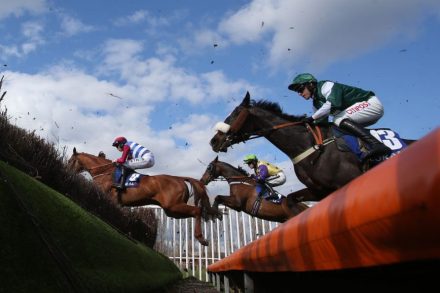
The respective favourites have won this year’s Boyle Sports Irish Grand National at Fairyhouse and the Randox Grand National at Aintree, and that trend could well continue at Ayr tomorrow in the Coral Scottish Grand National (3.35 p.m.) The forecast favourite tomorrow is the Irish-trained raider Kim Roque, who comes here off the back of a big run at the Cheltenham Festival last month, with fourth in the Rosconn Group Fulke Walwyn Kim Muir Challenge Cup. However, odds of no bigger than 5-1 are skinny enough in this 21-runner contest for a first prize of more than £112,000. Last weekend’s marathon contest at Aintree proved that few chasers truly stay four miles or more. There were plenty of horses in with a chance two fences out who clearly did not last home.

I won’t blame myself for my son’s autism

I’m a writer, and I’m raising my son knowing that he might never understand what I do for a living.  He’s just turned four. Last year, he was diagnosed with autism. I knew that the NHS was overwhelmed with referrals, so I was expecting a long process. Instead, all it took was a single hospital visit with a pediatrician. She had no doubts.   Autism is not a life-threatening illness like congenital heart diseases, and it’s not a debilitating mental disorder like schizophrenia. But, depending on where a child falls on the spectrum, it can require lifelong care. It’s not what I would have chosen for my son. It’s not what any parent would choose.

In praise of the paperback

At long last, hardback books, it seems, are finally drifting into, if not obsolescence, then at least abeyance. It turns out that punters are chary of buying hefty tomes, and so publishers are considering putting books out in paperback first. For once, this is a literary development that I will be applauding.  For centuries, hardback books were the only thing you could buy. In the 1920s, it was impossible to stroll along with a paperback of Woolf’s To the Lighthouse in your pocket to impress the ladies, since paperbacks of that sort did not exist. They are a relatively new beast on the literary scene. It was Allen Lane who brought the sixpenny paperback into the world in the 1930s, a feat for which he should be lauded, on a par with Alexander Fleming.

My shameful confession: I’m not a good baker

Contrary to popular conception, I’m not a great baker. I was hired by Bake Off for my judging experience, not my baking skill. I’m a good cook and I know what’s right and wrong about a cake, but I suspect my own baking efforts would not often get Paul Hollywood’s nod of approval. On the day before Good Friday I decided to make hot cross buns. They were a total disaster. Analysing them, I could hear myself say: ‘No flavour. How old were the spices you used? And when did you buy that yeast? You do know you should chuck out spices every year and that instant yeast does not last for ever?’ So, we went to Tesco and bought new spices and yeast. The second attempt was much better, but still not wonderful. We went late-night shopping and happily the Co-op still had hot cross buns.

The inner secrets of Rory McIlroy

It’s easy to be sceptical about top sportsmen turning to psychologists for help. A bit precious, no? After all, what’s wrong with the good old Fergie hairdryer treatment to unmuddle the thinking of some bewildered player? But when you hear Rory McIlroy extolling the virtues of the man who gets inside his cranium you start to think a little differently. Dr Bob Rotella, a craggy sports shrink from Vermont, is, it turns out, one of the key members of McIlroy’s team and they have been working together for years. McIlroy paid a very handsome tribute to Rotella after his second successive Masters victory.

How do you make a tart that doesn’t really exist?

There are few things more delicious than falling down a rabbit hole. No, don’t worry, I’m not serving up a second recipe for rabbit in a row. I mean discovering a recipe or dish which, not only have I not cooked or tried before, but haven’t even heard of. A little while ago, a reader asked me about Hawkshead cake, which Beatrix Potter used to make with her husband at Christmas. Hawkshead is the village Potter grew up in, in the Lake District, and the cake is actually more of a tart, made with puff pastry and filled with currants and syrup. This is where the proverbial rabbit hole came in, because I couldn’t quite stop there.

My time as an overdrawn Coutts customer

Dear old Coutts, the private bank used by the King, now requires clients to have £3 million in the kitty before they deign to allow you to open an account. The £3 million minimum deposit is the biggest single jump of the bank’s wealth test in its illustrious 333-year history, designed to attract ‘ultra-high-net-worth individuals’ apparently. Whoever they are, I am not one of them.   I had an account at Coutts opened for me by my mother when I was 15 at a small, rather cosy little branch it used to have on the corner of Sloane Street and Cadogan Square.  As I went in and out, I got to know the cashiers who greeted me by name, which made me feel I’d really arrived, although where I wasn’t quite sure.

Meet the humans training robots at the ‘arm farm’

AI is set to take over all cognitive tasks in the next few years. Your hard-won career as a paralegal, data analyst, radiologist, coder or novelist is about to be hacked out from under you. So far, so apocalyptic. But what about the jobs that are primarily embodied? Sous-chef, rehabilitation nurse, plumber, dog-trainer? These are expected to lag behind, awaiting the next generation of robots. But there is an important further question. Who will train these robots? Answer: you will.  This is the concept of the arm farm. On an arm farm, practitioners of the aforementioned jobs - chefs, nurses, plumbers etc. - wear Go-pro helmets, pressure-sensitive gloves, even full motion-capture rigs, and do the jobs that the robots will ultimately usurp.

The soft power of Ukrainian food

New wars bring new fundraising efforts. Since Russia’s invasion of Ukraine, Ukrainians who already lived in London or moved here as a result of the war have conducted a subtle but concerted gastronomic campaign on behalf of their country. Somehow, this avoids all shrillness – unlike the dreadful and relentless Cook for ‘Palestine’ movement.  The Ukrainian food scene doesn’t crow about good and evil but it takes a position on those questions anyway – of course. A wartime enterprise can't do anything else. But with front people like the beautiful, tireless Olia Hercules, who has raised millions for her homeland through culinary ‘cultural diplomacy’ missions, it’s an altogether more skilful piece of food politics than other wartime campaigns.

The next Renaissance is coming

When we think of the Renaissance, our minds naturally drift to figures such as Leonardo da Vinci and Michelangelo – and rightly so. These are individuals who transformed our understanding of art, science and human potential. What we tend not to consider, however, is how close we might be to another cultural revolution.  That is the argument now circulating on parts of the internet: that after a prolonged period of digital saturation – defined by algorithms, passive consumption and an overabundance of content – we are approaching a point of correction. Just as the original Renaissance followed a period of stagnation and upheaval, this new phase will be marked by a renewed emphasis on creativity, craft and intellectual depth.

School dinners are glorious

I don’t much miss being a teacher. A pathological dislike of teenage boys, a congenital inability to remember historical facts and an unwillingness to spend my spare moments lesson-planning rather than go to the pub meant that a brief career diversion to pay off my overdraft did not become a lifelong vocation. But there is one thing I do hanker for, that makes me briefly wish I was back in the classroom: the daily delight of school dinners. After four hours of trying to wrangle the Year 10s into memorising the membership of the League of Nations, sitting down for a steaming hot plate of fish, chips and jam roly-poly was a godsend. It was a little patch of civilisation between shepherding the droogs and staring at PowerPoints.

Bardella, the princess and a very French love story

Princess Maria Carolina de Bourbon des Deux-Siciles isn’t a name that rolls off the tongue – but it’s now on the lips of every socialite and political pundit in France. The 22-year-old Italian aristocrat, who is the elder daughter of the Duke of Castro, was splashed across the cover of gossip magazine Paris Match last week, gazing into the eyes of her new beau. Was he notable for being a duke, a prince or another such member of the hereditary elite? Not at all. The suitor in question was Jordan Bardella: the right-wing powerhouse whom polls suggest will succeed Emmanuel Macron as French president next year.  In an interview with Hello! in 2024, Maria Carolina declared she was ‘still waiting for Prince Charming to come and serenade me with a guitar and a red rose’.

The British road trip is over

You set off on a spring morning, windows down, full of hope. Sunglasses, flasks of tea and a picnic rug are packed. You are ready to experience the freedom of the road, leave your worries in the rear-view mirror, put pedal to the metal (and every other optimistic road trip cliché). Follow the brown signs to the Pembrokeshire Coast 200, South West 660, Wales Way, Antrim Coast Road or any of the other curated, promoted and hash-tagged routes now crisscrossing the UK.

Why exercise music stops you from throwing in the towel

Over the past few months, I’ve been training for the London Marathon, so most weekends I’ve been out running more than 20 miles at a stretch. I carry the usual bits to make these long slogs vaguely civilised – energy gels, a water bottle, a couple of fruit pastilles. They help, of course. But there’s one thing I absolutely cannot do without: music.  Non-runners sometimes ask if I ever feel like giving up and trudging home. And honestly, the only times that’s happened is when my AirPods have died and the music – my invisible pacer, my emotional support DJ – has suddenly vanished mid-run.  This makes sense, according to Victoria Williamson, a researcher and lecturer in music psychology and the author of You Are the Music.

Will genteel customers desert Waitrose?

One of the disadvantages of having a daughter who is both given to wayward behaviour in public and named Rose is that my increasingly frantic cries of ‘Wait, Rose! Wait, Rose!’ make me sound like an especially unhinged proselytizer for the middle classes’ favourite supermarket. When we do eventually make it inside the hallowed doors of Waitrose, however, I can feel my pulse rate returning to normal. Like Truman Capote’s Holly Golightly so famously said of Tiffany’s, it is a place where I feel that nothing bad can happen.   The supermarket has, however, suffered quite a public relations blow recently with its actions involving its former employee, Walker Smith.

Why Prince George should go to Eton

After three years of theatrical um-ing and ah-ing, the Prince and Princess of Wales have seemingly acceded to the obvious: Prince George is apparently going to Eton. Despite their perennial posturing at being a ‘modern’ royal family (is there such a thing?) there was really only one option. Eton is after all – somewhat paradoxically – the only place capable of offering any semblance of a normal adolescence for George, as well as mentally preparing him for kingship. To an outsider, this sounds ridiculous. How can prancing around in tailcoats while speaking unique slang (teachers are ‘beaks’; Year 9 is ‘F Block’) have any bearing on normalcy? Yet normal is relative. One of the first things you realise at Eton is that the exceptional is unexceptional.

Farewell to the final phone-free haven

Shortly before Christmas, I visited Australia for the first time. It’s quite some journey but I was fortunate enough to fly business class with Cathay Pacific – and very plush it was, too. On the first leg to Hong Kong (a mere 12 hours or so), I was just settling into my pod (they don’t call them seats) and was about to nod off when there was something of an altercation across the aisle. ‘I understood that wi-fi would be available for the entire journey,’ said a grumpy middle-aged man, who looked like he was from the Middle East. He might well have owned much of the Middle East for all I knew. ‘We’re sorry, sir,’ said the air hostess. ‘It should be up and running shortly. One of the crew is looking into it.

Take a 16-1 shot for Grand National glory

The whole nature of the Randox Grand National (Aintree, tomorrow 4 p.m.) has changed significantly in recent years and it is not just about the fences becoming smaller and safer. A race that once favoured horses below 11 stone in the weights now favours the classier horses that are carrying more than 11 stone. Here are just two statistics that rather prove that point. In 2005, Hedgehunter became the first horse since Corbiere 22 years earlier to carry more than 11 stone to victory in this famous, marathon handicap chase. However, in the last two years of the race, since the maximum number of runners was reduced from 40 to 34, only one horse has finished in the first four with less than 11 stone.

The empty escapism of ‘cowboy core’

Last week I dreamt I was a cowboy. My name was Billy ‘Toothpick’ Pickett, and I was the fastest pistolero east of Whiskey Row. I dreamt of robbing stagecoaches. I dreamt of playing three-card monte with Toothless Dan down by Granite Creek. I dreamt of owning a Smith & Wesson and shooting buffalo. I dreamt of riding a buckskin stallion named Tex. I dreamt of vintage Americana. And then I woke up.  This was the third cowboy dream in a fortnight. Once again, I had fallen asleep watching videos of cowboys on Instagram and paid the price. For months, my algorithm has been inundated with visions of a neo-Wild West. Videos of Monument Valley and the sandstone rocks of Utah. Young men with mullets camping in the Sierra Nevada.

How to rent a family in Japan

Ever fancied an extra family member or new best friend supplied on demand and available for as long as required? Ever dreamt you could summon up a surrogate to explain yourself out of an awkward romantic entanglement, or a presentable spouse to secure an employment opportunity (like Alan Partridge’s rented wife in the ‘Hamilton Water Breaks’ episode)? All of this, and more, is readily available in Japan, for a fee, courtesy of the ‘companionship agencies’. This decidedly odd business is the subject of the film Rental Family currently on release across the UK.

Gentleman’s Relish is no more

It is the early hours of the morning and an email drops into my inbox. Lacking any kind of willpower, I open it. Now I’m wide awake. Because this isn’t the usual PR slop that starts my days. It’s a tip-off. A big one. A reader has discovered something about a company and they are urging me – me! – to investigate. Adrenaline surges. This must be what it felt like to be Woodward and Bernstein. Only my informant is pointing me in a slightly different direction. Their intel is on Gentleman’s Relish: the incredibly niche spread is disappearing from our shelves. It has been available in the House of Lords dining rooms but for how much longer? Online supermarkets and delis are showing it as out of stock. What is going on?

White port is the new G&T

Spring is here and, as the garden blooms, readers might find themselves reaching for the Pink Diesel to enjoy in the sunshine. But I have another idea: white port and tonic will make you thank God for inventing Portugal and being so good as to align it with England. The great promulgators of white port in Portugal nowadays can be found in the Symington Family Estates. In 1882, 19-year-old Andrew James Symington boarded a boat from Glasgow and headed for opportunities beyond the Clyde. On arrival in Portugal, he worked for Graham’s Port, before breaking out to do his own thing. Symington soon became one of the defining names in Portuguese wine production. A.J., as he’s known in the family, had such success that his descendants were able to acquire Graham’s in 1970.

Why is it impossible to make good coffee at home?

It was when I was staying recently with the Frums in D.C. that, for a dizzying moment, I thought my life-long quest had ended. Nasa can fly us a quarter of a million miles to circumnavigate the moon but nobody has yet, to my knowledge, fixed the perennial problem of making an even half-decent cup of coffee at home. Back to the Frum residence in Georgetown, known inside the beltway as ‘the best hotel in Washington’. It is 8.30 a.m. There is no sign of Danielle, my hostess, but David is at large on the landing, perhaps as he had heard his house guest stir.  ‘Coffee?’ he asked. To my amazement, he flung open some doors outside his master bedroom suite to reveal an entire separate walk-in closet complete with serried rows of glass mugs and a space-age espresso machine.

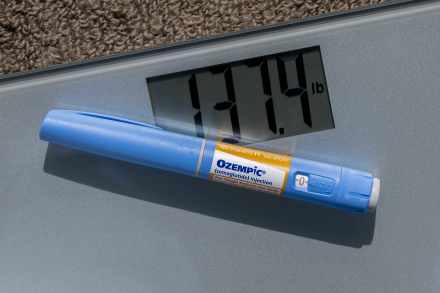
Will Ozempic trigger a big fat divorce boom?

One of the funniest - and in my opinion, falsest - things women have long said is ‘I’m doing it for myself - not for men’ about improving the way they look. Men have rarely said the same about women, which reflects that men have never been principally valued for their looks, historically, as they generally earned far more money than women. Women had to look as pretty as possible in order for a man to pick them and support them financially, thus my brilliant line ‘Men are judged as the sum of their parts; women are judged as some of their parts.

The Magic Faraway Tree is aimed at anxious parents not children

My ten-year-old daughter Rose is a thoroughly modern child in many respects but one endearingly old-fashioned characteristic that she has is a deep love of Enid Blyton. She thrilled to the Malory Towers books, as well as the BBC’s uncharacteristically old-fashioned adaptation, and was equally enamoured of the The Secret Seven, although curiously, she was left entirely cold by the wilder antics of the The Famous Five.   However, a particular favourite were the four Faraway Tree books that Blyton wrote between 1939 and 1951, at the peak of her popularity and fame. They are hardly great literature, but as usual with Blyton, are rich in imaginative vigour, as she follows the fortunes of Jo, Bessie and Fanny, a trio of girls who discover the Faraway Tree.

The strange beauty of Greenland

It is one of the world’s most remote corners – but Greenland is playing an increasingly important role in global affairs. In January last year, the island’s 57,000 residents became an object of desire for Donald Trump. ‘I think Greenland we'll get because it has to do with freedom of the world,’ declared the bombastic President. ‘I think the people want to be with us.’ Six weeks later, the people of Greenland duly gave their reply, crushing their pro-Trump party in an election centred on questions of independence. The ongoing struggle for control of the Arctic motivated Trump’s demands. The British government believes that the Arctic Circle will be ice free each summer by 2040; some experts predict it will be sooner.

Bovril’s infallible power

Nations are built from eating habits as well as masterpieces. In Britain, there’s one that is both: Bovril. This thick, salty meat extract paste may not be as wise as George Eliot’s Middlemarch, as beguiling as Rossetti’s ‘Proserpine’, or as symbolic of greatness as the Palace of Westminster – and yet it has a clear place among our nation’s intangible cultural assets. As both a spread and a drink, Bovril may be just a wartime ration, a tonic for invalids or a companion on football terraces but it still marks a serious, if ordinary, contribution to our common life.  That contribution, however, may now be under threat.