Spectator Life

Spectator Life

An intelligent mix of culture, style, travel, food and property, as well as where to go and what to see.

Should men wear jewellery?

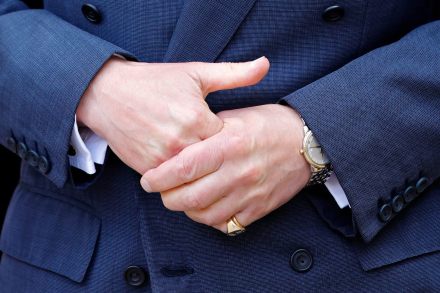
In times past, any self-respecting man of a certain class would have been dripping in jewellery. Henry VIII is said to have owned no fewer than 700 rings – almost as many rings as wives. Ruby rings, gold necklaces, diamond earrings, you name it: jewellery was not just reserved for noblewomen and Queens of England, it was fair play in Tudor England for both sexes. Fast forward to the 21st century and, as a rule, you won’t find the English upper-class males sporting emerald knuckle dusters. But that’s not to say their jewels are lying rusty in a stately home attic. Take a look at any recent red carpet and you’ll see ‘bling’ is finding a new audience among modern alpha males.

Constable should be on a banknote

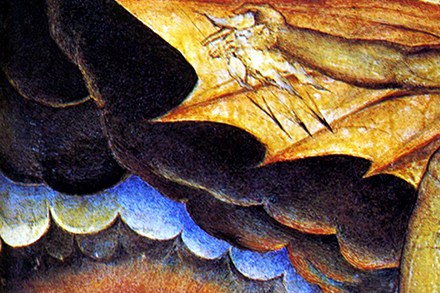
In all the recent hoo-ha about banknotes and who or what to put on them, one name has been curiously absent – that of John Constable. Born 250 years ago this year, he was the son of a prosperous Essex miller and merchant who would rise to become probably the greatest proponent of landscape painting in history.  Where his contemporary Turner – who got the £20 note, of course – had an expressive style that took landscapes towards ethereal impressionism, Constable took nature itself to his heart and somehow made it even better – not unlike a portrait painter flattering his subject. If we weren’t British, we would probably have a major gallery in his name.

The disappointment of a National Trust café

In his novel Coming up for Air (1939), George Orwell has his benighted protagonist, George Bowling, bite into a sausage, only to discover that it tastes of something else altogether: ‘...pop! The thing burst in my mouth like a rotten pear. A sort of horrible soft stuff was oozing all over my tongue. But the taste! For a moment I just couldn’t believe it. Then I rolled my tongue round it again and had another try. It was fish!’  I thought of George Bowling as my disgruntled family sat outside Felbrigg Hall in North Norfolk last week, eyeing me balefully — and I envied him. At least his sausage tasted of something. For I had just spent £43.

Céline Dion doesn’t do politics

It’s the most talked about comeback in France since Charles de Gaulle came out of retirement in 1958. The general may have launched the Fifth Republic, but Céline Dion is limiting herself to ten evenings at the Paris La Défense Arena between September 12 and October 14. Dion is French Canadian, but the French have adopted her as their own, as they did with the Belgian Jacques Brel and Britain’s Jane Birkin.  Dion has been plagued by ill-health in recent years – suffering from an incurable autoimmune condition called Stiff Person Syndrome – and hasn’t sung live for six years.

San Sebastian is a culinary miracle

Across the border from San Sebastian, just down the beach, is France. I never got over that. San Sebastian is so effervescent, so tropical, so fast, that its proximity to the surlier Gauls seems strange. French cooking is the best in the world and there is no point arguing. But somehow it’s been eclipsed by its neighbour on the Basque coast. Biarritz and Bayonne have nothing on this Spanish city that’s pretty much universally called the ‘culinary capital of the world’. Of course, it isn’t quite: that’s still Paris or maybe Tokyo. But San Sebastian might be the best place in the world to eat. There’s a difference. You can’t go to Paris just to eat: even by day two, un autre confit duck leg begins to make you feel sick.

The blessing and burden of belief to David Lodge

When most readers think of the late novelist David Lodge, it is his peerlessly funny and incisive campus novels, such as Changing Places and Small World, that immediately come to mind. While his satires on progressive academia are indeed some of his finest achievements, this is down to Lodge’s Catholicism, which was not merely a religious faith but a central guiding principle of his writing – if you were being pretentious, you might say ‘a calling’ – and his life. He may have called himself ‘an agnostic Catholic’, and from a religious perspective, this may have been true, but it remained a vital part of his literary career.

Ozempic has ruined Easter

It’s a funny thing, being a feminist surrounded by women on weight-loss drugs. As someone who recognises the health risks of being clinically obese, I’ve never been a fat liberationist – but pretty much all of us used to be against prescribed beauty standards. In practice this meant we would critique the harmful impacts of the ‘size zero’ or ‘heroin chic’ trends rather than obsess over having gained a few pounds over Christmas. Yet, with the rise of weight-loss jabs, skinniness has become a norm rather than a feminist discussion. And twee ideas about ‘being good’ or ‘cheating’ have been replaced by – well – feeling too nauseous to cheat at all.  Which is why Easter is a fascinating holiday in this era of weight-loss jabs.

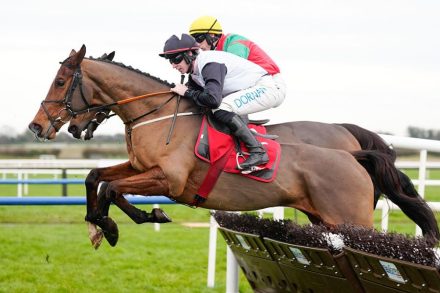
Three bets for Fairyhouse this weekend

Ever since MONBEG GENIUS finished a close third in the Ultima Handicap Chase at the Cheltenham Festival three years ago, it looked only a matter of time before he landed a big handicap. The form of that race could hardly have worked out better. The winner Corach Rambler, running off a rating of just 146 that day, went on to land the Randox Grand National a month later and was eventually rated at 162. The second horse from the Ultima in March 2023, Fastorslow, then running off a rating of 150, won the Ladbrokes Punchestown Gold Cup a month later, beating none other than Galopin Des Champs off level weights. Fastorslow was eventually rated 171. Yet Monbeg Genius, trained by Jonjo O’Neill and his son A.J.

Not all children’s screens have the same effect

When you have children, it’s incumbent upon you to develop a variety of new skills – paramount amongst which is the ability to ignore unsolicited advice. From the moment you share a grainy black ultrasound with the world, it rolls in. Birth, breastfeeding, sleep, diet, teething, clothing, tantrums... everyone’s got ideas about how to do it right. If your choices diverge from their wisdom, you immediately become tenants of different camps. The only sensible approach is to put your hands over your ears and go ‘La la la la’ until your children are emotionally well-regulated, financially independent adults with a 2.1 from a Russell Group university.

The problem with middle-class euphemisms

Why do we still struggle to say what we really mean? In an age when we’re all encouraged to overshare online, we can be remarkably evasive in real life. We’ve moved on a little from ‘he never married’ – but not much. Only last year, I went to a memorial service for a wonderful man who was so camp he made Liberace look like an SAS officer. He had had a lifetime subscription to Royalty Magazine, and a ferociously proud collection of china figurines. At the reception afterwards, a relation of his lamented how sad it was that ‘he just never found the right girl’. It wasn’t quite the time, but I wanted to reply that she’d have needed the ‘full meat and two veg’. See? Euphemism upon euphemism.

Who would ever run a marathon?

Like many good ideas, the London marathon was conceived over a drink in a pub. Inspired by their experience running the New York marathon in 1979, two British athletes met in the Dysart Arms, next to Richmond Park, to discuss staging a similar race in London. It became an iconic event and, such has been its success, organisers are now in talks to hold the London marathon over two days instead of one. The first Olympic marathon was held in 1896 in Athens. Of the 17 starters, only nine completed the gruelling course. The original distance was 25 miles but, for the 1908 London Olympics, the course was extended to 26.2 miles after the Queen asked for the route to start at Windsor Castle and end in front of the royal box at the Olympic stadium. From 1924, 26.2 miles became the standard.

Food to slake boredom: Le Café by Nicolas Rouzaud reviewed

Burlington Arcade on Piccadilly has a caff down from Charbonnel et Walker, where you can buy a box of chocolates as big as a cow, though I never have. Perhaps the time is now? I am being facetious of course: it is Le Café by Nicolas Rouzaud, who oversees the Maison de Haute Pâtisserie at the Connaught Hotel, and two unfortunate branches in Qatar. I wonder if the Hamas leadership visit and stick their fingers in pistachio gâteaux. The café is a marvellous construct, as the arcade is. It exists so that spoilt Regency women, the Chelsea hags of then, could shop without walking in horseshit. I know how they feel. It isn’t lunch in the common sense of it.

It’s time to let go of Tiger Woods

It’s not the newest joke in the world, but worth a quick rerun right now after the latest in a stream of near-fatal road accidents. What’s the difference between a Range Rover and a golf ball? Tiger Woods can drive a golf ball straight for 300 yards. The extraordinary story of Woods’s decline is written in his face: how the lean, mean athlete of the 1990s has developed into a puffy-faced drug user and sometime drunk is something we once associated with former footballers and boxers. Woods is evidence that no one, not even the prodigiously rich and talented, is immune to the destructive power of addiction.

The Bentley Continental GT is a car for the upper-middle classes

Bentley’s Continental GT has a name to suit it: four voluptuous syllables then two emergency stops. This is the first car I reviewed, and it is still my favourite. I think this is because I grew up in Esher, and this is the car of the functional aspirant upper-middle class. It is important to remember that the state limousines – the pair of sinuous maroon sharks that transport the monarch from one demonstration of public magic to the next - are Bentleys, based on the long-gone Arnage, elongated for majesty. The Bentley is for people who work hard: the still responsible. Just enough flash. Not too much. If Aston Martin is British romance and Rolls Royce British violence in lambswool, Bentley is British functionality and taste.

The end of litter is nigh

There are plenty of reasons to be depressed about Britain right now. From our government, which consists mainly of sixth-formers with special needs, to our sporting teams, which conspire to lose across the world. And polls show this depression is real: in a poll on ‘national happiness’ in different countries Britain has plunged from 13th place to 29th, in only a few years.  But if I was asked to name one small but daily aspect of modern British life that gets me down the most, I would answer: litter. All the bloody litter, everywhere. My despair gets so bad that sometimes I convince myself I’m imagining it; did London always look like this? But then I check old photos, and I realise I’m right.

Don’t tolerate potholes

Following Russia’s invasion of Ukraine in 2022, a meme circulated on Facebook suggesting the same thing could never happen here because the potholes would prove too much of an impediment. Given the current state of the roads, I think we can safely say any invasion plans must surely now have been shelved. And thank goodness. Owing to the paucity of our armed forces, potholes would be our first line of defence. The sides of motorways would be littered with abandoned enemy vehicles if anyone were rash enough to mount a ground assault. Dazed POWs would be wondering why they’d been ordered to take over a country with a crumbling infrastructure.

Can driverless cabs handle London?

The first time I took a ride in a Waymo was in 2024. It was summer in San Francisco, and my wife and I had spent several weeks watching these curious, sensor-laden Jaguar I-Paces gliding– driverless – up and down the city’s famous slopes. Intrigued, we downloaded the app, summoned one and climbed in.  It was the stuff of sci-fi. The car knew my name and displayed our route on a screen as we traced through traffic. Uncannily, the wheel still turned; phantom hands steering us into every corner. My wife was slightly perturbed; I loved every self-driving second.  But what struck me most wasn’t the technology, but how little fuss these all-electric cars were causing.

Harry Potter is for infantilised millennials

Nostalgia is often seen as a positive emotion, but the word actually derives from the Greek nostos, meaning ‘homecoming’, and algos, meaning ‘pain’. Nostalgia is really a type of homesickness, an ache for something lost. As audiences watch the new trailer for the HBO Harry Potter television series, the algos may hit pretty hard: those tantalising two minutes are the reminder we need that you can’t catch lightning in a bottle twice.  The first thing you notice is simply how bad everything looks.

My daughter’s living my football dream

Next door to Jeremy Clarkson’s farm, behind spiked steel fencing and overlooked by edge-of-town bungalows, are the grounds of my daughter’s football team, the Chipping Norton Swifts Under-15 Girls. On cold, leaden Saturdays, I stand and watch. The clubhouse does cups of instant coffee for a pound but they take only cash. I don’t bring it because the urge to drink the coffee has never yet found me. What does find me, as I watch the girls’ match, is the urge to play.

The scrumptious surge of unusual food pairings

When we describe something – or someone – as an ‘acquired taste’, it is rarely a compliment. If we say it of Sharon, for example, it means that she is a bit of a pain in the neck. It's the same with food: olives, anchovies and oysters are some of the finest foodstuffs on God's earth but sometimes, in order to truly enjoy them, you have to first quiet your inner doubts by tuning out all the reasons why other people don’t like them.  Those of us who like to devote time to thinking about matching food and booze get called snobs – but we all do it all the time. You would probably choose to have a mug of tea rather than a cup of coffee with fish and chips – and fair play to you if you do.

The American idyll still exists

Though I hadn’t lived there since 1998, when I was 16 and Bill Clinton was in power, I’d always defended America. Sure, it had flaws. Big ones. It had gun problems, drug problems, healthcare problems, race problems, problems winning wars. But, by Jove, it was still the end of the rainbow. It still had the highest concentration of good of any country on earth.  Then Donald Trump inaugurated a new era in which the US went weird, and not in a good way. Not only did the problems with opioids, guns, wars and healthcare only get worse, new catastrophic fault lines opened. The bizarre reign of Joe Biden and Kamala Harris was hardly a comforting interlude.

In praise of the gilet

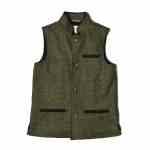
Every self-respecting gent these days is sporting a gilet. Don’t laugh. The gilet has come along leaps and bounds; you can’t tar it with the same brush as the Schöffel ‘Chelsea Life Jacket’ which is worn by the Hooray Henrys who guffaw at dinner parties twinned with their strawberry corduroy trousers.  The gilet is the height of sophistication. It is worn by the finance bros, the best-looking dad on the school run, the recently retired silver fox barrister you met at the ‘locals’ drinks party last Christmas and the gruff farmer who is so rich he really shouldn’t be that dour for goodness' sake.

Farrow & Ball is finished

In PR terms, it’s a such a well-worn trajectory, it has its own name. ‘Doing a Burberry’ is the term for when something once exclusive and favoured by those in-the-know is appropriated by the hoi polloi and its standing slips inexorably downwards. The Ivy — now a chain of naff provincial cafés — is a notable victim. Marbella, now ‘Marbs’ thanks to the cast of TOWIE is another. So is the name Samantha, once terribly Sloaney, now associated only with a former page 3 girl and some really filthy double entendres on I’m Sorry I Haven’t a Clue on Radio 4.

‘LinkedIn speak’ is a disgrace

The past few years have seen a slew of devastating style assaults on the English language known as ‘LinkedIn speak’. You know the type of word salad: ‘synergise’ instead of ‘combine’, ‘ideated’ instead of ‘thought of’, ‘holistic’ instead of – well – looking at something as a whole. Alarmingly, there is now an app, Kagi Translate, that allows you to type any sentence and it will deliver it for you in this wretched patois. For instance, write ‘I went to the zoo,’ and Kagi gives you: ‘I had an incredible opportunity to observe high-performing teams in a diverse ecosystem and reflect on the importance of adaptability and strategic positioning.’ Go on, try it.

Three 33-1 ante-post bets for the big spring meetings

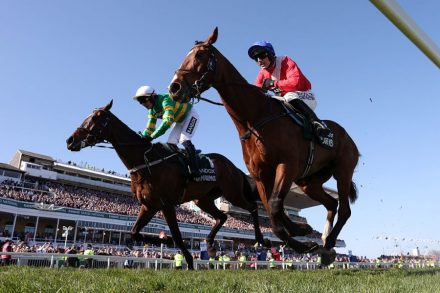
The arrival of a new flat season is exciting but, for betting purposes, I prefer to stick to the jumps. On the flat in late March and April, it is so hard to know which trainers have their horses fit enough to do themselves justice and which do not. Since most handlers are still in the dark on their horses’ racecourse fitness, what chance do punters have? This weekend’s National Hunt fare is, in all honesty, modest so instead I will try to identify some value over the two big meetings that are on the horizon linked to the two Grand Nationals at Aintree and Fairyhouse. First up is a long shot for the Randox Topham Handicap Case on Friday, 10 April, a race run over the Grand National brush fences the day before the big race itself.

Why don’t we wear proper shoes any more?

People can seem completely normal, until you look at their shoes. Particularly men. There they are, appearing sane: natty haircut, ironed shirt, non-psychotic trousers. But then: oh, horror! Terrible shoes. Slimy-looking Docksides, or Toms espadrilles, or something shiny and pointy. Or tremendous show-off brogues like Mr Noisy, with those execrable metal tap things, worn only by bounders and con men.  I was once, aged 23, struck silent with horror by the shoes of a boy who accompanied me to a beach: a pair of dusty brown lace-ups it seemed he’d had since Upper Sixth. I now understand this to be tremendously posh but at the time it turned my stomach. I am too suburban for that kind of thing.

This Easter, eat rabbit 

Dissonance is necessary around Easter. Fluffy lambs and chicks are everywhere: on cards and decorations, in countless chocolate forms and adorning every Easter-adjacent craft, toy or activity. But, of course, we also traditionally serve roasted lamb or chicken on Easter Sunday. In some part, this is simply seasonality. We associate gambolling lambs and new chicks with spring. But that apparent seasonality is also something of an untruth: lamb, particularly, is not actually in season at Easter. I know, I know, as soon as the days start to brighten, our green and pleasant lands are filled with sentient woolly fluff wobbling about on little legs. But those cartoon-like lambs are far from ready for market.

Never pass up a chance to ski

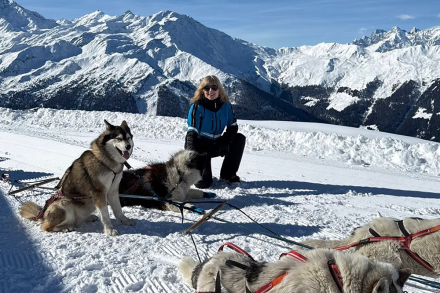
The snow is deep and crisp and even, the sky bluer than blue, and beneath my Black Crow skis there’s the soft hiss of fresh powder. I’m rehearsing my excuses as I carve my wiggly way down a well-upholstered piste. ‘I’ve gone skiing by mistake,’ I try out on the pure mountain air. I’m almost embarrassed by my own excess as this is my second ski break of the year, and to go twice before Easter during a war and an energy crisis is peak first-world indulgence. Still, as I like to say, I have not one but two Agas, ‘just not in the same house’, so what the heck. Here goes. My two ski trips in two months, then. Last month, we rented a chalet for the annual Dawnay-Johnson family ski holiday. We played Perudo and ate hugely both on and off the mountain.

Is it time for me to renounce the Devil?

As I spent much of January in dry dock in Tommy’s hospital (‘dry’ being doubly appropriate), other avocations were needed. One friend said that it sounded as if I had spent much of the time gazing at the glories of Barry and Pugin, reading poetry or teasing pretty nurses: all pleasant activities. But there was one disappointment. Geoffrey Elton helped to introduce the civilisation of the Rhineland to East Anglia Assuming that hospital wards were good stalking grounds for chaplains, I would have been happy to discuss the Trinity, the meaning of the first verse of St John’s Gospel, or whatever. But only one clergy creature appeared. There is a good old Scots word, ‘mouthless’ (pronounce ‘oo’); that poor fellow fitted the description.