Richard Crampton Platt

Richard Crampton Platt is a former restaurateur who writes about London's food scene. 

Why brown food isn’t always best

From our UK edition

This past week has shown that, when discussing the colour of eggshells, we need to walk on them. Sainsbury’s has announced that it is phasing out brown eggs in favour of white because the latter have a 12.7 per cent lower carbon footprint. As suspiciously precise as that figure is, it caused some commentators to rant that net zero madness is just a cover for cost-cutting. White hens lay white eggs and eat less feed, which in turn reduces emissions, so what's everyone getting scrambled up over?  However, buried in the original press release is a throwaway admission that Britain only switched to brown eggs in the 1970s because they were ‘perceived as more natural’. Even Queen Elizabeth ‘favour[ed] brown eggs, believing that they taste better’.

The terrible convenience of the meal deal

From our UK edition

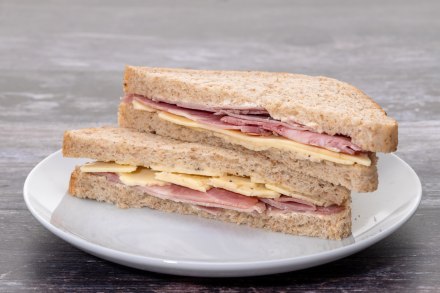
The French and British have always enjoyed disapproving of how the other eats. Take the British office worker often seen demolishing a meal deal at his desk, whereas in France, eating at your desk is (in theory) illegal; in 1894 French ouvriers were banned from eating in the workplace, owing to phosphorus contamination in match-making factories, and the law stands today, only briefly suspended during Covid.   But on closer inspection, the two nations are more similar than we like to admit. The earliest French women's strikes were a response to that very law, demanding the right to eat at work, since being turned out into the street at lunch left them exposed to harassment.

Bovril’s infallible power

From our UK edition

Nations are built from eating habits as well as masterpieces. In Britain, there’s one that is both: Bovril. This thick, salty meat extract paste may not be as wise as George Eliot’s Middlemarch, as beguiling as Rossetti’s ‘Proserpine’, or as symbolic of greatness as the Palace of Westminster – and yet it has a clear place among our nation’s intangible cultural assets. As both a spread and a drink, Bovril may be just a wartime ration, a tonic for invalids or a companion on football terraces but it still marks a serious, if ordinary, contribution to our common life.  That contribution, however, may now be under threat.

Len Deighton taught British bachelors to cook

From our UK edition

Men who cook Spanish omelettes look a bit gay. Or at least that is how American film executives reacted to Harry Palmer cooking in The Ipcress File. The cable said: ‘Dump Michael Caine’s spectacles and make the girl cook the meal. He is coming across as a homosexual.’ This was 1964, when London was the cultural centre of the Swinging Sixties. In the final cut, Palmer asks what she will report back about him. She replies simply: ‘That you like girls … you also like books, music, cooking.’ The Americans had misread the moment. This was a modern heterosexual man, self-sufficient, urban, and quietly competent, but one whose lifestyle still had to be explained.