Bijan Omrani

Bijan Omrani's new book, God is an Englishman: Christianity and the Creation of England, is published by Forum Press

Why Gen-Z turned back to Christianity

From our UK edition

Secularists are cock-a-hoop at the news that the “Quiet Revival” in British Christianity may just be a thing of nought. On Thursday, YouGov announced that a survey they had conduced last year which had found a striking increase in Christian observance, particularly amongst the young, had been flawed. Controls to filter out fraudulent responses had not been properly put in place. Thus, the results, which have driven a debate about a national return to faith, could not be trusted. There is something of the holier-than-thou and doth-protest-too-much in this secularist sermonising Andrew Copson, Chief Executive of Humanists UK, was swift to chide: “This is both validation and vindication.

catholic

Make education classical again

From our UK edition

The National Curriculum Review, published earlier this month, was a rare opportunity to ask some fundamental questions about the purpose and outcomes of British education. It is an opportunity that has been missed. In some ways, the review has a laudable conservative tenor. It is, for the most part, grounded in practical evidence rather than blind ideology. It acknowledges the improvements in literacy and numeracy brought by the previous government’s reforms, and calls for incremental rather than radical changes. However, it fails to grapple with the connections between education and society’s most fundamental problems. No one can deny that the country is in the grip of a mental health crisis, especially amongst the young.

Canterbury Cathedral’s graffiti heresy

From our UK edition

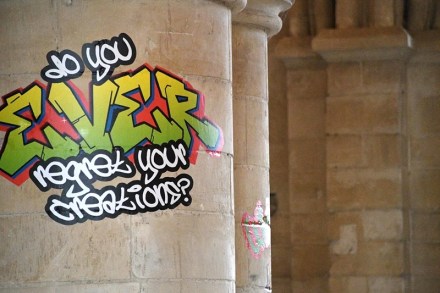
There was confusion in Canterbury Cathedral this week as the Dean and Chapter gave permission for this most venerable shrine of world Christendom to be redecorated in the manner of the M4 Chiswick flyover. Photographs appeared of the cathedral’s ancient walls and columns irregularly plastered in jagged and bulbous graffiti, picked out in the sort of gaudy palette you might see in an amusement arcade. Even vice president J.D. Vance has questioned whether this is the right way to treat the house of God, saying the graffiti made a ‘beautiful historical building really ugly’. It soon transpired that this graffiti spattered over the site of Becket’s martyrdom was in fact a temporary art installation.

Learning to speak Latin and Ancient Greek can save civilisation

From our UK edition

Finally, some good news from Oxford. The university has recently been through a gloomy patch. It slipped from the top three in UK rankings for the first time since records began. The Oxford Union president-elect, George Abaraonye, also shamed the institution by gloating over the murder of Charlie Kirk. However, the university’s classicists are bringing light into the darkness. Dons at four colleges – Jesus, Harris Manchester, Brasenose and Queen’s – are engaged in an extraordinary initiative that is widening access to the subject, improving standards and bringing back a Renaissance spirit to the study of ancient languages. In short, they have started to teach their students to speak Latin and Ancient Greek. This idea may seem eccentric.

Owen Matthews, Bijan Omrani, Andrew Hankinson, Laurie Penny & Andrew Watts

From our UK edition

29 min listen

On this week’s Spectator Out Loud: Owen Matthews says that Venice’s residents never stop complaining (1:11); Bijan Omrani reads his church notebook (7:33); Andrew Hankinson reviews Tiffany Jenkins’s Strangers and Intimates: The Rise and Fall of Private Life (13:54); as 28 Years Later is released, Laurie Penny explains the politics behind Alex Garland’s film franchise (18:25); and, Andrew Watts provides his notes on Angel Delight (25:09). Produced and presented by Patrick Gibbons.

Pope Idol: Leo’s singing should be celebrated

From our UK edition

‘But will anyone be interested?’ the vicar asked cautiously. It was a fair response to my latest madcap scheme. One of the vicar’s 12 churches, St Candida and Holy Cross at Whitchurch Canonicorum in Dorset, hosts one of the country’s only three remaining pre-Reformation saints’ shrines with the relics of the saint still present. In this case, the shrine is to St Wite, a ninth-century virgin princess martyred by the Vikings. Her saint’s day was coming up. Could we, I asked, recreate a pre-Reformation church service in honour of it? The vicar, the Revd Virginia Luckett, who is sometimes heard on Radio 4, agreed to my proposal – but with trepidation. She is used to conducting pilgrimages to the shrine, and knows the spiritual value of this medieval tradition.

Is God an Englishman?

From our UK edition

32 min listen

Bijan Omrani joins Damian Thompson to talk about his new book God is an Englishman: Christianity and the Creation of England. They discuss the spiritual and cultural debt the country owes to Christianity. The central question of Bijan’s book is ‘does it matter that Christianity is dying in England?’. The faith has historically played a disproportionate role in many areas of English life that we take for granted now – for example, by shaping both charity and the welfare state. Yet this is influence is often ignored as congregations shrink and the UK slides into secularism. But are there unexpected grounds for hope?

In defence of cultural Christianity

From our UK edition

Christian culture is under fresh attack. Those striving to preserve old Christian institutions, to maintain the Bible and Church traditions as a common cultural reference point, or to use scriptural ideas to influence society’s laws and ethics, regardless of whether society still possesses an underlying faith, are facing censure. This new assault has not come from the usual suspects: Islamists, secularists, decolonisers or the woke left. Instead, the latest cries against Christian culture are coming from Christians themselves. The faith of Christ’s apostles was active. Its ethic was constructive The charge has been led by Paul Kingsnorth, the writer, environmentalist and former journalist, who was baptised into the Romanian Orthodox Church in 2021.

What English Heritage gets wrong about the origins of Easter

From our UK edition

Easter is, of course, the time of year when Christians celebrate the death and resurrection of Jesus Christ, but don't expect to learn that on the English Heritage children’s Easter trail. ‘Did you know Easter started as a celebration of spring?,’ children who take part in the trail are told. Any mention of Christ or Christianity is omitted from that sign, which has been planted at English Heritage sites across the country. However, one god does get a look in. This first panel, decorated with children collecting flowers, painted eggs and a cheery Easter bunny, gave the following account of the origin of Easter: ‘Long ago, people welcomed warmer days and new life by honouring the goddess Eostre, who gave Easter its name!