Jonathan Maitland

To succeed at the BBC, Matt Brittin must learn to be hated

From our UK edition

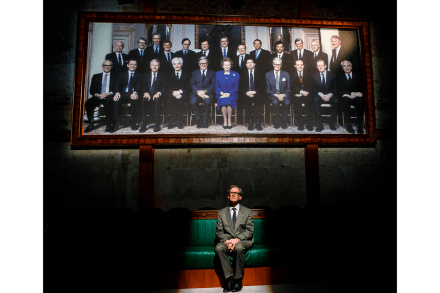
So farewell then Tim Davie with your spotless white trainers, on-message management speak and complete lack of journalistic nous. And hello Matt Brittin, the new Director General of the BBC, a job which may just be The Most Impossible In The World. To survive, the BBC is going to have to adapt, big time Unlike those other two all-time difficult gigs, Prime Minister and England football manager, there are no potential big wins like wars and World Cups, only potential catastrophes. The Hutton Inquiry of 2004 (more of which later) was, for some, the most damaging episode in BBC history. But then came the Jimmy Savile revelations. And the Martin Bashir interview with Princess Diana. And the Huw Edwards scandal. And the Hamas-sponsored documentary.

Why was this stranger in my friend’s house?

From our UK edition

I was walking my dog when a WhatsApp message and photo came through from Simon, an old school friend of more than 50 years. His kids had sent him a picture of a man who had turned up unexpectedly at the family home. The accompanying message said simply: ‘Your friend Andrew from Epsom College is here?’ Simon, who was out shopping, didn’t recognise him. Did I? No, I replied, but he looks familiar. But then again he was white, rotund and greying and thus a 99 per cent DNA match for one of our social circle: i.e. a well-fed 60-something with a 20-something handicap. The more I studied the photo the more worried I got. For Simon and his family. Who on earth was this mysterious visitor standing in the middle of his kitchen? What did he want?

The film Nuremberg is almost unforgivable

From our UK edition

It is said there is only one rule when it comes to dramatising the Holocaust: don’t. The argument is essentially this: the unique horror of the event is beyond the scope of conventional artistic representation. Illuminate what happened with a documentary, sure, but apply a glossy Hollywood sheen to those monstrous events and you risk artistic catastrophe. I’ve seen many productions which fall into that category but here’s two recent ones: Hunters, an Al Pacino series for Amazon which portrays a gang of 1970s New York Nazi hunters as superhero vigilantes, and Sky Atlantic’s tastefully shot The Tattooist of Auschwitz, a sentimental, semi-fictionalised (why? Is the truth not enough?) account of a concentration camp love story.

The age of the strongman, Tesla under attack & matinee revivals

From our UK edition

35 min listen

This week: welcome to the age of the strongman ‘The world’s most exclusive club… is growing,’ writes Paul Wood in this week’s Spectator. Membership is restricted to a very select few: presidents-for-life. Putin of Russia, Xi of China, Kim of North Korea and MBS of Saudi Arabia are being joined by Erdogan of Turkey – who is currently arresting his leading domestic political opponent – and Donald Trump, who ‘openly admires such autocrats and clearly wants to be one himself’. ‘This is the age of the strongman,’ Wood declares, ‘and the world is far more dangerous because of it.’  Despite their bombast, these ‘are often troubled characters’, products of difficult childhoods.

Why we’re flocking to matinees

From our UK edition

The Starland Vocal Band were on to something. In their 1976 hit ‘Afternoon Delight’ they sang, in gruesomely twee harmony: ‘Gonna grab some afternoon delight/ My motto’s always been when it’s right it’s right/ Why wait until the middle of a cold, dark night?’ Granted, they were singing about rumpy-pumpy, not theatre-going, but for many of us the same principle applies.  ‘I’ve turned into the kind of person who loves toddling off to matinees,’ admitted my actor friend Timmy recently. He’s not the only one. I’m at that age when lunch is preferable to dinner and matinees appeal far more than evening shows. There’s something hedonistic about a matinee. When everyone else is working (or should be), you’re luxuriating in the theatre.

The mystery of Huw Edwards’s missing phone

From our UK edition

The best thing about being a playwright? The satisfaction of creativity. The worst? Press-night parties attended by friends, industry people and celebs. Playwright Terry Johnson says he knows writers who find such occasions so hellish they’ve been put off writing plays altogether. The problem is the corrosive, deeply unsettling belief that everyone is lying to you. Everyone knows the rules: on press night, say something nice, even if it was a giant turkey. No negatives. That’s the critic’s job. But writers know this, so never believe any compliment, ever, even if the person paying it is telling the truth. The only time a writer can be sure of something is when they hear the dreaded words ‘You did it again!’ or ‘What an achievement!

The Huw Edwards scandal shows that the BBC never learns

From our UK edition

Albert Einstein wasn’t thinking about the BBC when he defined insanity as 'doing the same thing over and over again but expecting a different result', but he could have been. The BBC’s latest scandal, involving its former star presenter Huw Edwards, has followed a remarkably similar trajectory to the last two marmalade droppers that embroiled the Corporation. So will the BBC finally learn its lesson? The way the BBC dealt with Huw Edwards – once the embodiment of BBC culture and values but now a disgraced sex offender who admitted making indecent images of children – has strong echoes of the Jimmy Savile and Martin Bashir scandals.

Peter Oborne, Kate Andrews and Jonathan Maitland

From our UK edition

18 min listen

On this week's Spectator Out Loud, Peter Oborne reads his letter from Jerusalem (00:55), Kate Andrews talks about why Rishi Sunak has made her take up smoking (07:20), and Jonathan Maitland explains his growing obsession with Martin Bashir (12:15). Presented by Cindy Yu. Produced by Cindy Yu and Natasha Feroze.

How the BBC scapegoated Martin Bashir

From our UK edition

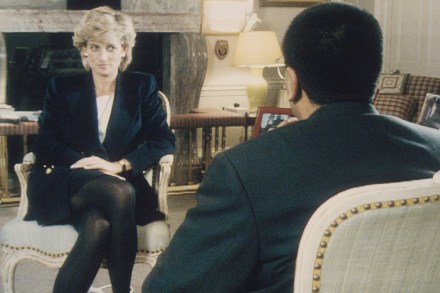
I have become rather obsessed with Martin Bashir and his downfall. Three years ago, I began researching for a play based around his infamous 1995 Panorama interview with Diana, Princess of Wales, which he secured by forging bank statements and reinforcing her belief that there was an Establishment conspiracy against her. When I started writing I thought I would soon understand him. But he still baffles me. When we corresponded recently via email, he suggested playing himself on stage or, failing that, what about Idris Elba? I couldn’t tell if he was joking.   I knew Bashir pretty well back in the day. We were fellow reporters at the BBC and ITV for 13 years. He even joined my covers band Surf’n’Turf on percussion, and very good he was too.

War of words: Scrabble players are being censored

From our UK edition

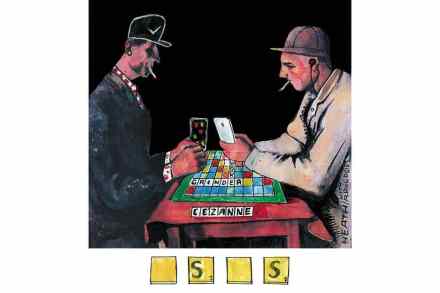
For some of us, world war has already broken out. Since 1 January, when a decision to ban 419 ‘offensive’ Scrabble words became ‘law’ on the orders of game owners Hasbro and Mattel, the previously genteel world of competitive Scrabble has become riven with hostility. The conflict started three years ago when the North American Scrabble Players Association polled its members about the issue. After more than 1,000 ‘passionate responses’, it decided to inflict a word cull. According to the association’s head John Chew, the 91-year-old game needed to be ‘more inclusive’: ‘How can we tell prospective members they can only play with us if they accept that offensive slurs have no meaning when played on a board?

Is the life of Jimmy Savile a suitable subject for drama?

From our UK edition

One day in 1975 the Israeli cabinet found themselves being lectured on the most intractable political problem of our age — how to bring peace to the Middle East — by a peculiar white-haired British entertainer wearing a pink suit with short sleeves. His name? Jimmy Savile. That’s how he told it anyway. Remarkably, witnesses back up the generality if not the specifics of the anecdote. Savile indeed visited the Holy Land in 1975. And he did talk to the Israeli president Ephraim Katzir, saying (so he claimed): ‘I’m very disappointed because you’ve all forgotten how to be Jewish and that’s why everyone is taking you to the cleaners.

Why great speeches are made for stage and screen

From our UK edition

Curious thing, writer’s block. If you believe it exists. Terry Pratchett didn’t. ‘There’s no such thing,’ he said. ‘It was invented by people in California who couldn’t write.’ He had a point. Writers write, period. But there is a syndrome in my house known as Not Starting Anything New Through Fear Of It Being Not Very Good. Less catchy than ‘writer’s block’, but arguably a more accurate description of the condition. My Covid-induced version of the above involved endlessly ‘honing’ an already completed play about my mother to devastatingly little effect and musing on the oldest creative question of all: is there a formula for writing success, and if so what is it?

The idiot box

From our UK edition

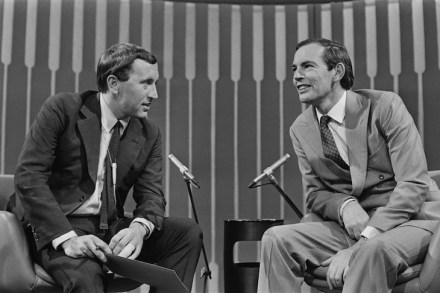
How to sum up David Frost? The lazy writer’s friend, aka Wikipedia, calls him ‘an English journalist, comedian, writer, media personality and television host’. To which I would add only: ‘Britain’s first TV superstar.’ (To some he was also ‘The Bubonic Plagiarist’, but we won’t dwell on that.) That Was The Week That Was, The Frost Report and The Nixon Interviews made him a key cultural figure of the 1960s and 1970s. But his true significance struck me only recently. He may have damaged Britain, unintentionally, as much as anyone in living memory. Frost, in my view, was a Pied Piper who helped to lure a generation of the brightest and best away from meaningful careers and into the often vacuous, inconsequential world of television.