Spectator Life

Spectator Life

An intelligent mix of culture, style, travel, food and property, as well as where to go and what to see.

Adventures in Australia’s winelands

On the Bussel Highway, an immaculate ribbon of tarmac that takes you south of Perth, the vegetation changes dramatically in a matter of miles. Suddenly, around the town of Busselton, which is 130 miles from Perth, instead of the rough, hardscrabble soils that form the bedrock of Australia’s desert environment, you find yourself in a more Mediterranean ecosystem. A further 40 miles south and you’re in Margaret River, an eco-warrior’s dream location with carbon-neutral residents – artists, chefs, surfers, organic farmers, winemakers – all over the place, neat, well-tended countryside, and the crispest, cleanest air you can breathe on this planet. Sea breezes from the Indian Ocean and the Southern Ocean wash over this forested landscape like an air-conditioning system.


26 lessons for surviving 2026

New Year’s resolutions are a cruel and demoralising prank. Don’t start any personal alterations until April. Spring is the real beginning of the year, as the Romans once knew and the taxman still does. Attempting to remodel yourself as a fountain of self-improvement in the bleak midwinter is just silly. But in the spirit of the many tip sheets and handy hints lists that pop up everywhere at the beginning of January, here’s mine: 26 for 2026. Don’t bother to watch any film or television series made after 2010. It only encourages them. (If the TV series began before 2010, perhaps, but that is the only exception.

Two bets for the small fields at Sandown tomorrow

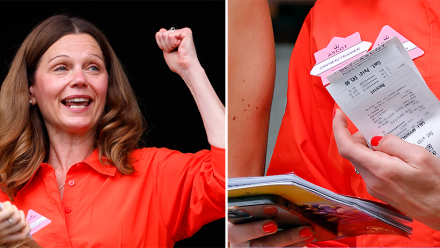
After so much superb racing over the festive period, it is disappointing to see such small fields at Sandown for tomorrow’s main card in Britain. Between five and 11 runners are due to take part in the seven races at the Esher course. The quicker-than-usual ground conditions for the time of year partly account for the small turn-outs. The Unibet Veterans’ Handicap Chase final (3.05 p.m.), over three miles, sees Dorset trainer Anthony Honeyball field one third of the nine runners. One of his horses, Gustavian, has been aimed at this race for some time as has Dan Skelton’s runner Le Milos, despite some indifferent form this season.

Giving up caffeine is a fool’s errand

Everyone is giving up something these days. Even before this week’s flood of new year’s resolutions, we’re in the age of subtraction as people shed vices like old skins. Cigarettes, alcohol – those villains have been booed off the stage by the newly health-conscious, whose accusing stare is now turning to a fresh culprit: caffeine. Like most sanitising trends, the anti-caffeine narrative is biggest across the pond. ‘Decaf desirability’ is ‘peaking’, the New York Times told us last month, as turmeric lattes, mushroom elixirs and chicory brews threaten to knock coffee off its perch.

Janus and the back and forth of the new year

The Roman god Janus is about to play his annual trick on us. 31 December, the last day of the year, will be followed by 1 January, the first day of the year. We’ve ended up right back where we started. Frustrating, but at the same time reassuring. Janus, after whom the new month is named, was always pictured with two faces, one looking forward, the other back. He is the god of both beginnings and endings. The notion of returning to 1 January has always bothered me slightly, as though all that effort last year was for naught. Indeed the fact that each day of the year is a ‘copy’ of all the equivalent days in previous years seems troublesome too.

‘Doomer jazz’ and the strange afterlife of Taxi Driver

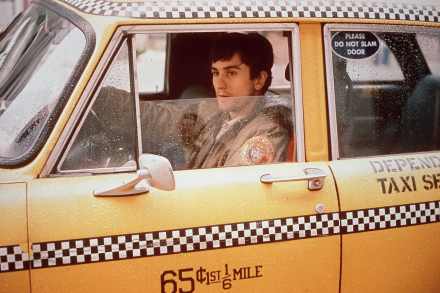
Bernard Herrmann died 50 years ago this month. He only just lived long enough to complete the suite of instrumental jazz that’s now regarded as not only his finest work across many decades as a movie composer, but one of the greatest celluloid soundtracks of all time. There are very few movies which you can honestly state simply wouldn’t have got out of the traps were it not for the soundtrack. Taxi Driver is one of them. There’s more than enough available film critic geekery about Martin Scorsese and Robert De Niro’s finest hour to plough through already. But the curious afterlife of the Taxi Driver soundtrack was something I had no idea about until a recent Spotify sleuthing session. You’ve heard the main siren call theme of the movie.

I walked out of my son’s nativity play

To walk out of a public performance before the end – be it the theatre, a concert or a lecture – is not the done thing. It’s considered an antisocial act that disrupts the performance and thus other people’s pleasure. To walk out provokes tuts of disapproval and scowls of indignation. And yet while it’s something we all disapprove of (at least in theory) it’s also something we all secretly long to do. Who hasn’t sat and squirmed in their seat at some tedious piece of theatre and wondered: how much more of this must I suffer? And who hasn’t been subjected to one of those long, sycophantic interviews with some self-adoring author flogging their latest book and not prayed for the courage to make a run for it?

There’s nothing to fear from Madeira

Perhaps because of the Flanders and Swann song in which a louche older gentleman tries to lure a younger lady to bed with Madeira wine, the drink has unfairly acquired a fusty image. While port and sherry have experienced a resurgence, Madeira remains underappreciated despite the fact it stands as a proud monument to the grand old Anglo-Portuguese alliance. One man, Jamie Allsopp, is intent on fighting a noble battle to promote the virtues of Madeira. And so to the Blue Stoops, Allsopp Brewery’s newish pub on Kensington Church Street, for their second annual Game and Madeira Dinner, named after the site in Burton-on-Trent where Jamie’s ancestors first brewed Allsopp’s Ale in 1730.

Make mine a BuzzBallz

There are always new ways for drinks companies to make alcohol seem even more exciting. Smirnoff has added gold leaf to some of its vodkas (apparently it’s both real and edible); cans of Dragon Soop and Four Loko deliver heart attack-inducing combinations of sugar, caffeine and alcohol; and the appropriately named Aftershock is rumoured to crystallise in your stomach for a few hours before reverting back to liquid form to release a second wave of alcohol into your bloodstream. (This is almost certainly an urban myth, but Aftershock drinkers remain convinced.) The latest fad was created during one woman’s postgraduate degree – and has since transformed the experience of partygoers across the world. Behold BuzzBallz.

The march of lazy children’s books

There’s a myth that lots of us fall for/ ‘Kids’ books are so easy to write’/ And you can see why we might think so/ As so many of them are shite. Little poem by me there. As the dad of a six-year-old and a three-year-old, I have spent perhaps 100 hours reading some wonderful books, and hearing gorgeous books read to me. But parents everywhere will know what I mean when I say: Christ there’s a lot of dross out there. Why are so many children’s books so bad? Children learn through books. If they read lazy poetry, they’ll become lazy writers and lazy thinkers While looking for kids’ books to name and shame for this piece, I realised that some of the very worst offenders are now in a charity shop or the bin.

Children need nursery food

In news that will surprise no one, it emerges that vegan children are thinner, shorter and – dare we say it – sicklier than their counterparts. A recent study by the University of Florence details how children who follow a vegan or vegetarian diet are deficient in vitamins and minerals and consistently exhibit a lower BMI than their omnivorous peers. Although children who follow a vegetarian diet consume more fibre, iron, folate, vitamin C and magnesium than omnivores, the only way for plant-based children to grow healthily is with a carefully planned regimen of supplementation – think pills with your brekker every day until you leave home.

The overlooked brilliance of Wonder Boys

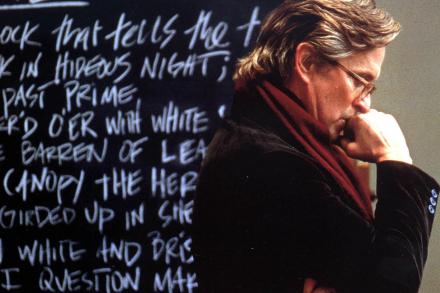
Deep in the backwaters of BBC iPlayer there lurks an American film with an all-star cast that time forgot. In its day I think it was all but forgotten, too – garnering some critical acclaim but bombing at the box office, presumably because it was too clever or just didn’t appeal enough to teenagers (I can’t see why). Fortunately, 25 years on, Wonder Boys, the campus-novel film starring Michael Douglas as a creative writing professor with writer’s block and an unravelling marriage, truly stands the test of time. You could even go so far as to say that it’s a modern classic.

Step forward the undeserving: it’s honours season again

Once Christmas Day’s out of the way and we’re stuck in that no man’s land between one year and the next – known, tweely, as ‘Twixmas’ or, if you’re posh, the ‘interregnum’ – one thing guaranteed to make the front pages is the announcement of the New Year’s Honours List. News of the worthy – and not-so-worthy – recipients will be released, and we’ll get to see who’s been elevated to the Lords, knighted or handed one of the lesser gongs. Among the very deserving recipients will be those who make you think: hang on a minute – how did that happen? When news broke that former prime minister Tony Blair was to be made a Knight Companion, more than a million people signed a petition calling for the honour to be blocked.

Bets for Kempton, Aintree and Wetherby today

The Gloucestershire yard of Ben Pauling has gone from strength to strength in recent seasons and today could see it reach a new high when the trainer sends his stable star to Kempton to compete in the Ladbrokes King George VI Chase (2.30 p.m.). THE JUKEBOX MAN will face seven talented rivals, including two hot-pots from the yard of Irish maestro Willie Mullins, when he runs in the Grade 1 contest over a distance of three miles. The Jukebox Man has plenty to find on official ratings with almost all his rivals but Pauling remains quietly confident that this lightly-raced seven-year-old gelding, owned by former football manager Harry Redknapp, is up to the task. Unusually, Mullins has brought over not one but two of his best staying chasers for this race.

Britain’s lack of trains on Boxing Day is shameful

Among all the perfidies of public transport in Britain (a nation that can build a £40 billion railway based on the premise that the outskirts of Acton counts as a ‘central London’ terminus), perhaps the most ludicrous of all is this. On 26 December, a day when millions of us need to move about, no trains run. HS2 makes me angry. But I’ve spent every festive period of my adult life feeling positively dyspeptic about the meek acceptance with which we tolerate the almost complete lack of trains departing or arriving at any UK railway stations on Boxing Day. We are an absolute, solitary outlier in this regard. Even in Italy, where Christmas stretches lazily from Christmas Eve until Epiphany, there’s a skeleton timetable on 26 December.

Christmas in a care home

Christmas Day in a care home is often thought to be the saddest shift of the year: a place where staff trudge in reluctantly through the dark and cold, while the rest of the country unwraps presents and gets merry; where residents sit quietly, reminiscing about the happiness of Christmases past. And yet, for those of us who work these shifts year after year, that idea bears little resemblance to the truth. It is, strangely, one of the most joyous shifts to work. There is grief and gratitude, absence and presence, memory and forgetfulness, and moments of surprising hilarity. Someone will say something outrageous. Someone will fall asleep halfway through pudding. Someone will insist they have already had lunch or get away with having two. Care home Christmases are more traditional.

Shakespeare isn’t difficult

Chloe Zhao may have co-written and directed Hamnet (a film about William Shakespeare’s son), but she claims that she couldn’t understand Shakespeare’s words and had to rely on the actor Paul Mescal to help her. You might have thought that Zhao, who spent her sixth form years at Brighton College (where, one hopes, she at least sniffed at some form of Shakespeare), could have bestirred herself to read one of the many editions with glossaries, or even to bone up on the CliffsNotes, but no. Instead, she is simply contributing to the enduring, frustrating idea that reading Shakespeare is ‘difficult’, as if it were on a par with analytical philosophy or Judith Butler wanging on about hegemonies.

Burnt out? Try a monastery

‘What time are morning prayers tomorrow?’ I asked the monk who, after meeting me at the monastery entrance, was taking me to my room. He checked a noticeboard listing the various Offices of the Day, the routine of prayers monks carry out each day of their lives. I followed his finger along the listings. Oh bloody hell, I thought. Lauds on Friday morning was at 5.30 a.m., and I had arrived at the Abbey of St Matthias late Thursday afternoon. Winter darkness was descending on the German city of Trier and I had trudged nearly 40km of the Jakobsweg, Germany’s Camino. Fortunately, the monk – like the rest of his Benedictine order – was a practical man and could see my bedraggled state. He shook his head: ‘That’s far too early, don’t worry – you need to rest.

Tea with a twist: the army’s curious Christmas drink

On Christmas morning, as you make your first tea or begin mixing your eggnog, spare a thought for our armed forces. Since the 1890s, they have been starting Christmas Day with a drink that sounds more like a bizarre hangover cure than a festive pick-me-up.  Known as ‘Gunfire’, the drink is made of one part rum to three parts black tea. By tradition, the beverage is taken hot and is served by senior officers to junior soldiers, making it one of the few occasions in which the ordinarily inflexible roles of the military are reversed.  Although no one is quite sure how Gunfire got its name, the most compelling theory, according to the Royal Norfolk Regimental Museum, comes from an encyclopaedia compiled by Major R.D. Ambrose.

Everyone has forgotten party etiquette

Growing up, it was made very clear to us that if you RSVPed in the positive to a party, you were absolutely honour-bound to turn up. It was the height of rudeness to chuck. How things have changed. These days, people don’t even bother RSVPing: it’s too difficult. Some are even too lazy to click a thumbs-up on a WhatsApp. More charitably, perhaps they have all suffered collective memory loss, or don’t understand the French. I know what you do when you get an email invitation, or when somebody texts you with the date and time of a party. You think ‘how nice’, and then do absolutely nothing about it until the week before.

I’m a Jew who loves Christmas

On more than one occasion, I have found myself being lectured by non-Jews (always men) about why I am incorrect in my Jewishness. Judaism is a religion and I can’t be Jewish if I am an atheist, some say. The ones that accept the atheism then feel compelled to categorise me as a ‘cultural’ Jew whose identity is defined by rituals and customs passed down over the centuries. And then there’s the stern mystification about the relatively minor role that Hanukkah plays in the spiritual calendar for Jews. It is hard for some to realise that while it involves lights and wintry nights, Hanukkah is not remotely the equivalent of Christmas. Nothing in Judaism is.

Can Karl Loxley make classical music cool?

I’m backstage with classical crossover singer Karl Loxley and his pianist Tim Abel at Stratford-Upon-Avon’s Rother Street Arts House. The sound and lighting team are setting up in the empty theatre for what will be one of the final shows in Loxley’s ‘Songs of Christmas’ tour. Since 2015, when Loxley sung Puccini’s ‘Nessun Dorma’ on the TV talent show The Voice, he’s been on a mission to make classical music cool. I’m here to see exactly what that involves – and if he’s succeeding.  Loxley is charming, expansive and – at least when I interview him, a couple of hours before showtime – relaxed. Appearing on The Voice, he tells me, was ‘a very nerve-wracking experience. I don’t think I would have the nerve to do it now.

The economic purge of the young white male

I can remember when I first realised that something strange was happening to white men in Hollywood. It was around 2014, and my younger colleagues in LA – often British writers, directors and actors who had moved to California to ‘make it’ – began reporting, anecdotally, that their work was disappearing. By that I don’t mean the normal vicissitudes of a volatile creative industry. I don’t mean actors ‘resting’ or scripts getting stuck in ‘development hell’. I mean that all jobs, and job opportunities, were abruptly vanishing. Applications went nowhere, CVs were binned, hopeful meetings were suddenly cancelled.

The quiet joy of spending Christmas alone

The first thing I should tell you about my relationship with Christmas is that I’m not saturated in essence of humbug. My approach to a big family Christmas is the same as my relationship with Mexican food: if it’s put in front of me I’ll enjoy it, but I probably wouldn’t ever purposely seek it out for myself. With no family to speak of within 200 miles and with a fiancée who usually has to work on Christmas Day at her job as an NHS intensive care unit nurse, I’ve spent quite a few recent Christmas Days on my own in London. On the first year in particular, I admit I did slouch around the house with a face like a farrier’s anvil.

Spare us from the snarky Christmas bauble

I have been scouring the internet for a Christmas bauble for my mother-in-law. I have fond memories of the blown glass baubles of my childhood – the little wooden cabin in the trees, covered in powdery snow; the half papaya, its orange cocoon concealing bright purple seeds inside. Last year I bought myself a glass bauble of Big Ben which, though perhaps not traditional, is still charming. We have a red post box too, which occasionally disappears and turns up in my son’s Lego set.  This year, though, I ventured to Etsy for a bauble and was shocked by what I found. The first one that caught my eye was a cartoon-like depiction of the nativity, with a speech bubble pointing to the babe in the manger and saying: ‘Spoilers: he dies.

Why Christmas comes early for thousands in Spain

Every time I hear about someone winning ten million pounds/euros/dollars in a lottery, I think (and I’m sure I’m not alone in this): ‘Yeah, but… wouldn’t it have been better if ten people had won one million?’ Well, that’s more or less what happens in Spain. Tomorrow nearly 2,000 people will share the first prize in the Christmas lottery, each winning €400,000 (£350,000). The same number stand to share the second (€125,000 each) and third (€50,000 each) prizes. So in total almost 6,000 Spanish households will suddenly be looking forward to a much better life. No wonder there are such explosions of joy the length and breadth of Spain every year on 22 December.

Hell is a motorway service station

If OPM had released an antithetical response to their 2000 magnum opus ‘Heaven Is a Halfpipe’, I’m certain it would have been called ‘Hell Is a British Service Station’. Had this song been made, I think it would have gone a little something like this: ‘If I die before I wake / I’ll spend eternity in a Welcome Break / ’Cause right now on earth, I can’t do jack / I’m at a service station and my tyre’s flat / Now hell would be a Roadchef / With a Costa bacon bap / And hell would be the toilets / After a curry at Watford Gap.’ Admittedly, the lyrics could do with some workshopping, but you get the point.

Wagers for Haydock and Ascot tomorrow

Jockey James Best rode into the history books yesterday when he partnered Britain’s longest-priced winner, courtesy of 300-1 shot Blowers, who landed the first race at Exeter in attritional conditions. The horse was named after retired cricket commentator Henry Blofeld, who is nicknamed 'Blowers'. Tomorrow, I am hoping the same jockey can ride arguably his favourite horse to victory at more conventional odds when he partners My Silver Lining in Haydock’s Betfred Tommy Whittle Handicap Chase (2.05 p.m.). This nine-year-old grey mare gave Best, who hopefully would not be offended at being described as a 'journeyman jockey', his career highlight when the pair won the Wigley Group Classic Chase at Warwick in January last year.