Spectator Life

Spectator Life

An intelligent mix of culture, style, travel, food and property, as well as where to go and what to see.

South Africa and a toast to democracy

Not everything in the entire world is going to hell in a half-track. A few days ago, I tasted some South African wines. Although there are many reasons for a gloomy appraisal of South Africa’s prospects, wine is not among them. The industry is benefitting from new investment, encouraged by easier export markets made possible by political change. Even under the previous dispensation, there were excellent vine-yards in the Cape, the product of a fruitful racial compact. When the Huguenot refugees arrived at Table Bay, they brought their oenophile lore and rapidly assimilated with the Dutch settlers who were already establishing themselves. The name Franschhoek survives, as do many French surnames, although the language largely disappeared.

Wesley Hall represents everything that cricket should be

Few sights in the history of cricket have been more thrilling – or more terrifying for batsmen – than the great West Indian fast bowler Wes Hall coming in off his 30-yard run. He is now Sir Wesley, and frail at 85, but still as forthright and impressive as ever. I was privileged to be able to speak to Sir Wesley the other day (for the Oborne & Heller on Cricket podcast) and it was as thrilling as watching him play in the 1960s when I was growing up. He is a glorious figure, a man of adamantine integrity, total sportsmanship and unbreakable moral values, and a reminder, like Frank Worrell and Clyde Walcott, of a golden age of the great traditions of cricket culture.

A last-minute alternative to Christmas cake: boiled fruit cake

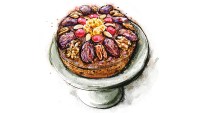
This time last year, I was disgustingly well organised. Awaiting the arrival of my first baby, with a late December due date, I’d ensured everything was squirrelled or squared away. I’d bought all my presents by October, wrapped them by December; I’d made my Christmas cakes and bought my Terry’s Chocolate Orange. For the first time in my life, I sent Christmas cards to everyone in my address book. I’d even made and frozen the gravy weeks in advance. It was my way of nesting – the baby could arrive when it liked. I was prepared. It can feel that every homemade edible component of Christmas demands commitment: puddings, cakes, mincemeat, it should all be made wildly in advance, and given time to mature. Well, that level of forward-planning has gone out of the window.

Antarctica: the best journey in the world

If there is one minor pitfall of being a travel writer, it is this. Whenever you tell a bunch of people what you do, invariably someone will ask: ‘Where’s the best place you’ve ever been?’ I struggled to answer until I got on a special new boat called the Greg Mortimer, operated by a Australian tour company called Aurora – and headed for Antarctica. We sailed south out of Ushuaia, in Tierra del Fuego, and crossed the Drake Passage. After three days I saw my first Antarctic iceberg. I’d observed icebergs before, in Iceland and Greenland, so I knew already that they could be striking, poetic, impressive. But this was on a grander scale entirely. It looked like an aircraft carrier made out of ethereal blue crystal.

What makes the perfect pub?

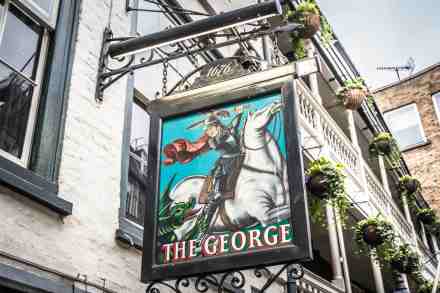
From Geoffrey Chaucer’s Tabard and Martin Amis’s Black Cross to Thomas Hardy’s Buck's Head Inn, literature is as replete with pubs as are villages and high streets up and down the land. It is no surprise. They are atmospheric settings for a plot, and places of inspiration and contemplation besides; many authors have written their novels while sitting within them. Above all, they are one of the essential stitches in the fabric of British life. In the words of Hilaire Belloc: ‘But when you have lost your inns, drown your empty selves – for you will have lost the last of England.’ Before my father came to this country in 1971 from East Africa, he read that the British socialised in pubs.

How to make the most of Vienna’s Christmas markets

Oh, Vienna. Home to Mozart, Beethoven, Haydn, Freud, the Danube, waltzing and coffee house culture, to name but a few. Famous for its history and culture, the Austrian capital’s cobbled streets fizz with stories of ages past.  In my opinion, there is no better time to visit than in the winter – and the run-up to Christmas in particular. This city knows how to do Christmas. The streets are lit with a plethora of Christmas lights, some of which have acquired fame in their own right (I am told a friendly rivalry exists between the fans of the chandeliers on Graben – designed to create the impression of a gigantic outdoor ballroom – and the ‘curtain of lights’ around the corner on Kohlmarkt).  But the biggest draw of all are Vienna’s Christmas markets.

Have Christmas cards had their day?

The festive season brings with it many enjoyably trivial decisions to fret over. Sprouts with or without chestnuts and bacon? To tastefully colour-scheme the Christmas tree or throw every garish bauble at it? Presents before or after lunch? This year, however, I have another decision to make and it’s one that I’m finding surprisingly tough: to write Christmas cards or just let that tradition… go? Usually by this point in December I’m scribbling away, determined to get my 70-odd cards written and sent while they can still reach their destinations with a second-class stamp. (Let’s not mention the foreign cards; they always arrive late.) While it does sometimes feel like a chore, I try to make it fun by pouring a glass of port or putting on a Christmassy film.

A house-hunter’s guide to haggling

Not so long ago buyers were treating house-hunting as a blood sport – price ceiling-shattering bids and gazumping were commonplace everywhere from the Cornish coast to the London suburbs to the Lake District. But six months is a long time in property. Following the debacle of the mini-Budget and amid rising interest rates and soaring living costs, not to mention looming recession, the power balance in the market has firmly shifted. Vendors can no longer sit back and wait for the offers to pour in.  Buyers who don’t have to move are increasingly taking a wait-and-see approach. Those still up for a move are determined not to overpay, often hoping to factor in future price falls to insulate themselves against negative equity.

The art of the stocking-filler book

The best stocking-filler present I received last year was the bumper Christmas edition of The Spectator. But it wasn’t the only erudite reading matter crammed into a moth-eaten ski sock. Nestled under a mouldy tangerine and some chocolate money destined to be stolen by my children were: How it Works: The Dad (Ladybird for Grown-Ups); You Do Have the Authority Here!: #What Would Jackie Weaver Do?; and The Best of Matt, 2021. They now jostle for space in a downstairs loo sprinkled with other half-read stocking fillers chronicling the past two decades: Schott’s Original Miscellany; The Curious Incident of the WMD in Iraq; Does Anything Eat Wasps?; Crap Towns; Fifty Sheds of Grey; Five on Brexit Island; and half a dozen more Ladybird spoofs, a series that has sold 5.

The empty eco-activism of renting clothes

From time to time my Instagram algorithm will taunt me with a dress. It is – unequivocally ­– the most beautiful dress I’ve ever seen. Satin, emerald green, halter-neck. The dress retails for about £200, and is always sold out in my size. The ad that Instagram teases me with is for a rental, which you can pick up for £73. This is the latest fad in so-called eco-activism. Rent a dress for an astonishing amount – usually a dress that’s sold out or difficult to track down – and you will save the world! Fighting back against the mortal sin that is fast-fashion. The trend is so popular now that even the monarchy is getting involved. At the recent Earthshot Awards in Boston, Catherine, Princess of Wales, wore a bright-green, rented Solace London dress.

Turkey isn’t the only option for a Christmas feast

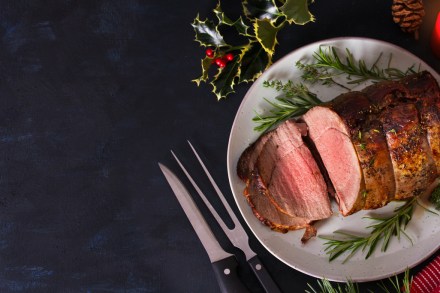
Christmas is coming – but if the geese are getting fat, the turkeys aren’t terribly happy, cooped up indoors on account of avian flu. Around half of the free-range birds produced for Christmas in the UK have been culled or died due to the illness, according to the British Poultry Council – and for those that remain, the government’s anti-infection measures mean they aren’t ranging anything like as freely as before. Some butchers, including the Ginger Pig chain, have announced they aren't selling turkey at all. So if we can’t get a happy turkey, what should we be eating on Christmas Day? Turkeys might seem like the stalwarts of the Christmas feast but they are, after all, New World birds, so latecomers to the festive table in these islands.

Shamebridge: why is Cambridge so embarrassed about its past?

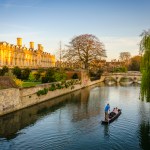
Finding Cambridge’s ugly side isn’t easy, but a walking tour of the city promises to show you it. Uncomfortable Cambridge, which bills itself as the ‘perfect introductory tour’ of the city, suggests tourists are wrong to think this is a place of beauty. Rather, Cambridge is a place we should be ashamed of – or at least feel a bit awkward about. The university is at the heart of the one-and-a-half hour tour, which costs £14 per person. Our guide begins by telling us that Cambridge isn’t as guilty as Oxford, which is good news – but it’s mostly downhill from there. St John’s College, where William Wilberforce and Thomas Clarkson studied, is the first target. Both men are commemorated with statues: Wilberforce’s is inside the chapel; Clarkson’s outside.

What are the best alternatives to Twitter?

From the moment Elon Musk suggested buying Twitter, users began threatening to leave – and the Tesla kingpin's erratic behaviour since he took over hasn't exactly helped his case, with thousands of workers laid off and hundreds more resigning. The MIT Technology Review estimates that more than a million Twitter users have jumped ship since Musk took the reins. Today the social network is launching a revamped version of Twitter Blue, its paid-for verification system, after a previous attempt last month was marred by a flood of imposters and fake accounts. So for those who decide not to stick around to see how this one turns out, what alternatives are out there – and are any of them any good?

How Australian rock art warns us about 2023

If you had to choose an obvious place to look for clues about what will happen in the coming year, it probably wouldn’t be the lush, green, watery tropic wilderness of Mount Borradaile, West Arnhemland, in the Northern Territory, Australia, hard by the sizzling blue reaches of the Arafura Sea. For a start, this lost, ancient chunk of Oz is almost empty – there are far more saltwater crocs than cars, and far more rare and exquisite wading birds than people. How can this lovely place speak of modernity? Of the future? And yet if I am right, the clues hidden in this Edenic wilderness suggest that we are about to see our lives entirely overturned – in a way that once happened in Arnhemland. The rocks may even illuminate our ultimate fate.

Who to back at the Welsh National

The Coral Welsh Grand National is my favourite jumps race of the whole season, largely because I have enjoyed a good record in the race over the years. You need a strong stayer, a good jumper and a well-handicapped horse to win the race. Usually, you want a mud-lover too but that’s not guaranteed this time around because of the lack of rain this autumn and early winter. Chepstow, with its undulations and fairly tight turns, is a specialist track as well, so I usually only fancy horses with strong form at the course.

The remaking of Margate

The faded splendour of 1980s Margate is the backdrop for Sam Mendes’s new film Empire of Light, starring Olivia Colman and Colin Firth. Coming to UK cinemas on 9 January, it’s about a romance in the north Kent seaside town and the revival of a striking 1930s cinema with a distinctive brick ‘fin’ tower. Renamed briefly as the Empire Cinema during filming in the spring, Margate's Grade II-listed Dreamland Cinema takes a starring role. In reality it's part of the Dreamland amusement park complex that’s had 102 years of rollercoaster fortunes.

How ‘iconic’ became anything but

Though I love words, I don't generally get on other people’s cases about them as I don't expect everyone to have my almost parasexual attachment to the English language. I’ve suffered silently through the flagrant misuse of ‘epic’ and ‘awesome‘ and numerous moronic reference to food as ‘orgasmic’ and ‘artisanal’ featuring 'curated table-scapes’. If you’re older than five and say ‘nom’ (in any multiple) then frankly, I believe that you should have your voting rights taken away – it’s called Universal Adult Franchise for a reason. However, I’m going to make an exception for ‘iconic’, the overuse of which has mildly irritated me for quite some time.

The best cookbooks to give this Christmas

I love a good cookbook. In an age where endless variations on any recipe are no more than a few clicks away on the internet, there is still a certain magic to buying, or receiving, a physical, curated collection.  Cookbooks can teach you something in a way that individual online recipes can’t. Whether exploring a new cuisine or trying a new technique, cooking from a cookbook means you can build up a whole repertoire of dishes and hone new skills. I love that you can annotate the pages, and it doesn’t matter if they get mucky (I find you can always tell the best recipes in a book by how dog-eared and food-splattered the pages are).

You don’t need a fondue set to make fondue

‘This dish is very you,’ my husband says, as I serve up 650g of melted, boozy cheese to the two of us for a weekday lunch, alongside a teetering pile of bread cubes. He is, I’m afraid, right: it really is my favourite kind of eating. There’s nothing better than a communal pot in the centre of the table, with everyone leaning over each other. Fondue is fun, as well as being pleasingly old-fashioned, its gooey and silky texture demanding dunking and swooping. And I’d probably treat anyone who didn’t leap at the chance to eat a lot of stringy cheese and bread with mild suspicion. Until now, my life has been mostly fondue-less, thanks to not owning a fondue set. The caquelon, or cauldron, has a low flame underneath it, which keeps the cheese hot while diners eat it.

Why should I be compensated for a delayed train?

In early 2020 my family and I were due to fly home from visiting a friend in Oman when the plane encountered a technical problem. We returned to departures and were rebooked on to a flight the following day. British Airways then sent us to a very decent hotel, where we were given rooms and a food voucher. The next day we were taxied back to the airport, and flew to London without incident. What if money went on improving trains instead of pandering to whingers who claim for every minor inconvenience? I then learned that under EU regulations, this relatively minor inconvenience entitled us to additional compensation of £600 each. We were in business class, but had bought all four tickets with frequent-flyer points.

The best Ukrainian restaurant you will find: Mriya reviewed

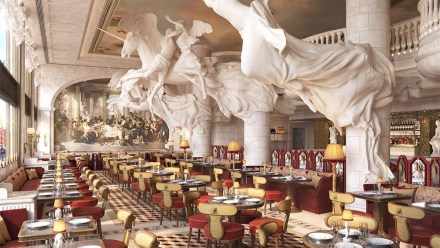
Mriya lives at the end of Old Brompton Road where South Kensington turns into Earl’s Court and, as if by some alchemy, becomes interesting. It is a Ukrainian restaurant, but something more touching too: a memorial and a retreat. It opened in August, in the sixth month of Putin’s war. Twelve of its 15 staff are displaced Ukrainians and their stories are common immigrant stories of renewal and loss. The kitchen porter is a mathematics teacher, the waiter is an English teacher, and the chef, Yurii Kovryzhenko, is one of the most famous in Ukraine. Mriya is the name of the largest cargo aircraft ever built, designed by Ukrainian engineers, which was destroyed by the Russians at the beginning of the war.

The etiquette of canapés

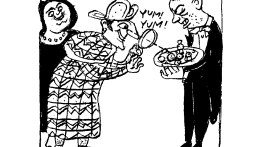
Canapés are one of life’s delights and surprises – surprises because drinks party invitations usually give nothing away. Perhaps because ‘nibbles’ is such a hideous word, or perhaps just because of invitation convention, hosts tend simply to put ‘Drinks, 6.30 to 8.30’ on the Paperless Post card. So you arrive with no idea whether you’re in for two hours of fizz on an empty stomach, or for a culinary treat in a succession of miniatures. Always braced for the worst-case scenario – starvation in high heels – I’m overjoyed to spot a tray of canapés coming towards me through the throng, and am pathetically grateful to the host for this beneficence.

You’re never too old to stay in a youth hostel

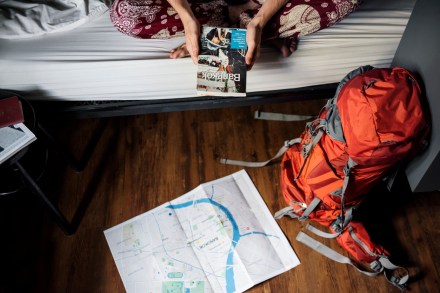
No disrespect to the hotel industry: staying in a hotel room, especially when there is someone nice with you, can be exciting and sexy. Staying in a hotel room on your own, though, can be exceedingly sad, boring and unsexy. Unfortunately, I’ve experienced more of the latter type of hotel stopover (a squalid hotel room in Addis Ababa as the occupants on the other side of the thin walls went at it like gangbusters being a particular abject experience that lingers in the mind). It makes paying a wad of cash for a lonely night even more galling.

The secrets of London by postcode: SW (South West)

Ferrets at Buckingham Palace, swearing at Wimbledon and the real-life incident that inspired Del Boy’s fall through the bar – it can only mean that our trivia tour of London’s postcode areas has reached SW… The Clermont was the first hotel in London to have lifts. The ‘ascending rooms’ (as they were known when the hotel opened in 1862) were powered by water pressure. Back then the five-storey building, next to Victoria station, was known as the Grosvenor and was a favourite of Sir Arthur Conan Doyle. So much so, in fact, that he included it in ‘The Final Problem’, the short story with which he first tried to kill off Sherlock Holmes.

The truth about why we hate estate agents

Once again estate agents have been named among the least-trustworthy people in Britain, rated in the public consciousness somewhere between politicians and journalists (ouch). Less than a third of people believe agents tell the truth, according to the annual Veracity Index from market research firm Ipsos Mori, which tracks consumer trust in particular professions – less than the same time last year. Many of us have our own horror stories of widespread chicanery in the sector: when moving house recently, for example, I was informed I would not be permitted to view a house I was interested in until I agreed to list my flat with the selling agent first.

The dos and don’ts of getting a wood-burner

Of all the money we’ve spent on our barn conversion since we moved in 13 years ago, the wood-burner we installed in our living room trumps bathrooms, oak flooring and even a beautiful garden room extension as our best investment. At £2,000, the neat cast-iron stove was worth every penny – and never more so than now, when the temperature is plummeting and our smart meter informs us that we’re blowing a zillion pounds a day on gas and electricity despite being frugal with the heating and, well, everything else.  Log-burners weren’t such a common sight when we got ours in 2012, but since then they've grown in popularity among those wanting to add a flick of English country chic to their homes. And as our energy bills have soared, they've become even hotter property.

Best of British: Christmas gifts for under £20

Christmas shopping has its challenges at the best of times. Oxford Street crowds and high street tat; Black Friday generating more excitement than a White Christmas. And this year will, for many, be more challenging than ever. Who needs the Grinch when the cost-of-living monster threatens to steal Christmas? When looking to keep down the cost of presents, gravitating towards well-known British heritage brands might seem counterintuitive. The ‘big box’ instinct sometimes kicks in: the bigger the package the more expensive it’ll look under the tree, we reason. And many of us are guilty of buying presents that are more gimmicky and flashy than genuinely likely to get good use.

Will Elon Musk’s Starlink cause a mutiny on Pitcairn?

What difference does the internet make? Critics blame it for a range of ills, from social collapse and child abuse to obesity. So shouldn’t we greet with some caution and even sadness the recent announcement that Elon Musk’s Starlink satellite broadband is to reach tiny Pitcairn Island in the Pacific Ocean, home to the handful of descendants from the 1789 mutiny on the Bounty? Will the advent of Zoom calls and the ability to stream The Crown turn this idyllic tribe into socially fractured, screen-obsessed time-wasters? Is high-speed connectivity the beginning of the end for this Pacific paradise? I think not. Because this 38-strong community collapsed long before Musk was crowned the richest man in the world. It doesn’t take Starlink for paradise to turn sour.