Spectator Life

Spectator Life

An intelligent mix of culture, style, travel, food and property, as well as where to go and what to see.

A sceptic’s guide to English wine

Being in possession of a well-kept secret is every wine-buyer’s goal, not least because uncorking an unusual find impresses even the snootiest of guests. English wine-makers have long been trying to break up any residual secrecy about the worthiness of their wines. Not quite new world, not quite old world, English wine was always going to fill an odd space in the market.  Confession: I never buy wine from the British isles. Almost anything else has always struck me as both better value and nicer to drink. And then I met Matt Hodgson. Hodgson runs Grape Britannia, a modest but expert shop and bar in Cambridge that sells only English wine (plus some Welsh and one from the Scottish borders).


The Lord of Misrule and the lost spirit of Christmas past

The Lord of Misrule is surely the jolliest spirit of Christmas past. He is certainly the best named. He used to gambol through cities and courts, churchyards and dining rooms, telling jokes, performing tricks and spreading good cheer. Society shook itself upside down at his coming, so knaves played at being kings, children became miniature tyrants and noblemen misplaced their manners (an exercise in which some, admittedly, needed little assistance). His origins can be traced back to ancient Rome, where each December masters and slaves swapped places for the festival of Saturnalia and engaged in various acts of tomfoolery while gorging on food and wine. These traditions survived the advent of Christianity and found their own expression in the Church.

The art of shooting (and cooking) game

I love game, me. Not the great game, of course, which is football. But game, real game, the sort that was running about in hedgerows and copses, and in fields of spent brassicas and wintry stubbles, until you shot it. At this time of year there's nothing better, to my mind, than a day out in the country with a gun and a dog, shooting a few brace of pheasant or duck, and then taking them home for a bit of butchery. People talk about from farm to fork. Good for them. I think from trigger to tongue is even better. I know that butchery sounds grisly and may be shocking to the sanitised ears of Tesco man or Waitrose woman. But the fact is eating meat or fish is a grisly business. Regardless of the posh packaging, there’s been blood spilled along the way.

The Christmas when Parisians ate the zoo

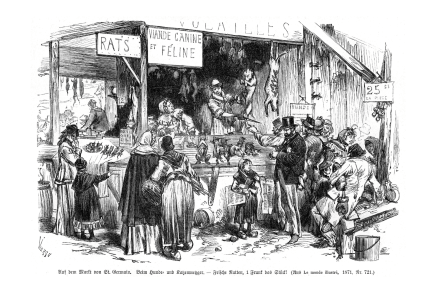
Even if you don’t like Christmas, it’s hard to deny that Christmas dinner is one of the best meals of the year. But for Parisians in 1870, the Christmas meal took an unexpected and macabre turn. While we may think of Paris as being the city of light, good food and fine wine, it’s also the city that once produced a Christmas Day menu of stuffed donkey head, elephant consommé and roasted camel – all courtesy of the Jardin des Plantes zoo. In the late stages of the Franco-Prussian war, Paris found itself surrounded by enemy forces. The Germans aligned themselves with Prussia with a plan to bombard and starve Parisians into submission. All supplies to the city were cut off, meaning there was no meat, fresh vegetables, butter, milk or cheese to be found.

Why war museums matter

On Christmas Day 1942, the German battlecruiser Scharnhorst, along with five destroyers, left its Norwegian base and headed for a series of Arctic convoys, the British fleets transporting material and support to the Soviets. The townclass cruiser HMS Belfast, used to escort the convoys through some of the most dangerous seas in the world, played a vital role in the Royal Navy’s clever game of bait-and-blast that resulted in the destruction of the Scharnhorst, a monster that had already sunk a British carrier and two destroyers. Belfast, the most powerful cruiser in the Navy at her relaunch in 1942 (she hit a mine in 1939 and needed three years of repairs), now sits in the Thames by City Hall, a visitor attraction operated by Imperial War Museums.

The power of the royal Christmas message

Today, shortly before 3 p.m., there will be a collective heave as backsides – weighed down from turkey and roast potatoes – are prised from dining chairs and plonked on to sofas to tune into the King’s speech. So I very much hope. For the royal Christmas broadcast is important, and this year’s of course marks a new era. This afternoon our televisions will bring us not only the first Christmas message from the new King, but indeed the first from any King. For while the tradition of the Christmas message began in 1932 under King George V, the first Christmas broadcast to be televised was not until 1957, and that of course was by Queen Elizabeth II.

The King’s speech

Christmas dinner is the meal we love to hate

Many of the elements of the Christmas spread have more detractors than admirers. Turkey can seem an undistinguished bird thrust into an undeserved limelight: bland and unwieldy, it’s a far cry from a rich goose or even a regular, moist chicken. Carrots and parsnips – uninspiring. Bread sauce resembles the gruel ladled out to Oliver Twist. Christmas pudding – dense and gluey. And Brussels sprouts, well, enough said. Every year, Christmas dinner-haters crawl out of the woodwork to air their disgust at the traditional meal and find themselves given a surprisingly sympathetic hearing. A 2020 YouGov poll indicated that only around half of us, for example, consider turkey part of our ideal Christmas dinner (it hardly needs saying that for Gen Z the figure is even lower).

The joy of spending Christmas Day abroad

Spending Christmas Day abroad is, as they say, ‘Marmite’ – you either love the idea, or you hate it. But it seems there are plenty of us who love it. The Association of British Travel Agents estimates that five million Britons will escape abroad for Christmas and new year this month, with yesterday expected to be the busiest day for departures. Many are destined for sun-soaked destinations such as the Canary Islands, Southern Spain, Turkey, Barbados, the Middle East and Mexico. And I know exactly what the appeal is. My husband, young son and I have spent six of the past eight Christmases overseas – most of them at our second home just south of Valencia in Spain, another in Dubai and one in Cape Town. ‘Don’t you miss being at home?

My picks for the Grand National

The Randox Grand National at Aintree is more than three months away but I can’t resist a couple of bets on the race now. At this stage, it is important to bet on a horse that is being targeted at the race but that will not go up in the ratings/weights significantly between now and the spring, thereby hampering its chances of winning. You also need a strong stayer and a sound jumper, ideally one that has run well over the Aintree fences before. Like all antepost bets, it’s best to have a horse too that is not ground dependent so it can handle whatever the going is on the day. Lucinda Russell knows what it takes to train a Grand National winner having done just that with One For Arthur in 2017.

Why it’s time to go back to church

Somewhere in the midst of the hurly-burly antics and preoccupations of life, I think maybe, I’m probably a Christian. Not the type who sings in church with his eyes shut, but an extremely moderate, unthinking Anglican for whom the prospect of the existence of nothing is too painful for words. That makes me the sort of Anglican who starts to pray once the 747 has been in freefall for six seconds or more over the Atlantic, or the type that looks heavenward when Harry Kane is about to take the most important penalty in the recent history of English football. As a result, the Great Being plays precious little part in my day-to-day life; I fear I’m essentially Godless.

Forget Love Actually: the best alternative Christmas films

It's become one of the traditions of the modern festive period: arguing about whether Die Hard is a Christmas movie. The explosive 1988 film features, you may recall, a vest-clad Bruce Willis confounding Alan Rickman and his terrorist cohorts’ evil plans in a Los Angeles skyscraper on Christmas Eve – and it’s peppered throughout with fir trees and tinsel.   Some claim this means it should take its place as a festive staple alongside more conventional classics of the season, It’s a Wonderful Life et al. Opponents furiously insist that a proper Christmas film shouldn’t feature machine guns and explosions, but instead depict rather more heartwarming scenes.

Happy Excessmas: why shouldn’t we eat, drink and be merry?

Christmas is coming and it isn’t only the goose that’s getting fat – so are you. That’s according to the skinny, pie-dodging miserable lot who make up the public-health lobby. For these people – who are living proof that a lack of sugar makes you cranky – the countdown to Christmas isn’t an opportunity to excite kids about Santa’s sack or splurge on gifts for loved ones; no, it’s an ideal time to freak people out about the dangers of eating and drinking too much. Every year it’s the same. It starts in November. An alcohol-awareness group (a fancy term for the neo-temperance movement) and obesity experts (a grand title for fat-shamers) rattle off press releases about the awful things we’ll do to our guts and livers.

The problem with Jeremys

Why is Jeremy Clarkson in trouble so often? Is it because he often appears arrogant, entitled or untouchable? Or is it for a much simpler reason: he’s called Jeremy? This week, in a column for the Sun, he suggested a rather unsavoury Game of Thrones-style punishment for the Duchess of Sussex. The article prompted 20,000 complaints to Ipso – more than the press regulator received in the whole of last year – and led to 64 MPs signing a letter of complaint to the paper’s editor. Clarkson has made a grudging non-apology and persuaded the paper to remove the article from its website, but unsurprisingly this is unlikely to satisfy the lynch mob already digging out those pitchforks ready to march on his well-publicised farm.

How to make eggnog

Let Bing sing about a white Christmas, if he insists. My kind of Christmas is more eggnog-toned: yellowy, like old-fashioned incandescent string lights; rich, like real velvet ribbon on presents; topped with pale froth of the most non-utilitarian and fluffy kind; sweet, with a kick of rum or bourbon to redeem it from sentimentality; stippled with a dark sprinkling of freshly grated nutmeg on top to ginger up the olfactory receptors. Uncanonical as it may be to view this time of year through an eggnog-tinted lens, it seems to me that food and wassail are more essential to Christmas than snow. What is the celebration without culinary traditions, even though one man’s festive favourite may be another’s pet peeve?

Peace on Earth? 10 films about Christmas on the front line

Christmas may ostensibly be a time of goodwill to all men, but war rarely takes a break for the festive season – as events in Ukraine sadly demonstrate. Here are ten films set during Yuletide where the front line is front and centre: Castle Keep (1968) – Amazon Rent/Buy https://www.youtube.com/watch?v=8uALKeb0C6U&t=1s Sydney Pollack’s (Three Days of the Condor) Castle Keep is set during the Germans’ failed Ardennes offensive of December 1944 and stars Burt Lancaster as one-eyed US Major Abraham Falconer. But if from that description you expect a meat-and-potatoes world war two actioner, think again.

Beyond Dickens: the best Christmas short fiction

Claire Keegan’s Booker-shortlisted Small Things Like These this year revived the tradition of Christmas short fiction. It’s a deftly done parable about cruelty and kindness in the run-up to Christmas, with actual snow – and tears.   Although Keegan’s novella eventually lost out to Shehan Karunatilaka for the Booker, it perhaps served a greater purpose than prizes: it was a reminder of the value of stories that connect us with our humanity, particularly around this time of year.  It was also a reminder that cultural consumption at Christmas needn’t merely be about overloading on films.

What should be on your Christmas cheeseboard?

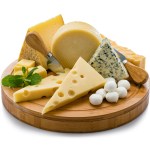
No overindulgent gourmand worth his salt fails to own a stilton scoop. Mine has a bone handle and Mappin & Webb silver plate. It has an ingenious contraption to release the cylindrical pellet of cheese: a bit like those retro ice cream scoops that, with a little squeeze, crack like a whip, the metal slicing under ice as vicious as a mousetrap. My stilton scoop is gentler. One releases the mouldy blue at one’s own pace, until it falls sensuously on to the plate. It is used just once a year, at Christmas, like the cookie-cutter and the nut-cracker. Why this extended detour about a kitchen utensil? Because one cannot talk about cheese at Christmas without talking of stilton.

The pick of this year’s Christmas TV

Has a certain media mogul had a visit from three ghosts recently? I only ask as this year’s Sky Christmas schedule is so packed with treats and big-hitters that it can't possibly be explained by hard-nosed commercialism. An outbreak of sudden seasonal generosity seems to be the only explanation. Whatever has triggered Sky's largesse, the result is a little something for everyone – including those of us best described as jaded anti-Christmas types. I was particularly pleased to see the return of Billie Piper in the deliciously sardonic I Hate Suzie. From Succession writer Lucy Prebble, it's the chaos comedy that makes Fleabag feel like Emily in Paris. If you need an outlet from seasonal niceties, this is it.

Stop harassing me to review everything I buy

The email landed in my inbox one afternoon, as I frantically sandwiched work in between feeding the dog and doing the school run, its subject saying: ‘A quick reminder for you, Antonia Hoyle.’ Oh God, what now? Had I forgotten to pay a bill? Missed a deadline? It was worse. I hadn’t left a review for a company I’d purchased skincare supplements from – and six days after their initial request, they sounded disappointed, adding reproachfully: ‘We would like to remind you that writing a review of your experience will help us improve our customer satisfaction.

How the royals do Cornwall

There was arguably no better advocate for holidaying in Britain than Queen Elizabeth II. Her Majesty loved to spend her summers in Scotland, having stayed at Balmoral each August since she was a girl. But could the next generation of royals favour the warmer climes of Cornwall over chilly Scotland? It certainly seems so. After Charles became King, William inherited the Duchy of Cornwall estate from his father. Not only is he now responsible for the Duchy’s extensive portfolio of Cornish property and farmland but he also inherits the 500-year-old Restormel Manor in the heart of Cornwall. Situated only a few miles from the house that inspired Daphne Du Maurier’s Rebecca, it frequently hosted King Charles and the Queen Consort during their annual tour of the region.

Why a nightcap is a dream Christmas present

Have you finished your Christmas shopping yet? I ask because there is a must-have item for 2022 that may have so far escaped your attention. And that’s a small irony because at some point in the weeks ahead it will almost certainly be staring you in the face. Whether you’re reading A Christmas Carol and enjoying John Leech’s illustrations, or relishing in the monochrome horror of Alastair Sim in Brian Desmond Hurst’s gothic version of 1951, or enjoying once again Michael Caine’s peerless performance in the Muppets’ musical adaption, you will notice that one of Ebenezer Scrooge’s nocturnal accessories is never missing: the nightcap. You don’t have to be a miser to see the benefit of this piece of forgotten headgear.

His Dark Materials is the perfect Christmas viewing

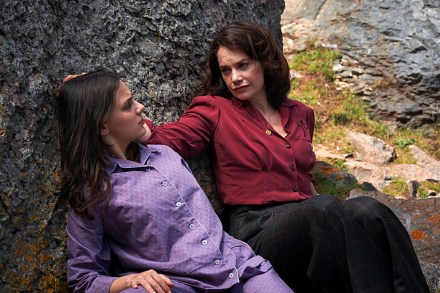
When you’re sitting on the sofa in the week ahead, stupefied into submission by food and alcohol and relatives and God knows what else, you’ll be tempted to watch something that will divert you from the gluttony. And, yes, the likes of Elf, It’s A Wonderful Life and Love Actually are all available, as they were last year. But maybe you’ll want to watch something that is not just entertaining but that makes the viewer think. Something that also has a provocative religious theme that is, if not quite the three wise men and the star of Bethlehem, as relevant this time of year as it ever is. Step forward the third series of His Dark Materials, all eight episodes of which became available on BBC iPlayer last night.

How to get the most from your wood-burner

Recently, Sadie Nicholas shared ten lessons she’s learnt from ten years of having a wood-burner. In response, Spectator readers offered their own advice for getting the most from your wood-burner – from maximising the heat and minimising the mess to fire-lighting tricks and cooking tips… Join the fan club ‘Combine wood-burners with small fans. The problem with heating a room in winter (or cooling it in summer is air circulation). A small fan or a large fan set on low speed quickly circulates the air, warming the entire room faster. It actually does cut down the cost of heating a room.’ ‘We highly recommend a free-standing fan on top of the wood-burner, which has vastly improved how heat is distributed.

A guide to buying scent for Christmas

Is it presumptuous to buy perfume as a gift without knowing the recipient will like it? Scent is such a personal choice, we are told, ad infinitum. But those in close confines with a person drenched in fragrance will experience it as much as (if not more than) the wearer. Purchasing an eau de toilette is high-stakes stuff for all. Every fragrance smells different to (and on) everyone; a single spritz at the perfume counter could convince gift-givers that they have found the most charming scent in existence, only to learn it induces abject nausea in their chosen recipient. I know this to be true: a whiff of Angel by Mugler is like a high-pitched siren through my head, but its curious chocolatey concoction remains one of the most popular.

Cheryl Tweedy’s West End debut is one to watch

For an industry so dependent on glitz and glamour, the West End has never quite mastered the celebrity debut. While big names might be a surefire way of shifting tickets, they have an unfortunate knack for ending up in mediocre plays – even when they’re as famous as Madonna. The problem is partly structural. A-listers aren’t exactly cheap, and their schedules are notoriously tight. Faced with those constraints, theatreland has developed an unfortunate habit of putting box office names – John Malkovich, Damian Lewis, even Lindsay Lohan – into derivative three-handers by David Mamet. They might be easy to make, but they rarely deliver. But are the days of celebrity mediocrity finally over?

Two 20-1 shots for the festive period

The likeable Joe Tizzard was a talented jockey and he is proving equally adept as a trainer. His father, Colin Tizzard, retired at the end of last season after a hugely successful training career so this is Tizzard Jnr’s first season with only his name on the licence. Tizzard has already trained 32 winners this season, with an admirable 17 per cent first-past-the-post strike rate. However, he would love a big-race winner over the Christmas period to boost his CV and he has a couple of good chances of doing just that. ELDORADO ALLEN is a relatively lightly-raced eight-year-old gelding who has run some big races over the past two seasons, including winning the Grade 2 Betfair Denman Chase at Newbury in February.

Rum deal: the fight to save Trader Vic’s

I have just been proposed to in a somewhat slatternly tiki bar in Mayfair. Not just any tiki bar, but Trader Vic’s, the Polynesian-themed restaurant and lounge underneath the London Hilton on Park Lane. Approaching its 60th anniversary, the bar has seen better days, but for historical purposes my partner of 12 years decided that this dimly lit den would be the location for the proposal of a lifetime. Then wouldn’t you know it – just two weeks later I discover that this cavern of delight where I spent many birthdays is being evicted and will close on 31 December. Trader Vic’s began in the 1950s, when Victor Jules Bergeron Jr. (Trader Vic himself) teamed up with Western Hotels in the US to turn his already popular tropical-themed bar and restaurant into a franchise.

Bring back the handwritten school report

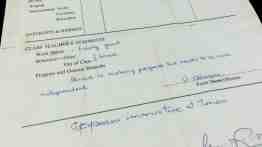
The end of term is here and parents up and down the country will be awaiting the arrival of their child's end-of-term report. But I hope they won’t be expecting too many pearls of wisdom from the impersonal emails that will ping into their inboxes shortly.   Ten or a dozen years ago (the exact date varied, school by school), in an act of educational vandalism, handwritten school reports were abolished. Edicts were issued by school ‘senior management teams’ and grudgingly, reluctantly, teachers put their fountain pens and little bottles of Quink back into their desks, never to be taken out again.   The personal touch in the reporting process disappeared with them.

The White Lotus effect: why luxury resorts are the perfect setting for thrillers

Glamorous love-to-hate-them characters, beautiful scenery, money, sex and murderous intent: it’s not hard to see why The White Lotus has been such a success on both sides of the Atlantic. Each series of the darkly comic satire (available on Sky Atlantic and Now TV) charts a week in the lives of the wealthy guests and employees at a sumptuous five-star resort – first in Hawaii, then in Sicily. This week’s season two finale drew record viewing figures in the US, and a third series has already been commissioned. But while The White Lotus may be full of unexpected twists, its choice of setting is less surprising.