Spectator Life

Spectator Life

An intelligent mix of culture, style, travel, food and property, as well as where to go and what to see.

Don’t fall for Rome’s tourist traps

Is any tourist attraction on earth really worth enduring a madding crowd to see? My mother, denied international travel for half her life by the Soviet state, made up for this deprivation by becoming the world’s most fanatically rigorous tourist. A major site left unseen or portion of a museum unexamined was, to her, as morally repugnant as leaving food on the plate or abandoning a book half-way through.   I, spoiled frequent flyer that I am, find crowds the ultimate holiday buzz-killer. Nowhere is this more true than in Rome, which clocked a record 52.92 million overnight visitors for the Papal Jubilee year of 2025 and, according to pre-bookings tracked by the local tourist board, is expecting even more tourists this summer.
Marmalade doesn’t belong to the EU

‘Citrus marmalade?’ Well, that’s a tautology, if ever I’ve heard one. I’ve been making marmalade for a long time and written about it extensively. I wouldn’t quite paint myself as a marmalade obsessive (I’ve met them, and I know that I cannot literally or figuratively compete), but I’m certainly a marmalade fangirl. They line my cupboards and are a breakfast non-negotiable. I seek out unusual citrus fruit, and pore over old preserve cookery books. January is officially marmalade-making season in our house and, for the full month, every window is steamed up, every surface is slightly tacky from over-zealous jarring.

How to be a good enough godfather

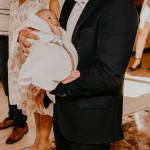
Of all the inappropriate presents I've bought my godson over the years, the nadir was the Swiss Army knife I sent for his 11th birthday. I was pretty pleased when I ordered it: a genuine Victorinox, none of those Chinese knockoffs. He'll be removing stones from horses' hooves in no time, I thought to myself. But a week later he sent me a thank you note in unusually shaky handwriting saying the knife had been confiscated by his mother after he'd had it for only a day because he cut his hands to pieces. Had I ruined his chances of being a violinist or a heart surgeon?  It all started promisingly when I was asked to be a godfather in 2008.

The decline of the country house hotel

For decades, the idea of the country house hotel – a uniquely British phenomenon – has held a seductive sway for those who would never dream, unlike Hyacinth Bucket’s sister Violet, of having their own mansion ‘with the Mercedes, swimming pool and room for a pony’. There is something wonderfully appealing about turning up at a vast estate that could double as a National Trust property, to be greeted by charming domestic staff who could have stepped out of Downton Abbey, and of abandoning all one’s worldly cares and concerns for a weekend of pampering and history alike.

We can still save Prince Harry

‘It won’t last,’ my schoolfriend Albert told me, as we staggered down Embankment one summer evening in 2018, a few pints into his birthday pub crawl. I wasn’t sure as to what he was referring. The evening twilight? His youthful good looks? Our ability to walk in a straight line? He expanded: ‘Harry and Meghan. She’s not right for him. They’ll be divorced within five years. Just you wait.’ Then he burped. I was surprised by Albert’s comments. I, like tens of millions of other viewers, had been taken in by the royal wedding weeks before. Yes, the presence of Oprah Winfrey and an over-enthusiastic American preacher had been a little gauche.

What has become of our table manners?

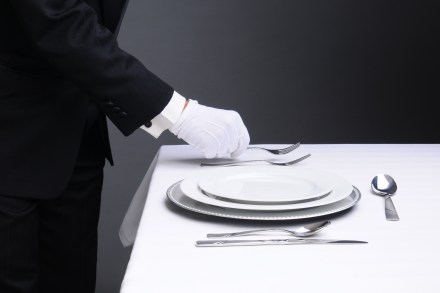
When I was a child, I always wanted to watch television during supper, but my dad wasn’t keen. He preferred family conversation and as we chatted over a meal he would try to gently steer us towards more pleasant subjects rather than the vulgar or provocative topics I tended to propose. ‘A meal is a sacred thing,’ he’d tell me.  I spent my secondary education at a bizarre school run by a quasi-Vedic cult, where table manners were also important. Before lunch, we chanted a Sanskrit mantra. The organic vegetarian food was to be offered, not grabbed. We sat upright, our backs as straight as any Himalayan yogi. We were told not to eat more than we needed. Naturally, I sneered at much of this as angrily as any teenage Clash fan would.

How technology changed birdsong

I was a beady, birdy child. I had binoculars, made lists and sewed a Young Ornithologist’s Club (YOC) patch on my M&S jeans. Every spring, our YOC leader, a cheery ex-Army man ‘Binks’ Williams would drive a minibus at 6 a.m. to Wimbledon Common, for us to experience the Dawn Chorus. This was more exciting in principle than reality, as unless I could see a bird through my bins, it didn’t really exist. I was hopeless at identifying birds through song alone.

The luxury of the modern playground

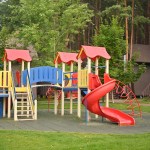
The 1990s were great years. The economy was humming, the West could duff up any Middle Eastern dictator it wanted, and the arrival of Oasis and Blur meant the music press could convince us we were cool again. Parents didn’t think to question the idea that for their kids, things could only get better.  30 years later, I also don’t question it. My countrymen are now poorer than the average hick from Alabama, as well as every other state. Climate change is working its way through all four horsemen of the apocalypse. And while AI probably isn’t going to destroy humanity, your employer will replace you with a robot that has been programmed to spend half its time on acid.

Why British toilets are revolting

First things first, as this is an article about toilets, we need to establish if the word ‘toilet’ is an acceptable word. Here at The Spectator, editorial opinion on this crucial point is deeply divided. Some have expressed a preference for ‘bog’. Others opt for 'john', 'jakes', or lavatory.

The curious life of an antique dealer

Over ten years ago years ago, I made the transition from auction house ‘expert’ to antiques dealer. And it came as a rude shock. Nothing like a healthy dose of comeuppance; deference vanished overnight.   Auction houses are open to the public for consultation, even the grander ones in London’s West End; or that is how it was in the early 2000s. Back then, anyone could turn up (without an appointment) and ring a buzzer on the front counter. And, as an auction specialist, you played the part. Keep ‘em waiting for ten minutes, then a star-like descent down to reception, where a forelock-tugging hopeful awaited with Tesco bag and fake Fabergé frog in ‘resin’ — a useful auction house term to describe plastic.

In praise of the paperback

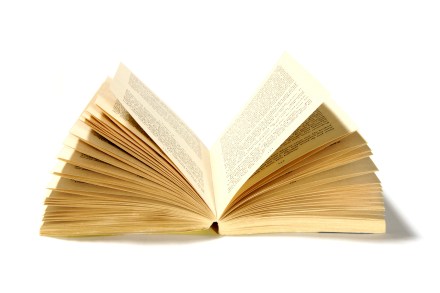
At long last, hardback books, it seems, are finally drifting into, if not obsolescence, then at least abeyance. It turns out that punters are chary of buying hefty tomes, and so publishers are considering putting books out in paperback first. For once, this is a literary development that I will be applauding.  For centuries, hardback books were the only thing you could buy. In the 1920s, it was impossible to stroll along with a paperback of Woolf’s To the Lighthouse in your pocket to impress the ladies, since paperbacks of that sort did not exist. They are a relatively new beast on the literary scene. It was Allen Lane who brought the sixpenny paperback into the world in the 1930s, a feat for which he should be lauded, on a par with Alexander Fleming.

My time as an overdrawn Coutts customer

Dear old Coutts, the private bank used by the King, now requires clients to have £3 million in the kitty before they deign to allow you to open an account. The £3 million minimum deposit is the biggest single jump of the bank’s wealth test in its illustrious 333-year history, designed to attract ‘ultra-high-net-worth individuals’ apparently. Whoever they are, I am not one of them.   I had an account at Coutts opened for me by my mother when I was 15 at a small, rather cosy little branch it used to have on the corner of Sloane Street and Cadogan Square.  As I went in and out, I got to know the cashiers who greeted me by name, which made me feel I’d really arrived, although where I wasn’t quite sure.

Meet the humans training robots at the ‘arm farm’

AI is set to take over all cognitive tasks in the next few years. Your hard-won career as a paralegal, data analyst, radiologist, coder or novelist is about to be hacked out from under you. So far, so apocalyptic. But what about the jobs that are primarily embodied? Sous-chef, rehabilitation nurse, plumber, dog-trainer? These are expected to lag behind, awaiting the next generation of robots. But there is an important further question. Who will train these robots? Answer: you will.  This is the concept of the arm farm. On an arm farm, practitioners of the aforementioned jobs - chefs, nurses, plumbers etc. - wear Go-pro helmets, pressure-sensitive gloves, even full motion-capture rigs, and do the jobs that the robots will ultimately usurp.

The soft power of Ukrainian food

New wars bring new fundraising efforts. Since Russia’s invasion of Ukraine, Ukrainians who already lived in London or moved here as a result of the war have conducted a subtle but concerted gastronomic campaign on behalf of their country. Somehow, this avoids all shrillness – unlike the dreadful and relentless Cook for ‘Palestine’ movement.  The Ukrainian food scene doesn’t crow about good and evil but it takes a position on those questions anyway – of course. A wartime enterprise can't do anything else. But with front people like the beautiful, tireless Olia Hercules, who has raised millions for her homeland through culinary ‘cultural diplomacy’ missions, it’s an altogether more skilful piece of food politics than other wartime campaigns.

The next Renaissance is coming

When we think of the Renaissance, our minds naturally drift to figures such as Leonardo da Vinci and Michelangelo – and rightly so. These are individuals who transformed our understanding of art, science and human potential. What we tend not to consider, however, is how close we might be to another cultural revolution.  That is the argument now circulating on parts of the internet: that after a prolonged period of digital saturation – defined by algorithms, passive consumption and an overabundance of content – we are approaching a point of correction. Just as the original Renaissance followed a period of stagnation and upheaval, this new phase will be marked by a renewed emphasis on creativity, craft and intellectual depth.

Bardella, the princess and a very French love story

Princess Maria Carolina de Bourbon des Deux-Siciles isn’t a name that rolls off the tongue – but it’s now on the lips of every socialite and political pundit in France. The 22-year-old Italian aristocrat, who is the elder daughter of the Duke of Castro, was splashed across the cover of gossip magazine Paris Match last week, gazing into the eyes of her new beau. Was he notable for being a duke, a prince or another such member of the hereditary elite? Not at all. The suitor in question was Jordan Bardella: the right-wing powerhouse whom polls suggest will succeed Emmanuel Macron as French president next year.  In an interview with Hello! in 2024, Maria Carolina declared she was ‘still waiting for Prince Charming to come and serenade me with a guitar and a red rose’.

The British road trip is over

You set off on a spring morning, windows down, full of hope. Sunglasses, flasks of tea and a picnic rug are packed. You are ready to experience the freedom of the road, leave your worries in the rear-view mirror, put pedal to the metal (and every other optimistic road trip cliché). Follow the brown signs to the Pembrokeshire Coast 200, South West 660, Wales Way, Antrim Coast Road or any of the other curated, promoted and hash-tagged routes now crisscrossing the UK.

Will genteel customers desert Waitrose?

One of the disadvantages of having a daughter who is both given to wayward behaviour in public and named Rose is that my increasingly frantic cries of ‘Wait, Rose! Wait, Rose!’ make me sound like an especially unhinged proselytizer for the middle classes’ favourite supermarket. When we do eventually make it inside the hallowed doors of Waitrose, however, I can feel my pulse rate returning to normal. Like Truman Capote’s Holly Golightly so famously said of Tiffany’s, it is a place where I feel that nothing bad can happen.   The supermarket has, however, suffered quite a public relations blow recently with its actions involving its former employee, Walker Smith.

Why Prince George should go to Eton

After three years of theatrical um-ing and ah-ing, the Prince and Princess of Wales have seemingly acceded to the obvious: Prince George is apparently going to Eton. Despite their perennial posturing at being a ‘modern’ royal family (is there such a thing?) there was really only one option. Eton is after all – somewhat paradoxically – the only place capable of offering any semblance of a normal adolescence for George, as well as mentally preparing him for kingship. To an outsider, this sounds ridiculous. How can prancing around in tailcoats while speaking unique slang (teachers are ‘beaks’; Year 9 is ‘F Block’) have any bearing on normalcy? Yet normal is relative. One of the first things you realise at Eton is that the exceptional is unexceptional.

The empty escapism of ‘cowboy core’

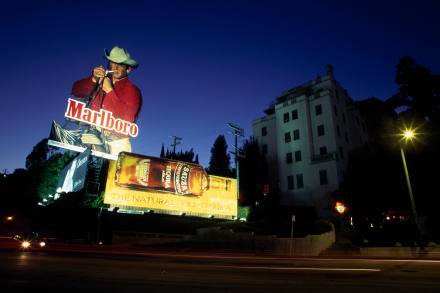
Last week I dreamt I was a cowboy. My name was Billy ‘Toothpick’ Pickett, and I was the fastest pistolero east of Whiskey Row. I dreamt of robbing stagecoaches. I dreamt of playing three-card monte with Toothless Dan down by Granite Creek. I dreamt of owning a Smith & Wesson and shooting buffalo. I dreamt of riding a buckskin stallion named Tex. I dreamt of vintage Americana. And then I woke up.  This was the third cowboy dream in a fortnight. Once again, I had fallen asleep watching videos of cowboys on Instagram and paid the price. For months, my algorithm has been inundated with visions of a neo-Wild West. Videos of Monument Valley and the sandstone rocks of Utah. Young men with mullets camping in the Sierra Nevada.

How to rent a family in Japan

Ever fancied an extra family member or new best friend supplied on demand and available for as long as required? Ever dreamt you could summon up a surrogate to explain yourself out of an awkward romantic entanglement, or a presentable spouse to secure an employment opportunity (like Alan Partridge’s rented wife in the ‘Hamilton Water Breaks’ episode)? All of this, and more, is readily available in Japan, for a fee, courtesy of the ‘companionship agencies’. This decidedly odd business is the subject of the film Rental Family currently on release across the UK.

Will Ozempic trigger a big fat divorce boom?

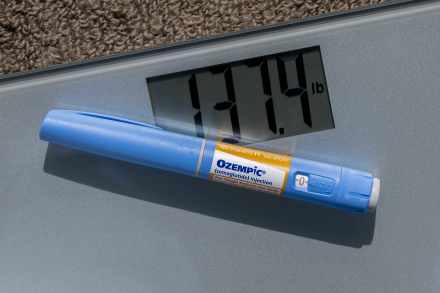
One of the funniest - and in my opinion, falsest - things women have long said is ‘I’m doing it for myself - not for men’ about improving the way they look. Men have rarely said the same about women, which reflects that men have never been principally valued for their looks, historically, as they generally earned far more money than women. Women had to look as pretty as possible in order for a man to pick them and support them financially, thus my brilliant line ‘Men are judged as the sum of their parts; women are judged as some of their parts.

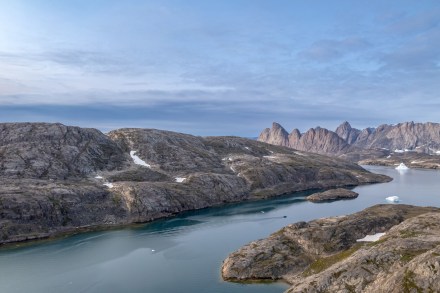
The strange beauty of Greenland

It is one of the world’s most remote corners – but Greenland is playing an increasingly important role in global affairs. In January last year, the island’s 57,000 residents became an object of desire for Donald Trump. ‘I think Greenland we'll get because it has to do with freedom of the world,’ declared the bombastic President. ‘I think the people want to be with us.’ Six weeks later, the people of Greenland duly gave their reply, crushing their pro-Trump party in an election centred on questions of independence. The ongoing struggle for control of the Arctic motivated Trump’s demands. The British government believes that the Arctic Circle will be ice free each summer by 2040; some experts predict it will be sooner.

Constable should be on a banknote

In all the recent hoo-ha about banknotes and who or what to put on them, one name has been curiously absent – that of John Constable. Born 250 years ago this year, he was the son of a prosperous Essex miller and merchant who would rise to become probably the greatest proponent of landscape painting in history.  Where his contemporary Turner – who got the £20 note, of course – had an expressive style that took landscapes towards ethereal impressionism, Constable took nature itself to his heart and somehow made it even better – not unlike a portrait painter flattering his subject. If we weren’t British, we would probably have a major gallery in his name.

The disappointment of a National Trust café

In his novel Coming up for Air (1939), George Orwell has his benighted protagonist, George Bowling, bite into a sausage, only to discover that it tastes of something else altogether: ‘...pop! The thing burst in my mouth like a rotten pear. A sort of horrible soft stuff was oozing all over my tongue. But the taste! For a moment I just couldn’t believe it. Then I rolled my tongue round it again and had another try. It was fish!’  I thought of George Bowling as my disgruntled family sat outside Felbrigg Hall in North Norfolk last week, eyeing me balefully — and I envied him. At least his sausage tasted of something. For I had just spent £43.

Céline Dion doesn’t do politics

It’s the most talked about comeback in France since Charles de Gaulle came out of retirement in 1958. The general may have launched the Fifth Republic, but Céline Dion is limiting herself to ten evenings at the Paris La Défense Arena between September 12 and October 14. Dion is French Canadian, but the French have adopted her as their own, as they did with the Belgian Jacques Brel and Britain’s Jane Birkin.  Dion has been plagued by ill-health in recent years – suffering from an incurable autoimmune condition called Stiff Person Syndrome – and hasn’t sung live for six years.

The blessing and burden of belief to David Lodge

When most readers think of the late novelist David Lodge, it is his peerlessly funny and incisive campus novels, such as Changing Places and Small World, that immediately come to mind. While his satires on progressive academia are indeed some of his finest achievements, this is down to Lodge’s Catholicism, which was not merely a religious faith but a central guiding principle of his writing – if you were being pretentious, you might say ‘a calling’ – and his life. He may have called himself ‘an agnostic Catholic’, and from a religious perspective, this may have been true, but it remained a vital part of his literary career.

Ozempic has ruined Easter

It’s a funny thing, being a feminist surrounded by women on weight-loss drugs. As someone who recognises the health risks of being clinically obese, I’ve never been a fat liberationist – but pretty much all of us used to be against prescribed beauty standards. In practice this meant we would critique the harmful impacts of the ‘size zero’ or ‘heroin chic’ trends rather than obsess over having gained a few pounds over Christmas. Yet, with the rise of weight-loss jabs, skinniness has become a norm rather than a feminist discussion. And twee ideas about ‘being good’ or ‘cheating’ have been replaced by – well – feeling too nauseous to cheat at all.  Which is why Easter is a fascinating holiday in this era of weight-loss jabs.

Not all children’s screens have the same effect

When you have children, it’s incumbent upon you to develop a variety of new skills – paramount amongst which is the ability to ignore unsolicited advice. From the moment you share a grainy black ultrasound with the world, it rolls in. Birth, breastfeeding, sleep, diet, teething, clothing, tantrums... everyone’s got ideas about how to do it right. If your choices diverge from their wisdom, you immediately become tenants of different camps. The only sensible approach is to put your hands over your ears and go ‘La la la la’ until your children are emotionally well-regulated, financially independent adults with a 2.1 from a Russell Group university.