Spectator Life

Spectator Life

An intelligent mix of culture, style, travel, food and property, as well as where to go and what to see.

Was Picasso a Catholic artist?

There’s a new exhibition on Picasso which is actually transgressive: Picasso and the Bible. That promises to stir things up among worshippers of the great man, who was known for being Republican, Communist and atheist.   The premise of the exhibition – which was opened this week with great fanfare at Burgos Cathedral in Spain – is that an artist can leave the Church, but the Church never really leaves him. The real theme of the exhibition isn’t Picasso and the Bible; it’s Picasso and Catholicism, a more explosive subject.

Serge Gainsbourg would not survive modern France

Yesterday marked the 35th anniversary of the death of Serge Gainsbourg at 62 from a heart attack. The only real surprise is that he ever made it to such an age. Gainsbourg, whose unlovely but strangely beguiling countenance can best be likened to a garden gnome left outside in the rain for too long, was a performer and composer who epitomised French popular music of the 1960s and 1970s in all its bizarre contradictions. Compared to such wholesome British figures as Cliff Richard and Tom Jones, Gainsbourg was a seedy, almost sinister figure whose demeanour gave off an odour of stale aftershave, Gitanes and day-old red wine.  That he was also a songwriter of genius who has influenced countless other musicians – everyone from Jarvis Cocker and Radiohead to R.E.

How Gen Z became indebted to ‘doom spending’

Man on the television says you’ll never pay off your student loan. Lady on social media says the UK has the worst unemployment crisis since 1932. Politician says you’re off to war. Sally from HR says the company is ‘restructuring’ and fires you over a Microsoft Teams meeting. Science guy on Instagram says there’s a new disease in India. Ex-girlfriend says you’ve let yourself go and your body looks like dropped yoghurt.  In short, you’ve got a lot going on. So, what can you do about it? Well, according to some, the answer is simple: spend. Spend what you don’t have. Spend on what you don’t need. Spend until your overdraft is gasping for air, and then spend some more.

The joy of a launderette

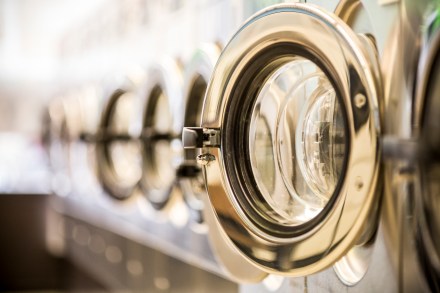
A broken-down washing machine is generally regarded as definitely a Bad Thing. There is the expense and hassle of repairing or replacing the machine, the prospect of a flooded kitchen, and the sudden realisation that your underwear stock is … less abundant than you hoped.   But when our washing machine expired recently, I was secretly thrilled because it gave me an excuse to go to one of the few places on the planet that always makes me happy: the launderette.  I feel soothed from the moment I walk into one of these womb-like environments. I love the warmth, the smell of detergent and the air of cleanliness.

How much will Mandelson pay for a good barrister?

When the cops came calling to arrest Peter Mandelson this week, he was already lawyered up. And he’s secured the services of the best – and most expensive – lawyers in town. Mandelson is now staring down the barrel of a legal bill running into the hundreds of thousands of pounds – very possibly the millions, given the mammoth number of documents in the Epstein Files his lawyers will have to trawl through. Add in the forensic examination of government emails swapped in the build-up to Mandelson’s catastrophic appointment as British Ambassador to Washington – and the lawyers’ tills will be cheerfully ringing away.

Does The Spectator hate the Welsh?

This St David’s Day weekend, I devote this column to a celebration of the world’s most under-appreciated ethnic group. Under-appreciated, certainly, in the pages of The Spectator, whose editorial policy suffers from a Pictish delusion that its readers are eager to hear of the appointment of a new procurator fiscal in Ayrshire, or political divides on Pitlochry council, while having zero interest in the finer country to the west. Sometimes mere exposure to Wales may be enough to inspire greatness, as in the work of Alfred Russel Wallace or Led Zeppelin Now in celebrating Wales, we need some ground rules. Since the Welsh are much more agreeable than other Celtic tribes, they are widely content to have sex with people from other cultures and ethnicities.

Why are Parisians so awful?

I have recently returned from a fleeting visit to the City of Light. As usual, Paris itself was a delight. It is an architectural and historic marvel that nevertheless manages to offer the best food and wine in the world at all kinds of prices, and somehow also has a respectable number of quirky and interesting independent shops and boutiques amidst the more anticipated international names. In other words, any trip to the French capital should be an alloyed pleasure. So why, when I arrived back at St Pancras, did I all but sink to my knees in gratitude that I was once back in rainy old Blighty, and that the land of the Belle Époque was a distant memory?

The Georgians deserve better than Bridgerton

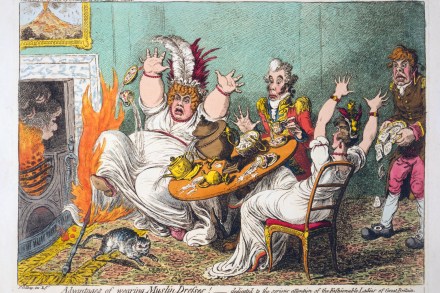
When we think of the Georgians, if we ever do, we think of them in Hogarthian terms: they are squalid, gin-soaked, syphilis-ridden and probably short of a few teeth. They are bewigged zombies without the apocalypse and either dressed in soiled, lice-ridden breeches or lying comatose in some fetid gutter.  Thanks to Bridgerton, we now see them slightly differently: as opulent social climbers who’ll happily strip off their sumptuous corsets and jewels behind the stables before gossiping about their neighbours’ misdemeanours at a ball.

Pity the fool with a nonsense name

‘If there is one thing I dislike,’ said P.G. Wodehouse, ‘it is the man who tries to air his grievances when I wish to air mine.’ His grievance was conversational, mine is nominative: I pity those with made-up names. There was a time when names came from a modest catalogue: the Bible, aunts and uncles of fond memory, a wider culture that worshipped the royals. Maturity involves a conservative deference to tradition. One learns to presume that norms have more value than drawbacks: dress in an ordinary style, have the manners people expect – and bear a name that connects you to others. Beware any job that requires new clothes, said Thoreau. He meant coats and trousers but it applies to birth certificates, too.

Driving isn’t fun any more

It is almost inconceivable that we used to live in a world where people would ‘go for a drive’. Not to get to a destination, but simply for the pleasure of driving. Sunday afternoons were the time of choice for this activity and would see car owners take to the road simply because it was good fun to be behind the wheel. The idea that driving was anything other than functional now seems absurd.   That world has vanished, partly due to the sheer volume of cars. In 1971 (the year my dad learned to drive), there were roughly 15 million cars on UK roads. Today, on those same roads, there are 34 million.

How to save the royals? Stop the psychobabble

Pick the prince who recently said this: ‘I take a long time trying to understand my emotions and why I feel like I do, and I feel like that’s a really important process to do every now and again, to check in with yourself and work out why you’re feeling like you do.’  Prince Harry, right? The baffled bailer across the water with too much time on his hands, who in the past, while doped up, has confessed to having conversations with both a trash can and a toilet. O, that the alumni of the Algonquin could have been around to join in!  No, it was Prince William. I must admit that I felt a vague foreboding when I heard his comments on BBC Radio 1’s Life Hacks on Wednesday – the Mental Elf strikes again!

Andrew, the Queen and the pitfalls of ‘gentle parenting’

It was the sort of elaborate birthday surprise that Andrew — practical joker and fond of a fart gag — might have arranged to prank a friend. Six unmarked police cars roaring up to the farmhouse where he had been living on the Sandringham estate at the unseemly hour of 8 a.m yesterday. Only these rozzers were real and the ‘ex-UK prince’, as one international news network described him, was arrested on suspicion of misconduct in public office before being released under caution around 12 hours later. ‘I’m just glad the Queen didn’t see this day,’ wrote one commentator on X. ‘It would have broken her heart.’ Yet the root of Andrew’s downfall lies with the late Queen Elizabeth II — an unlikely early advocate of gentle parenting.

No, the Southbank Centre is not beautiful

What is it about the left and their fascination with ugliness? Placing Lord Mandelson to one side, you’ve probably noticed that in so many areas of life, radical progressives appear to revel in anything that deviates from traditional notions of beauty whether in art, music, literature or architecture. Punk chose shrill discordance to rail against conservative values while left-leaning directors such as Jude Kelly have taken great pleasure in coarsening the works of Shakespeare to fit a narrow political agenda. Architecture has become a particularly divisive cultural lightning rod. Take the recent kerfuffle around the decision to bestow listed status on London’s Southbank Centre, famously dubbed 'Britain's ugliest building' in a 1967 Daily Mail poll.

Gen Z won’t actually read Wuthering Heights

When Wuthering Heights (first published in 1847) is splashed across the front page of the Daily Mail as a free offer to readers and sells more than ten thousand copies in a month, you know that this says something significant about our current cultural tastes.  Just as Mr Darcy’s soaking shirt was a pivotal moment for millennial women in the 1990s thanks to the television adaptation of Jane Austen’s Pride and Prejudice, so another screen version of a 19th century novel written by a woman has captured the imagination of young adults, Gen Z.   It is, however, doubtful just how many of those who buy Emily Brontë’s Wuthering Heights as a book will manage to read over 300 pages.

Why is Greggs trying to sell me a matcha latte?

Last week I was in a branch of Greggs, in the small market town in north Wiltshire where I live. Behind the sausage rolls, steak bakes, corned beef pasties and trays of vanilla slice was something that almost made me drop my Tesco meal deal in shock. A machine dispensing matcha lattes.  Greggs, the last bastion of brown food in the post-Ottolenghi era is now retailing aspirational green, radioactive TikTok slurry … in Wiltshire. A cheerful, democratic, brute-force provider of cheap calories in culturally legible form has collided with a beverage whose main function is performative wellness. It felt less like innovation than a stitching error. Two incompatible worlds roughly bolted together, animated despite never quite cohering.

The Great Boomer Declutter is under way

The Great Wealth Transfer has never felt more under way. Boomers who own more than half of owner-occupied housing in Britain are now grappling with the practicalities of downsizing.  It is estimated that in the next 20 or 30 years, boomers will pass down between £5.5-7 trillion worth of assets and, according to Savills, around £2.9 trillion of that is held in property.    Boomers who are living in houses that they have been in for decades are looking to their millennial children to shoulder some of the burden of their boomer junk, prompting much Swedish death cleaning and decluttering. This seems like a fair trade given that in many cases, these children stand to inherit their fortune; better still for them, this is set to double by 2035.

Why have a parenting philosophy?

In recent months, much has been made of ‘Fafo parenting’. Touted as the backlash to ‘gentle parenting’, the philosophy of ‘Fuck Around & Find Out’ seems to be that children should learn the natural consequences of poor decision-making. While gentle parenting advocates empathy and respect, reasoning and explanation, Fafo parenting dictates that rather than going nine rounds with your small person to persuade him or her to go to the loo before going out / to put a raincoat on when it’s coming down in stair rods / not to pull the cat’s tail, you should let them see what happens when they have the temerity to exercise their own free will.

Work experience was the making of me

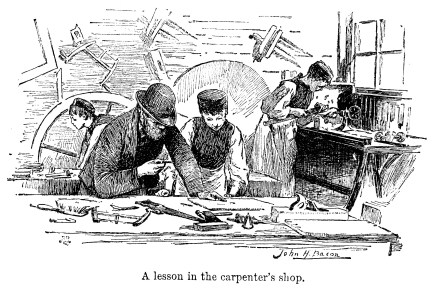
It was reported in the Times last week that Hampshire county council has threatened chef Greg Olerjarka with prosecution if he continues to allow his 14-year-old son, Dexter, to help him in his food truck at the weekends and after school. The boy desperately wants to be a chef and hopes one day to work alongside Marco Pierre White. He’s already an accomplished cook and has undertaken a food hygiene course.  Thirteen- and 14-year-olds, for whom minimum wage laws don’t apply, are allowed to do light work; 12 hours during the week (outside school hours) and five and two hours respectively on Saturdays and Sundays. They can work in retail, admin, hairdressing, stables, agriculture, horticulture, and deliver newspapers.

Americans are erasing European culture

Did Mariah Carey mime or not when she headlined the opening ceremony of the Winter Olympics in Milan? That was the main takeaway from last Friday’s jamboree. Organisers have since suggested that the US singer did indeed lip-sync to Domenico Modugno’s ‘Nel Blu, dipinto di Blu’ and the song that followed, her very own, ‘Nothing is Impossible’. ‘The technical, logistical and organisational complexities of an Olympic ceremony are not comparable to a live performance by a single artist,’ said a spokesperson for the organising committee.    Was there also a linguistical complexity in the decision?

The hellish side of Bumble

Valentine’s Day is upon us. I’ve never liked it. As an ugly ginger kid with a beautiful – much older – half-Indian sister, it was torture. Helen was a glamorous air stewardess and never short of cards or flowers. While I sat in my room listening to David Bowie and staring at the Starsky & Hutch posters I’d saved up for, Helen would be getting whisked away in a Mercedes to Joanna’s or some other club in Glasgow. In the run-up to Valentine’s Day 1976, age 12 and desperate for a card, I asked 11-year-old George next door if he would be my boyfriend. He said no. I shrugged and we resumed our den-building with his wee sister Lorna.

How ‘chicken yoga’ came to the Cotswolds

Halfway through a downward dog, red-faced and breathing a little too hard, a hen stops about 18 inches from my face. It squats, and lifts its a tail a fraction. There is a brief, unmistakable pause. Something warm and biological drops onto the mat beside me. It is not an egg.  From the front of the class, the instructor’s voice calls out, instructing us to inhale deeply.   To my side, another chicken wanders into the danger zone just as a pose collapses and someone nearly brings an arm down on it. The bird emits a short, offended squawk.   How have I ended up here?

Would you be friends with a Reform voter?

Most of us have had disagreements with friends over politics at some point in our lives. Or worse. One of the constant threats to friendships is that such differences could one day spill over into acrimony or result in a full-blown falling-out. In my youth, the election night parties held by my parents seldom ended without raised voices and tearful eruptions – aided, admittedly, by the vast consumption of alcohol – and who could forget the divisions and severed friendships occasioned by the EU referendum in 2016?  At least most folk above a certain age have been able to establish and sustain friendships with those of contrasting political persuasions. The same can’t be said for Gen Z.

Am I allowed to find Tom Stoppard boring?

I didn’t breathe a word of my true reaction while filing into the top-floor bar of the Old Vic theatre last week after the three-hour production of Tom Stoppard’s Arcadia was over. It would have been mortifying to be overheard muttering any adverse comments, when swaths of intellectual Stoppard-lovers from all over London and the Home Counties were crowding on to the staircase. Stoppard is a national treasure and to say anything rude about his work, especially in the three months after his death, would be heresy.   It was only on the pavement walking towards Waterloo that I dared to say to my husband: ‘I must say, I wasn’t moved by it.

The puerile fantasy of Bridgerton Britain

There is something inherently embarrassing about watching Bridgerton in Britain. It is so palpably, monstrously, uninhibitedly woke; an American fever dream of England in which an all-English (and the odd Australian) cast cavort as members of the ‘ton’ for money they’d probably never get from the BBC. In front of the great Bridgerton mood board scrawled with such words as ‘Downton Abbey’, ‘Jane Austen’, ‘Upstairs Downstairs’ and – of course – the most Shondaland touch of all, ‘Diversity!’, the likes of Adjoa Andoh and Lorraine Ashbourne do their thing while (one imagines) the suits at Shondaland clap with pleasure. Shondaland is the woman (Shonda Rhimes) and production company behind Netflix’s adaptation of the Julia Quinn novels.

Is Industry the Brideshead Revisited of our times?  

At first glance, there are few similarities between Brideshead Revisited, Evelyn Waugh’s classic 1945 novel – later adapted into an equally classic ITV series – of prelapsarian bliss in Oxford and Industry, the BBC’s adrenaline-fuelled show that exposes the dark iniquity at the heart of the financial industry. The one is a languid examination of (discreetly portrayed) same-sex love and Catholic guilt, and the other is a profane, sexually charged and palpitation-inducing dive into hedonistic self-indulgence. Brideshead is plover’s eggs and Meursault; Industry class A drugs and group sex. They would seem as distinct from one another as chalk and (Comté) cheese.

Auctions speak louder than words

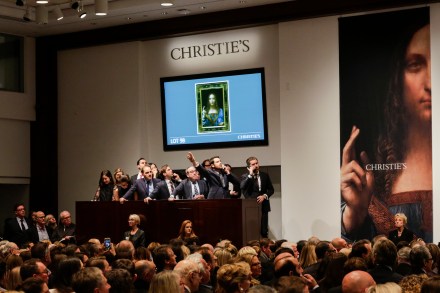
Can’t get an appointment with your GP? Nowhere to sit in surgeries crammed with the ill and infirm? Spare a thought for your local auctioneer who is also dealing with the effects of a long winter of discontent. The cost-of-living plague, from which almost nobody is immune, has prompted people to rummage around in their cupboards for treasure and to wonder whether they really want to continue to insure that Raeburn or Lawrence at vast expense. Throw in the epidemic of rocketing gold and silver prices, and you’ll struggle to get an appointment with an auctioneer, busy as he is weighing Georgian candlesticks and making house visits to inspect the family portraits.

The gentrification of British crime novels

Eighty years ago this month, in February 1946, the left-wing Tribune magazine published George Orwell’s essay ‘The Decline of the English Murder’ in which the writer identified a certain class of crime as most appealing to the tabloid-reading British public – and contrasted the ‘cosiness’ of this type of early 20th-century domestic murder with the brutal sadism of killings committed in Britain during the second world war.  Two years previously, in 1944, while war still raged, in another essay entitled ‘Raffles and Miss Blandish’, Orwell specifically contrasted the ‘hard-boiled’ school of crime fiction with the gentlemanly Raffles stories of E.W. Hornung, featuring a well-mannered upper-crust jewel thief.

We don’t need to see radio DJs’ faces

In a week in which embarrassing and damaging revelations about past misdemeanours are very much in vogue, let me reveal one of my own. When I was seven years old, I wrote in to Jim’ll Fix It. My request was to play a giant Wurlitzer organ, preferably the one in the Blackpool Empress Ballroom. To my retrospective relief, Savile didn’t respond to my letter. But I did purchase a second-hand, two-tier Hammond organ when I was at university, which I played as part of an acid jazz group. No tapes of our band’s songs or gigs survive I am delighted to state. I was reminded of my rather strange and atavistic early love of organs last week when I read of the death of Nigel Ogden, the presenter of the long-running Radio 2 show The Organist Entertains.

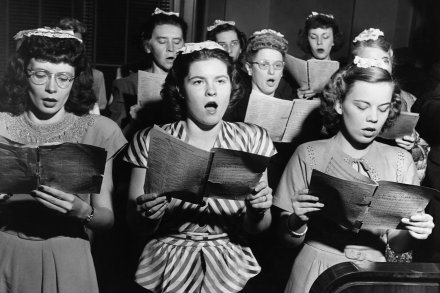
Why Gen Z are singing the praises of community choirs

‘Screenagers’, ‘lonely’, ‘boring’ – all words used to describe Gen Z. Born between 1997 and 2012, we are the first generation to grow up with omnipresent technology and are often maligned as phone addicts and loners. But things are changing. Now the first tech-native generation is actively seeking out the most analogue hobby of all: community choir.  Community choirs have boomed across the UK following the pandemic, and the country’s youngest adults are clamouring to get in. Some Voices, a non-audition choir in London which started as six friends singing in 2010, has grown to more than 1,200 members since 2020. Many of these newer members are Gen Z, searching for a connection which is more reliable than the wifi.