Spectator Life

Spectator Life

An intelligent mix of culture, style, travel, food and property, as well as where to go and what to see.

The best short novels for screen-addled minds

Who honestly has the time or inclination to finish long novels these days? I yearn for a serene period when I can read The Red and the Black or The Raj Quartet each night before bedtime, but I seem to be imagining someone else’s life. When new content, cool and engaging, is flooded onto YouTube daily, when you have subscriptions to four different websites, and the telephone regularly pings (or rather, zhuzzes) with WhatsApp messages, entering the world of Julian Sorel or the British in India is a struggle. I used to read two or three books a week, very cheerfully, but since around 2016 we’ve lived in a world so swirling and volatile that literature has at times seemed like its shadow.

Paul Wood, Ross Clark, Andrew Lycett, Laura Gascoigne and Henry Jeffreys

33 min listen

On this week’s Spectator Out Loud: as Lebanon reels from the exploding pagers, Paul Wood wonders what’s next for Israel and Hezbollah (1:24); Ross Clark examines Ireland’s low-tax project, following the news that they’re set to receive €13 billion… that they didn’t want (8:40); Reviewing Ben Macintyre’s new book, Andrew Lycett looks at the 1980 Iranian London embassy siege (15:29); Laura Gascoigne argues that Vincent Van Gogh would approve of the new exhibition of his works at the National Gallery (22:35); and Henry Jeffreys provides his notes on corkscrews (28:01).  Produced and presented by Patrick Gibbons.

Farage’s plan, the ethics of euthanasia & Xi’s football failure

45 min listen

This week: Nigel’s next target. What’s Reform UK’s plan to take on Labour? Reform UK surpassed expectations at the general election to win 5 MPs. This includes James McMurdock, who Katy interviews for the magazine this week, who only decided to stand at the last moment. How much threat could Reform pose and why has Farage done so well? Katy joins the podcast to discuss, alongside Jovan Owusu-Nepaul, who fought Nigel Farage as the Labour candidate for Clacton (1:02). Next: who determines the morality of euthanasia? Matthew Hall recounts the experience of his aunt opting for the procedure in Canada, saying it ‘horrified’ him but ‘was also chillingly seductive’. Does Canada provide the model for the rest of the world? Or should we all be worried of where this could lead?

Britain needs more royals

If King Charles wants a ‘slimmed down’, low-calorie royal family, we can thank Queen Victoria for bequeathing us the plus-size version. Responding in horror to the antics of her naughty uncles, who raked about being unsuitable and having mistresses, she set herself and her nine children to public duty and procreation: go forth and multiply, indeed. Her grandson George V envisaged a vast, bemedalled horde, trotting all over the Empire. At one point in the early 20th century, you couldn’t move for minor royals. Oops – mind that equerry! Edinburghs, Waleses, Connaughts, Fifes: you couldn’t visit a hospital without witnessing a royal plaque unveiling. And they were popular, too. My great-great-grandfather named his boat after Princess Patricia.

In praise of anachronisms

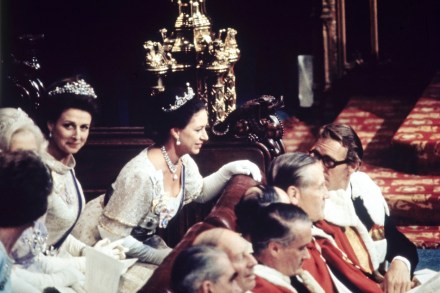
Do you know what an anachronism is? They’re very clear in cultural terms: Shakespeare’s clocks in Julius Caesar, for example. But in historical terms, it’s a different matter. When His Majesty King Charles III was crowned, the online scoffers were quick to mobilise themselves. One enthusiastic Jacobin tweeted that the enthroned, orbed and sceptred sovereign was ‘insane’, an ‘anachronism’. Out the scoffers troop, reliably, at every State Opening of Parliament. (And quite right too: mockery is a vital part of a successful polity). ‘How Ruritanian!’ they sneer (not quite grasping that the Ruritanians were copying us. And also, er, fictional.) The jeerers usually finish by wondering why we can’t be a grown-up country, like that entirely stable republic, France.

In defence of true crime

I recently listened to a 13-part podcast called Who Killed Emma?. It’s a gripping piece of work – a BBC investigation into the murder of 27-year-old Emma Caldwell in April 2005. Emma was a heroin addict and a prostitute on the streets of Glasgow. She was strangled and left for dead in a remote wood. Is it so terrible to be interested in these killers and their deeds? I don’t think so I’d recommend the podcast to any fan of true crime. And I’d also expect the scorn of those who deplore this highly successful genre. People who are inclined to say things like: ‘How can you be so voyeuristic? Why do you care about these monsters who kill? I want nothing to do with those despicable programmes and podcasts.

Nobel winners are strange. I should know, I’ve met three of them

To meet one winner of the Nobel Prize for Literature would be seen by most bookish nerds like me as a real privilege; to meet two as extraordinarily lucky; but to enjoy extended encounters with three is surely very heaven. Such, however, has been my fortunate fate. The Nobel Prize for Literature is the world's most prestigious – and, as it comes with a hefty cash bonus, the second most lucrative – award for fine writing. Inaugurated at the dawn of the 20th century by the Swedish industrialist and inventor of dynamite, Alfred Nobel (to atone for a lifetime manufacturing munitions) the prize is one of five awarded annually every autumn by the Swedish Academy. The others are for physics, chemistry, medicine and – most controversially – peace.

Ian Thomson, Andrew Watts, Sam Leith, Helen Barrett and Catriona Olding

32 min listen

On this week’s Spectator Out Loud: Ian Thomson reflects on his childhood home following the death of his sister (1:20); Andrew Watts argues that the public see MPs as accountable for everything though they’re responsible for little (7:40); Sam Leith reveals the surprising problem of poetical copyright (13:47); Helen Barrett reviews Will Noble’s book Croydonopolis and explores the reputation of a place with unfulfilled potential (19:48); and, Catriona Olding ponders moving on from loss to love (26:09).  Produced and presented by Patrick Gibbons.

Gen-Z mean girls are aggressive and progressive

When Black Lives Matter created the figure of the Karen, it was a sign of that movement’s darker, bullying qualities. What exactly was wrong with a white middle-aged woman who asked to speak to the manager when things were unsatisfactory? The answer seemed to be in the white part and the woman part, and perhaps also in the middle-aged part. In short, the Karen was a racist, sexist, ageist construct, and as a middle-aged white woman myself, who makes her dissatisfaction known from time to time, I felt extra defensive. But if that original Karen caricatured the wrong person, then there are some modern female types that deserve closer scrutiny.

The rise of the rogue bouncer

Bouncers – or ‘door supervisors’ – are a pillar of the ‘British night out’. They can sneak you into an exclusive club or send your teeth skating across the pavement with their Wreck-It Ralph fists. They can take a selfie with you and call you ‘mate’ or they can hit on your sister and emasculate you on your 19th birthday. We’ve all tried to sneak past them, to argue with them, to convince them that your best friend ‘is like that normally’ and ‘definitely not throwing up in his mouth right now’. We’ve all tried to high-five them. We’ve all been scared of them. We’ve all seen them hit a posh bloke called Hugo for saying ‘My daddy can buy this place.

The UK’s phone signal is infuriatingly poor

As I have been driving across England’s green and pleasant land visiting friends and family this summer, I discovered that the UK’s phone signal is really, really terrible. I expected poor connectivity on coastal paths in Cornwall, but everywhere I went I experienced problems: network dropouts as I tried to navigate the M1, recurrent outages as I tried to work remotely from Sussex, endless loading and buffering screens (even though my phone promised me 4G) regardless of whether I was in London or the Lake District. The signal in a friend’s home in south east London is so terrible you would think we were trying to beam through the Great Pyramid of Giza. I have had more reliable phone service on safari in Tanzania than I have on Great Western Rail.

The problem with Larry the Cat

There is, reportedly, an official plan in place for the demise of Larry the Downing Street Cat, aka the Chief Mouser to the Cabinet Office. Old Larry, originally acquired by the Camerons in the early part of the coalition, has now reached the impressive age of 17, having been born in the dog days of the Blair government. Sir Keir is the sixth Prime Minister to have passed through the black door of No. 10 since Larry began his tenure. What exactly will happen when Larry shuffles off to pounce on balls of angelic wool for all eternity has not been revealed. Some wag has apparently dubbed the alleged plan ‘Larry Bridge’, a reference to the ‘London Bridge’ scheme that set out the arrangements for the funeral of the late Queen.

Doing the bins has become an unbearable faff

Benjamin Franklin famously observed that there are only two certainties in life, death and taxes. But there are in fact three certainties: death, taxes and bins. Of the three, bins occupy more of my thought life than my eventual demise, financial or otherwise. For a long time, bins used to be bins: receptacles for rubbish. You scraped the remains of your supper into them, tore a letter up and tossed it in (usually a bill) or emptied the vast tangle of dog hair and unidentified dirt of the hoover bag into it and remembered to heave it out on the right day for collection. End of story.   Not anymore.

Joan Collins, Owen Matthews, Sara Wheeler, Igor Toronyi-Lalic and Tanya Gold

30 min listen

On this week’s Spectator Out Loud: Joan Collins reads an extract from her diary (1:15); Owen Matthews argues that Russia and China’s relationship is just a marriage of convenience (3:19); reviewing The White Ladder: Triumph and Tragedy at the Dawn of Mountaineering by Daniel Light, Sara Wheeler examines the epic history of the sport (13:52); Igor Toronyi-Lalic looks at the life, cinema, and many drinks, of Marguerite Duras (21:35); and Tanya Gold provides her notes on tasting menus (26:07).  Presented and produced by Patrick Gibbons.

There should be a maximum smoking age

In January 2022, the New York Times ran a piece that declared that smoking was back, quoting Martin Amis’s daughter saying it seemed like it was. In the summer of 2023, the Guardian ran a piece that declared that smoking was back, because Lily-Rose Depp looks great when smoking. Last month, the Guardian again ran a piece that declared that smoking was back, because Dua Lipa smokes and Charli XCX pretends to.  Smoking between 35 and 60, however, is really very dangerous But it isn’t back, and there’s stats to prove it. However, what those pieces do say is that smoking retains its ‘cool’ image. We know that. Kate Moss and James Dean knew that.

Alt reich: Is Germany’s far right about to go mainstream?

46 min listen

This week: Alt reich. The Spectator’s Lisa Haseldine asks if Germany’s far right is about to go mainstream, ahead of regional elections this weekend. Lisa joined the podcast, alongside the historian Katja Hoyer, to discuss why the AfD are polling so well in parts of Germany, and how comparable this is to other trends across Europe (1:13). Then: why are traditional hobbies being threatened in Britain? Writer Richard Bratby joins the podcast, alongside Chris Bradbury, the drone support officer at the BMFA, to discuss his article in the magazine this week about the challenge red-tape poses to model steam engine and aeroplane enthusiasts (18:47). And finally: how has sound design changed the world of theatre?

Wonderwall is the worst song ever written

It could be said that the last thing we need now is an Oasis reunion. I read somewhere that there are 56 conflicts in the world at the moment, and that doesn’t count what would surely happen if you put the Gallagher brothers in the same room. Siblings have a poor history in rock ’n’ roll – one immediately thinks of John and Tom Fogerty of Creedence Clearwater Revival, who didn’t talk for the last 20 years of Tom’s life, or Ray and Dave Davies of the Kinks. In 1971, Ray and Dave were dining in Manhattan. Dave tried to steal one of Ray’s French fries. Ray stabbed his brother in the chest with a fork. At Dave’s 50th birthday, Ray stamped on his cake.

I was an Oasis fan. Then I grew up

On the evening of 10 August 1996, I found myself lost in the grounds of a stately home in Hertfordshire, and very, very drunk. Everywhere I turned, there were men, mostly young men in bucket hats. They were all raucously singing, and they too were very drunk. Everyone was drunk. It always felt like the Gallagher brothers were performatively baiting each other for show, like two camp old wrestlers trying to hype a crowd Almost 30 years on, the Oasis concert at Knebworth is, what those working in marketing like to call, legendary. There has already been a commemorative album and documentary film – and now an Oasis reunion will see millions of people attempt to spend tens of millions of pounds to be able to attend re-creations of Knebworth next summer.

Welcome to real clubland

In the early 1860s, the teetotal vicar Revd Henry Solly founded the very first working men’s clubs. Like so many middle-class radicals, he failed to understand the true appetites of the working classes. Where Solly had visions of ‘education’ and ‘wholesome recreation’, real working men had different ideas: they wanted booze. Real clubland is not in St James’s. Instead, it can be found some 100 miles north By the 1970s, there were over four million drinkers visiting 4,000 clubs across Britain. There was live entertainment, big pot parimutuel betting, and copious amounts of subsidised drink. Some had Sunday afternoon strippers. Then British industry came crashing down, the miners of Orgreave had their heads smashed in, and their jobs went abroad.

William Cash, Marcus Nevitt, Nina Power, Christopher Howse and Olivia Potts

31 min listen

On this week’s Spectator Out Loud: William Cash reveals the dark side of Hollywood assistants (1:12); Marcus Nevitt reviews Ronald Hutton’s new book on Oliver Cromwell (7:57); Nina Power visits the Museum of Neoliberalism (13:51); Christopher Howse proves his notes on matchboxes (21:35); and, Olivia Potts finds positives in Americans’ maximalist attitudes towards salad (26:15).  Presented and produced by Patrick Gibbons.

Is the Proms safe with the BBC?

We’re approaching the home straight at the Proms. There are three weeks to go at the world’s greatest festival of music, and Prommers are counting down the days until the famous orchestras of Berlin, Munich and Prague reach the Royal Albert Hall. The friendly foreign invasion has become the traditional climax to eight weeks of music-making. It’s been a better season in the hall than the one which appeared on paper, though the opening night was vin ordinaire. Clara Schumann’s pretty piano concerto turned out to be pretty dull. It’s not a piece that should open a festival of this pedigree. The pianist was a poor choice, too, but we shall come to Isata Kanneh-Mason anon.

The dark truth about Hollywood assistants

Anew stop has been added to the map of Movie Star Homes and Crime Scenes, on sale at LAX airport: 18038 Blue Sail Drive, Pacific Palisades, the sleek single-storey $6 million ocean-view house where the Friends actor Matthew Perry was found floating in his hot tub last October. His death has revealed something of the dark world of LA’s celebrity staff. Perry’s assistant, two doctors and LA’s ‘Ketamine Queen’ have been charged with supplying the drugs Last week it was reported that Perry’s live-in assistant Kenneth Iwamasa injected his boss with ketamine before his death. While watching a movie around noon, the actor asked Iwamasa – part-butler, part-nurse and head of shopping (including meds and drugs) – for his third jab of the day.

Why are men being told to worry?

What’s a guy got to do these days to take a pee in peace? Standing at the urinal in London King’s Cross train station, I was trying to embrace the present, not dwell on the failures of the past or the great trials to come; and for a brief moment, I felt that Zen-like tranquillity that, as all guys know, is key to avoid a freeze moment at a public urinal. But then, ‘MALE SUICIDE IS AN INCREASING PROBLEM. IF YOU OR ANYONE YOU KNOW ARE HAVING THOUGHTS...’ blared the Tannoy system. My inner Buddha fled. I left the public toilets thinking, ‘hmm, I don’t think I’ve been feeling particularly suicidal of late... But maybe?’ I was soon gazing at the latest poster campaign for prostate cancer (anti, not pro). One in eight!

The trouble with expat parents

When my mum picks up my WhatsApp video call, she’s on the beach. As we chat, I watch her take small sips from a wet can of lager, dodging the hairy men in budgie smugglers who try to pass behind her. Inevitably, I’ll spend most of our conversation staring at her earlobe, since she’ll press the phone against her head in order to hear my various life updates over the screeching sound of holidaymakers frolicking in the shallow water. If the connection’s good enough, I might be able to make out her excitement about the pink bikini she’s just bought, or get the gossip from the local scuba shop, with its dramas that are more exciting than a soap opera’s.

Edinburgh is ruined by the Festival

As an arts journalist, you know you’re getting old when you scan the Edinburgh Festival programme, and instead of thinking ‘Wow, look at all this,’ your reaction is ‘Oh Christ, look at all that’. You tell friends that you’re off to cover Edinburgh in August, and instead of lighting up with envy, they suck their teeth in sympathy. Ouch – nasty! And yet there it is, nonetheless: that great immovable cultural blow-out on the shores of the Forth; infinite, monstrous, plastered all over press and media, and defying you to ignore it. Could you design a less suitable host city for a major international arts festival? No, it’s got to be done, and you know what that means. The hell of a Cross Country train.

What can save Britain’s ash trees?

The next time you drive or walk down a country road, you may well notice that something is not quite right. Look around and you might see that tall ash trees in the verge-side hedgerows are no longer as handsome, their leaves sparse and scattered, even brown and wilting, while naked branches point accusingly to the sky. A disaster is unfolding, which, on the face of it, seems hardly less serious than the one that hit the countryside in the early 1970s, after ‘Dutch’ elm disease was imported in timber from Canada and killed 30 million trees. This time, the victim is the European ash (Fraxinus excelsior). The disaster is plain, even to urban dwellers.

An alternative to Giffords Circus

I’ve never been seduced by the circus. As a motif in children’s literature, particularly taken up by Enid Blyton and Disney. In fact, as an animal-loving child, I think I found it cruel; I wanted Nellie the Elephant to pack her bags and say goodbye to the circus, I longed for her to slip her iron chain. In childless adulthood, I forgot all about it. Until I moved back to Oxfordshire and Giffords Circus appeared on the horizon every summer, its posters slapped on every lamppost from Charlbury to Cheltenham. The posters might have pulled in some punters, but for a certain type of middle-class patron, Giffords needed no advertisement. Everyone knew about it. It was the day out du jour. The young, the old, the child-laden, the childless: all came in their droves.

Why children have stopped reading

It’s only when you read the old stories again, to a child maybe, that you become aware of the extent to which the characters still live inside your mind, bobbing about just below the level of consciousness. I still find myself puzzling over the stories collected by the Brothers Grimm, decades after I first read them. How could Little Red Riding Hood have avoided being eaten? (We read the original, merciless version.) What should Hansel and Gretel have done? Any good book leaves its mark, but the characters from the books you loved as a child embed themselves. They inform the way you think as an adult, which is why it’s so sad and so significant that children all over the West have stopped reading.

Love it or loathe it, ragwort is winning 

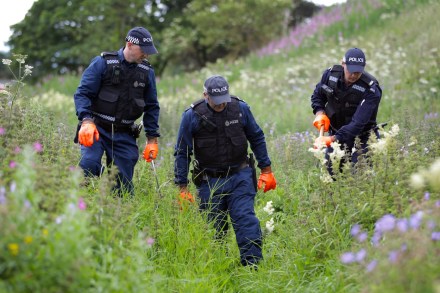
White, lacy cow parsley frothing along the roadside is a familiar sight during the British summer. But 2024 is the first year I can remember when it’s been superseded by the retina-scorching yellow of ragwort. Whether you consider common ragwort (Senecio jacobaea) the ‘yellow peril’ or a precious wildflower crucial to biodiversity depends on whether you’re in the horse owner/farmer camp or a conservationist. ‘It’s the worst I’ve ever seen,’ I keep hearing from farmers and fellow horse-owners. For the first time I’ve had to pull it up from our small acreage; enough to fill a feed sack. In Appleshaw in Hampshire, villagers organised a community ragwort pull, getting an entire trailer’s worth in just over an hour.