Spectator Life

Spectator Life

An intelligent mix of culture, style, travel, food and property, as well as where to go and what to see.

I’m an ageing, male Swiftie

Over five decades, I have been lucky enough to witness some of the great rock concerts of our time. Bob Dylan at Blackbushe in the late 1970s, The Everly Brothers Reunion Concert at the Albert Hall in the early 1980s, The Rolling Stones at New York’s Shea Stadium in the 1990s and Bruce Springsteen and the E Street Band in Paris a few years after that.  If that sounds overheated and inappropriately ecstatic I refuse to apologise There are many others but those are the first to light up my memory bank. Now add Taylor Swift’s Eras concerts at Wembley stadium to that list. Three nights last weekend and another five nights to come in August, this is one of the great events in modern popular music.

Real Americans drink and drive

Prius owners are always demanding more legislation against drink driving, but an advantage of living in America is that if you are too trashed to drive home, your 15-year-old kid can pick you up from the bar. The only problem with this is that we Americans love reckless driving too much to let anyone else take the wheel. Drink driving is one of our great illegal freedoms. Actually, it’s called ‘buzzed’ driving in the States, and as we like to say, ‘it’s only illegal if you get caught.’  Driving while intoxicated is about the rights enshrined in the Constitution Justin Timberlake was caught indeed in the early hours of Tuesday morning after a policeman in the Hamptons saw him swerve between lanes and blow through a stop sign.

I loved Taylor Swift – then I grew up

You will almost certainly have noticed that Taylor Swift is making her way across the UK. Even in the crowded news marketplace – an election, Euro 2024, poorly royals – she is, just by virtue of playing some concerts, consuming a lot of airspace and column inches. We see endless vox popping of her fans, of all ages, gushing about their idol. I can relate to an extent. Like any normal young girl growing up in the 21st century, I sought solace in the music of Taylor Swift. When my heart hurt after I’d found out Ed Bentley had told another girl he loved her on MSN, she soothed me on my iPod nano. I’d listen to her song ‘Teardrops On My Guitar’: ‘I’ll bet she’s beautiful, that girl he talks about / And she’s got everything that I have to live without.

Why we love to be baffled

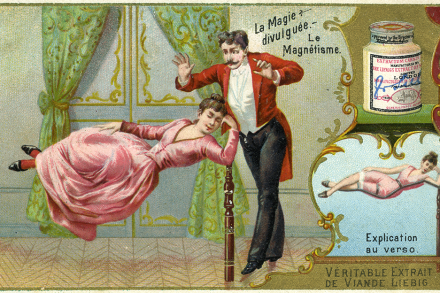
So much of life is a search for answers. How to get ahead, how to earn more money, how to be happy. But deep down, is there a part of us that likes not knowing an answer? Do we sometimes want to be baffled? It’s a question that’s come to fascinate me as I’ve embarked on a new career leading corporate team-building sessions based around magic. I do the tricks (close-up stuff – cards, coins and the like), then the team has to work out how I’m doing them. People who don’t want to know how a magic trick is done are saying: ‘I want to be three again’ Of course they need hints to get them started, but you’d be amazed at how much the group brain can achieve.

Why rich kids are weird

The son of the celebrity chef Marco Pierre White, imaginatively named Marco Pierre White Jr, has been convicted of theft and sentenced to 41 weeks in prison. The former heroin addict briefly became a reality star after a stint on Celebrity Big Brother, but has since reverted to bad behaviour, being imprisoned in 2018 for stealing from Tesco and racially abusing a security officer.  His conviction this time was for taking £1,760 worth of clothes from a shop in Bath, £72 from a Sports Direct in Bristol, and £250 from the till at a deli in Bath. He was caught because of an unedifying complication as he climbed out of the deli window: his trackie bottoms were pulled down and his hoodie pulled up, so he emerged almost naked, like a peeled sausage.

Natasha Feroze, Robert Ades, Lucasta Miller, Sam McPhail, Toby Young and Catriona Olding

38 min listen

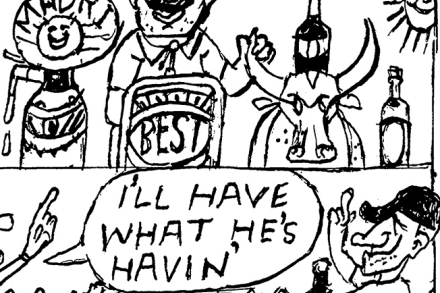
On this week’s Spectator Out Loud: Natasha Feroze reports on the return of ex-Labour MP Keith Vaz (1:10); Robert Ades presents the case against sociology A-level (7:39); Lucasta Miller reviews Katherine Bucknell’s book, Christopher Isherwood Inside Out (15:24); Sam McPhail provides his notes on the lager Madri (23:16); Toby Young explains why he will be voting Reform (26:23); and, Catriona Olding reflects on love and friendship (31:17). Presented by Patrick Gibbons.

My doomed run for parliament

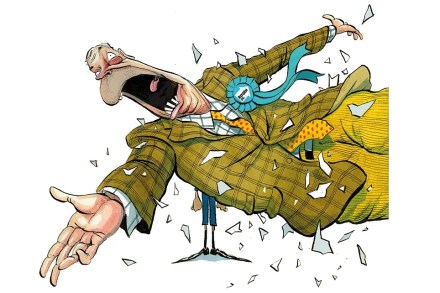
I had always been interested in politics but had not done anything practical until the rise of Nigel Farage’s Ukip. He was proving a thorn in the side of David Cameron in 2013, which attracted my admiring attention, so I decided to try and get involved. Despite having done my bit for European unity by fathering a half-French daughter and a half-Austrian son, I had always been fundamentally hostile to the EU – an artificial and undemocratic structure inimical to British interests and traditions – so it seemed obvious that Ukip was the party for me. A large poster of me was defaced with a Hitler moustache – an episode I found deeply humiliating I was summoned to a hotel in Gillingham, Kent, for a test to see if I was suitable for the approved list of Ukip candidates.

Why prog beat punk

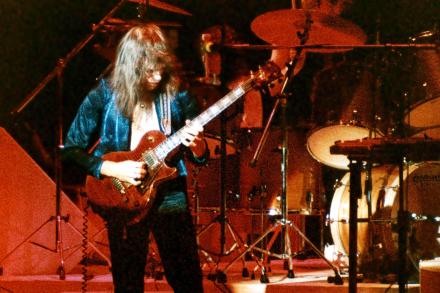
Keyboard wizard Rick Wakeman once described progressive rock as the ‘porn of the music industry; you bought an album under the counter in a brown paper bag’. He was no doubt referring to the genre’s mid-1970s nadir when punk burst onto the scene and nicked all the cool kids, leaving the nerds to their embarrassing flares and concept albums. Fast forward 50 years and it’s the nerds who prevail. Anyone out there still listening to Sham 69? These are the marginalised, workaday Brits you rarely get to see on television anymore Yes, the proggiest of the 1970s rock behemoths, is on tour again with an album of new material in the pipeline. Wakeman quit the band years ago leaving 77-year-old guitar maestro Steve Howe as the only remaining member from the classic line up.

Where to find history without the hectoring

I recently had an encounter with Oliver Cromwell’s hat which, these days, rests on a bespoke hat-rest in the Cromwell Museum in Huntingdon. It’s an astonishing piece of craftsmanship being far wider than any normal hat at nearly three feet across. The perfectly horizontal brim is constructed from thick black felt and the central head-holding part is a cylinder that rises sharp and perpendicular, like a chimney pot from a roof.  What is absent from small museums like this, mercifully, is the over-bearing hand of a committee of arts graduates What a sight he must have been, wearing this extraordinary hat, at the dissolution of the Rump Parliament in 1653, railing at the politicians: Ye are a factious crew, and enemies to all good government.

The Farage factor

45 min listen

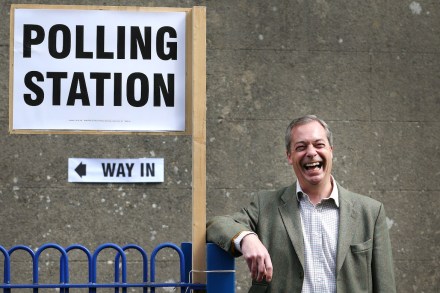
This week: The Farage factor. Our cover piece looks at the biggest news from this week of the general election campaign, Nigel Farage’s decision to stand again for Parliament. Farage appealed to voters in the seaside town of Clacton to send him to Westminster to be a ‘nuisance’. Indeed, how much of a nuisance will he be to Rishi Sunak in this campaign? Will this boost Reform’s ratings across Britain? And could it be eighth time lucky for Nigel? The Spectator's political editor Katy Balls joins the podcast to discuss, alongside former Clacton and UKIP MP, Douglas Carswell (2:32).Then: Gavin Mortimer reports from France ahead of the European and local elections this weekend, where the country is moving to the right.

Would you dare to wear a Rolex?

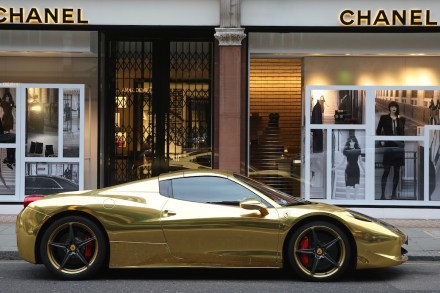
‘London has become a jungle, right? Anyone with anything nice risks having it taken.’ Bobby, the manager of one of Hatton Garden’s watch shops, does business in a windowless room as far from the street as possible, watched over by a thickset guard and a couple security cameras. ‘I’m a paranoid person,’ he says, and he’s right to be. While the level of general theft in London is going down, more and more luxury watches are stolen every year – tens of millions of pounds’ worth. There’s no sophistication to stealing a watch. Gangs smash into shops with machetes or rip them from wearers’ wrists. Last week, Oliver White, a watch broker in south-west London, had £3 million worth of watches stolen.

Pensioners should do national service

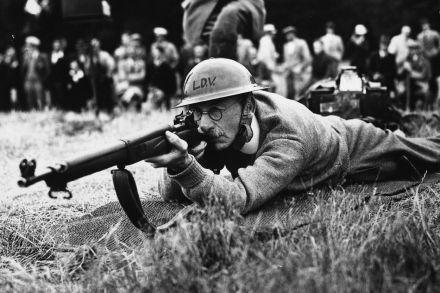
When Rishi Sunak proposed national service for 18-year-olds as the first big idea of his election campaign, my initial thought was: absolutely, bring it on. But then I had a second thought, which was that if Sunak was trying to boost the Conservative vote, rather than the nation’s preparedness, his big idea probably wasn’t going to fly. Younger voters would recall their 18-year-old selves and reject the whole prospect out of hand – as would parents, concerned that their now not so little Harrys (and Hannahs) might be sent off to fight in Ukraine. Meanwhile, all those older people agreeing that the nation’s youth could do with some toughening up will probably be voting Tory anyway.

What happened to the Evening Standard?

Like any bunch of ageing ex-hacks, those of us in the ‘Former Evening Standard Employees’ Facebook group are fond of reminiscing about the past. Occasionally, it’s at boozy reunions, when we recreate afternoon epics in the Elephant pub near the old Kensington office. More often, it’s when posting online RIPs to old colleagues who’ve passed to that great newsroom in the sky – sometimes, sadly, well ahead of deadline. The last few days, though, a Facebook page often dedicated to mourning bygone scribes and sub-editors has suffered a rather wider bereavement. Last week, it was announced that the Standard would cease its daily newspaper altogether, ending two centuries of print-runs in the capital.

Do art attackers think they’re helping?

The latest painting to be attacked by an ovine climate protestor is Monet’s Poppies in Paris’s Musee D’Orsay. Thankfully, the initial reports that the painting was not protected by glass were inaccurate, and the alarming red rectangle – which at first glance looked as if the painting had been torn to the underlying canvas – was in fact a large red sticker. How is it helping climate change to throw good food at works of art? Video footage has emerged of a woman covering the surface of the painting then taking off her jacket to display her activist t-shirt. She then stood by the painting as if she was waiting for applause. It’s far from the first time that a famous work of art has been targeted. Leonardo da Vinci’s iconic Mona Lisa was smeared with cake.

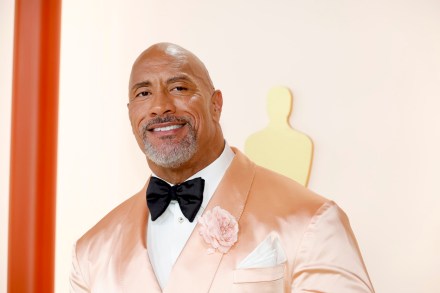
Dwayne ‘The Rock’ Johnson is crumbling

Dwayne ‘The Rock’ Johnson is the epitome of Hollywood masculinity. His on-screen magnetism and talk show couch affability have endeared him to millions. Now though, the Rock seems to be crumbling.  Johnson first forged his identity in the testosterone-fuelled world of professional wrestling The Rock, who has referred to himself as ‘the hardest worker in the room’, has developed a reputation in the industry for his lateness and lack of professionalism on set. In April, the Hollywood trade publication The Wrap published a exposé, one that cast The Rock in the most unflattering of lights. According to the piece, The Rock used to pee in a bottle during movie shoots, rather than use the restroom – you know, like a respectable, housetrained human being.

Peter Parker, Wayne Hunt, Nicholas Lezard, Mark Mason and Nicholas Farrell

33 min listen

On this week’s Spectator Out Loud: Peter Parker takes us through the history of guardsmen and homosexuality (1:12); Prof. Wayne Hunt explains what the Conservatives could learn from the 1993 Canadian election (9:10); Nicholas Lezard reflects on the diaries of Franz Kafka, on the eve of his centenary (16:06); Mark Mason provides his notes on Horse Guards (22:52); and, Nicholas Farrell ponders his wife’s potential suitors, once he’s died (26:01). Presented and produced by Patrick Gibbons.

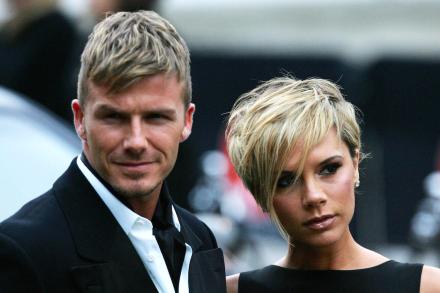
The Beckham rumour that refuses to die

I first heard it in the spring of 1999 from a bloke who was sitting behind me at a West Ham game. It concerned David Beckham and Victoria Adams of the Spice Girls, who were then on their way to becoming the UK’s most prominent celebrity couple. They were set to marry that summer – and they particularly wanted to book an Essex country hotel for the event, he told me. But his friend of a friend had long since secured the booking on the day in question for his own wedding. On learning this, Beckham had been so keen on getting the coveted slot himself that he had offered to pay for the friend of a friend’s entire wedding if he moved it to a later date – and, as an extra sweetener, he would pay off his mortgage too.

What to do if you’re being sued

In each country where I have sued or defended a client, whether in England, France or the US, an often bitterly fought dispute ends peacefully. Given the brutal nature of our species, this could be considered surprising. For most of the 30,000 years we have roamed the planet, disputes have ended with one party killing the other. Drug disputes are still settled this way. Yet we rarely notice that ending a dispute peacefully is an historic leap forward. Judges are fallible. Even the most competent ones make mistakes You may enter the legal system of your own free choice or you may be dragged into it as a defendant. In either case you come to court thinking there will be a fair decision. In your mind, that means winning the case.

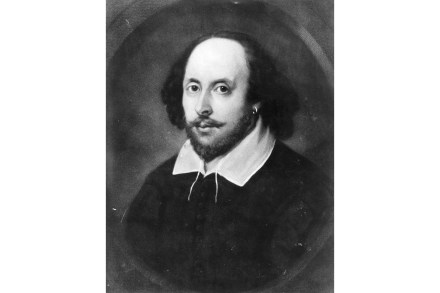
What drives the Shakespeare conspiracy theories?

As predictably as the tides, as welcome as a pebble in your shoe, the bogus question of ‘who actually wrote Shakespeare’s plays?’ is in the news again. Jodi Picoult, the writer, thinks that Emilia Bassano (aka Aemilia Lanier), the daughter of a musician, must have had a hand in them, because, she says, Juliet is 13 in Romeo and Juliet, and Bassano was forced to become a mistress at that exact age. This despite the fact that in the play Juliet isn’t forced to love Romeo, and that Bassano was in her late teens when she became Lord Hunsdon’s mistress. Not convinced? In Othello, Desdemona’s servant is called  – wait for it – Emilia! I don’t know about you, but that clinches it for me.

My day with the Met police

As we are reaching 100mph, I can hear the muted sirens and see blue lights reflecting on gawping onlookers. I’m neither an officer, nor a criminal but I’m in the back of a police car on my way to an incident that apparently involves two men fighting in the middle of a road. I am a celebrity gossip columnist by trade so the only abusive men I deal with are usually the likes of Jeremy Clarkson (via Twitter) and lecherous millionaires (at 5 Hertford Street). I feel scared of what I’ll see when we arrive at the scene, but I have long been curious about the Met – whose misconduct I feel as though I read about on a near daily basis – and curious too about the people who work there. So, a few months ago, I signed up for a ride-along.

Quentin Letts, Owen Matthews, Michael Hann, Laura Gascoigne, and Michael Simmons

31 min listen

On this week’s Spectator Out Loud: Quentin Letts takes us through his diary for the week (1:12); Owen Matthews details the shadow fleet helping Russia to evade sanctions (7:15); Michael Hann reports on the country music revival (15:05); Laura Gascoigne reviews exhibitions at the Tate Britain and at Studio Voltaire (21:20); and, Michael Simmons provides his notes on the post-pub stable, the doner kebab (26:20). Produced by Patrick Gibbons and Oscar Edmondson.

Guns, drugs and beatings – I loved boarding school

My son and various well-meaning friends have been advising me to abandon writing history books and cash in on the trend for boarding school misery memoirs. On the face of it, as someone who was sent away aged seven and remained in these institutions until I was 18, I am well qualified to add my contribution to what has now become a recognised sub-genre of English literature. My problem, though, is that I quite enjoyed my time at boarding schools and I cannot claim – as so many do – that it adversely affected my life; rather the reverse. In his extended essay ‘Such, such were the joys’, George Orwell recorded his awful schooldays at St Cyprians, a snobbish boys preparatory school in Eastbourne.

The internet is getting worse

In Gerald Weiner’s book The Secrets of Consulting, there is a case study in which a bright MBA graduate tells a giant multinational burger chain to eliminate just three sesame seeds from each bun to save the company $126,000 a year, under the assumption that none of the customers will notice. This works, so the next year they remove five sesame seeds, and, each year or two, they remove some more, until the bun is barely recognisable. Suddenly, nobody buys their burgers anymore. I get the sense that nothing on the internet really works – or at least no longer works for us I would suggest that the same thing has happened to the internet.

Our strange relationship with columnists

I’ve been reading newspapers since I was a teenager and have become strangely familiar with those who write about their lives, even though I’ve met very few of them. Recently, this has gone from being a moderately amusing side interest to an increasingly sad one.  In the late 1990s we lived a few doors down from Times columnist Robert Crampton, in Hackney. We had dinner with the Cramptons a couple of times and found them perfectly affable. And then we moved. So I haven’t seen him in years. But were I to bump into him now, I’m pretty certain he’d be struggling to remember who I was, whereas I’d be more: ‘How are Nicola and the kids? Do you still get to that beach hotel in Pembrokeshire?

The hypocrisy of the fame-shy famous

Three years ago, I started employing actors, when I had my first play in the Brighton Fringe. I always think they slightly disapprove of me as I’m a fidget and tend to leave rehearsals early (as I remarked to my husband and co-writer of the latest one as we hightailed it off to the pub one day after only an hour of watching our cast run lines: ‘We didn’t ask them to sit in the room and watch us write the ruddy thing, did we?’) but I love to observe them. In fact, I find it almost too affecting an experience, which could explain my reluctance to watch them too much. That and being a booze-hound. I even made up a word, ‘limberessence’ - a fusion of limbo, limbering up and luminescence - which describes that perfect moment between privacy and performance.

The descent of the Cambridge ball

I went to quite a few May balls in my three years as an undergraduate at Cambridge. As an editor at the student newspaper I blagged my way into the top ones – Magdalene, Trinity and John’s – since they were stupidly expensive and even as a 20-year-old student I had the sense to feel it should be many years before anything to do with enjoyment was worth more than £20, let alone £100-plus. The university now packages its student experience, from the academic to the social, in the neurotic, righteous language of ‘safety’ and ‘inclusion’ The price certainly ensured a very high degree of pretentiousness – even by Cambridge standards – but it was impossible not to marvel at the splendour of the famous acts (Dizzee Rascal, Amy Winehouse) and the food and drink.

Join the Royal British Legion!

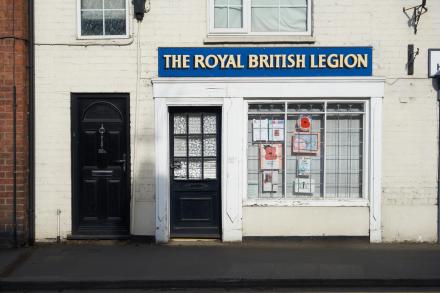
One of the things I really regret is that I didn’t spend more time down the British Legion with my dad. I was a bit snooty about it, I suppose. All those ex-squaddies talking about the army and playing darts and having a pint or two.I was an indie-kid, heading to university to read English. I preferred Camden to Greenford. But now I’d choose the Legion any day. And if more us don’t then you might see your local club closing as a result of the cheap pints at a local Wetherspoons. I realise now that the old British Legion clubs and the Legion itself is of such importance that we need a national drive to support it. To get into one of the clubs you need a membership, but that’s not difficult. Everyone is welcome, even with no connection to the military at all.

Why British women are so unhappy

I must admit to being somewhat taken aback on reading – in a new survey by the Hologic Global Women’s Health Index, whatever that is when it’s at home – that we women of Blighty are sadder and more ‘stressed’ than our sisters on the European mainland. Odd because I’ve always found us a cheerful bunch; after all, we were churning out the Carry On films, graced with Babs Windsor’s lusty chuckle, while French, Italian and Scandinavian film actresses were all looking like they’d lost a fiver and found a euro.

AI is coming for artists

It’s a famous theme in science fiction: the idea that, one day, humanity and the thinking machines will somehow go to war. It’s the narrative spine of The Terminator films. It’s implied in 2001, A Space Odyssey. You can find it in Neuromancer, The Hyperian Cantos, Ex Machina, The Creator and I, Robot (the Asimov stories and subsequent film). In one of the fundamental texts of sci-fi, Frank Herbert’s Dune, this apocalyptic conflict is given a name: the ‘Butlerian Jihad’. Personally, I’ve always dismissed the concept of Butlerian Jihad as fanciful, even as I accept that Artificial General Intelligence – machines as smart as the best of us – is coming at us fast. And yet in recent weeks I’ve started to wonder.