Culture

Culture

The good, the bad and the ugly in books, exhibitions, cinema, TV, dance, music, podcasts and theatre.

Spiritual solace

Exhibitions

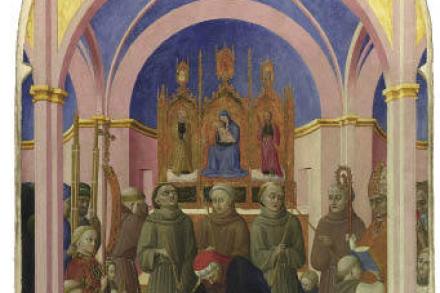
The basement galleries of the Sainsbury Wing are darker than ever for this intriguing redisplay of some of the oldest paintings in the National Gallery. The atmosphere attempts to recreate the penumbral gloom of church and chapel in which these paintings were originally to be seen, before impoverished religious foundations flogged them to dealers and collectors. Nearly all these pictures come from the NG’s permanent collection, but it is always revealing to see things exhibited in new ways, and this exhibition is no exception. For a change, it focuses our attention on the nuts and bolts of altarpieces — how they were commissioned, constructed, framed, positioned — and in so doing sheds much light on them as devotional objects.

Paradise regained

Exhibitions

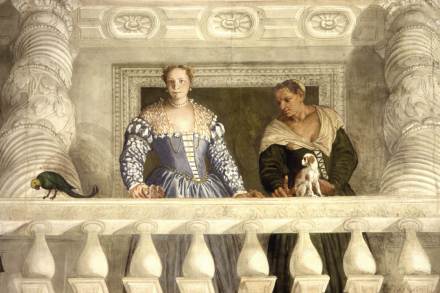
Alasdair Palmer marvels at a series of Veronese frescoes at Palladio’s Villa Barbaro It has included repairing the roof and strengthening the walls, as well as redecorating the interior, and it has taken almost as long as it took to build the original structure — but work on Andrea Palladio’s last building, the Tempietto at Maser, is finally complete. And what a glory it is! The building was finished in 1580, the year Palladio died, and he may never have seen it in its final form. It is the only church that he designed which isn’t in Venice. Marcantonio Barbaro, who commissioned it to be the chapel for his villa, was a long-time friend of Palladio.

Artistic rebellion

Exhibitions

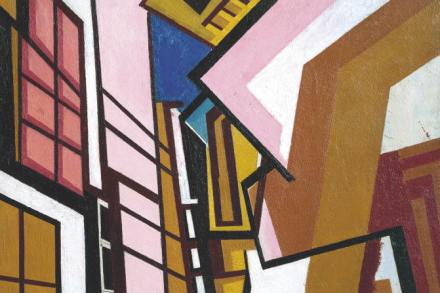
Vorticism is often referred to as the only British 20th-century art movement of international importance, but the work of the Vorticists — Wyndham Lewis, Edward Wadsworth, Gaudier-Brzeska and their associates — has up to now not been widely known. Vorticism is often referred to as the only British 20th-century art movement of international importance, but the work of the Vorticists — Wyndham Lewis, Edward Wadsworth, Gaudier-Brzeska and their associates — has up to now not been widely known. However, the Tate’s show has already been seen in Venice at the Peggy Guggenheim Collection, making it the first ever Vorticist exhibition in Italy, stronghold of Futurism (Vorticism’s rival), and in America, at the Nasher Museum of Art in North Carolina.

A feast of visual delight

Exhibitions

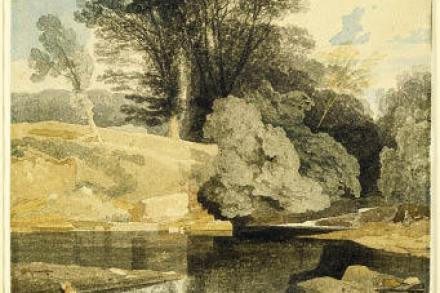
There are just 26 drawings and watercolours in the magnificent exhibition at Lowell Libson, but they are all of such quality and interest that the show is a feast of connoisseurship and visual delight. Selected by Libson and Christopher Baker from the National Gallery of Scotland, the range of work gives a distinct flavour of the museum’s holdings, from major watercolours made for exhibition to more informal studies. Here are the big names (Turner, Constable, Blake) and the lesser-known (William Callow, John Webber). Most deal with travel or landscape, but there are figure studies and visions, too. The variety within such a small compass is impressive. For pure pleasure, this show is hard to beat.

Lautrec’s dancing muse

Exhibitions

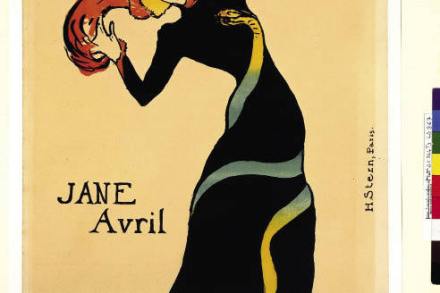
Henri de Toulouse-Lautrec (1864–1901), diminutive aristocrat and radical artist, was roundly travestied in John Huston’s 1952 film Moulin Rouge, and at once entered the popular imagination as an atrociously romanticised figure doomed for early death. Henri de Toulouse-Lautrec (1864–1901), diminutive aristocrat and radical artist, was roundly travestied in John Huston’s 1952 film Moulin Rouge, and at once entered the popular imagination as an atrociously romanticised figure doomed for early death. In fact, Lautrec was a tough and original artist, incisive and unsparing in his observation though also compassionate of the human comedy, a perfect painter of what then passed for modern life.

Keeping an eagle eye

Exhibitions

The resident ravens of the Tower of London seem to croak a little louder these days. A few yards from their gathering spot, a golden eagle, traditional symbol of power and kingship, perches on a military standard, keeping watch. It is one of several exhibits on display at the newly refurbished Fusilier Museum in the Tower of London. The Royal Regiment of Fusiliers is a British infantry regiment named after the Fusil musket and raised at the Tower in 1685. In 1809, having routed the French in Martinique, the Fusiliers carried off the eagle insignia, which had originally belonged to the 82nd Regiment of the French Line, serving under Napoleon.

Conflicting demands

Exhibitions

This year, the sequence of galleries has been subtly altered, and for a change we enter the fabled Summer Exhibition (sponsored by Insight Investment) through the Octagon rather than Gallery 1. This brings the visitor straight into the heart of the show, and it’s quite a good idea at this point to turn right into the Lecture Room for a gallery dedicated entirely to RA members, hung by that éminence grise, Michael Craig-Martin. Of course this is Craig-Martin’s choice, so the more traditional practitioners are excluded, but the Lecture Room nevertheless looks better than it has done for years. A big tattooed head by Tony Bevan keeps company with Humphrey Ocean’s ‘Windscreen’, a roughly massed urban landscape.

Inquire within

Exhibitions

In the Mellon Gallery of the Fitzwilliam is an unashamedly rich and demanding exhibition of Italian drawings, ranging from the 15th to the 20th century. I say ‘demanding’ because you need to look closely and with attention at these works — not simply to decipher what is going on (the narrative component), but to appreciate how it has been achieved (the formal aspect). So much of the stuff that is produced under the name of art today is easy on the eye and mind, with as much aesthetic nourishment as used air. Real art solicits the spectator’s involvement: it’s not a variant on wallpaper, it requires interpretation and response, intellectual as well as emotional.

Call of the wild

Exhibitions

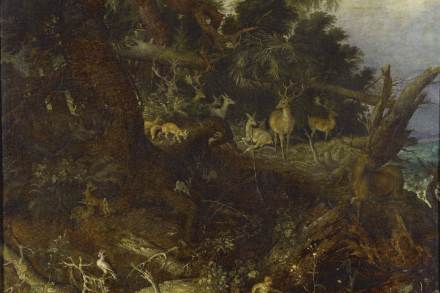
‘Not something I’d want on my wall,’ said an English lady visitor to Antwerp’s Rockox House, standing in front of a painting of wolves attacking cattle. ‘Not something I’d want on my wall,’ said an English lady visitor to Antwerp’s Rockox House, standing in front of a painting of wolves attacking cattle. ‘Nor that,’ said her friend of another painting showing lions feasting on a live gazelle. I didn’t dare tell them that I’d come to Belgium specially to see a whole exhibition of paintings by the artist responsible, Roelandt Savery (1576–1639), in his native Kortrijk. ‘Kortrijk where? Roelandt who?’ you may be asking.

Ditching the dirt

Exhibitions

Cleanliness was nowhere near godliness in 17th-century Europe — except in Delft, where God came second. The Wellcome Collection’s examination of humanity’s relationship with dirt begins in Vermeer’s city, where thousands of girls with pearl earrings scrubbed hearths for a living. Delftware, those distinctive blue and white ceramic tiles so common in antique shops, was mass-produced because it was so easy to clean and molysmophobic merchants used it to plaster their interiors. It’s tempting to mock the fashion; but the show immediately moves on to Dickens’ s London – a miasma of grime, dust and disease. The obsessive compulsives of Delft were visionaries.

Consolations of Constable

Exhibitions

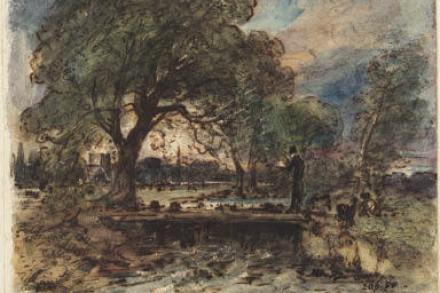
William Cook takes refuge from the modern world at an exhibition of the artist’s paintings of his beloved Salisbury I’d always thought of Constable’s paintings of Salisbury Cathedral as grand, majestic things — but seeing them again in Salisbury, with Richard Constable, the artist’s great-great grandson, you begin to look at these splendid pictures in an entirely different light. Richard has come here, to the Salisbury & South Wiltshire Museum, to attend the opening of an exhibition that celebrates his ancestor’s close relationship with this city, and standing alongside him, in the shadow of Salisbury Cathedral, you realise John Constable wasn’t painting architecture, but the landscape of his private life.

Wit of a hunter-gatherer

Exhibitions

Over the years Chris Beetles must have made the pencil-wielding fingers of Quentin Blake and Ronald Searle itch with a desire to draw him. He presents a vigorously compact figure, possesses a pair of appropriately beetling brows sheltering an extremely shrewd gaze and sports an unabashedly splendid set of bugger’s grips. Standing in the doorway of his gallery on Ryder Street in the heart of art-dealing London, both he and his collection are a world away from the smooth-talking, sharp-suited power-broking of Christie’s and Sotheby’s, the plush hush of Colnaghi. The walls of the gallery bristle with pictures, hung to fill every possible available space from floor to ceiling.

All things bright and beautiful

Exhibitions

Beauty is generally considered old-fashioned by the young and not-so-young bloods of contemporary culture, so an exhibition appealing unashamedly to the aesthetically refined will not seduce the practitioners of sensationalism, bad taste and ever more self-indulgent and feeble art. But it will appeal to a public fed up with the empty, egomaniacal posturings of today’s fashionable art world nonentities, whose every burp and slurp is faithfully reported by a cynical press. At last, you may justifiably say, here is an exhibition to delight the eyes. Assuredly, it’s another of the V&A’s great blockbusters, and as such really too large to take in at one session, but at least it’s full of real art, worth more than a sneer or a puff.

Read all about it

Exhibitions

As newspapers are consulted increasingly on screen, and newsprint is all set to become a thing of the past, artists are turning their attention to this endangered medium. The Irish Expressionist painter Michael Kane (born 1935) has produced a provocative series of 100 paintings in ink, acrylic paint and collage, done on newsprint magazine pages taken mostly from the Irish Times (see above). The results are witty and moving, powerful comments on the age-old imperatives of humanity, acted out against the media stories and features of yesterday. Kane responds to the pictures and headlines he’s painting over, either as shapes or narratives, juxtaposing and repositioning to good effect. Man and the city is his great theme.

Vocal heroes

Exhibitions

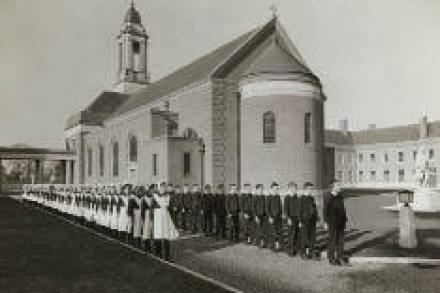
Foundling Voices at the Foundling Museum in London’s Bloomsbury (until 30 October) is the fruit of an oral history project that recorded the memories of 74 men and women (the youngest is now 68, the oldest 98) born to unmarried mothers who were placed as babies in the care of the Foundling Hospital Schools in the first half of the 20th century. Foundling Voices at the Foundling Museum in London’s Bloomsbury (until 30 October) is the fruit of an oral history project that recorded the memories of 74 men and women (the youngest is now 68, the oldest 98) born to unmarried mothers who were placed as babies in the care of the Foundling Hospital Schools in the first half of the 20th century.

Power of invention

Exhibitions

Lorenzo Lotto’s portraits alone should have secured him a place in history as a major Renaissance painter. Lorenzo Lotto’s portraits alone should have secured him a place in history as a major Renaissance painter. Yet, ironically, while his works continued to be admired, his name was all but forgotten. This paradoxical state of affairs came about because Lotto suffered from a steady series of posthumous misattributions, his works being assigned to the most bafflingly diverse range of other artists from Giorgione, Pordenone, Titian, Tintoretto, Dosso Dossi and Veronese to Perugino, Leonardo, Andrea del Sarto, Holbein, even Van Dyck, and an obscure 17th-century German Baroque artist Johann Carl Loth, known in Italy as Carlotto.

Parisian perspectives

Exhibitions

In 1879, two young brothers moved into a new fifth-floor apartment at no. 31 Boulevard Haussmann, overlooking the Opéra. Flush with inheritances from their father’s army bunk business, Gustave Caillebotte, 31, and his brother Martial, 26, were exactly the sort of children of the Second Empire for whom these new Parisian mansion blocks had been built. In 1879, two young brothers moved into a new fifth-floor apartment at no. 31 Boulevard Haussmann, overlooking the Opéra. Flush with inheritances from their father’s army bunk business, Gustave Caillebotte, 31, and his brother Martial, 26, were exactly the sort of children of the Second Empire for whom these new Parisian mansion blocks had been built.

Call to action

Exhibitions

From across Margate Bay, the prickly silhouette of the new Turner Contemporary art gallery points towards the sea like prows of departing cruise liners. Here at last is the inspired intervention in economy and townscape to encourage resurgence in the south-east of England as has been catalysed by Tate St Ives in the south-west. Margate has a history of imaginative investment in high capital cost ventures to draw people to Thanet. The Royal Sea Bathing Hospital was opened in the 1790s to provide a cure for tuberculosis. John Rennie’s stone pier was completed in 1815 to allow steam packets to land visitors from London.

Free spirit

Exhibitions

Joan Miró (1893–1983) was a great imaginative artist and a pure painter of genius. Joan Miró (1893–1983) was a great imaginative artist and a pure painter of genius. He produced a huge body of work over a long life, and this excellent selection of it transforms the uninspiring galleries at Tate Modern, which have rarely looked so good. This exhibition offers the political interpretation. You can see Miró as a surrealist, as a formalist or as a political artist. Actually, he was none of these, but allowed each to touch upon the wellsprings of his creativity and have some sort of relationship with his art.

Garden delights

Exhibitions

There were two John Tradescants, father and son, operating in the 17th century as travellers and gardeners from a base in south London. Their family tomb is at the heart of the garden surrounding the Garden Museum in the former church of St Mary-at-Lambeth in Lambeth Palace Road, a garden designed as a Tradescant memorial 30 years ago by the Dowager Marchioness of Salisbury. This hallowed place has been the principal subject for the past year of the painter Charlotte Verity (born 1954), the museum’s first artist-in-residence. The initiative has been generously funded by the Cochemé Trust, and the results of Verity’s year-long residency are now on show in the museum’s new gallery.

Personal vision

Exhibitions

At the beginning of Richard Ingrams’s book on John Piper (1903–92), he quotes the artist as saying: ‘The basic and unexplainable thing about my paintings is a feeling for places. At the beginning of Richard Ingrams’s book on John Piper (1903–92), he quotes the artist as saying: ‘The basic and unexplainable thing about my paintings is a feeling for places. Not for “travel”, but just for going somewhere — anywhere, really — and trying to see what hasn’t been seen before.’ It’s a good description of what makes Piper’s best work special and memorable, that feeling not just for identifying the spirit of a place, but for depicting it as never before.

Lines of beauty | 2 April 2011

Exhibitions

So far, 2011 has been a good year for drawing. The great Pre-Raphaelite drawings show at Birmingham is still fresh in my mind as I write this review of a superb Watteau exhibition at the Royal Academy (supported by Region Holdings) and a select survey of Victorian drawings and watercolours at the Courtauld. Watercolours are often described as a form of drawing, though they are in fact made with paint. So they occupy a hybrid category, allowing rather too great a laxity of definition, as can be seen in the Tate’s current watercolour compendium. But there is no uncertainty about the Academy’s show: this is all drawings, and of a very high quality indeed. So far, 2011 has been a good year for drawing.

East Anglian friends

Exhibitions

Three exhibitions in East Anglia serve to remind us that museums and galleries outside London continue to programme stimulating events. At Norwich Castle is an excellent survey of British art from the beginning of the first world war to the end of the second — a time of great richness and considerable innovation. There’s so much of interest and value here that it’s difficult to decide what to mention and what to leave out. Three exhibitions in East Anglia serve to remind us that museums and galleries outside London continue to programme stimulating events. At Norwich Castle is an excellent survey of British art from the beginning of the first world war to the end of the second — a time of great richness and considerable innovation.

Maastricht treats

Exhibitions

The European Fine Art Fair (TEFAF) takes place in Maastricht, Netherlands, every year. It showcases the finest examples that the most prestigious commercial galleries of the international art world have to offer — from ancient to contemporary art and design. The European Fine Art Fair (TEFAF) takes place in Maastricht, Netherlands, every year. It showcases the finest examples that the most prestigious commercial galleries of the international art world have to offer — from ancient to contemporary art and design. Exhibits are heavily vetted and scrutinised for their provenance before the wealthiest dealers, collectors and heads of museums are allowed in to make their purchases. It is a true celebration of the global art market.

Out of place

Exhibitions

Since pluralism in the arts became the order of the day, categories have been bursting at the seams, and the old definitions have lost validity. No longer does visual art denote painting, sculpture, printmaking and drawing, but all manner of extraneous and tangentially linked activities as well. Film, installation and performance are crammed in under the same umbrella as Michelangelo, Dürer and Monet, when it’s painfully clear they have almost nothing in common with such illustrious forerunners. In fact, it’s extremely doubtful whether much of the stuff that currently parades under the banner of art has any justification for being there.

Erotic review

Exhibitions

First, a note about naming. The artist here presented as Jan Gossaert (c.1478–1532) was formerly known as Jan Mabuse, so designated after the Walloon town he came from — Maubeuge in Hainaut. First, a note about naming. The artist here presented as Jan Gossaert (c.1478–1532) was formerly known as Jan Mabuse, so designated after the Walloon town he came from — Maubeuge in Hainaut. The Americans, meanwhile, miss out the e and spell his name Gossart, which makes the poor fellow sound even more like an underwear firm, though the word is itself more attractive-looking than its variant. So if you were wondering where this newly minted artist had sprung from, the likelihood is he was flying under different colours the last time you saw him.

Aesthetic responses

Exhibitions

Over the past month I’ve strolled through Berlin’s Alte Nationalgalerie to examine Edouard Manet’s ‘In the Conservatory’ in close detail. Over the past month I’ve strolled through Berlin’s Alte Nationalgalerie to examine Edouard Manet’s ‘In the Conservatory’ in close detail. I’ve taken a look at what’s on offer on the stands of international art dealers including Gagosian and White Cube at the VIP art fair. I have also considered buying shares in a 1988 gouache by Sol LeWitt. And I’ve done all these things from my front room thanks to an internet revolution in the art world.

Fruit of the vine

Exhibitions

According to Athenaeus of Naucratis, the 2nd-century AD author of The Sophists’ Banquet, the ancient Sybarites kept the capital of their city-state in southern Italy supplied with wine through a network of ‘vinoducts’ that reached far out into the surrounding countryside. According to Athenaeus of Naucratis, the 2nd-century AD author of The Sophists’ Banquet, the ancient Sybarites kept the capital of their city-state in southern Italy supplied with wine through a network of ‘vinoducts’ that reached far out into the surrounding countryside.

Visual dialogue

Exhibitions

An encounter with the paintings by the established Berlin-based Swede Peter Frie comes as a breath of fresh and insightful air to the British contemporary art scene. The dozen or so works (large-scale oil landscapes and a few still-lives) are displayed in stunning contemporary settings: a glass gallery and an adjacent artists’ house at Roche Court (a period house with grounds, better known for its sculpture programme). Landscape painting has not fared well within the dictates of modernist and post-modernist art definitions. It is as if an urban-centric, text-driven and often anti-aesthetic dogma has stifled both alternative discourse and individual human expression.