Culture

Culture

The good, the bad and the ugly in books, exhibitions, cinema, TV, dance, music, podcasts and theatre.

On the edge

Exhibitions

There’s nothing safe or cosy — and, indeed, there shouldn’t be anything safe or cosy —about being an artist. There’s nothing safe or cosy — and, indeed, there shouldn’t be anything safe or cosy —about being an artist. Being an artist means living on the edge, going outside your comfort zone, being challenged. Artists put that challenge into practice in all sorts of different ways; and for me it’s meant seeking out challenge — and adventure — in a very focused way.

Selective attention

Exhibitions

Another vast exhibition at Tate Britain, but one which will no doubt prove popular with the public. Watercolour is a national pastime, and the English tend to wax proprietorial about it. As a painting medium it appeals greatly to amateurs because it’s nearly always possible to do something passable in watercolour which couldn’t be achieved in oil paint without more knowledge, application and experience. Passable, yes, but not distinguished: it takes a very great deal of skill to achieve the more than ordinary in watercolour, and herein lies its seduction and challenge. The stakes are raised by the existence of a tradition of great watercolour painting in this country, which prospered with particular insistence in the period 1750 to 1850.

Fine lines

Exhibitions

Drawings are often valued as an artist’s first thoughts, the most direct and intimate expression of his or her response to a subject. Drawings are often valued as an artist’s first thoughts, the most direct and intimate expression of his or her response to a subject. Looking at a drawing, you feel you can see the artist’s mind at work — in a much more spontaneous way than in a painting made from preparatory studies. Yet in the rather ridiculous established hierarchy of art, drawings are ranked much lower than paintings, perhaps because they are generally considered to be working tools, less durable than oil on canvas, and frequently not preserved with the same care as ‘finished’ pictures.

Never the same | 12 February 2011

Exhibitions

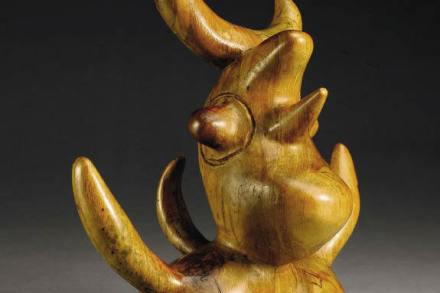
There is a saying that art in restaurants is like to food in museums. You know the feeling: the attendant monstrosity on the wall peers over your shoulder, wrecking your appetite. But times are changing. Independent galleries have faded under recent financial strain, and the upward pressure on shop rents continues. Denied their premises, dealers are using new spaces and have reached new markets in the process. This is what brings Thomas Ostenberg’s Equilibrium to the Mint Leaf Lounge, 12 Angel Court, London EC2 (until 27 February). Ostenberg is a former vice-president of Citibank who had a Damascene moment in the Rodin Museum and vowed to become a sculptor. Plenty of dissipated financiers have similar impulses; few share his talent. This exhibition is fantastic in an exact sense.

Enlightened patronage

Exhibitions

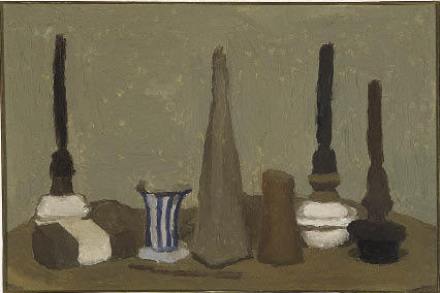
Alberto Della Ragione (1892–1973) was a naval engineer from Genoa with a passion for music, poetry and the visual arts; he also had the collecting bug. Alberto Della Ragione (1892–1973) was a naval engineer from Genoa with a passion for music, poetry and the visual arts; he also had the collecting bug. Towards the end of the 1920s, he sold his earlier accumulation of 19th-century paintings and began to acquire modern art, concentrating on works with a figurative bias, but by some of the most adventurous spirits then active in Italy.

Death watch

Exhibitions

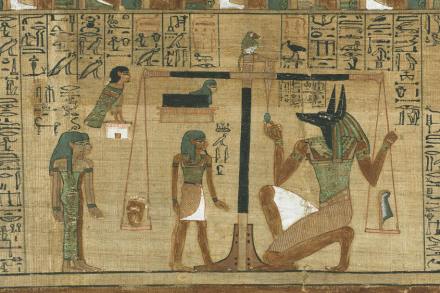
Although I stopped watching TV some years ago, films are a continuing solace and pleasure. Among the Christmas treats was a previously unseen Jack Nicholson movie, entitled The Bucket List. The plot revolves around two very different Americans, Nicholson and Morgan Freeman, both of whom are suffering from cancer and are given a mere matter of months to live. The Bucket List is their wish list of things to do before they die, some of the more exotic of which the wealthy Nicholson enables them to achieve. The excellent Freeman, a poorer man but the greater philosopher, reminds Nicholson of a more important consideration: the two questions asked of Ancient Egyptians at the gates of Paradise. Have you found joy in your life? And, has your life brought joy to others?

Direct observation

Exhibitions

Although he was the leading portrait painter of Regency England, Thomas Lawrence (1769–1830) has somehow slipped beneath the catch-net of modern public recognition. Although he was the leading portrait painter of Regency England, Thomas Lawrence (1769–1830) has somehow slipped beneath the catch-net of modern public recognition. He was the son of a Bristol innkeeper, who moved with his family to Devizes in 1773 to take over the Black Bear public house, and by 1780 young Lawrence was charming all and sundry with what Fanny Burney called ‘his astonishing skill in drawing’. His precocious talent came in handy when his father was declared bankrupt and Lawrence became the family breadwinner with his pencil profiles and pastels.

A look ahead | 18 December 2010

Exhibitions

The trend of fewer temporary exhibitions in our museums is becoming established, as the cost of mounting blockbusters escalates beyond even the generous reach of sponsorship. This is in sharp contrast to the commercial galleries, which still put on as many as 10 or 15 different shows a year in the hope of tempting clients to part with their cash. Taking a keen look at forthcoming exhibitions is always a mixed pleasure: the expected counterpointed with the novel, the obvious with the obscure. Thankfully, there are still enough exciting prospects in the public sector to raise the spirits and move us to make a note in the diary.

Light relief

Exhibitions

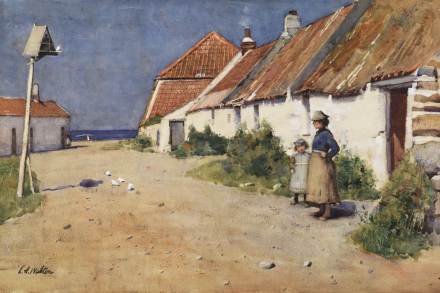
The so-called Glasgow Boys had no manifesto, common background or style, apart from working in and around the city of Glasgow and sharing a belief in the importance of painting from direct observation and experience. They acknowledged the influence of the naturalism practised by the Barbizon and Hague schools in the later 19th century, and rejected narrative in painting and especially the sickly sentimentalism that bedevilled so much Victorian art. They were a loosely associated group of painters, sometimes called the Glasgow School but preferring to be known by the slightly more raffish title of the Glasgow Boys, who banded together principally to exhibit. This ploy worked and they achieved a degree of international recognition.

At the heart of Europe

Exhibitions

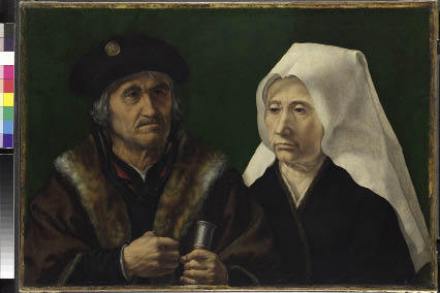
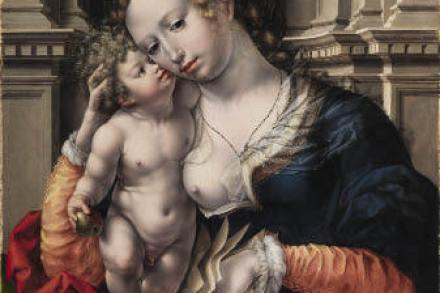
The historic centre of Bruges has 16 museums, enough to cater for every touristic taste. There’s a Diamond Museum, a Lace Centre, a Choco-Story (the narrative element distinguishes it from the 50 chocolate shops) and a Friet Museum — or ‘Belgian Fries Museum’, for English-speakers under the misapprehension that fries are French. But the main focus of the city’s five-yearly festival, now in full swing, is on a local product the French cannot lay claim to: the Flemish painting tradition founded by Jan van Eyck, who died in Bruges in 1441. The historic centre of Bruges has 16 museums, enough to cater for every touristic taste.

Smoke and mirrors

Exhibitions

The Prince, according to Machiavelli, ‘should appear, to see him, to hear him, all compassion, all good faith, all integrity, all piety’ — which might be translated into Basic Blairish as ‘should appear a pretty straight kind of guy’ — but, as the Florentine Father of Spin emphasised, it was a great deal more important to seem to have, rather than actually to have, these qualities.

Small blessings

Exhibitions

As I pointed out last week, one of the chief attractions of the Treasures from Budapest show at the Royal Academy is the inclusion of two rooms of Old Master drawings. For those of us who find large exhibitions overwhelming, there is a refreshingly modest display of French drawings (admission free) at the Wallace Collection, which makes a good companion to the RA’s blockbuster. The earliest work is a fanciful, somehow ethereal, black-chalk and brown-wash 16th-century drawing of a water festival at Fontainebleau, by Antoine Caron. Much tougher is a neighbouring red-chalk study by Jacques Callot, ‘Ecce Homo’. Despite a certain vulgarity of pose and gesture, it has a brash energy that buttonholes the viewer in a way the Caron never could.

Fresh and feisty

Exhibitions

Harry Becker (1865–1928) is one of those artists too often dismissed as being of regional interest only, who feature but rarely in the art chronicles of the period. Harry Becker (1865–1928) is one of those artists too often dismissed as being of regional interest only, who feature but rarely in the art chronicles of the period. He is most widely known for his illustrations to Adrian Bell’s celebrated Suffolk trilogy — Corduroy, Silver Ley and The Cherry Tree — and it is worth noting that Becker’s pictures were matched to Bell’s prose after the artist’s death, though they seem to be made for each other in their near-perfect fit. Becker only moved from London to Suffolk in 1913, but he found there his perfect setting.

Look and learn | 6 November 2010

Exhibitions

The greatest myth to affect Paul Gauguin (1848–1903) is the one of his own life: the romantic bohemian who escaped to the South Seas. The greatest myth to affect Paul Gauguin (1848–1903) is the one of his own life: the romantic bohemian who escaped to the South Seas. This has spawned numerous popular interpretations from novels such as Somerset Maugham’s Moon and Sixpence to films which include Lust for Life (though principally about van Gogh, it features Anthony Quinn as an unforgettable Gauguin) and the Danish–French Wolf at the Door (1986).

UnEnglish triumph

Exhibitions

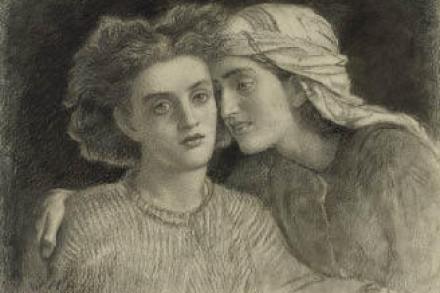
Sometimes an exhibition does what it says on the tin. The Pre-Raphaelites and Italy, the Ashmolean’s first major show post-revamp, is such an exhibition. Sometimes an exhibition does what it says on the tin. The Pre-Raphaelites and Italy, the Ashmolean’s first major show post-revamp, is such an exhibition. This fidelity is simultaneously its strength and its weakness. In a dazzling and far-reaching show, the exhibition organisers ultimately leave us questioning the nature and meaning not only of Pre-Raphaelitism but also of 19th-century concepts of Italy. This may be part of the exhibition’s achievement. It does not make for the easy ride exhibition-goers have come to expect from the Pre-Raphaelites.

Taking to the skies

Exhibitions

In the first retrospective of his work for nearly 40 years, Peter Lanyon (1918–64) is given the kind of recognition long his due. In the first retrospective of his work for nearly 40 years, Peter Lanyon (1918–64) is given the kind of recognition long his due. A major figure in the St Ives group, his work holds its own on an international stage even though it remains rooted in his native Cornwall. He was an inventive and innovative painter who conjured up the sensation of being in certain places and experiencing particular weather conditions. This was not an art bound to the earth’s surface, and it began by delving beneath it, with the Cornish miners, and increasingly rising above it — quite literally — into the air in a glider.

A place to dream

Exhibitions

As regular readers of this column will know, I am not an admirer of large exhibitions. The exhaustive is exhausting, and I refuse to believe that the general visitor can absorb the contents of a blockbuster show on a single viewing. Of course in these days of enforced leisure, more and more viewers are able to return to exhibitions (particularly if mounted by institutions of which they are members), though the time and expense involved deters those with jobs from making repeated visits. Vast exhibitions are designed to bring glory on the host museum and garner headlines as well as visitor numbers.

Sculpture: Earth to earth

Exhibitions

The park was founded nearly 25 years ago by a trio of friends from Borgo Valsugana, a small town near Trento in the Italian Alps: Carlotta Strobele, a philosophy graduate whose Viennese family’s connections with the area go back to when the region formed part of the Austro–Hungarian Empire; Emanuele Montibeller, a former market trader in fabrics and a local councillor; and Enrico Ferrari, an architect — all of whom shared a passion for contemporary art. It now covers a wide area in Val di Sella, a secluded valley of forest, glades and rolling meadows, high above Borgo, at the end of a narrow road that zigzags its way up precipitous and densely wooded slopes, beneath a chain of peaks over 6,000-feet high.

Art fairs: Satellite superiority

Exhibitions

It is a critical moment for the Biennale des Antiquaires in Paris — and for the French art trade. It is a critical moment for the Biennale des Antiquaires in Paris — and for the French art trade. For this year’s edition of this most august art and antiques fair (which ended last week) — ostensibly celebrating its 25th anniversary — came as a real shock. It was not that the fair was poor; it was simply underwhelming. How can it be that this once peerless event is no longer distinguishable from any other good international fine art and antiques fair?

Liberating Visions

Exhibitions

Victor Willing (1928–88) is perhaps the least classifiable of the brilliant early-1950s Slade generation, which includes his wife Paula Rego. Victor Willing (1928–88) is perhaps the least classifiable of the brilliant early-1950s Slade generation, which includes his wife Paula Rego. So it is uniquely appropriate that this first major posthumous exhibition should be at the beautiful museum built in her honour and opened last year. Willing’s career is dramatically divided. In his twenties he was briefly successful with portraits and still-lives.

Decorative magnificence

Exhibitions

The Indian Portrait: 1560-1860 National Portrait Gallery, until 20 June Mark Shields: Here and Elsewhere Grosvenor Gallery, 21 Ryder Street, SW1, until 14 May   I suspect that the first thought in many people’s minds to be associated with the Indian portrait is of the delicately detailed miniatures produced at the Mughal court in the 16th and 17th centuries. This is indeed the beginning of Indian portraiture as we know it, and the point at which this fascinating exhibition commences. Here is the portrait not just as likeness, but also as propaganda and official chronicle. The exhibition design in the Porter Gallery is constructed to steer the visitor clearly round the exhibits. A long curving wall with a large aperture commands our progress: we enter the gallery and go left.

Russian danger

Exhibitions

Rodchenko and Popova: Defining Constructivism Tate Modern, until 17 May Art is always at its most dangerous — but perhaps also its most endearing — when it approaches the idealistic. In the wake of the Russian Revolution of October 1917, the group of artists who called themselves Constructivists came to believe that abstraction could transform everyday life. But, unlike many theorists, they weren’t content simply with the idea of art’s revolutionary potential, they longed to put it into practice, and this they proceeded to do. Abstraction is a great tool in applied art, and the Constructivists used it to good effect in posters, books, textiles and furniture. For once, art had a use.

Oxford treasures

Exhibitions

Beyond the Work of One — Oxford College Libraries and their Benefactors  The Bodleian Library, Oxford, until 1 November, admission free A few years ago, my old tutor, the much- missed Angus Macintyre of Magdalen College, gave me a letter that meant I could get into the Codrington Library — Nicholas Hawksmoor’s 1716 gem at All Souls: Gothic on the outside, classical on the inside. At the end of the letter, he wrote, ‘Welcome to the loveliest room in Europe!’ He was quite right; although other Oxford libraries run the Codrington a close joint second. The only problem is, it’s tricky getting inside them to have a gawp at their treasures without one of these letters.

Mixed blessings

Exhibitions

Summer Exhibition Royal Academy, until 17 August The Summer Exhibition at the Royal Academy, now in its 240th year, is still an event, even if visitors don’t dress up quite as ornately as once they did. For the first time I attended Buyers’ Day. The atmosphere is convivial but competitive, as people jostle to see exhibits and further thicken the crowds round the provenly popular. It’s not always easy to look at art in these conditions, but the acquisitive hum in the air almost compensates for the lack of calm.