Culture

Culture

The good, the bad and the ugly in books, exhibitions, cinema, TV, dance, music, podcasts and theatre.

Taking to the skies

Exhibitions

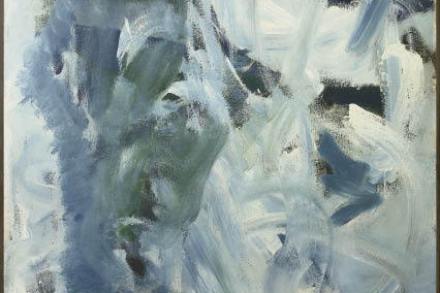
In the first retrospective of his work for nearly 40 years, Peter Lanyon (1918–64) is given the kind of recognition long his due. In the first retrospective of his work for nearly 40 years, Peter Lanyon (1918–64) is given the kind of recognition long his due. A major figure in the St Ives group, his work holds its own on an international stage even though it remains rooted in his native Cornwall. He was an inventive and innovative painter who conjured up the sensation of being in certain places and experiencing particular weather conditions. This was not an art bound to the earth’s surface, and it began by delving beneath it, with the Cornish miners, and increasingly rising above it — quite literally — into the air in a glider.
A place to dream

Exhibitions

As regular readers of this column will know, I am not an admirer of large exhibitions. The exhaustive is exhausting, and I refuse to believe that the general visitor can absorb the contents of a blockbuster show on a single viewing. Of course in these days of enforced leisure, more and more viewers are able to return to exhibitions (particularly if mounted by institutions of which they are members), though the time and expense involved deters those with jobs from making repeated visits. Vast exhibitions are designed to bring glory on the host museum and garner headlines as well as visitor numbers.

Sculpture: Earth to earth

Exhibitions

The park was founded nearly 25 years ago by a trio of friends from Borgo Valsugana, a small town near Trento in the Italian Alps: Carlotta Strobele, a philosophy graduate whose Viennese family’s connections with the area go back to when the region formed part of the Austro–Hungarian Empire; Emanuele Montibeller, a former market trader in fabrics and a local councillor; and Enrico Ferrari, an architect — all of whom shared a passion for contemporary art. It now covers a wide area in Val di Sella, a secluded valley of forest, glades and rolling meadows, high above Borgo, at the end of a narrow road that zigzags its way up precipitous and densely wooded slopes, beneath a chain of peaks over 6,000-feet high.

Art fairs: Satellite superiority

Exhibitions

It is a critical moment for the Biennale des Antiquaires in Paris — and for the French art trade. It is a critical moment for the Biennale des Antiquaires in Paris — and for the French art trade. For this year’s edition of this most august art and antiques fair (which ended last week) — ostensibly celebrating its 25th anniversary — came as a real shock. It was not that the fair was poor; it was simply underwhelming. How can it be that this once peerless event is no longer distinguishable from any other good international fine art and antiques fair?

Liberating Visions

Exhibitions

Victor Willing (1928–88) is perhaps the least classifiable of the brilliant early-1950s Slade generation, which includes his wife Paula Rego. Victor Willing (1928–88) is perhaps the least classifiable of the brilliant early-1950s Slade generation, which includes his wife Paula Rego. So it is uniquely appropriate that this first major posthumous exhibition should be at the beautiful museum built in her honour and opened last year. Willing’s career is dramatically divided. In his twenties he was briefly successful with portraits and still-lives.

Decorative magnificence

Exhibitions

The Indian Portrait: 1560-1860 National Portrait Gallery, until 20 June Mark Shields: Here and Elsewhere Grosvenor Gallery, 21 Ryder Street, SW1, until 14 May   I suspect that the first thought in many people’s minds to be associated with the Indian portrait is of the delicately detailed miniatures produced at the Mughal court in the 16th and 17th centuries. This is indeed the beginning of Indian portraiture as we know it, and the point at which this fascinating exhibition commences. Here is the portrait not just as likeness, but also as propaganda and official chronicle. The exhibition design in the Porter Gallery is constructed to steer the visitor clearly round the exhibits. A long curving wall with a large aperture commands our progress: we enter the gallery and go left.

Russian danger

Exhibitions

Rodchenko and Popova: Defining Constructivism Tate Modern, until 17 May Art is always at its most dangerous — but perhaps also its most endearing — when it approaches the idealistic. In the wake of the Russian Revolution of October 1917, the group of artists who called themselves Constructivists came to believe that abstraction could transform everyday life. But, unlike many theorists, they weren’t content simply with the idea of art’s revolutionary potential, they longed to put it into practice, and this they proceeded to do. Abstraction is a great tool in applied art, and the Constructivists used it to good effect in posters, books, textiles and furniture. For once, art had a use.

Oxford treasures

Exhibitions

Beyond the Work of One — Oxford College Libraries and their Benefactors  The Bodleian Library, Oxford, until 1 November, admission free A few years ago, my old tutor, the much- missed Angus Macintyre of Magdalen College, gave me a letter that meant I could get into the Codrington Library — Nicholas Hawksmoor’s 1716 gem at All Souls: Gothic on the outside, classical on the inside. At the end of the letter, he wrote, ‘Welcome to the loveliest room in Europe!’ He was quite right; although other Oxford libraries run the Codrington a close joint second. The only problem is, it’s tricky getting inside them to have a gawp at their treasures without one of these letters.

Mixed blessings

Exhibitions

Summer Exhibition Royal Academy, until 17 August The Summer Exhibition at the Royal Academy, now in its 240th year, is still an event, even if visitors don’t dress up quite as ornately as once they did. For the first time I attended Buyers’ Day. The atmosphere is convivial but competitive, as people jostle to see exhibits and further thicken the crowds round the provenly popular. It’s not always easy to look at art in these conditions, but the acquisitive hum in the air almost compensates for the lack of calm.