Culture

Culture

The good, the bad and the ugly in books, exhibitions, cinema, TV, dance, music, podcasts and theatre.

Relatively eccentric

Exhibitions

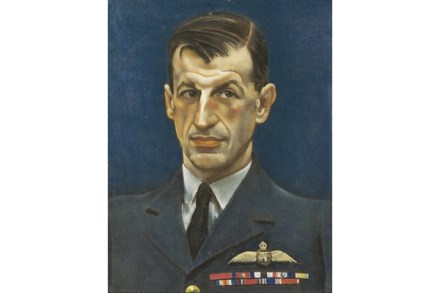
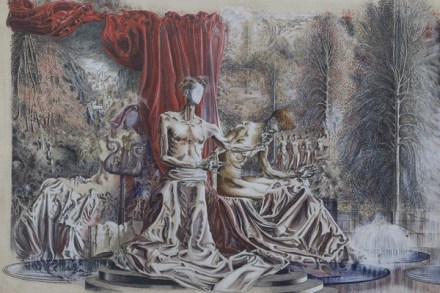
My uncle Robin Ironside bewailed the demise, after the scandal of the Wilde trial and the early death of Beardsley, of the imaginative tradition which, he wrote, ‘had been kept flickering in England since the end of the 18th century, sometimes with a wild, always uneasy light, by a succession of gifted eccentrics’. The truth is that he himself was one of those very eccentrics. Born in 1912 of a staunchly upper middle-class background, and after stints at the Courtauld and the Sorbonne, he landed, in 1937, the job of assistant keeper to Sir John Rothenstein at the Tate Gallery.

To the point

Exhibitions

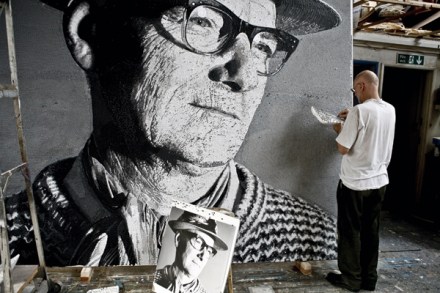
Ten years ago, Duncan MacAskill went into Rymans to buy some drawing pins and was struck by the range of colours on offer. That moment of revelation led him to construct a self-portrait from drawing pins, adapting the ideas of Seurat’s pointillism, and the ben-day dot approach of Roy Lichtenstein, to contemporary needs and materials. Now he has been commissioned by the Royal Opera House’s Deloitte Ignite festival, curated by Mike Figgis, to make two vast pin portraits for The Link at the ROH. These ‘paintings with pins’ hang near the box office over the exit to Covent Garden Piazza, and depict MacAskill’s father in black and white, and the choreographer Wayne McGregor in colour.

Sacramental vision

Exhibitions

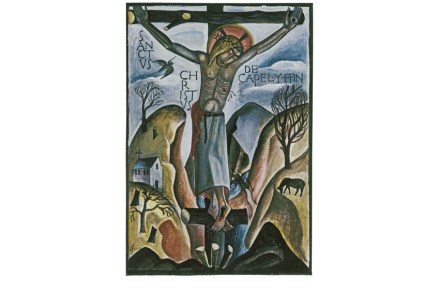
As the focus for an Easter meditation, David Jones’s ‘Sanctus Christus de Capel-y-ffin’ (1925), a small, heartfelt painting in gouache on paper, could scarcely be bettered. The Crucifixion takes place in a luminous landscape with the bird of hope in attendance. This is the world of medieval illuminated manuscripts and ivory carvings, a highly sophisticated spiritualised and classicised vision of existence that is sometimes dismissed as primitive. A Welsh hill pony is set off against a chapel, trees and a bridge over running water in an arabesque design quivering with natural and spiritual life. Rhythm is crucial. As Jones said, ‘I don’t care how static the subject is, but it must be fluid in some way.

On the beach | 31 March 2012

Exhibitions

As exhibitions in London’s public galleries become increasingly mobbed and unpleasant, it is heartening to report that the drive to take art to the provinces continues apace. New museums seem to be opening all over the country, from Wakefield to Margate, and although one may entertain doubts about their sustainability, their enhancement of our current cultural budget is very welcome. The latest public art gallery to open on the south coast is in Hastings, a once rather grand town that has in recent years been down on its luck. It takes more than an hour and a half to get there from London by train, and there isn’t a fast road, and these factors have contributed to keeping the town just outside the easy commuting belt.

Seeing the light

Exhibitions

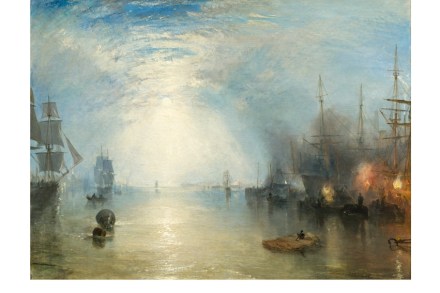
One of the more considerable pleasures of exhibition-viewing outside London recently was the Claude show at the Ashmolean. London exhibitions are becoming mobbed by crowds, and there is little enjoyment in shoving or being shoved in the supposed pursuit of artistic enlightenment, and absolutely no chance to contemplate individual pictures in the hurly-burly. As the devout will queue up to kiss the wizened toe of a saint, now the football fans of art will jostle to snatch the merest passing glimpse of a Leonardo or a Freud. The being there is all: the experience has very little to do with serious looking. Afterwards, you join the ranks of the blessed and tell your friends that you too were in the presence. There is apparently much comfort to be drawn from such sharing.

Shape shifters

Exhibitions

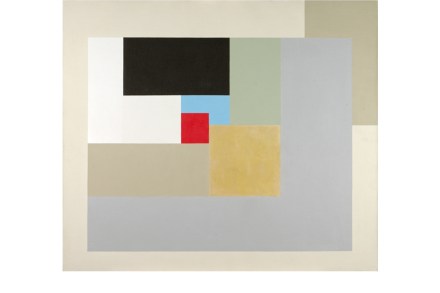
Someone asked me recently whether I actually liked Mondrian’s paintings. The implication being that his form of geometrical abstraction was too pure — or too antiseptic — to contain the necessary germ of human warmth required to engage the emotions; and that though one could admire his work intellectually, it was difficult to be passionate about it. There’s plenty of passion in Mondrian, but it is controlled fire, banked down to burn with a white-hot flame. Perhaps it should be termed the Higher Passion, as it does not immediately affect the ordinary emotions, but inspires instead to the spiritual ecstasy of the saint.

Road to Mecca

Exhibitions

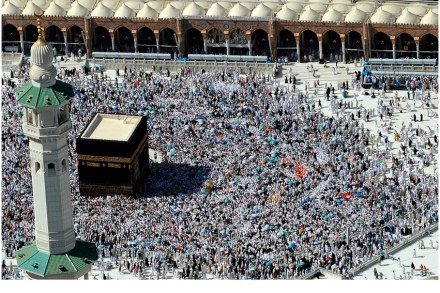
The British Museum’s latest exhibition Hajj: journey to the heart of Islam (until 15 April) sets out to explain the mysteries of this annual pilgrimage. Last year, a total of 2,927,719 pilgrims went to Mecca, Saudi Arabia, something that all Muslims should try to do at least once in their lifetime. Such huge numbers are hard to visualise, so a film, projected on to a wall, is a great help: one sees, I suppose, hundreds of thousands of pilgrims arriving in the city, and walking round Islam’s most sacred site, the Ka’ba, confined as they are to the courtyard of the Grand Mosque and surrounding areas. And because of its rather claustrophobic atmosphere, the BM’s old reading room is — for once — just the right place to hold an exhibition.

Spring round-up | 10 March 2012

Exhibitions

The fashion for museum-quality exhibitions in commercial galleries continues apace with two notable shows in Mayfair: Cy Twombly at Eykyn Maclean, and Julio González at Ordovas. Both galleries specialise in this kind of display, which must be more to do with impressing potential clients than with generating income, given that both are loan shows. I hope there’s also an altruistic motive here, however slight: to provide another forum for the public to view high-quality art they might not see elsewhere. Certainly these venues offer a new and welcome resource to the London gallery-goer, and should be better known.

Losing its edge

Exhibitions

Last November the Museum of Contemporary Art in Los Angeles held its annual fund-raising gala. Previously the event had used the tried-and-tested formula of wheeling in celebrity hosts such as Lady Gaga to try to persuade the great and good of Los Angeles to part with cash to fund the museum’s programme. This time, however, the museum changed tack, and appointed the performance artist Marina Abramovic as its creative director. When the guests, who included Kirsten Dunst, Pamela Anderson and Will Ferrell, turned up, they were asked to don white lab coats. They were then led to their tables, many of which featured a live human head poking up through the middle, revolving like a Lazy Susan. Other tables had as their centrepieces naked performers lying underneath skeletons.

All the fun of the fair | 3 March 2012

Exhibitions

It is easy to take the art and antiques fair for granted. After all, thousands of them take place every year, from humble events in village halls — cardboard boxes, old newspaper and cups of tea — to fairs so glamorous that on opening nights the ticket alone can cost $5,000. It was not ever thus. That revered mother of all such selling exhibitions — what became known as the Grosvenor House Art and Antiques Fair — was conceived in 1934 as a daring initiative to stimulate trade in the dark days of post-Depression London. As for the word ‘fair’, the late and much-lamented Frank Davis, who was still writing his Country Life saleroom column aged 97, recalled in 1961 that the very use of the term had caused unease when first mooted.

Miniatures to dazzle

Exhibitions

Alongside his distinguished career as a painter, Howard Hodgkin has also long been a collector of note. As a schoolboy at Eton he was given to bouts of running away but while briefly in situ his art master, Wilfrid Blunt (the brother of Anthony), borrowed a 17th-century Indian painting of a chameleon from the Royal Collection to enliven a lesson and Hodgkin was hooked. He started buying Indian pictures then and has continued ever since. ‘My collection has nothing to do with art history,’ he says. ‘It is entirely to do with the arbitrary inclinations of one person.’ It is a method that has, nevertheless, resulted in one of the world’s great collections of Indian art.

A break from posh

Exhibitions

The actor Ed Stoppard is kicking off the year in some nice period costumes. One of our brightest young actors, he’s back at 165 Eaton Place in the new BBC Upstairs Downstairs (reviewed on page 60) playing the diplomat Sir Hallam Holland. It’s got gas masks, the Munich Crisis, cocktails, a dead pet monkey, the odd conchie servant and, not least from Ed’s point of view, some great clothes. ‘In this series I get to wear jodhpurs and hacking jacket, naval uniform, black tie, white tie and a dressing-gown that would make Hugh Hefner green with envy. It will look sumptuous — more so than the last series.

The Picasso effect

Exhibitions

Pablo Picasso (1881–1973) cast a very long shadow over the 20th century, not least in England. Although he did not visit this country often, he apparently had a high regard for it, despite his somewhat sketchy knowledge of its contemporary painters. He once complained, ‘Why, when I ask about modern artists in England, am I always told about Duncan Grant?’ This remark is usually taken as a slight to Grant, though the two knew each other and maintained friendly relations.

Displeasures of the flesh

Exhibitions

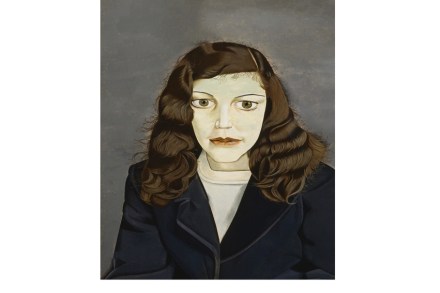
When Lucian Freud (1922–2011) was hailed as the Greatest Living Painter towards the end of his career, it was almost as a mark of respect for having survived so long and kept stubbornly painting in the way he wanted, without any quarter given to fads and fashions, in pursuit of truth to appearances, whatever that term may actually mean. This lifetime achievement award, though understandable (the English love a Grand Old Man), was misplaced, for Freud was not a great painter. He was often a striking image-maker, but from the overwhelming evidence of the knotted, gnarled and pelleted textures of his later paintings, the turgid accumulations of dry pigment, he disliked the medium of oil paint intensely.

Memorable imagery

Exhibitions

The RWA galleries offer a superb setting for a sculptor, and Ivor Abrahams RA (born 1935) has taken full advantage of the beautiful top-lit space of the main rooms to present a lively retrospective look at his principal themes and achievements. The work ranges from the 1950s to the present day, and embraces a number of different media, from drawing, painting, collage and screenprinting to relief and fully three-dimensional objects. The scale also runs the gamut from hand-held to overwhelming (‘Head of the Stairs’ is three-metres high), while the variety of materials includes bronze, plastics, ceramic and flocking. This is the kind of work that cannot be judged from reproductions in books: it has to be seen and experienced to be fully understood and appreciated.

Casting shadows

Exhibitions

Zarina Bhimji is a photographer of ghosts. Her images of deserted buildings (‘Bapa Closed His Heart, It Was Over’, above) and desolate landscapes are empty, but haunted by humanity; her work is, as she puts it, evidence not of ‘actual facts but the echo they create’. The Whitechapel Gallery is currently home to a retrospective of the work of this Turner Prize-nominated artist (until 9 March), and includes a selection of her photographs, installations and short films. Bhimji and her family were forced to leave Uganda when Idi Amin expelled Asians from the country in 1972 and much of her work bears the imprint of this background. Her images of East Africa and India explore the vast issues created by displacement and forced exile.

Beautiful game

Exhibitions

Remarkably, this is the first solo show in the UK of the work of Albert Burri (1915–95) for more than 50 years. Compare the popularity of other Italian postwar artists — Lucio Fontana, for instance, who only had one idea, the slashed or pierced canvas, to recommend him. Burri remains very much an unknown quantity, with a single work in this country’s public collections. A dozen Burris were shown at the Tate in 2005 in a mixed show of modern Italian art, but otherwise nothing. All praise then to the Estorick for mounting this enjoyable and succinct survey of Burri’s career: it introduces the general public to an artist well worth the attention. Born in Città di Castello, the young Burri was a talented footballer with a taste for pirate novels.

Quick flip to success

Exhibitions

Having studiously avoided the media for years, Charles Saatchi was stirred enough to write an article for the Guardian last December that opened: ‘Being an art buyer these days is comprehensively and indisputably vulgar. It is sport of the Eurotrashy, hedge-fundy, Hamptonites; of trendy oligarchs and oiligarchs.’ He has a point. A new type of collector is taking a close interest in contemporary art and elbowing old hands such as Saatchi out of the way. These new collectors are not interested in watching artists build a career through museum shows over a period of years. They’re not out to spot new movements as Saatchi tried to do with young British art.

Loudspeaker art

Exhibitions

Several people I spoke to when this exhibition was first mentioned thought it would be a Hockney retrospective, considering that he was commandeering all the first-floor galleries at the RA. But actually the retrospective element is very slight, consisting of half a dozen early landscapes and a couple of photo-collages, before we encounter the first of the mainly large-scale landscapes he has been painting since the late 1990s. In fact, the greater part of the exhibition (sponsored by BNP Paribas) consists of work done in Yorkshire since 2004, and Hockney has packed the galleries with hundreds of images (a single work might consist of 36 watercolours, or perhaps 51 iPad drawings with an oil painting on 32 canvases).

Riding to the rescue

Exhibitions

As cuts in government funding begin to bite, the innovative Tricycle Theatre in Kilburn finds itself short of £350,000 a year, and its long-serving artistic director, Nicolas Kent, is standing down as a result. Into the breach has stepped 89-year-old philanthropist and Tricycle devotee Al Weil. He is donating 37 paintings (including ‘The Gulf of Salerno’, above) by an artist he has collected since the 1960s, the distinguished Victorian watercolourist Hercules Brabazon Brabazon (1821–1906). Brabazon was a man of means who didn’t have to sell his work to survive, but nevertheless created a body of paintings and drawings of rare sensibility.

Pursuit of truth

Exhibitions

When R.B. Kitaj put together The Human Clay, his ground-breaking 1976 exhibition of figurative art at the Hayward Gallery, he wrote: ‘If you have a great subject, say, a person or people or a face or some complex theme, you have no right to be negligent about form or colour. Great themes demand the highest artistic qualities and ambitions.’ The current loan exhibition at the newly reopened Haunch of Venison gallery (with a handy new shopfront on Bond Street) is a splendid example of great themes articulated by the highest artistic qualities and ambitions.

Burra revealed

Exhibitions

The last major show of paintings by Edward Burra (1905–76) was at the Hayward Gallery in 1985 and I remember visiting it with a painter friend who was rather critical of what she called Burra’s woodenness and lack of movement. At the time, I was impressed by her criticisms, but now they rather seem to miss the point. Burra made highly stylised images of people (often actually in movement) which are mostly about the darker side of humanity and the ways in which we distract and amuse ourselves in the face of despair.

Pushing the boundaries | 10 December 2011

Exhibitions

When I was at school, I remember the art teacher returning incensed from a trip to London during which he’d taken a group of seniors to the Tate Gallery. The particular object of his ire was what he described as ‘a pile of blankets’ by Barry Flanagan. He could not accept that this was a legitimate work of art, and, in a state of raging mischief, he’d grouped his school party around the thing in question and surreptitiously changed the order of the blankets. This subversive act was intended not only to relieve his feelings but also to prove the falseness of the work. If it could be fundamentally changed without anyone noticing, it was — to his mind at least — undeniably bogus.

Mysterious ways | 3 December 2011

Exhibitions

Among exhibition organisers, hyperbole is clearly the order of the day. The crowds are going wild over Leonardo at the National Gallery, expecting an exhibition packed with paintings (though only nine are by the master), and now the Fitzwilliam is hauling them in with a show called Vermeer’s Women that contains just four paintings by Vermeer. On the day I visited, the gallery was thronged, though the queues of which the management warned were thankfully not in evidence. I am frankly horrified by the volume of visitors to art galleries these days. I should perhaps be thankful that art is so popular, but the sheer numbers make the experience of viewing an exhibition increasingly disagreeable and unrewarding.

Buried treasure | 26 November 2011

Exhibitions

In recent years there has been a surge of interest in the treasures hidden in our public art collections, many of them rarely if ever on view. The Tate Gallery is perhaps the principal offender here, showing only a tiny percentage of its glorious and wide-ranging holdings of British art, but attention is now being directed towards our provincial galleries and museums. Since 2003 the Public Catalogue Foundation has been recording and publishing the oil paintings held in galleries and civic buildings, county by county, and issuing invaluable volumes of colour illustrations to show us what usually remains invisible. By its calculations, a shameful 80 per cent of these paintings are not on view.

Meeting point

Exhibitions

I prepared for this exhibition in Düsseldorf by taking the short train journey down the Rhine to Cologne, which would hate to be thought of as a twin city. Its gigantic cathedral is as I first saw it some 40 years ago, still black with soot (but where would you start to clean it?), and the streets still remind me of Swansea, but without the sense of space. The same low-rise blocks of anonymous postwar buildings are on every side, with the same seemingly temporary shops and takeaways, only with Würstel as well as burgers. Where Swansea has the fine Glynn Vivian Art Gallery, Cologne has the Wallraf-Richartz, now in a handsome new building adorned in the old-fashioned manner with the carved names of artists whose works are held within.

Trading places

Exhibitions

Venice and Alexandria were, as far as the Venetians were concerned, twin cities. According to legend, St Mark had visited Venice before going to Alexandria, where he preached, performed miracles and was martyred. When two Venetian merchants stole the saint’s remains from Alexandria in 828, they were merely fulfilling the prophecy of the Angel that had appeared to Mark in the lagoon and, addressing him with the ringing words ‘Pax tibi Marce, Evangelista meus’, had predicted that a great city would arise upon these waters, which was to be his last resting place. The origins of the mythical links between Venice and Alexandria were as much mercantile as mystical.

Adventurous rogue

Exhibitions

Historically, British artists have not been good at money management. George Morland (1762–1804) was chronically insolvent; Benjamin Haydon (1786–1846) served four jail terms for debt and eventually killed himself after being reduced to pawning his spectacles; even Sir Thomas Lawrence (1769–1830) died leaving debts of £30,000. But the painter who turned serial defaulting into an art was George Chinnery (1774–1852). Absconding was the making of him as an artist suggests a new exhibition, The Flamboyant Mr Chinnery, at Asia House. A Londoner and fellow student of Turner at the Academy Schools, Chinnery launched his portrait-painting career in Dublin four years before the Act of Union emptied the Irish Parliament of MPs, and his studio of sitters.