Culture

Culture

The good, the bad and the ugly in books, exhibitions, cinema, TV, dance, music, podcasts and theatre.

Women and children first

Exhibitions

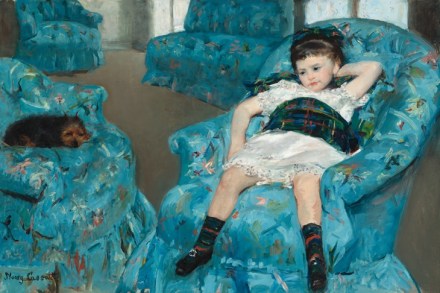
A lady licking an envelope. An intimate thing. It might be only the bill from the coal-man she’s paying, but it has the feel of something else: an assignation, a confession, an apology, a breaking-off. Would this woman in her deep-blue day dress and jacket be so unguarded if the artist had been a man? Mary Cassatt (1844–1926) was a femme sérieuse who painted women of quick wits and tender instincts. No grubby models, no ballet rats, no laundresses, no absinthe. Her sitters, you feel, would write a thank-you note, send flowers, recommend a dressmaker. Mary Cassatt: An American Impressionist in Paris, at the Musée Jacquemart-André, is the first French exhibition to be dedicated to the Pittsburgh-born painter since her death.

A whiff of wine and garlic

Exhibitions

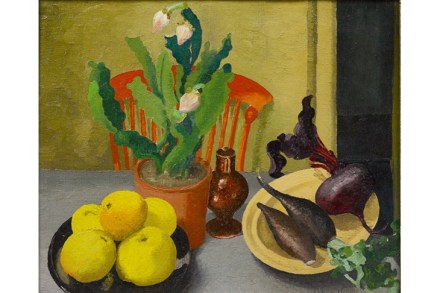
I have occasionally mused that there is plenty of scope for a Tate East Anglia — a pendant on the other side of the country to Tate St Ives. If ever that fantasy came to pass, the collection would include — in addition to Grayson Perry, Edward Bawden, Eric Ravilious, and John Wonnacott, contemporary master of the Thames Estuary — a section on Sir Cedric Lockwood Morris. The more one delves into the history of modern art in Britain — indeed, into art history in general — the more one discovers that many reputations are still free-floating. Morris’s is certainly one of these: there is no consensus as to how good he was as a painter, nor as to how he fits into the wider story.

Pot heads

Exhibitions

A friend of mine once owned a vase by the potter Hans Coper — until, that is, her teenage son had his friends around for a party. It wasn’t clear who knocked it off the shelf, but it was an expensive accident; a similar Coper pot sold last month at auction for almost £400,000. But then the tricky thing about studio pottery is where to put it — in more senses than one. It isn’t just whether it will be safer on the mantelpiece or in a cupboard. There is also the problem of how to categorise the stuff: is it art or is it craft, and what’s the difference? Such conundrums perplexed me as I walked around Things of Beauty Growing at the Fitzwilliam Museum, Cambridge.

The evanescence of everything

Exhibitions

Think of the work of Claude Monet and water lilies come to mind, so do reflections in rippling rivers, and sparkling seas — but not buildings. He was scarcely a topographical artist — an impressionist Canaletto, even if Venice was among his themes. Nonetheless, Monet & Architecture at the National Gallery is an intriguing experience. Before I saw it, the suspicion crossed my mind that this was the solution to a conundrum that must puzzle many galleries. Namely, how to put together another Monet exhibition without it being the same as all the others? An institution such as the National Gallery could not just borrow a lorry-load of Monets and shove them up on the walls — although quite a lot of visitors might be happy enough with that.

Greek idyll

Exhibitions

In late April 1992, I was in Crete, interviewing the painter John Craxton. It was the week that Francis Bacon died. We heard the news on the BBC World service, and afterwards Craxton reminisced about his old friend. Craxton himself at that stage had almost disappeared into obscurity. He was living in a elegantly crumbly building overlooking the harbour at Chania. It wasn’t grand, but there was a small Matisse cut-out hanging on his sitting-room wall. In recent years Craxton has been undergoing a minor revival. There has been a book, a show at the Fitzwilliam; now this sizable exhibition — Charmed lives in Greece — devoted to him, together with the Greek painter Niko Ghika (Nikos Hadjikyriakos-Ghikas, 1906–1994), and the writer Patrick Leigh Fermor.

Water, water, everywhere | 28 March 2018

Exhibitions

‘Ding, Clash, Dong, BANG, Boom, Rattle, Clash, BANG, Clink, BANG, Dong, BANG, Clatter, BANG BANG BANG!’ is how Charles Dickens transcribes the sound of 1,200 men building the first iron-clad frigate Achilles at the Royal Dockyard, Chatham, in the 1860s. A Chatham boy, Dickens lived to see — and hear — the age of sail turn into the age of steam, when the creak of ropes, the flap of canvas and the ding of bells gave way to the hiss of steam, the chug of motors and the shriek of whistles. As soundscapes go, both strike the modern imagination as more musical than the roar of road traffic.

Time and motion

Exhibitions

Andy Warhol would probably have been surprised to learn that his 1964 film ‘Empire’ had given rise to an entire genre. This work comprises eight hours and five minutes of slow-motion footage of the Empire State Building during which nothing much happens. Warhol remarked that it was a way of watching time pass or, you might say, the Zen of boredom. Much the same could be said of the films in Tacita Dean’s two exhibitions, Portrait and Still Life at the National Portrait Gallery and National Gallery respectively.

Being and nothingness | 15 March 2018

Exhibitions

René Magritte was fond of jokes. There are several in René Magritte (Or: The Rule of Metaphor), a small but choice exhibition at Luxembourg & Dayan, 2 Savile Row W1 (until 12 May), that includes numerous variations, accomplished and disturbing, on similar ideas to his famous ‘Ceci n’est pas une pipe’ painting. ‘L’usage de la parole VI’ (1928) contains two amorphous brown patches resembling mud or merde or molten chocolate. They are labelled as if in a scientific diagram, one with the word ‘miroir’, the other ‘corps de femme’. It’s true that Magritte could be repetitive, but his early paintings are beautiful, and the humour had a serious point.

Faulty connections

Exhibitions

In the mid-1940s, Frank Auerbach remarked, the arbiters of taste had decided what was going to happen in British art: Graham Sutherland was going to be the leading painter. ‘Then downstage left, picking his nose, Francis Bacon sauntered on. And the whole scene was changed.’ But how did it alter? What happened to figurative painting in London in the decades after Bacon exploded on to the scene? This is a question with which All Too Human at Tate Britain grapples. It is an old problem. When in 1976 R.B. Kitaj proposed that there was an important group of figurative artists at work here, a ‘School of London’, he defined them as ‘a herd of loners’.

Notes on a scandal | 1 March 2018

Exhibitions

Leonard Rosoman is not a well-known artist these days. Many of us will, however, be subliminally familiar with his mural ‘Upstairs and Downstairs’ in the Grand Café at the Royal Academy, painted in 1986 when the artist was in his early seventies. Two worlds are portrayed with a degree of satire — dressy guests arriving for the private view of the Summer Exhibition and below, in sober grisaille, Royal Academy Schools students engaged on life drawing. ‘Upstairs and Downstairs’s wit and perspectival acuity notwithstanding, its status as a mural makes it easy to overlook, an extended splash of colour behind the Café’s lunch counter. Leonard Rosoman is worth rediscovering. He was a fine war artist and a brilliant illustrator.

Keeping up with the Joneses

Exhibitions

To bleak, boarded-up Margate — and a salt-and-vinegar wind that leaves my face looking like Andy Warhol’s botched 1958 nose-peel — to see Journeys with ‘The Waste Land’ at Turner Contemporary. The exhibition has been organised by a group of local residents, who selected the exhibits, designed the layout, and wrote the exhibition texts. In ‘The Waste Land’, some of it written in the Nayland Rock seafront shelter, Eliot writes: ‘On Margate Sands./ I can connect/ Nothing with nothing.’ The local research group have connected Eliot’s text with everything — some duds, some successes.

Hair-raising

Exhibitions

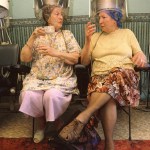
One of the best things about Beehives, Bobs and Blow-dries — yep, an exhibition about hairdressing — is the reaction of visitors. Some are getting on a bit and their pangs of recognition as they pass 1970s straightening tongs or Carmen heated rollers are evident. One woman exclaimed, as she passed a Ronson hairdryer with its shower-cap hood, ‘Ooh, they were good, they were. We’ve only just got rid of my mum’s.’ A hairdresser called Keith from Wakefield observed of the Beatles era that it was a worrying time to begin with: ‘Nothing happened for about two or three months. Nobody came. We thought we’d lost our business. But it turned out that the men were just growing their hair. They came back when it was shoulder length.

Sound investment

Exhibitions

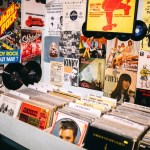
Listen closely, among the shelves of the last remaining music shops, in student dorm rooms and amid the flat whites and reclaimed wood of certain coffee shops, and you’ll hear a sound that many thought long banished. Check out the steadily rising sales figures of the past few years and there’s little doubt: the vinyl record is making a comeback. With it comes the return of another sound, like some po-faced, bearded handmaiden: the whine of the vinyl bore. It is three decades since 12-inch PVC discs were the dominant means of access to music, but for some the format never died and analogue will always offer a purer, more true-to-life audio reproduction.

Home is where the art is | 8 February 2018

Exhibitions

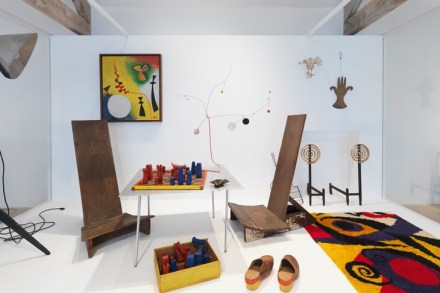
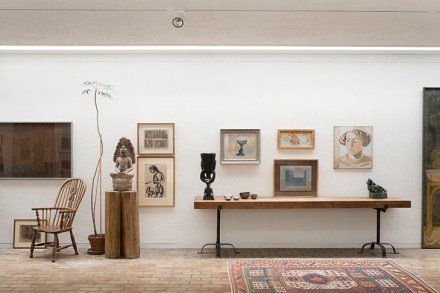
When I first visited Kettle’s Yard, Cambridge, I was shown around by Jim Ede, its founder and creator. This wasn’t an unusual event in the 1970s. I was an undergraduate, and in those days Ede — elderly, elegant and almost translucently ascetic — showed round anyone who rang his doorbell. It was rather as if Henry Clay Frick had given you a tour of his pied-à-terre on Fifth Avenue, or Sir Richard Wallace walked you through his collection. Except, of course, that they wouldn’t have done that — and Kettle’s Yard, as Ede (1895–1990) mused in a conversation with the artist John Goto, isn’t really a collection, ‘it’s a number of things perhaps’. In fact, it is much more than just a collection.

The bigger picture | 1 February 2018

Exhibitions

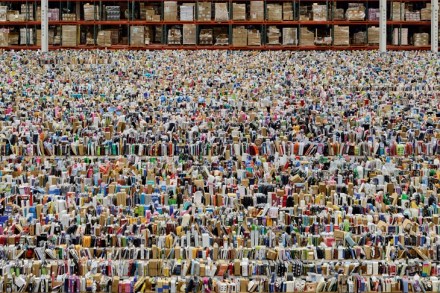
Walking around the Andreas Gursky exhibition at the Hayward Gallery, I struggled to recall what these huge photographs reminded me of. Gursky has built a career on colossal, panoramic pictures of subjects that are extremely ordinary — the view from a departure lounge of the empty runway at Schiphol airport, for example. Or, yet more exquisitely uninteresting, a wall-sized image of a section of beige carpet in an art gallery. Then I got the connection that had eluded me. These pictures were much like Martin Parr’s little books of Boring Postcards. These are collections of real cards made over the years by the British photographer, with separate volumes devoted to items from the USA and Germany (the latter entitled Langweilige Postkarten).

Living sculptures

Exhibitions

Seventeenth-century Roman art at its fullblown, operatic peak often proves too rich for puritanical northern tastes. And no artist was ever more Baroque than Gian Lorenzo Bernini, the supreme maestro of the idiom. But I love his work, which is why, on a spare afternoon in Rome before Christmas, I strolled over to the Borghese Gallery where the largest array of Bernini sculpture ever assembled is currently on view. Admittedly, the Borghese collection already contains the world’s finest collection of Bernini (1598–1680) and has done so ever since the artist’s lifetime. But on this occasion some 60 loans — including many full-scale marbles as well as paintings and terracotta models — have been added.

Lines of beauty | 7 December 2017

Exhibitions

The thing about Winnie-the-Pooh, 91 years old this year, is that he’s the creature of E.H. Shepard, who drew him, quite as much as he is of A.A. Milne, who created him. The words and the pictures came together for anyone who encountered Pooh Bear in the books rather than the film. Any exhibition about him, then, has to grapple with the difficulty of doing justice to the text as well as to the drawings. And, moreover, to the fact that many of those who love him best heard about him first in a story that was read aloud. And for all that Pooh is a byword for world-class — or rather, middle-class — whimsy, there is something fragile and evanescent about the world he inhabits: he evokes the time When We Were Very Young. Tread softly, then, around this bear.

Oops! he did it again

Exhibitions

‘It’s odd,’ Picasso once mused, ‘but you never see Modigliani drunk anywhere but at the corners of the boulevard Montmartre and the boulevard Raspail.’ He obviously suspected his friend of being a stage bohemian. There is, indeed, a touch of Puccini about Modigliani’s life — the poverty, his film-star good looks, the drink and drugs and poignant early death, all set against a picturesque Parisian backdrop of Montmartre and Montparnasse. It’s La bohème but with the painter himself, surely a tenor role, taking the place of the tragic, tubercular Mimì. Whether or not he lived out a cliché, Amedeo Modigliani (1884–1920) certainly painted to a set recipe — even if it was one largely of his own devising.

Talking heads | 16 November 2017

Exhibitions

Under the central dome of UCL — an indoor crossroads where hordes of students come and go on their way to lectures and lunch — there’s an intriguing exhibition on at the moment about death. ‘Human remains are displayed in this exhibition’, it says in white lettering on the floor atall four entrances, to warn any passing snowflakes. The real head of Jeremy Bentham, who died in 1832, glass eyes staring out at you from behind a vitrine, is indeed a bit queasy-making. This is the central object of the exhibition. Bentham still has his long dark-grey hair at the back and sides of his bald pate, and his whole head is leather-brown from the tanning treatment after his death. He looks as if he’s grinning or grimacing.

Worse for wear

Exhibitions

Erté was destined for the imperial navy. Failing that, the army. His father and uncle had been navy men. There were painters and sculptors on his mother’s side, but they were thought very frivolous. Romain de Tirtoff (‘Erté’ came from the French pronunciation of his initials) was born in 1892 at the St Petersburg Naval School where his father Pyotr was inspector. When he was a little boy, his aunt bought him a set of wooden soldiers. Instinctively, he hated war, violence and, above all, uniforms. He burst into tears and threw the box out of the window. What he liked best was to play with his mother’s old perfume bottles, which he dressed in scraps of lace to make ballerinas.

Dark side of the Moomins

Exhibitions

Tove Jansson, according to her niece’s husband, was a squirt in size and could rarely be persuaded to eat, preferring instead to smoke fags and drink whisky. And when she did eat, it was usually salted cucumbers — to go with the drink. You know, this late in life, I may have encountered my role model. We were at the launch of an excellent edition of four books in her Moomin series at the Finnish embassy. London is in the grip of a kind of Moomin madness right now, what with the books, a Moomin event at the South Bank and a new exhibition of Tove Jansson’s artwork at the Dulwich Picture Gallery. Which is good news for Finland, on account of the Moomins being one of its two big cultural exports — the other being Santa Claus, who obviously lives in Lapland.

The apple of his eye

Exhibitions

The critic and painter Adrian Stokes once remarked on how fortunate Cézanne had been to be bald, ‘considering the wonderful volume that he always achieved for the dome of his skull’. It’s a good joke, and all the better for being perfectly true — as is demonstrated by the superb sequence of self-portraits included in Cézanne Portraits at the National Portrait Gallery. These are the finest hairless craniums in the history of art. That, however, is only one of the attractions of the exhibition. This is the most impressive array of work, by one of the greatest of all painters, to be seen in London in more than 20 years. Cézanne once said, ‘I paint as I see, as I feel — and I have very strong sensations.

All black and white

Exhibitions

Leonardo da Vinci thought sculpting a messy business. The sculptor, he pointed out, has to bang away with a hammer, getting covered in the process with a nasty mixture of dust and sweat. In contrast the painter can sit at his easel, dressed like a gentleman, and portray the whole wide world and everything in it. (Michelangelo, not surprisingly, disagreed.) Such spats were by-products of the paragone — a sort of Punch-and-Judy debate, much enjoyed in 16th-century Italy, about which of the arts was the most powerful. Intriguingly, the National Gallery has revived the paragone in one section of its new exhibition, Monochrome.

Emotional rescue

Exhibitions

In the 1880s the young Max Klinger made a series of etchings detailing the surreal adventures of a woman’s glove picked up by a stranger at an ice rink. At a certain point the glove washes up, nightmarishly large, beside a sleeping man’s bed on to which a shipwrecked sailor is desperately hauling himself. Storm-tossed billows merge with rumpled pillows in an image simply titled ‘Angste’. Klinger’s nightmare vision came back to haunt me at the exhibition Tracey Emin, ‘My Bed’/JMW Turner. Yes, you read that right. Since its loan to the Tate in 2015, Emin’s most famous oeuvre has been partnered in exhibitions with the work of Francis Bacon at Tate Britain and William Blake at Tate Liverpool.

It’s the thought that counts

Exhibitions

During a panel discussion in 1949, Frank Lloyd Wright made an undiplomatic comment about Marcel Duchamp’s celebrated picture of 1912, ‘Nude Descending a Staircase, No. 2’, in the presence of the artist. ‘I am sure he doesn’t himself regard it as a great picture now.’ At this Duchamp bridled, exclaiming in his excellent English, ‘I beg your pardon, sir!’ However, the architect had a point, as the exhibition Dalí/Duchamp at the Royal Academy bears out. I came away from it reflecting that Duchamp wasn’t a very good painter. This is not the point, obviously, that the RA intended to make.

Raw materials

Exhibitions

‘Art by its very essence is of the new… There is only one healthy diet for artistic creation: permanent revolution.’ Jean Dubuffet wrote those words in 1963, and when Jean-Michel Basquiat burst on to the New York art scene 20 years later — barely out of his teens, untrained and black — he seemed to embody them. Together with his friend Al Diaz, he had grabbed attention in the late 1970s with a campaign of cryptic graffiti signed SAMO© targeted on the SoHo gallery district. Born to middle-class Haitian-Puerto Rican parents in the South Bronx, Basquiat didn’t waste time tagging trains. He knew the value of location; his dad was an accountant. Photographs of the graffiti fill a room in the Barbican’s exhibition Basquiat: Boom for Real.

I spy | 28 September 2017

Exhibitions

Where was Degas standing as he sketched his ‘Laundresses’ (c.1882–4)? Did he watch the two women from behind sheets hanging to dry? Or was he hidden by steam from the basins? The laundry women are unselfconscious, unguarded. One reads aloud from a list, calling out shirts, collars, cuffs to be washed and ironed. Another leans over her workbench, staring into the placket of a folded shirt like Narcissus into his pool. Neither is the least bit bothered by the artist making a rapid chalk sketch to be worked up later in pastel. Nor the two men in ‘At the Café de Châteaudun’ (c.1869–71), reading a newspaper with monocle and magnifying glass. Degas might be peering at them over the top of his menu. A coffee, a croissant, a sneaking sketch.

Mothers’ ruin

Exhibitions

At the heart of Basic Instincts, the new exhibition at the Foundling Museum in London, is an extraordinarily powerful painting of a mother and baby. At one time the ‘Angel of Mercy’ was sold as a greetings card by its owner, the Yale Center of British Art in Connecticut, presumably intended as something you might send your own mother or child. But take a second glance and you might well wonder who bought the card and who they might have sent it to. In Joseph Highmore’s Georgian scene, a young, fashionably dressed woman is splayed across the canvas, her feet in delicate silk shoes, a tiny baby, naked, resting precariously on her lap.

Space odyssey | 14 September 2017

Exhibitions

Rachel Whiteread is an indefatigable explorer of internal space. By turning humble items such as hot-water bottles and sinks inside out — that is, casting the cavities — Whiteread has accomplished one of the traditional tasks of art: revealing structure, beauty and mystery in the everyday. Her work is a remarkable contribution to an overlooked genre: the sculpture of inanimate things or still-life statuary. Nonetheless the large-scale, mid-career Whiteread retrospective at Tate Britain, which ought to be a triumph, does not quite come off. Ironically, since her idiom is derived from minimalism, the exhibition fails to observe the law that less is more.