Culture

Culture

The good, the bad and the ugly in books, exhibitions, cinema, TV, dance, music, podcasts and theatre.

Silent films

Exhibitions

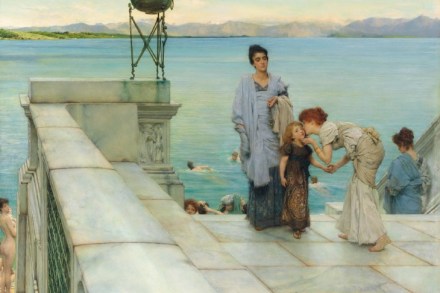
On 15 September 1888 Vincent van Gogh was intrigued to read an account of an up-to-date artist’s house in the literary supplement of Le Figaro. This described a purple house in the middle of a garden, the paths of which were made of yellow sand. The walls were glass bricks ‘in the shape of purple eggs’. Such aesthetic dwellings were all the rage; Van Gogh dreamed of having one himself in Arles. But as one learns from an exhibition at Leighton House, it was another 19th-century Dutch artist, Lawrence Alma-Tadema, who actually inhabited two such establishments — one off Regent’s Park, the other in St John’s Wood. On paper, Van Gogh and Alma-Tadema have a great deal in common.

Snap, crackle and op

Exhibitions

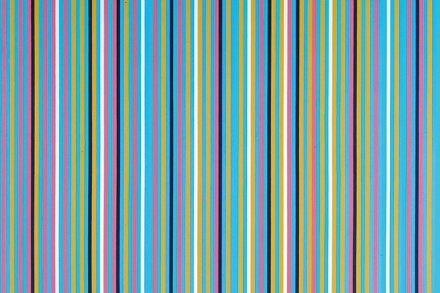
Stand in front of ‘Fall’, a painting by Bridget Riley from 1963, and the world begins to quiver and dissolve. Something you normally expect to be static and stable — a panel covered with painted lines — undulates and pulses. In addition to just black and white, the pigments actually present, other hues appear and disappear: faintly luminous pinks and greens. To her irritation, the artist was once told, ‘as though it were some sort of compliment’, that ‘it was the greatest kick’ to smoke dope while looking at this painting. The remark, much though it affronted Riley, is wonderfully characteristic of its epoch, the mid-1960s. We usually think of op art itself as dating from the era of Mary Quant, the Beatles and LSD.

Nothing is quite what it seems

Exhibitions

One day, somebody will stage an exhibition of artists taught at the Slade by the formidable Henry Tonks, who considered Cézanne a ‘curiously incapable’ menace, and a cracking show it will be. Until then, we must take what we can from exhibitions like True to Life: British Realist Painting in the 1920s & 1930s. Here, many of Tonks’s pupils, and others schooled with similar exactitude, can at last reclaim their rightful positions in British art after decades in the wilderness, pushed into the shadows by the alpha art of abstraction and the ironies of pop. True to Life is a marvellous show. The portraiture is the stand-out stuff, dominated by the limpid virtuosity of Meredith Frampton and Gerald Leslie Brockhurst.

Object lesson | 3 August 2017

Exhibitions

Why did Henri Matisse not play chess? It’s a question, perhaps, that few have ever pondered. Yet the great artist provided an answer, which is quoted in the catalogue to Matisse in the Studio, a marvellous new exhibition at the Royal Academy. He did not care, he explained, ‘to play with signs that never change’. It’s a revealing reason in several ways. For one thing, it underlines how different Matisse was from his younger contemporary Marcel Duchamp: the most celebrated chess-player in art. Duchamp loved logic, so his work tended to turn into a series of theorems.

Maximum wattage

Exhibitions

On his deathbed in 1904, George Frederic Watts saw a extraordinary spectacle. He witnessed the universe coming into being: the ‘breath of the Creator acting on nebulous matter’ causing ‘agitating waves & revolving lines’ to fly out in all directions. With hindsight, it is tempting to conclude that Watts had a vision not, as he thought, of reality in ‘a glorious state’, but of abstract painting. The beautifully installed exhibition at the Watts Gallery, Compton, Surrey, celebrating the bicentenary of his birth actually contains a few pictures that — surprisingly for a great Victorian — put one in mind of Jackson Pollock.

A game for two

Exhibitions

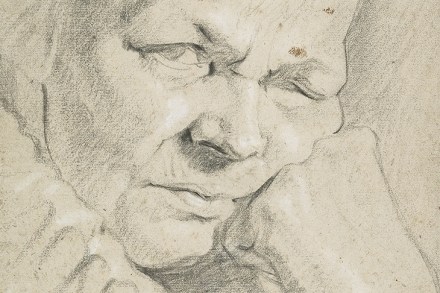
Some art can be made in solitude, straight out of the artist’s head. But portraiture is a game for two. That’s the lesson of The Encounter: Drawings from Leonardo to Rembrandt, a marvellous little exhibition at the National Portrait Gallery. It is essentially a medley of Old Master works on papers from various British collections — which might sound a little on the quiet side. But that would be the wrong conclusion: on the contrary it poses intriguing questions and is full of visual pleasures. [caption id="attachment_10230102" align="alignnone" width="530"] 'Head of an Elderly ManWearing a Cap, probably Mino da Fiesole' (c.

Repo women

Exhibitions

Aren’t you getting a little sick of the white cube? I am. I realised how sick last week after blundering around White Cube Bermondsey, where the walls are so pristine no label is allowed to sully them, struggling to work out what I was looking at. I was reduced to photographing the works in order and tracing my itinerary in ink on the ground plan — shoot first, ask questions later — and even then I had to keep getting the attendants to tell me where exactly on the plan I was. One of them admired my wiggly drawing. Well, it was a surrealist exhibition. Dreamers Awake sets out to repossess surrealism for women.

American quartet

Exhibitions

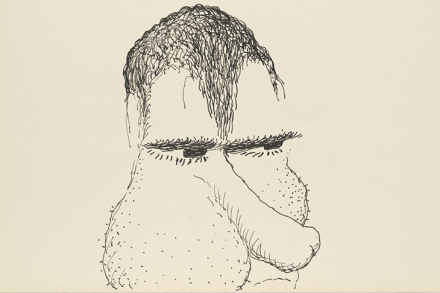
Politics and art can make for an awkward mix. Much more than with religious subjects it seems to matter whether the viewer shares the artist’s beliefs. But whatever you think of Richard M. Nixon, it would be hard not to enjoy Philip Guston’s satirical drawings of him and his cronies at Hauser & Wirth, Savile Row. These were the most exuberant, scatological, obsessive and imaginative such works since 1937 when Picasso produced an extraordinary strip-cartoon vilification and lampoon entitled ‘The Dream and Lie of Franco’. Indeed, the two series have a good deal in common. Picasso portrayed the Generalissimo as a sort of obscene, moustachioed set of bagpipes.

The better angels of our nature

Exhibitions

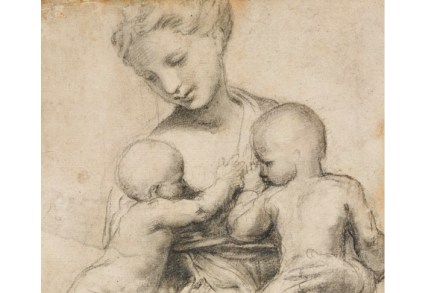
Late one afternoon, early in the year, I was walking through the Vatican Stanze with a small group of critics and art historians. While we were admiring the Raphael frescoes that fill these private apartments of the Renaissance popes, Matthias Wivel, curator of the Michelangelo & Sebastiano exhibition at the National Gallery, made the most eloquent case for the painter I have ever heard. Suddenly, I felt a new enthusiasm for Raphael. Essentially what he said is that Raphael is the supreme master of depicting human beings in interaction. Each of the frescoes around us, Wivel pointed out, was made up of a huge number of figures, all engaged with each other in fluently orchestrated groups.

Dealer’s choice

Exhibitions

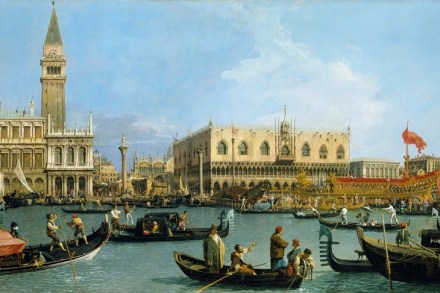
One evening a few weeks ago I was on my way to the opening of an exhibition at the Venice Biennale when I stopped for a moment in a quiet campo off the main drag. An elderly priest was standing on the steps of the church of Santa Maria della Fava in the weak sunshine. On impulse I stepped inside and he followed. For a while I looked at Piazzetta’s altarpiece, ‘The Madonna with St Philip Neri’ (c.1725). Then — as if silently to indicate that I should have a look at this too — the priest switched on the light to illuminate Giambattista Tiepolo’s ‘Education of the Virgin’ (c.1732)on the opposite side of the nave. It was indeed worth contemplating.

Being and nothingness | 25 May 2017

Exhibitions

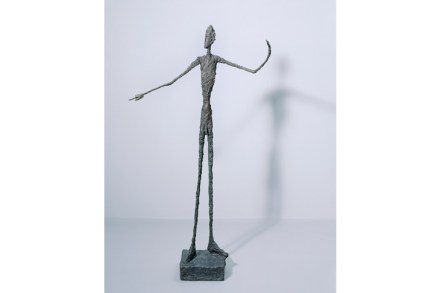
Size, of course, matters a great deal in art; so does scale — which is a different matter. The art of Alberto Giacometti (1901–66) illustrates the distinction. There are very few major artists who have produced objects so physically minuscule. But the smaller and thinner his people are, the vaster the space they seem to inhabit. That’s where scale comes in. There was a period of about five years, wrote his friend the critic David Sylvester, ‘when every figure Giacometti made (with one exception) ended up an inch high more or less.’ You encounter just such a work about halfway around Tate Modern’s big new Giacometti exhibition.

League of nations

Exhibitions

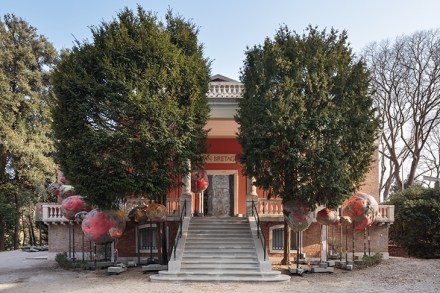
‘Are you enjoying the Biennale?’ is a question one is often asked while patrolling the winding paths of the Giardini and the endless rooms of the Arsenale. It is not easy to answer. The whole affair is so huge, so diverse and yet — in many ways — so monotonous. Like the EU, an organisation with which it has something in common, La Biennale di Venezia believes in the principle of subsidiarity. Therefore individual nations are allowed to do what they like within their own pavilions. However, there are also strong homogenising forces at work — so much of what is on view in the national pavilions and elsewhere tends to fall into certain approved categories: notably video art, photography (often rather dull) and messy installation.

Put a spell on you

Exhibitions

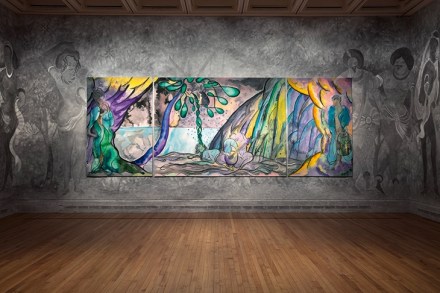
Many of the mediums from which art is made have been around for a long time. People have been painting on walls, for example, for about 40,000 years. Similarly, figures have been fashioned out of stone and metal for millennia, and still are. But if there is one ancient medium you might think was now definitely over and out, it would be tapestry. But no! In this era of artificial intelligence and omniscient Google, the ancient practice of painstakingly twining coloured wool into pictures is undergoing an unexpected revival. The latest contemporary artist to give tapestry a go is Chris Ofili. His exhibition Weaving Magic at the National Gallery gives some clues as to why he — and other figures such as Grayson Perry, Marc Quinn and Craigie Horsfield — find it appealing.

Constable on sea

Exhibitions

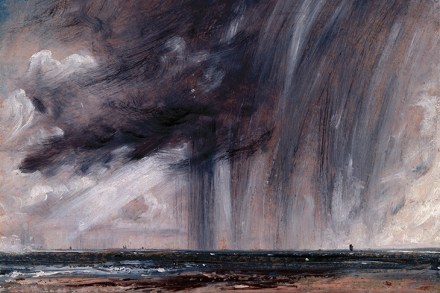
John Constable was, as we say these days, conflicted about Brighton. On the one hand, as he wrote in a letter, he was revolted by this marine Piccadilly, populated with: ‘ladies dressed & undressed — gentlemen in morning gowns and slippers on, or without them altogether about knee deep in the breakers — footmen — children — nursery maids, dogs, boys, fishermen’, all mixed together ‘in endless and indecent confusion’. On the other, as a brilliantly conceived little exhibition at the Brighton Museum & Art Gallery makes clear, the town was one of a small number of locations that were crucial to his art.

The good, the indifferent and the simply awful

Exhibitions

‘There is only one thing worse than homosexual art,’ the painter Patrick Procktor was once heard to declare at a private view in the 1960s. ‘And that’s heterosexual art.’ It would have been intriguing to hear his views on Queer British Art at Tate Britain. All the more so since it includes several of his own works, including a fine line-drawing study of the playwright Joe Orton, completely naked except for his socks — which he kept on because he felt they were sexy — and reclining somewhat in the manner of Manet’s Olympia. In fact, many of those included might have had reservations — Oscar Wilde, for example, one of whose characters observed, ‘The only artists I have ever known who are personally delightful are bad artists.

Home is where the art is

Exhibitions

The house in which I lived in Tokyo was built by my landlady, a former geisha. It stood on a plot of land given to her by her last lover. It was small, full of light and positioned to enjoy the large ginkgo tree in the garden next door. It was easily the best designed house I have ever lived in. Nostalgia for that house and my former life in Tokyo overwhelmed me as I wandered through the new exhibition at the Barbican — The Japanese House: Architecture and Life after 1945. Exhibitions on architecture are notoriously hard to pull off but this succeeds triumphantly. Japanese domestic architecture has consistently produced some of the most influential examples of modern design. By the end of the second world war B-29 bombing had destroyed a third of Japanese housing stock.

Cut it out

Exhibitions

How do you make a work of art? One method is to cut things up and stick them back together in a different order. That is, roughly speaking, the recipe for collage. Thus in 1934 Max Ernst snipped away at a pile of illustrations to 19th-century novels, reassembled them in an altered fashion, and came up with Une semaine de bonté — or A Week of Kindness — a surrealist novel in pictures. Some of its pages are displayed in The Ends of Collage, at Luxembourg & Dayan, 2 Savile Row, W1. In one a woman reclines on an ornate, neo-baroque bed, while all around the waves of the sea are rippling over her coverlet; in another a male leaps astonishingly high in a moonlit street, his head transformed into that of an enormous bird.

A word in your ear

Exhibitions

Do you, or do you not, fork out for an audioguide — one of those necklace-like, strappy contraptions you’re offered at the beginning of exhibitions, which cost an extra £3.50? The nation is divided. Some loathe them — as I was reminded reading an obituary of the historian Eric Christiansen, which said, ‘The British Museum’s Viking Exhibition in 2014 drew his wrath as visitors blocked everyone else’s view as they listened to their headsets, while ignoring any object which did not have a spoken description.’ I blushed, because that’s exactly what I do. Not in room one or two, when I’m still all energy and excitement and take pains to look at every single item with equal attention.

Home help

Exhibitions

There have been many explanations for what happened in the Italian Renaissance. Some stress the revival of classical antiquity, others the rise of individualism. A pioneering exhibition at the Fitzwilliam Museum, Cambridge, Madonnas and Miracles: The Holy Home in Renaissance Italy, takes a different line. It’s all about the 15th- and 16th-century household — and the religious furnishings and fittings it contained. To a 21st-century eye some of these are distinctly bizarre. Early on, there is a painting of the ‘Madonna and Child’ by a follower of Filippo Lippi — just the kind of thing one expects to find in an art gallery. Underneath it is a brightly painted wooden figure of the infant Christ, very similar to the one in the picture.

Snap happy

Exhibitions

These days the world is experiencing an unprecedented overload of photographs, a global glut of pictures. More and more are taken every day on smartphones and tablets. They zip around the world by the billion. When I went to Wolfgang Tillmans’s exhibition at Tate Modern, the galleries were full of people taking snaps of the exhibits. Some visitors posed to have their pictures taken in front of the larger ones — huge photographic prints of such diverse subjects as the waves of the Atlantic Ocean, a weed growing in a London garden and a hugely enlarged close-up of a male bottom. These, and a great many more, are shown in galleries with a messy, provisional look, more like a classroom or workshop than a conventional exhibition of art.

On the make

Exhibitions

Rudolfo Paolozzi was a great maker. In the summer, he worked almost without stopping in the family’s ice-cream shop, making gallon after gallon of vanilla custard. In the slack winter months, when the shop made its money on cigarettes and sweets, he built radios from odds and sods. It was on one of these homemade radios that he heard Mussolini’s declaration, on 10 June 1940, that Italy, the country he had left for Scotland 20 years before, had entered the war. That night a mob attacked the ice-cream shop at 10 Albert Street, off Leith Walk in Edinburgh. The family lived above the shop and later, Rudolfo’s son Eduardo, then aged 16, would remember how it had been before and what the men had done.

American psyche

Exhibitions

The latest exhibition at the Royal Academy is entitled America after the Fall. It deals with painting in the United States during the 1930s: that is, the decade before the tidal surge of abstract expressionism. So this show is a sort of prequel to the RA’s great ab ex blockbuster of last autumn. It might have been called, ‘Before Jackson Began Dripping’. Not much in this selection, though, can compare to the power of the abstract expressionists at their peak in the Forties and Fifties — not even an early work by Pollock himself. But it does include a couple of masterpieces by Edward Hopper, plus several pictures so brashly over the top as to be quite interesting, several others that are simply terrible — and one of the world’s most familiar images.

The good, the bad and the ugly

Exhibitions

Vladimir Putin notoriously declared the collapse of the Soviet Union in 1989 to be one of the greatest disasters of the 20th century. However, as Revolution: Russian Art 1917–32 — an ambitious exhibition at the Royal Academy — helps to make clear, the true catastrophe had occurred 82 years earlier, in 1917. Like many of the tragedies of human history, the Russian revolution was accompanied, at least in the early stages, by energy, hope and creativity as well as by murderous cruelty and messianic delusion.

Sunny delight

Exhibitions

No Californian could have painted Hockney’s pools. No La-La Land artist, raised on sun and orange juice, would have done tiles and diving boards and tan-lined bottoms as the boy from Bradford did. It had to be a Hockney, brought up, the fourth of five children, in a two-up two-down. Hockney, who aged three had sheltered from bombs with his mother Laura, father Kenneth, four siblings and a lady neighbour in the cupboard under the stairs. A Yorkshire child steeped in Typhoo tea and fortified by meat and potatoes from Robert’s Pie Shop. A painter who had bicycled the Wolds in the rain, and lived in the garden shed of an Earl’s Court boarding house when a student at the Royal College of Art in London.

Seeing everything in black and white

Exhibitions

Two divergent approaches to printmaking are on view in an exhibition of graphic work by Francis Bacon and Lucian Freud at Marlborough Fine Art, Albemarle Street. For the former, media that depend on line, such as etching, were of little interest, since — as his friend Freud would point out — Francis couldn’t draw very well. But, Freud would add, Bacon’s painting was so brilliant that he made you forget that limitation. Bacon’s prints were essentially reproductions of his oils, signed and numbered by the artist. The etchings Freud made in the last three decades of his life were not like that at all. Though the models for the etchings were often the same as those for his paintings, his approach was entirely distinct.

Great leaps forward

Exhibitions

In the 1940s Lucian Freud took another young painter, Sandra Blow, up to the top of a bombed church in Soho. There were just two prongs of masonry left and Lucian promptly launched himself through space from one to the other. ‘You can’t possibly expect me to do that,’ she exclaimed. ‘Just think of it as if you were on the escalator in Selfridges,’ he replied. History does not relate whether she was persuaded by this comforting analogy, but as a small exhibition at the Fine Art Society demonstrates, Blow (1925–2006) spent the rest of her career making jumps. These were mainly of the visual and stylistic variety. There is an exhilarating feeling of rushing through air about ‘Stripes’ (1978), for example.

Shape shifter | 12 January 2017

Exhibitions

Victor Pasmore once told me how he greeted Pablo Picasso at Victoria station. The great man had come to Britain in 1950 to attend a communist-sponsored peace congress in Sheffield. In person Pasmore found him surprisingly different from the solemn art-historical giant suggested by books. ‘He did nothing but joke all the time, non-stop, and he was no more a communist than the local fairy.’ Instead, Pasmore felt, ‘Picasso was 100 per cent anarchist.’ Something similar could be said about Pasmore himself, as can be seen from a fine exhibition devoted to his work from the 1930s to the ’60s at the Djanogly Gallery, Nottingham (moving on to Pallant House, Chichester, on 11 March). Few artists made more abrupt stylistic swerves.

Ways of seeing

Exhibitions

‘Radical’ is like ‘creative’, a word that has been enfeebled to the point of meaninglessness. Everybody seems to want to be both, but nobody has any clear idea of what might be involved. In the case of this exhibition, radical could refer either to aesthetic or political themes; neither seems quite right. Never mind, ’modernist’ has, with the passage of time, become more firmly anchored. We now know it was a movement in the arts that began in about the 1880s and ended in, very roughly, the 1950s or ’60s. It was a period in which art became preoccupied with form as a determinant — rather than the servant — of content.

Trivial pursuits | 1 December 2016

Exhibitions

Robert Rauschenberg, like Autolycus in The Winter’s Tale, was a ‘snapper-up of unconsidered trifles’. Unlike Shakespeare’s character, however, he made them into art. Rauschenberg’s most celebrated piece, ‘Monogram’, on view in the grand retrospective of his work at Tate Modern, comprises, among other bits and pieces, a rubber shoe heel, a tennis ball, and a car tyre-plus-oil paint on stuffed angora goat. Next to it is another amalgam from the mid-Fifties, incorporating ‘paint, paper, fabric, printed paper reproductions, sock and army-issue flare parachute on canvas’.