Culture

Culture

The good, the bad and the ugly in books, exhibitions, cinema, TV, dance, music, podcasts and theatre.

Hiding in plain sight

Exhibitions

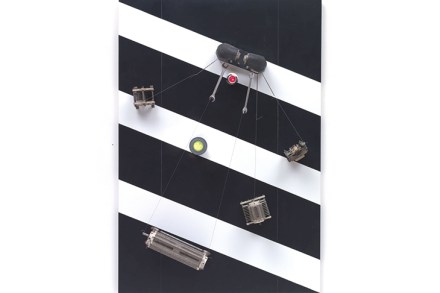
Steel flowers bend in a ‘breeze’ generated by magnetic pendulums. This is the first thing you see as you enter Tate Modern’s survey show. And ‘Magnetic Fields’ (1969) is pretty enough: the work of this self-taught artist, now in his nineties, has rarely been so gentle, or so intuitive. But there’s a problem. ‘I would like to render [electromagnetism] visible so as to communicate its existence and make its importance known,’ Takis has written. But magnetism hides in plain sight. A certain amount of interference is necessary before it will reveal itself. Does the interference matter? Does the fact that gallery assistants have to activate this work every ten minutes spoil the ‘cosmicness’ of Takis’s art?

Keeping it real | 4 July 2019

Exhibitions

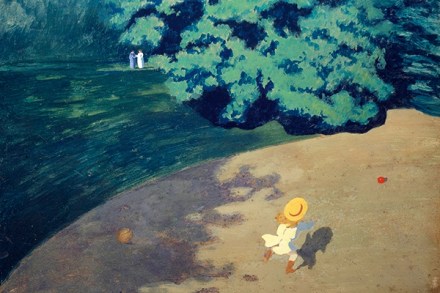
Félix Vallotton (1865–1925) was a member of the Nabis (the Prophets), a problematically loose agglomeration of painters, inspired by Gauguin and Émile Bernard, the school of Pont-Aven. Broadly speaking, this entailed an alleged allegiance to spirituality and anti-naturalistic flat colour. The Nabis — a secret group moniker —were heterogeneous, a broad church that seldom sang from the same hymn sheet. As we can see from Vallotton’s inadvertently emblematic ‘The Five Painters’ (1902–3): Vallotton stands to the left and Ker-Xavier Roussel stands to the right. Below, seated, are Bonnard, Vuillard and Charles Cottet.  Like many group paintings, it is an identity parade of posed and wooden mugshots. It is formally incoherent.

Strokes of genius

Exhibitions

In 1965 a journalist asked Paula Rego why she painted. ‘To give a face to fear,’ she replied (those were the days of the Salazar dictatorship in Portugal). But when asked the same question shortly afterwards, Rego added a qualification: ‘There’s more to it than that: I paint because I can’t stop painting.’ Rego has carried on making pictures ever since and the results can be seen in a remarkable exhibition, Obedience and Defiance, curated by Catherine Lampert at the MK Gallery, Milton Keynes. This is not quite a career retrospective — Rego will get one of those at Tate Britain in 2021. But it is the first time that I have seen so much of her life’s work laid out consecutively in one place. The effect is truly powerful.

Double diamond | 13 June 2019

Exhibitions

‘It is no easier to make a good painting,’ wrote Vincent van Gogh to his brother Theo, than it is ‘to find a diamond or a pearl.’ He was quite correct. Truly marvellous pictures are extremely rare. To make one, Vincent went on, you have to ‘stake your life’ (as he, indeed, was doing). Well, there is just such a jewel of a painting — only one by my count — in Francis Bacon: Couplings, an exhibition at Gagosian, 20 Grosvenor Hill. In some cases, the title of the show is literal. Several pictures depict two naked men in a ferocious sexual tangle. As a subject, this is perhaps still slightly daring today; it would have been astonishingly outré in 1953 when Bacon produced this dark masterpiece, ‘Two Figures’.

The possibilities of paint

Exhibitions

‘The possibilities of paint,’ Frank Bowling has observed, ‘are endless.’ The superb career retrospective of his work at Tate Britain demonstrates as no words could that he is correct, and that the obituaries of this perennial medium — so often declared moribund or defunct — are completely wrong. This presents more than half a century’s virtuoso exploration of what pigment on canvas can achieve. After his first decade of work, Bowling (born 1934) became what is called an abstract artist. But that is a vague and unsatisfactory category. His early, figurative pictures such as ‘Cover Girl’ (1966) could be labelled ‘pop’.

Our flexible friend

Exhibitions

Plastics — even venerable, historically eloquent plastics — hardly draw the eye. As this show’s insightful accompanying publication (a snip at £3) would have it, ‘Plastics have no intrinsic form or texture, thus they are not materials that can be true to themselves.’ They exist within inverted commas. They can be shell-like, horn-like, stony, metallic — they do not really exist on their own behalf. Mind you, the first vitrine in Raw Materials: Plastics at the Nunnery Gallery in east London contains an object of rare beauty: a small, mottled, crazed, discoloured sphere that looks for all the world like the planet Venus, reduced to handy scale. It’s a billiard ball, made of the first plastic: cellulose nitrate.

Memories, dreams, reflections | 23 May 2019

Exhibitions

This mesmerising retrospective takes up three floors of the City Art Centre, moving in distinct stages from the reedy flanks of the Pentland Hills through fractured half-views of Venice and Scotland and into fresh, twilit forests. Mirrors and windows reflect and refract, rigid faces stare from the shadows, animals flit and bare branches twist. It’s 50 years of painting, and half a century of observing, finding, losing and remembering. Victoria Crowe, born in England but long since adopted by Scotland, is one of our more distinguished painters. She is a respected portraitist but it is her other work that dominates this show, and rightly so. We see the trajectories of an inner life expressed through these paintings.

Double vision | 16 May 2019

Exhibitions

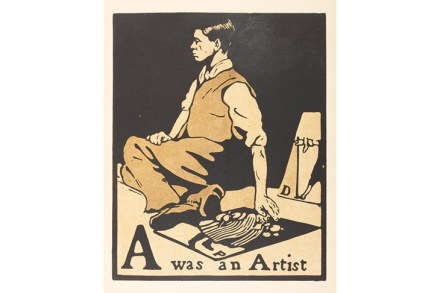
The best double acts — Laurel and Hardy, Gilbert & George, Rodgers and Hart — are often made up of two quite different personalities. So it was with the painters William Nicholson and James Pryde, who worked together under the names of J. & W. Beggarstaff. Their similarities and dissimilarities are the subject of a highly entertaining exhibition at the Fitzwilliam Museum, Cambridge. Nicholson (1872–1949) and Pryde (1866–1941) are sometimes dubbed the ‘Beggarstaff brothers’. They weren’t really siblings, but they were brothers-in-law. At the age of 21, in 1893, Nicholson eloped to Ruislip with Pryde’s sister Mabel.

The write stuff | 9 May 2019

Exhibitions

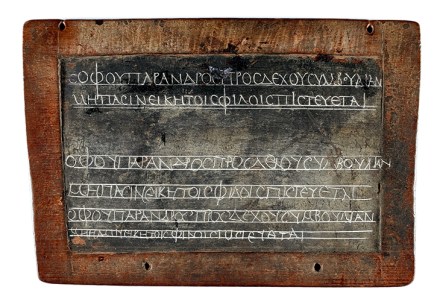
The Mesopotamians wrote on clay and the ancient Chinese on ox bones and turtle shells. In Egypt, in about 1,800 BC, someone even found the space to scrawl on a portable sandstone sphinx. Look closely towards the base of the sculpture and you will find a delicate line drawing of an ox head. Remarkably, this picture reveals the origins of the letter ‘A’. At the first stage in its development, the ox was simplified, so that an engraver could express it with just a couple of lines. An Egyptian seal stone shows the animal’s head in abstract form. Next, the shape was flipped 90º, so that by the time the Greeks had adopted the Phoenician system of writing, in the 8th century BC, it was recognisably an ‘A’.

Let there be light | 2 May 2019

Exhibitions

Henry Moore was, it seems, one of the most notable fresh-air fiends in art history. Not only did he prefer to carve stone outside — working in his studio felt like being in ‘prison’ — but he felt the sculpture came out better that way too, in natural light. What’s more, he believed that the finished works looked at their best in the open air. This last idea is tested in a new exhibition, Henry Moore at Houghton Hall: Nature and Inspiration — and it turns out that the artist was absolutely right. This — the latest in an enterprising series of shows at this north Norfolk mansion — is a focused selection, not a massive retrospective. Nonetheless, it prompts several unexpected conclusions.

Line dance

Exhibitions

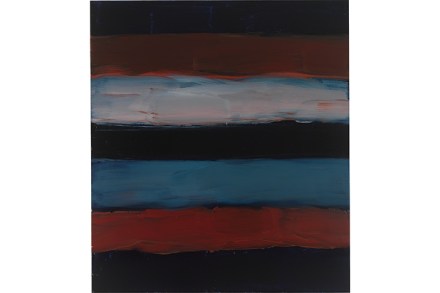
Sean Scully once told me about his early days as a plasterer’s mate. At the age of 17 he was helping a craftsman who would often accidentally drop a good deal of plaster on his youthful assistant’s head, especially after a midday break in the pub. Scully spent his own lunchtimes differently. He would roar on his scooter to the Tate Gallery, and spend the time staring at a single picture: ‘The Chair’ by Vincent van Gogh. That picture is one of two reference points in Sea Star, his beautiful exhibition at the National Gallery. Scully pays homage to it in two groups of three paintings, entitled ‘Arles Abend Vincent’ and ‘Arles Abend Deep’.

The art of repetition

Exhibitions

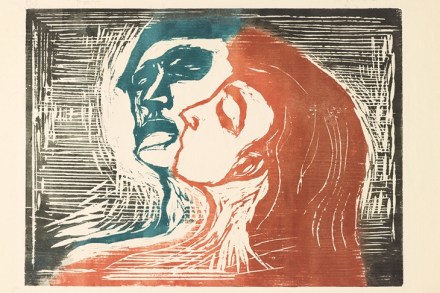
An eyewitness described Edvard Munch supervising the print of a colour lithograph in 1896. He stood in front of the stones on which the head of a masterpiece was drawn. He then closed his eyes tightly, stabbed the air with his finger, and gave his instructions. ‘Print... grey, green, blue, brown.’ Then he opened his eyes and remarked, ‘Now it’s time for a glass of schnapps.’ The whole performance, including the air of melodrama and that shot of spirits, was highly characteristic. The resulting colour lithograph, ‘The Sick Child’, is one of the artist’s masterpieces. It is on show in Edvard Munch: Love and Angst at the British Museum — an exhibition that attempts to do two jobs, and succeeds in doing one better than the other.

Capital punishment

Exhibitions

Is now a good time to talk about Jews and money? The Jewish Museum in London thinks so, and perhaps it is right. Motifs of Jewish financial chicanery that have never really gone away are back. The internet age has allowed memes about Rothschilds, rootless financiers and other thinly veiled claims of Jewish duplicity to thrive as they haven’t for several generations. A film at the start of this new exhibition at the museum in Camden gives some context, with clips of recent anti-Jewish statements from the likes of Louis Farrakhan and other conspiracy theorists. It also includes Donald Trump talking about ‘elites’ draining power from America, which strikes me as an unfair overclaim about what the contents of this poisonous cauldron really are.

England, their England | 28 March 2019

Exhibitions

All good narrative painting contains an element of allegory, but most artists don’t go looking for it on a Coventry council estate — unless, that is, they happen to come from there. Since starting his Scenes from the Passion series while at the Royal College in the 1990s, George Shaw has been painting the Tile Hill estate where he grew up. In 20 years he has produced 200 images of the same square mile, revisiting the pubs, library and short cut to the shops of his youth, winkling out the Englishness of the place while lamenting the decline of its fabric and post-war community spirit. Tile Hill is Shaw’s Cookham, imbued by this former Catholic schoolboy with an English mysticism more covert and far less cosy than Spencer’s.

The shock of the nude

Exhibitions

Early in the 16th century, Fra Bartolomeo painted an altarpiece of St Sebastian for the church of San Marco in Florence. Though stuck full of arrows, the martyr was, according to Vasari, distinctly good-looking in this picture: ‘sweet in countenance, and likewise executed with corresponding beauty of person’. By and by the friars of San Marco discovered through the confessional that this image was giving rise to ‘light and evil thoughts’ among women in the congregation. It was removed and eventually sold to the King of France (who was presumably less bothered by that sort of thing). So even during the heyday of Michelangelo and Raphael depictions of human bodies without any clothes were not necessarily all about art.

Dream on | 14 March 2019

Exhibitions

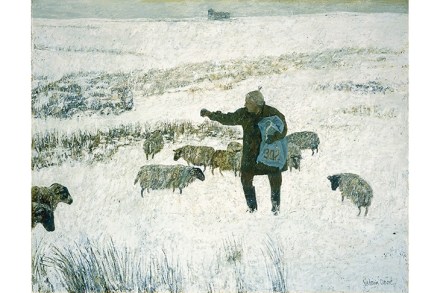
Art movements come and go but surrealism, in one form or another, has always been with us. Centuries before Freud’s scientific observation that the stuff of dreams will out, artists were painting it. The English have never been much cop at surrealism — too buttoned up; the Celts are better. The Scottish painters Alan Davie and John Bellany, jointly celebrated in Newport Street Gallery’s latest show, Cradle of Magic, were both surrealists in different ways. Both attended Edinburgh College of Art — Davie in the late 1930s, Bellany in the early 1960s — and both came out fighting in a punchy style of painting combining expressionistic brushwork with strong colour.

Privates on parade | 28 February 2019

Exhibitions

‘Those who can, do; those who can’t, teach.’ If there’s an exception to prove Shaw’s rule, it’s Phyllida Barlow. The 40 years the sculptor spent teaching at the Slade, where her pupils included Rachel Whiteread, have not only left her creative energies intact, but completely failed to keep a lid on them. After turning Tate Britain’s Duveen Galleries into a cross between a lumberyard and an enchanted forest in 2014, then filling the British Pavilion to bursting point at the 2017 Venice Biennale, the septuagenarian who can conjure a sculptural wonderland from the contents of your local branch of Travis Perkins has been let loose on the Royal Academy’s Gabrielle Jungels-Winkler Galleries. Unusually for Barlow, it’s not a jungle in there.

Small wonders | 21 February 2019

Exhibitions

When Henry VIII died in 1547, he left a religiously divided country to a young iconoclast who erased a large part of its visual culture. In a brief six years the government of Edward VI effectively whitewashed over England’s native heritage of sacred art, leaving a country already reliant on foreign painters for its royal portraits bereft of an artistic identity. Artistically speaking, Tudor England was the sick man of Europe — and the signs of recovery, when they first appeared, were tiny. Nicholas Hilliard, born in the year of Henry VIII’s death, paradoxically owed his art education to his family’s Protestantism.

Art and life

Exhibitions

Diane Arbus saw mid-20th century New York as if she was in a waking dream. Or at least that is the impression you get from the exhibition of her early photographs at the Hayward Gallery. She was attracted to people on the margins of society — or, as she roundly called them, ‘freaks’: fairground performers, assorted human oddities and individuals with non-standard bodies such as ‘Miss Makrina, a Russian Midget, in her Kitchen NYC’ (1959). Arbus famously observed of such individuals: ‘They’ve already passed their test in life. They’re aristocrats.’ However, Arbus could make just about anybody — or thing — appear unaccountably strange.

Lines of enquiry

Exhibitions

A cataclysmic storm is unfolding. Dense, thunderous lines of black chalk sweep rapidly around the paper in frantic curls of awesome energy. Rocks tumble beneath the irresistible force of an engulfing flood. Cloud and rain, vapour and water, both churned by the same punishing vortexes, become almost indistinguishable. The scale is hard to judge until you glimpse, in the foreground, a hilltop fortress, dwarfed and ruined by the relentless inundation. Man and his monument, both powerless in the face of almighty nature. It’s a terrifying scene of chaos and one that Leonardo da Vinci revisited numerous times in his final years. Facing his own mortality, he produced a series of these intense, obscure drawings in which he imagined an apocalyptic storm obliterating the landscape.

Maps of the mind

Exhibitions

MacDonald ‘Max’ Gill (1884–1947) is less well known than his notorious brother, Eric. But was he less of a designer, less of an artist? The son of a Brighton clergyman, his career was built on a sequence of remarkable connections. The architect Halsey Ricardo, a descendant of the economist, was his tutor. While working for church builders Nicholson and Corlette, Gill very likely met Edwin Lutyens at the Art Workers’ Guild. And for Nashdom, the neo-Georgian house Lutyens built in 1909 for Prince Dolgorouki at Burnham in Buckinghamshire, Gill drew an imaginative ‘Wind Map’. Somewhere between illustration and cartography, this was a pointer of what was soon to come from his pen and brush.

Brightness falls

Exhibitions

The little-known painter Cyril Mann (1911-80) saw a lot from his council-flat window. Beyond the parks and trees and red-brick houses was St Paul’s, rising triumphantly through the haze. Mann, who grew up in Nottingham and trained at the Royal Academy in the 1930s, had painted the bombsites around Spitalfields and the streets of postwar London when he finally turned his hand in 1961 to the view from his Finsbury tenement block. The resulting painting was exceptional. He captured the cathedral in the distance with such a swift brush that it seems almost to dance on the horizon. The optimism Mann clearly found in the city skyline reflected his own change in circumstances as much as those of Britain.

The odd couple | 31 January 2019

Exhibitions

The joint exhibition of Michelangelo Buonarroti and Bill Viola at the Royal Academy is, at first glance, an extremely improbable double act. Viola is one of the contemporary-art stars of the later 20th and early 21st centuries. He was one of the first to achieve fame in the new medium of video art, and is still its best-known exponent. While Michelangelo, as they say in showbusiness, needs no introduction. But there’s more to this bromance, across eras and continents, between a 16th-century Florentine and a contemporary Californian than might immediately be apparent. The more you think about the pairing, and follow the argument of the curator Martin Clayton, the more analogies between the two appear.

Remembrance of things past | 24 January 2019

Exhibitions

An attendant at an art gallery in France once apprehended a little old vandal, or so the story goes. He had smuggled in a palette, paints and brushes under his coat and was trying to alter one of the exhibits — a picture by Pierre Bonnard. On further questioning, it turned out that the elderly vandal was none other than Bonnard himself. Though the work in question had been ‘finished’ years before, he just couldn’t leave it alone. Bonnard (1867–1947) was a master of indecision, as a glance at just about any picture in Tate Modern’s new exhibition The Colour of Memory reveals. There are no straight lines or clear divisions in his work. Even items you might expect to be sharp —such as window frames — turn out, on closer inspection, to waver.

Fine prints

Exhibitions

Artists’ prints have been around for almost as long as the printed book. Indeed, they have similar origins in Gutenberg’s invention of the printing press and the boom in book and paper production that followed. Consequently, although the art dealer Bernard Jacobson has been around for quite a while — his gallery celebrated its 50th anniversary this year — and began as a print publisher, he arrived on the scene rather too late to have acted for Albrecht Dürer in person. Nonetheless, and for good reasons, it is with Dürer that he begins his current exhibition, Prints I wish I had published. Dürer was the first great artist to achieve fame by selling multiple editions of engravings and woodcuts rather than unique pictures.

Relative values | 10 January 2019

Exhibitions

When he knew that he was dying, Thomas Gainsborough selected an unfinished painting from some years before and set it on the easel in his studio. It was a portrait of his nephew, pupil and assistant Gainsborough Dupont, begun more than a decade earlier and set aside. This little work, which he seems to have intended as a sort of artistic last testament, also hangs at the end of the exhibition Gainsborough’s Family Album. What did he mean to tell us by making a small, intimate picture of a relative the conclusion to a career of more than 40 years? This marvellous and brilliantly conceived exhibition at the National Portrait Gallery supplies plenty of clues. Firstly, it was doubtless significant that the picture on display after his death was of someone close.

Comic genius

Exhibitions

For the hundredth, possibly the thousandth, time, Lucy van Pelt offers to hold the football for Charlie Brown so he can kick it. She cajoles him with the innocence of her eyes. He falls for it; he falls for it every time. Lucy, as she always does, whips the ball away. Charlie loops into the air and crashes to the ground. ‘What you have learned here today, Charlie Brown,’ she explains, ‘will be of immeasurable value to you for many years to come.’ Lucy is a cynic, a sadist, a huckster, a realist. Nevertheless, she would be right but for the fact that nothing is ever of ‘immeasurable value’ to Charlie Brown. He is too battered by life to be an idealist but he clings to hope, to the possibility that there is justice somewhere in the cosmos.

Get your skates on

Exhibitions

In landscape terms, the Fens don’t have much going for them. What you can say for them, though, is that they’re flat — a selling point for lovers of flat racing. This aspect was not lost on James I when, while out hunting in 1605, he came across the village of Newmarket, and 60 years later his grandson Charles II, who inherited the Stuart love of the sport of kings, would build a palace and stables in the Suffolk village. Today the remains of Palace House and the King’s Yard are home to the National Heritage Centre for Horseracing & Sporting Art, which houses a world-class collection of sporting art by Stubbs, Landseer, Munnings and Skeaping. But its latest exhibition focuses on a sport with a more surprising Stuart connection — skating.

Hunter, scholar, boaster, dreamer

Exhibitions

The Assyrians placed sculptures of winged human-headed bulls (lamassus) at the entrances to their capital at Nineveh, in modern Mosul, to ward off evil. The mighty lamassu to the right of the Nergal Gate had been on guard for some 2,700 years when Isis vandals took a drill to it in 2015 and blew away its face. Today a copy, crafted out of date syrup cans, stands on the Fourth Plinth in Trafalgar Square. It wears the oblong beard and proud look of the Assyrian kings. The original sculpture dated to the time of Sennacherib, who ruled Assyria from 705 to 681 BC, and transformed Nineveh into a magnificent metropolis. No stranger himself to violent desecration, he made his eldest son king of Babylon, but went on the rampage when the Babylonians rebelled and had the ruler dispatched.