Culture

Culture

The good, the bad and the ugly in books, exhibitions, cinema, TV, dance, music, podcasts and theatre.

The beast in man

Exhibitions

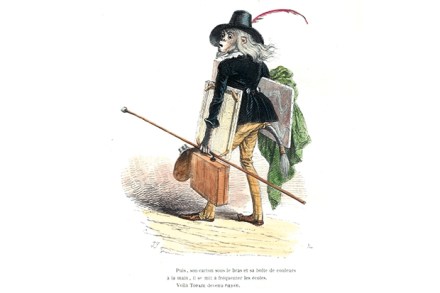
Ernest Hemingway loved going to the zoo, but not on Sundays. The reason, he explained, was that, ‘I don’t like to see the people making fun of the animals, when it should be the other way around.’ He would probably have enjoyed Animality, an entertaining exhibition at Marian Goodman Gallery, Lower John St, W1. It contains quite a few jokes, but generally the laugh is on Homo sapiens. The humour tends to comes from an age-old ploy: birds, reptiles and mammals wearing clothes. It was the basis, for example, of many works by the caricaturist J.J. Grandville of cats, bears and other such fauna dressed up as early 19th-century French citizens.

Serious concerns

Exhibitions

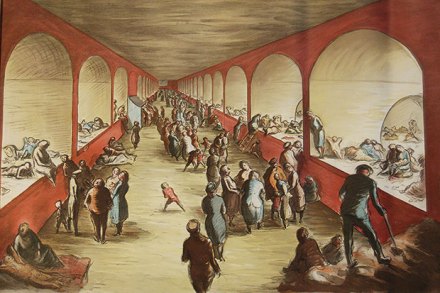
It’s funny, isn’t it, how a dust jacket on a book can draw you to it from the other end of a room — always supposing the illustration is by Edward Ardizzone. In fact, is there anything more suggestive of delight than a book illustrated by him? It’s the Midas touch even for unprepossessing authors. The exhibition of his work at the House of Illustration finishes off with a wall lined with them: The Little Grey Men, Jim at the Corner, Italian Peepshow, Johnny’s Bad Day, Eleanor Farjeon’s Book... you’ll recognise lots.

Order, order | 10 November 2016

Exhibitions

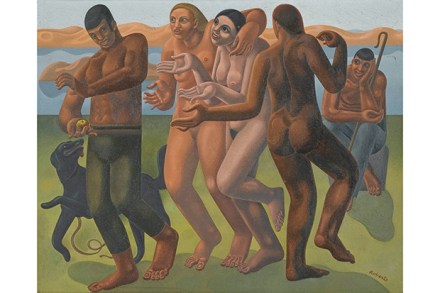
The catalogue to Pallant House Gallery’s latest exhibition features a favourite anecdote. It is 1924 and a competition is being held to find the woman with the most pleasing vital statistics. As a paradigm, the judges choose the Venus de Milo. Thousands of women queue up to find out whether their measurements — not only bust, waist and hips, but thighs, calves, neck, wrists even —approximate closely enough to those of the ancient sculpture to earn them the prize of £5. No one thinks to mention that the Venus is missing both arms. Classical myth was all the rage after the first world war. When the world felt like chaos, it was only logical to go back to the beginning.

Enigma variations | 3 November 2016

Exhibitions

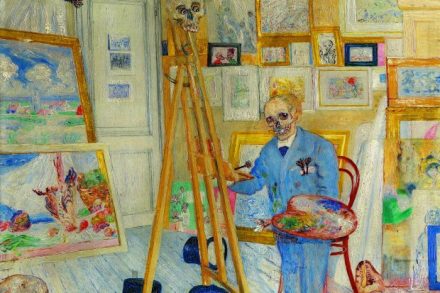
On 2 August 1933 one of the more improbable meetings of the 20th century took place when Albert Einstein had lunch with James Ensor. Apparently, Einstein attempted to explain his theory of relativity to Ensor, who doesn’t seem to have understood it. That evening the painter gave a speech, entitled ‘Ensor to Einstein’, ending with a sort of apology. Painters, he exclaimed — ‘alas and alack!’ — were slaves to vision and resistant to ‘positive reason, to calculations, to probabilities’. However, Intrigue: James Ensor by Luc Tuymans at the Royal Academy is an exhibition that is subject to the principle of relativity.

Halloween hire

Exhibitions

To use a vulgar phrase, I can’t get my head around this exhibition. It seems anything but ‘vulgar’. Daintily laid out and dimly lit in the gloomier cloisters of Fortress Barbican is a series of dresses — the chaps hardly get a look-in, save for some of those white-knee-britched, jaboty, gold-laced-coat get-ups that people like Philip Green struggle into for their fancy-dress parties — some ancient, some modern, a lot very pretty, a few laughably ludicrous; anyone wanting a frightening clown costume for Halloween will find inspiration here. The clothes are, for the most part, exquisitely made. Many are elegant, and several supremely extravagant; however, the organisers of the exhibition seem to be trying to lump them all into the ‘vulgar’ basket.

Romantic modern

Exhibitions

In 1932 Paul Nash posed the question, is it possible to ‘go modern’ and still ‘be British?’ — a conundrum that still perplexes the national consciousness more than 80 years later. It is true that the artist himself answered that query with an emphatic ‘yes’. But, as the fine exhibition at Tate Britain makes clear, his modernism was deeply traditional. The truth is that Nash (1889–1946) was what the author Alexandra Harris has termed a ‘romantic modern’. In other words, his art was a characteristic Anglo-Saxon attempt to have things both ways. Equally typically, he managed to do so — but only some of the time. Nash’s early drawings and watercolours, done in his early twenties, reveal his starting point.

Going Dutch | 27 October 2016

Exhibitions

In debates about what should and should not be taught in art school, the subject of survival skills almost never comes up. Yet the Dutch, who more or less invented the art market, were already aware of its importance in the 17th century. In his Introduction to the Academy of Painting (1678), Samuel van Hoogstraten included a chapter headed ‘How an Artist Should Conduct Himself in the Face of Fortune’s Blows’. Top of his casualty list of artists ‘murdered by poverty ...because of the one-sidedness of supposed art connoisseurs’ was the landscape painter and printmaker Hercules Segers (c.1589–1633).

Face time

Exhibitions

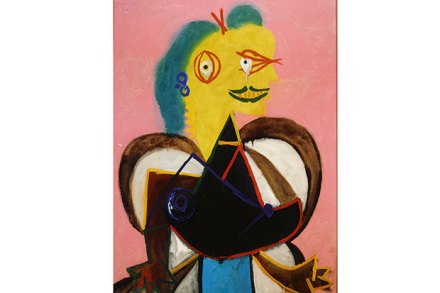
As a chat-up line it was at least unusual. On 8 January 1927, a 46-year-old man approached a young woman outside the Galeries Lafayette department store in Paris and announced, ‘You have an interesting face; I would like to do your portrait. I feel we are going to do great things together.’ The approach was successful, even though the woman in question, Marie-Thérèse Walter, was bewildered by his subsequent announcement, ‘I am Picasso!’, since she had never heard of the famous artist. Undeniably, great works did result from this chance meeting — as well as an intense affair, which lasted for years. Several are included in the splendid Picasso Portraits exhibition at the NPG.

Overshadowing all the rest

Exhibitions

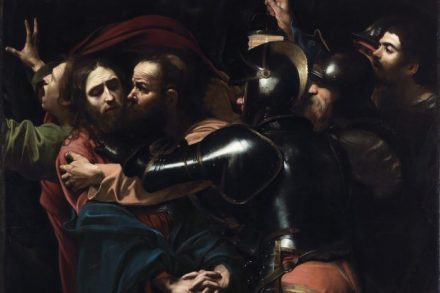
We don’t know what Caravaggio himself would have made of Beyond Caravaggio, the new exhibition at the National Gallery which is devoted to his own work and that of his numerous followers. But, by chance, we do have a very good idea what he would have said at least of one exhibit: ‘The Ecstasy of St Francis’ (1601) by Giovanni Baglione. Two years after this was painted, in 1603, Caravaggio stated in a disposition to a Roman court that he didn’t know of any other artist ‘who thinks Giovanni Baglione is a good painter’. Very few of Caravaggio’s own words survive, and those that do are mainly in the records of legal cases in which he was involved. But these are enough to give an idea of his demeanour.

All things bright and beautiful | 6 October 2016

Exhibitions

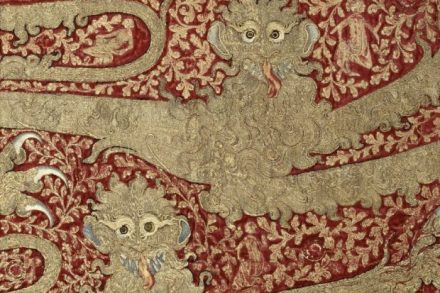
For much of the Middle Ages, especially from 1250–1350, ‘English work’ was enormously prized around Europe from Spain to Iceland. Popes took pains to acquire it; bishops coveted it; the quality was such that the remnants have ended up in the treasuries of Europe. London, especially the area around St Paul’s, was famous for its production. And what was English work? Embroidery, that’s what. Beautiful, costly, high-quality embroidered pieces, much of it using gold or silver thread, sometimes embellished with pearls and precious stones. Matthew Paris tells a story about Pope Innocent IV spotting some English bishops wearing lovely vestments and badgering them to find some of it for him, preferably for the lowest possible cost.

Food of love

Exhibitions

Modern Britain scratches its head over children who are overfed, not underfed, while guilt-ridden mothers stand accused of feeding children badly even if they are not obese. These are not insignificant troubles since childhood obesity is set to cost the NHS many millions in years to come. But as a new exhibition at the Foundling Museum in London will show, infant and child nutrition is not a new science and the challenge of nurturing, not least keeping children alive before the age of five, was taken just as seriously two centuries ago as it is now. Feeding the 400 is the first show at the museum, built on the site of the former Foundling Hospital (established in 1739, and closed in 1954), to examine how the many young boys and girls in the hospital were nourished.

Skinny dipping

Exhibitions

For a 21st-century gallery, a Victorian collection can be an embarrassment. Tate Modern got around the problem by offloading its Victoriana on to Tate Britain, but York Art Gallery decided to make the best of it. As the birthplace of William Etty, York found itself lumbered with a major collection of work by a minor Victorian artist whose reputation nosedived after his death. While Etty’s statue still dominates the gallery forecourt, most of his paintings languish in the stores. For contemporary audiences, though, he has a USP. An avid frequenter of the life room, Etty acquired a mastery of flesh tones and a penchant for painting nudes that many of his fellow Victorians regarded as pervy.

In the shadow of Picasso

Exhibitions

‘My painting is an act of decolonisation,’ declared Wifredo Lam. These are the first words you read on entering the retrospective of his work at Tate Modern. But I must say that both Lam and Tate got this statement 100 per cent back to front. On the contrary, Lam’s work strikes me as entirely a product of colonialism. It’s none the worse for that, but it’s not any better either. Lam (1902–1982) was originally from Cuba. His father, Enrique Lam-Yam, had emigrated from China and his mother, Ana Serafina, was of mixed African and Spanish descent. He was, in other words, a rather typical inhabitant of the new world. And the rich fusions of that milieu have produced such cultural wonders as Afro-Cuban music and, across the Gulf of Mexico in Louisiana, jazz.

Time to change the record

Exhibitions

Back in the high optimism of the 2008 presidential campaign, one of Barack Obama’s more extravagant hopes was that ‘the psychodrama of the baby boom generation’ would finally be left behind: that no longer would the kind of radical late-Sixties politics ‘hatched on a handful of college campuses long ago’ be seen by both its supporters and its opponents as the key to understanding more or less everything about modern life. Sadly, though, if Obama needs proof of how comprehensively this hope has been dashed, he need only head to the V&A — where, with the supporters firmly in charge, the whole story of how great the late Sixties were, how much they’ve shaped today’s world, and how much they still could (fingers crossed!

Recycling the avant-garde

Exhibitions

One overcast afternoon in late July I took a train to Norfolk. It seemed a good time and place to catch up on the state of the avant-garde. My goal was the British Art Show 8, currently spread over several venues in the centre of Norwich and due next month to move on to Southampton, the final resting-point on its slow progress around what remains, for the moment at least, the United Kingdom. Not having caught the exhibition at its previous stopping points, Leeds and Edinburgh, I thought this would be a suitable place to see it since Norwich is a town of art historical pedigree — home to Cotman, the Cromes and Michael Andrews.

Beauty and the banal

Exhibitions

In 1965 William Eggleston took the first colour photograph that, he felt, really succeeded. The location was outside a supermarket in Memphis, Tennessee; the time — to judge from the rich golden light and long shadows — late afternoon. Eggleston’s subject — a young man with a heavily slicked, early Elvis hairstyle stacking trolleys outside the shop — was as ordinary as he could be. But the result was a photographic masterpiece. It is included in the exhibition William Eggleston: Portraits at the National Portrait Gallery, although, by most definitions, it is not a portrait. Indeed, it is as hard to say just what it is as it is to explain exactly why it is so good. Actually, great pictures are often images of very commonplace sights.

First impressions | 21 July 2016

Exhibitions

The last boat I saw in the galleries on the Mound was a canoe that the Scottish painter Jock McFadyen had been using to explore viewpoints around the waterways of London. Now another vessel has sailed in, a full-scale recreation of the studio boat built in 1857 by the French painter Charles-François Daubigny, from the bow of which he ushered in the movement that would come to be known as impressionism. Daubigny, a now sorely neglected artist, established an entirely novel approach to landscape painting that was to influence Monet, Pissarro and Cézanne and also, quite explicitly, Van Gogh. Inspiring Impressionism has an admirably clear narrative and it places Daubigny back where he belongs, at the fulcrum of modern painting.

Privates on parade

Exhibitions

In 1927, Georgia O’Keeffe announced that she would like her next exhibition to be ‘so magnificently vulgar that all the people who have liked what I have been doing would stop speaking to me’. Perhaps, then, she would approve of the massive retrospective of her work at Tate Modern. This show is, as is frequently the case in the largest suites of galleries on Bankside, considerably too big for its subject. The scale, however, is a matter of institutional overkill. Its vulgarity, magnificent or otherwise, is supplied by O’Keeffe (1887–1986) herself — in a pared-down, high-modernist way. Resident for much of her long, long life in the New Mexican desert, she prided herself on her all-American toughness.

Echoes of Italy

Exhibitions

‘Hidden beauty is best (half seen), faces turned away.’ So noted a young English painter named Winifred Knights in 1924. Until recently, the power of her own work has been thoroughly concealed. After her death in 1947, indeed even before it, Knights was forgotten. By the 1950s her reputation had sunk so completely that both the Tate and the Fitzwilliam Museum refused to accept one of her masterpieces as a gift. However, artists who disappear into oblivion are sometimes rediscovered — and that is what has happened to Knights, who is now the subject of an admirable exhibition at Dulwich Picture Gallery. It is, as the cliché goes, a revelation. One of the things it reveals is how English painters continued to love the Italian Renaissance well into the modernist era.

Jumbled up

Exhibitions

‘In the end, nothing goes with anything,’ Lucian Freud remarked one afternoon years ago. ‘It’s your taste that puts things together.’ He would perhaps have been a little startled to find those words inscribed on the wall of Painters’ Paintings at the National Gallery, but they are very apt. The exhibition reassembles the works of art owned by a number of great painters, among them Van Dyck, Reynolds, Degas, Matisse and Freud himself. It begins with pictures and sculptures that used to co-exist in Lucian’s sitting-room. Most powerful of these is a magnificent Corot, ‘Italian Woman’ (c.1870), that once hung over his fireplace and is now part of the National Gallery’s collection.

Let’s talk about sex

Exhibitions

At one time, Damien Hirst was fond of remarking that art should deal with the Gauguin questions. Namely, ‘Where do we come from? What are we? Where are we going?’ Hirst would sum up with a deft shift from post-impressionism to Michael Caine: ‘What’s it all about, Alfie?’ The new exhibition of work by the American artist Jeff Koons at Hirst’s Newport Street Gallery might raise the same query in a visitor’s mind. Among other sights, you are confronted by a number of brand-new vacuum cleaners, mounted over neon lighting tubes; soon afterwards by a shiny blue sculpture, six metres high, representing a monkey made out of twisted balloons.

What lies beneath | 2 June 2016

Exhibitions

It was not so unusual for someone to turn into a god in Egypt. It happened to the Emperor Hadrian’s lover, a beautiful young man named Antinous, who was drowned in the Nile in the autumn of 130 AD. It was also the fate of Queen Arsinoë II, who had a complicated life. At the age of 15 she became wife to the 60-year-old ruler of Thrace. When he died in battle, she married her half-sibling, who murdered two of her sons. Her next husband was her full brother. A headless sculpture of Arsinoë stands about halfway around Sunken cities at the British Museum. It is, as a label rightly points out, an almost perfect fusion of Greek and Egyptian art. Arsinoë was represented as an incarnation of Aphrodite.

Punk turns 40

Exhibitions

There have been many punk exhibitions over the years so I can’t help but chuckle at the ‘experts’ who are getting hot under the collar about the ‘sacrilege’ of housing punk memorabilia in museums. Hasn’t it always been the case that anything considered culturally significant ends up in a ‘cultural establishment’ of sorts? Joe Corré, son of Dame Vivienne Westwood and Malcolm McLaren, is even threatening to burn his punk collection in protest. Really!! The experts I know, i.e. band members, don’t seem too bothered about it. In fact, many will be turning up to do Q&As at the British Library’s tasteful if limited Punk 1976–78 exhibition.

Close encounters | 19 May 2016

Exhibitions

A story John Piper liked to tell — and the one most told about him — is of a morning at Windsor presenting his watercolours of the castle to King George VI and the Queen. She admired his storm-tossed battlements; the King did not. ‘You seem to have had very bad luck with your weather, Mr Piper.’ If this was a criticism of the artist’s gloomy and gothic tendency, it was an unfair one. Mr Piper was very unlucky with his weather. In Caernarvonshire in 1945, on a sketching trip with two small children in tow, it never stopped drizzling.

Surreal, strange and scatological

Exhibitions

Why do we put one work of art beside another? For the most part museums and galleries tend to stick them on the wall as if they were butterflies or beetles, putting similar species together: an array of impressionist flowers, baroque altarpieces, pictures by a certain painter. But there are other ways to do it. Carambolages, a refreshing and highly entertaining exhibition at the Grand Palais, Paris, presents a dizzying diversity of stuff according to a quite different principle: namely, billiards. ‘Carambolage’ is a term that originates from the game of carambole, or French billiards, as once observed by Van Gogh and Gauguin in the Café de la Gare, Arles. It translates into English as ‘cannon’: hitting one ball so that it strikes two others.

Wings of desire

Exhibitions

Maria Sibylla Merian was a game old bird of entrepreneurial bent, with an overwhelming obsession with insects. Born in Frankfurt in 1647, she sacrificed her health and financial stability in pursuit of her passion. It carried her halfway across the globe and earned her lasting renown among a handful of cognoscenti. Merian was 15 when Jan Goedart published the first of his three volumes of Metamorphosis et historia naturalis insectorum and is unlikely to have seen the book until later. Goedart’s purpose, based on close observation of a range of insects, was a fuller understanding of insect life cycles. It was the same purpose to which Maria Merian devoted herself — even resorting to selling snakes, lizards, a tortoise and a crocodile to fund her compulsion.

Is it art or science?

Exhibitions

William Henry Fox Talbot had many accomplishments. He was Liberal MP for Chippenham; at Cambridge he won a prize for translating a passage from Macbeth into Greek verse. Over the years he published numerous articles in scholarly journals on subjects ranging from astronomy to botany. One thing he could not do, however, was draw well — and it was this inadequacy that changed the world. While on holiday in Italy in 1832, he became so frustrated by his failure to draw Lake Como satisfactorily using a pencil and a drawing aid known as the camera lucida — his efforts were well below GCSE art standard — that he resolved to find another way to preserve such views. The results are on show in an exhibition at the Science Museum, Fox Talbot: Dawn of the Photograph.

Picture books for grown-ups

Exhibitions

Art Spiegelman, the American cartoonist behind Maus, the celebrated Holocaust cartoon, dreamt up a good definition of graphic novels: comics you need a bookmark for. This jolly show about the British graphic novel takes an even broader approach. It begins with Hogarth’s 1731 series, ‘A Harlot’s Progress’, the tale of an ingénue in London who becomes a prostitute and dies of syphilis. You’d need an awfully big bookmark for the six original paintings in Hogarth’s series. But the point is well made — the idea of telling stories through a series of pictures has been around for a long time in Britain. Perhaps that’s why we’ve often denigrated cartoons and comics — we take them for granted.

A trip down Mammary Lane

Exhibitions

The V&A is selling £35 Agent Provocateur pants. This is, of course, a business deal because Agent Provocateur — along with Revlon — is sponsoring the museum’s new exhibition Undressed or, as I would have called it, if I were a curator with a gun to my head: Important Artefacts from the Ancient Kingdom of Boob; or A Trip Down Mammary Lane. The atmosphere is vague and vapid, for this is fashion-land, where anger, if it even exists, is buried deep. But no matter; this is what I am here for. I can now tell you that, in the 19th century, women wore cages on their legs (a metaphor?), and that most women in history panicked as to what to do with their boobs because they were the most interesting thing about them, and still are.