Culture

Culture

The good, the bad and the ugly in books, exhibitions, cinema, TV, dance, music, podcasts and theatre.

What became of Thomas Becket’s bones?

More from Books

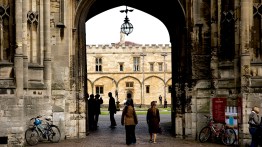
The St Brice’s Day Massacre? I must admit I hadn’t heard of this ‘most just extermination’ of Danes in Oxford at the instigation of King Aethelred the Unready in 1002, perhaps because the teaching of history in this country tends to kick off in 1066. You certainly don’t think of Oxford as a place that pioneered techniques of ethnic cleansing. Crypt is a collection of seven essays that unearth details about how certain people lived and died in the past. If you didn’t already know Alice Roberts’s background as an anatomist and biological anthropologist, you’d have a good chance of deducing it from this book.

An Oxford spy ring is finally uncovered

More from Books

Oxford and Cambridge have many rivalries, but espionage has always been a one-sided contest between the two. Burgess, Maclean, Philby, Blunt and Cairncross were all Cambridge men. If this were put in Boat Race terms, Cambridge would have rowed halfway to Hammersmith Bridge before the dark blues had their blades in the water. Charles Beaumont’s excellent A Spy Alone (Canelo, £9.99) tries to redress the imbalance with its depiction of a richly imagined Oxford-based spy ring. His protagonist, Simon Sharman, is a former agent turned private security consultant. An Oxford man, he is approached when a Russian oligarch decides to donate some of his millions to the university. Sharman is tasked with investigating just how dirty the money on offer is.

The remarkable Princess Gulbadan, flower of the Mughal court

More from Books

In 1587, the Mughal Emperor Akbar, himself illiterate but with grand vision and even greater ambition, commanded his courtier Abu’l-Fazl to write an official history of his reign and dynasty. An order went around Akbar’s court that anyone who was ‘gifted with the talent for writing history’ should put pen to paper and record the events that had shaped their times. Unusually for a male-dominated society, this included the emperor’s aunt. The 64-year-old Princess Gulbadan was well placed to provide a first-hand description of the creation and consolidation of the Mughal empire, for she was the beloved daughter of the Emperor Babur, who founded the dynasty, and the half-sister of Akbar’s father, Humayun.

Do we really want to bring back the wolf?

More from Books

Near our house on the Derbyshire-Staffordshire border is a place called Wolf Edge. It is a raven-haunted slope set to the sounds of curlew song in high spring and I visit it regularly, not least because I imagine that within the deep peat soil there is some remembrance of the site’s eponymous predator, and the thought thrills me. A similar emotion appears to have gripped Derek Gow, and has led him to locate, over several decades, as many references to British and Irish wolves as possible.

Four months adrift in the Pacific: a couple’s extraordinary feat of endurance

Lead book review

It is every writer’s dream to glimpse, peeping out from behind a news story or feature, the contours of a book. Brian Masters was eating his breakfast on 12 February 1983 when he read in the morning papers reports of the arrest of a mildly spoken Jobcentre employee accused of strangling a number of men with whose flesh he had blocked the drains in his flat in Muswell Hill. Masters wrote to Dennis Nilsen. Nilsen wrote back: ‘Dear Mr Masters, I pass the burden of my life on to your shoulders.’ After Nilsen had filled 50 prison notebooks, Masters embarked on Killing for Company, surely the grisliest yet most poignant biography of a serial killer ever written.

It feels somehow improper to witness an author groping for the right words

Lead book review

The early stages of a literary work are often of immense interest. It is perhaps a rather tawdry kind of interest, like paparazzi shots of a Hollywood starlet taking the bins out before she’s put her make-up on. Of course it’s extraordinary to think that some of the most famous characters, events and lines in literature weren’t as we now know them but had to be struggled towards. Sometimes these efforts have the anachronistic but unavoidable sense of somebody getting it wrong. Textual bibliographers have carefully classified the different steps a work takes from manuscript to first edition and subsequent versions. Perhaps we could go further in search of a writer’s progress.

The complexities of our colonial legacy

More from Books

It happened by accident. In 1829 the naturalist Nathaniel Bagshaw Ward was trying to hatch a moth pupa. He placed it in a sealed glass container, along with some soil and dried leaves, and set it aside. Sometime later he was surprised to find that a fern and some grass had taken root in the soil, despite having no water. As Sathnam Sanghera writes in Empireworld, the discovery ‘revolutionised the logistics of international plant transportation’. Suddenly there was a means of securely transporting seeds and seedlings across vast distances. Empireworld is a sequel to Sanghera’s wildly successful Empireland. Where the latter examined the legacies of empire in Britain, this book seeks to apply that template to the world.

Sisterly duty: The Painter’s Daughters, by Emily Howes, reviewed

More from Books

The painter in the title of Emily Howes’s first novel is Thomas Gainsborough, famous, of course, as a great portraitist – ‘the curs’d face business’, as he once called it – and landscape artist. His daughters by his wife Margaret were Molly and Peggy, immortalised in half a dozen double canvases by their father. These family pictures allow us to intrude upon the sisters’ special intimacy as we follow their development from carefree girls playing in their native Suffolk to their emergence as fashionable young women in Bath and London society.

Wishful thinking: Leaving, by Roxana Robinson, reviewed

More from Books

One evening, a man and a woman who haven’t met for decades bump into each other at the Metropolitan Opera in New York. It’s a familiar tale, but one to which Roxana Robinson brings many twists in her highly enjoyable latest novel, Leaving. Sarah and Warren were childhood sweethearts in a suburb outside Philadelphia. Sarah was uncertain, made biddable and cautious by cool, judgmental parents. Warren was bold and full of ambition and crazy-sounding dreams. They proved too much, too threatening, for the timid Sarah and she married a man she thought a safer bet. It turned out to be a mistake. Rob, who has electric blue eyes and an intimate manner, skitters from one improbable career to the next. They have two children, a boy, Josh, and a girl named Meg.

Will Keir Starmer ever learn to loosen up?

More from Books

Tom Baldwin declares at the outset: ‘It’s only fair to warn those hoping to find these pages spattered with blood that they will be disappointed.’ Fair enough. This is not an authorised biography, but it is a friendly one, written with Keir Starmer’s co-operation. Baldwin briefly worked as Labour’s communications director, and then was asked to help Starmer with his autobiography. They did several interviews, but Starmer always had reservations and finally pulled the plug last spring. Instead, he agreed that Baldwin could write this book, using some of the material he had already gathered, and that he would assist him with contacts.

There was nothing remotely pleasant about a peasant’s existence

More from Books

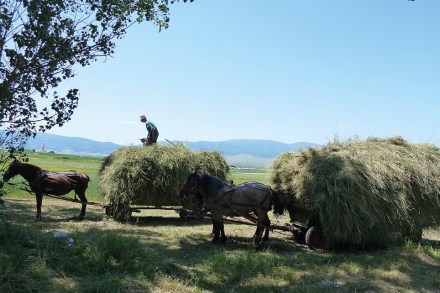
If we are to remember peasants, we need a definition. Here is an imperfect but workable one. A peasant is a person working on the land in return for a bare subsistence. Patrick Joyce’s peasants are smallholders making just enough to feed their families and pay the rent in a normal year. They are people without status, tied to the land even if they are legally free. They occupy the lowest place in society, people with no ambitions and no future, who come into the light of history only when they revolt against their condition, as they frequently do. Historically, there have been peasants who did not fit this mould. There were rich peasants, like the well-fed revellers in a Brueghel painting.

The making of Good Queen Bess

More from Books

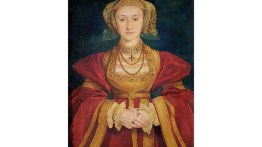
In the course of British history there have been few royals with a childhood as traumatic as that of Elizabeth I. She endured the torment of her mother Anne Boleyn’s execution, her father’s death, the comings and goings of four stepmothers, sexual abuse from a stepfather (who was executed soon after), the death of a half-brother, imprisonment and the death of a half-sister before finally acceding to the throne. All this by the age of 25. Throughout her young life, Elizabeth veered from sole inheritrix of the crown to hated bastard child Not many could cope with such a relentless identity crisis. Throughout her young life, Elizabeth veered from sole inheritrix to the crown to hated bastard child.

Reluctant servant of the Raj: Burma Sahib, by Paul Theroux, reviewed

More from Books

Eric Blair, to give George Orwell his baptismal name, arrived in Burma (present-day Myanmar) as a 19-year-old trainee police officer at the end of 1922 and left it in mid-1927 just before his 24th birthday. Not much of his time there had a direct impact on his work beyond a solitary novel, Burmese Days (1934), two luminous essays, ‘A Hanging’ (1931) and ‘Shooting an Elephant’ (1936), a poem or two and a scattering of autobiographical fragments, most of which turn up in the second half of The Road to Wigan Pier (1937). None of his letters home survives and only a handful of reminiscences by people who knew him as a servant of the Raj.

Four dangerous visionary writers

More from Books

‘The production of souls is more important than the production of tanks... And therefore I raise my glass to you, writers, the engineers of the human soul.’ The quote is usually attributed to Stalin, though the phrase ‘engineers of human souls’ most likely came from someone else. Who’s to argue? Purges, executions, deportations – what’s a little light plagiarism in comparison? Whoever coined the phrase, it certainly struck a chord and indeed continues to ring various alarm bells whenever one comes across writers who deliberately set out to influence politics and ideas – and not just the big beasts, the Nobel Prize winners, say, or the shopfront-filling non-fiction authors hawking their wares, or the endless novelists with their little axes to grind.

A mother-daughter love story

More from Books

In Splinters, the American novelist and essayist Leslie Jamison leaves behind the issue of her addiction and recovery – the subject of her previous memoir, The Recovering (2018) – and takes us through her pregnancy, experience of childbirth, marriage, divorce and post-separation dating life. Each stage of her journey is related with the author’s trademark love of the telling detail: On the postpartum ward my window ledge filled up with snacks from friends: graham crackers, cashews, cheddar cheese, coconut water, oranges with tiny green leaves. Someone hands her a form to fill out. ‘Did I want bone broth?’ We can assume she does, as bone broth appears later on. Much of Splinters recounts her marriage to the author Charles Bock – referred to throughout as ‘C’.

The firebrand preacher who put Martin Luther in the shade

More from Books

‘Now tell us, you miserable wretched sack of maggots,’ wrote Thomas Müntzer, sounding like the love child of Owen Jones and Ian Paisley, ‘who made you into a prince over the people whom God redeemed with his own precious blood?’ The question Müntzer posed Count Albrecht of Mansfeld was, you’d think, rhetorical. Like his contemporary Martin Luther, if less unremittingly scatological, the radical millenarian preacher wielded a sharp pen. Don’t forget Ezekiel’s prophecy, he wrote to Count Albrecht’s brother Ernst: ‘God would command the birds of the air to feast on the flesh of the princes and command the unthinking beasts to lap up the blood of the bigwigs.

After Queen Victoria, the flood

More from Books

Alwyn Turner writes early on that Little Englanders is ‘an attempt to take the temperature of the nation as it emerged from a century that had dominated the world and was beginning – whether it knew it or not – a long process of decline’. Perhaps for that reason, or perhaps because the high (and low) politics of the years from 1901 to 1914 – the Edwardian era continues for four years after the death of the eponymous sovereign, up to the lights going out all over Europe in August 1914 – have been so exhaustively covered in recent years, he tells his readers that he will draw heavily on popular literature, on the songs of the music hall and on the newspapers.

What do we mean when we say we are ‘giving up’?

More from Books

Oscar Nemon’s statue of Sigmund Freud at the Tavistock Clinic glares out with such a contemptuous look of superior knowledge that Freud’s housekeeper told him it made him look too angry. ‘But I am angry,’ replied Freud. ‘I am angry with humanity.’ Meanwhile, the cover image of Adam Phillips’s new book on psychoanalysis is a detail of a figure from Michelangelo’s ‘Last Judgment’, cast down to damnation, face in hand, his eyes wracked with fear and regret, his muscular ring finger grinding anxiously into his muscular forehead. If you didn’t recognise him from the Sistine Chapel you could imagine an angry Freud, not an impassive Christ, glaring at him just out of shot. Phillips, while he can possess a contemptuous glare, is at least not angry with humanity.

Lord Byron had many faults, but writing dull letters wasn’t one of them

Lead book review

In 1814, at the height of his fame, the poet, libertine and freedom fighter Lord Byron had his head examined. Not by a proto-psychiatrist but by the German phrenologist and physician Johann Spurzheim, who, after making a detailed study of the no doubt amused Byron’s cranium, pronounced the brain to be ‘very antithetical’ and said that it was an organ in which ‘good and evil are at perpetual war’. Two centuries after Byron’s death, this dichotomy is as pronounced as ever when it comes to analyses of the poet. His defenders point to his wit, his poetic genius, his heroic efforts in defence of Greek liberty and his personal flair; not for nothing has the word ‘Byronic’ entered the vocabulary as a largely admiring adjective.

Extremes of passion: What Will Survive of Us, by Howard Jacobson, reviewed

More from Books

There is not going gently into that good night, and then there is teetering into it on spiked-heel boots while strapped into a leather corset in search of clandestine kicks among like-minded fetishists. If it sounds an exhausting and chilly way to spend an evening, well, it is. At least, that’s how it feels to Sam Quaid, the middle-aged playwright who is beset by misgivings – he himself is dressed in ‘the more chicken-hearted guise of a fallen Quaker who had never seen the sun’ – but gamely determined to accompany his lover, Lily. Where is Sam’s obeisance going to lead him, or Lily?

Saviours of souls: the heroism of lifeboat crews

More from Books

Our summer holidays by the sea were the thrill of the year and the lifeboat was the thrill the holidays. Whissh-crack! went the maroon, sending the dauntless crew and their punchy little vessel off into the waves to save souls. The Royal National Lifeboat Institution has been doing this for 200 years. Mariners and all of us must hope it never stops, because its story is the best of us. In One Crew, Helen Doe, a maritime historian, writes the official history with verve and precision.

Heartbreak in the workplace: Green Dot, by Madeleine Gray, reviewed

More from Books

Hera, the heroine of Madeleine Gray’s first novel, is 24, which, as she says, ‘seems young to most people but not to people in their mid-twenties’. She lives in Sydney with her father and their dog and works as an online community moderator, but the contents of her work bag reveal her to be Bridget Jones’s edgier little sister: ‘My wallet, three pairs of underpants, headphones, nine tampons, a travel vibrator, two novels, a notebook, two beer caps, a bottle of sake and a fountain pen.’ She will also inevitably be compared to Hannah from Lena Dunham’s Girls and to Phoebe Waller-Bridge’s Fleabag. Gray’s writing style is droll but if Hera’s internal monologue sounds gauche and affected, it is useful to remember what the average 24-year-old sounds like.

Progressives vs. bigots: How I Won a Nobel Prize, by Julius Taranto, reviewed

More from Books

This is the kind of comic novel I greatly admire, because it makes me feel so anxious and wrong-footed. I laughed wholeheartedly until an inner voice chided, in a contradictory fashion, ‘that’s not supposed to be funny’ and ‘can’t you see it’s a joke?’ Given that the book is about that very modern set of dilemmas, my admiration for Julius Taranto’s work is even greater. The novel’s protagonist is Helen, a graduate student, who explains her field in the opening sentence: ‘The Rubin Institute had nothing to do with high-temperature superconductors, so I cannot say I had spent much time thinking about it.’ Her supervisor has been offered a position at the prestigious university, the catch being it is known colloquially as Rape Island.

Thugs in drape jackets: when the Teddy Boys ruled the roost

More from Books

In the wake of wars, youth cults spring up, those too young to have fought behaving in a way to scandalise those who did. The Bright Young People were the younger siblings of those who perished, battalion by battalion, on the Western Front. (Come to that, it was after the end of the Peloponnesian War that Socrates’s corruption of the youth became intolerable to Athens.) So when Max Décharné describes the Teddy Boys as Britain’s first youth counterculture, what he means is that they were Britain’s first working-class youth counterculture. The Notting Hill riots of 1958 were largely blamed on Teddy Boys, possibly incited by Oswald Mosley’s sons  Décharné sketches in the elements that made the Teddy Boys a phenomenon.

The perils of Prague: Parasol Against the Axe, by Helen Oyeyemi, reviewed

More from Books

An informal survey of friends, family, acquaintances and previous reviews suggests that the word most usually associated with Helen Oyeyemi’s fiction is ‘weird’. The author of eight novels has hardly shied away from unconventional storytelling, with books about everything from Brexit-through-biscuits (Gingerbread, 2019) to magical trains and a pet mongoose (Peaces, 2021). Her style is one of high and low: song lyrics jumbled up with references to medieval literature; nods to Shakespeare next to 1980s films. The result is either lauded – Oyeyemi was on the 2013 Granta list of best young novelists and her short story collection won a PEN award – or hated. In a TLS review, the novelist Claire Lowdon likened reading Peaces to ‘babysitting an over-indulged child’.