Culture

Culture

The good, the bad and the ugly in books, exhibitions, cinema, TV, dance, music, podcasts and theatre.

Coming in 2011: The Edge of Eden

Can nation building defeat terrorism? Jack Fairweather asks this question at the outset of The Edge of Eden, a history of the wars in Iraq and Afghanistan. Admittedly, the question is rhetorical – having been answered by all too evident failures and the high cost in blood – but that doesn’t lessen Fairweather’s impact.   Fairweather was the Telegraph’s Baghdad correspondent and the Washington Post’s man in Afghanistan; this books commits a decade of strategic and political errors made to posterity's record. The account is high-political: an antidote to the foot soldiers’ memoirs that have emerged in recent years.

Coming in 2011: The man who ate his boots

The history of British exploration is dominated by heroic failure. Robert Falcon Scott: defeated and died. George Mallory: probably defeated and died. Those two are the greatest, or at least the most famous of our imperial adventurers; the Victorian hero Captain Sir John Franklin is more obscure, though no less heroic. Prior to the construction of the Suez Canal, British seaborne commerce searched for a fast route to the East, preferably through the Arctic Circle. The hunt for the elusive Northwest Passage became a national obsession; the subject, even, of Coleridge’s Rhyme of the Ancient Mariner.  Expeditions became more frequent after the Napoleonic Wars. In 1845, the 59-year-old Franklin led a Royal Navy frigate in the most audicious attempt.

Ferdinand Mount’s and Philip Hensher’s books of the year

Ferdinand Mount: Mark Girouard’s Elizabethan Architecture is a prodigy book devoted to the Prodigy Houses, those fantastical mega-palaces which reared up out of the placid landscape in the brief, dazzling period of Elizabeth’s ending and James’s beginning: Longleat, Hardwick, Burghley, Castle Ashby, Wollaton and Montacute. The English built nothing so breathtaking before or after. The illustrations are lovely, and so is the text: crisp, authoritative, with a touch of mischief. This is a ripe example of the Girouardesque, a glorious slab of a book. Si monumentum requiris, perlege. Going to very cold places is the idealist’s last resort. David Vann’s losers escape into the snow and solitude without, of course, escaping themselves.

Sam Leith’s and Lewis Jones’ books of the year

Sam Leith: The book that I’ve found myself telling other people about most has been Through The Language Glass, Guy Deutscher’s gripping pop-science book about linguistics and neuropsychology, describing how language shapes our perception of reality. I also hope people look at the handsomely produced A Hedonist’s Guide to Art. I must confess an interest: I’ve contributed a couple of essays and it’s edited by a friend, Laura K. Jones. But it’s highly original, and stuffed with fascinating gobbets from contributors as diverse as Brian Sewell, Will Self, Gilbert & George and Genesis P. Orridge.

Cressida Connolly’s and Bevis Hillier’s books of the year

Cressida Connolly: Polly Samson’s new collection of short stories, Perfect Lives is terrific. Funny, beautifully observed and often poignant, they’re the best thing Samson has produced yet. Whether she’s recording the minutiae of modern marriage or the flora and fauna of a riverbank, this is a writer who misses nothing. The Collected Stories of Lydia Davis was a revelation. The stories sound ghastly: some of them are less than a page long, few characters are given names and Davis approaches her subjects sideways and in sudden scuttles, crablike. But the effect is quite brilliant — wry, original and wholly unsettling. I can’t think of a book it would be more of a pleasure to be given.

Good books don’t always see the light of day

Elizabeth Baines is a novelist, playwright and blogger. Her work can be found at www.elizabethbaines.com, and she blogs at http://elizabethbaines.blogspot.com and at the cutting http://fictionbitch.blogspot.com. Her first novel The Birth Machine has been reissued as it was originally intended; here she relates why. Christmas, a time for dreaming, and here, sure enough, are the Christmas books offering the dream that whatever your beginnings – East End boy selling TV aerials out of a van or anthropomorphized desert meerkat – with talent and determination you’ll succeed.

Charlotte Moore’s and Marcus Berkmann’s books of the year

Charlotte Moore: I revelled in David Kynaston’s Family Britain and am longing for the next instalment of this densely packed, non-judgmental social history of mid-20th-century Britain. Michael Frayn’s memoir My Father’s Fortune is exemplary; touching, funny, cleverly constructed and kind. I returned to Molly Keane’s Good Behaviour after 20 years and found it still perfect. Clara Claiborne Park, who died in July, was an American academic. The Siege, her book about life with her autistic daughter, diagnosed at a time when psychiatrists blamed autism on ‘refrigerator mothers’, was one of the earliest parental accounts, and remains one of the best.

Coming in 2011: Julian Barnes

Julian Barnes is fast challenging William Trevor as the modern master of the short story. Barnes’ second collection of short stories, The Lemon, delved into life’s complexities and he dives deeper with this latest collection, Pulse. Each character is attuned to a ‘pulse’ – an amalgamation of a life-force and an Aristotelian flaw. They struggle against or thrive upon the submerged currents of life – touched by ambition, sex, love, health, work and death.        Barnes’ range of time and place is impressive, veering from the domestic to the exotic, from the contemporary to the historical – unsurprising given his success with fictionalising history in Arthur and George.

A.N. Wilson’s and Anne Chisholm’s books of the year

A.N. Wilson: Stuart Kelly’s Scott-land: The Man Who Invented a Nation is a very engaging, highly intelligent conversation with its readers about what we owe to Walter Scott. His heritage is found not only in literature, but also in tourism, in the banking crisis (Kelly has some good things to say about The Letters of Malachi Malagrowther and their relevance to the crisis of 2008) and much more. The author is interested in everything, from Balmoral to the Wild West, from films to Hiawatha. I loved this book and heartily recommend it. To coincide with the anniversary of Tolstoy’s death, Rosamund Bartlett has written Tolstoy: A Russian Life.

Paul Johnson’s and David Sexton’s books of the year

Here is the second installment from the magazine. Paul Johnson: The book I relished most from 2010 was John Singer Sargent: Figures and Landscapes, 1883–1899. This is volume 5 in the catalogue raisonné being lovingly compiled by Richard Ormond and Elaine Kilmurray and published by Yale at £50. It contains a detailed account of Sargent’s greatest painting, ‘Carnation, Lily, Lily, Rose’, which took him two years, 1885–86, to complete and is now in the Tate. Also enjoyable was the latest instalment of The Collected Letters of Thomas and Jane Welsh Carlyle which covers the year October 1860–October 1861 and is volume 37 in this remarkable series — notable as always for the feisty letters of Jane.

Would I be a better novelist if I found my inner Trollope?

Columns

Some of you are going to be appalled that it has taken me till now to read Trollope’s Autobiography. And quite right too. If I’d read it in my mid-twenties instead of my mid-forties, I would have had two dozen novels under my belt by now instead of a measly five-and-a-half. And you would never have had to read a single column of mine complaining about how poor and underrated I am, because I wouldn’t be. By the time he was my age, Trollope was a household name and bringing in £4,500 a year. This is the rough equivalent of £675,000 today. How did he do it? By treating the business of writing not as an ‘art’ to get precious about but just another journeyman craft to be laboured at nine-to-five. Or, in Trollope’s case, 5.30 a.m.

Bookends: Self-help guide

More from Books

P. J. O’Rourke is what happens when America does Grumpy Old Men. P. J. O’Rourke is what happens when America does Grumpy Old Men. Instead of sour-faced curmudgeons bleating that ‘politics is just a load of crap’, you get a succession of amusing and incisive observations about why politics is a load of crap. And his solution is that we should stop looking for solutions — from politics, that is. For the real solution, we need to look in the mirror. In his latest book, Don’t Vote! It Just Encourages the Bastards (Grove/Atlantic, £16.99), O’Rourke’s humour is used to advance arguments (‘the government is taking a third of your pay ... is the government doing a third of your dishes?

Another form of segregation

More from Books

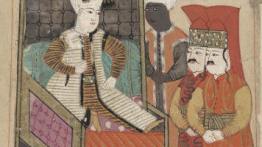
N.B. This review was published without its final two paragraphs in the 18th December 2010 issue of The Spectator. These paragraphs have been reinstated for the online version below. These volumes — four for now, and a further six to come — are saddled with a title redolent of lantern lectures delivered in Godalming, say, round about the time that Rorke’s Drift became legendary overnight. The Image of the Black suggests people, or things, of a certain stamp. Penny blacks, so to speak: picked out with tweezers, profiles raised, their blackness being their distinction, their black face value assessed within the swelling majesty of Western Art.

From red giant to white dwarf

More from Books

Richard Cohen, who was a publishing director of Hutchinson and Hodder before moving to New York where he now teaches Creative Writing, is the author of one previous book: By the Sword: Gladiators, Musketeers, Samurai, Swashbucklers and Olympic Champions (2002). This comprehensive history drew on his deep, personal knowledge of the subject, for Cohen was five times the British national sabre champion, selected for the Olympic team every time between 1972 and 1984. Its illustrations include a superb shot of the author flying through the air sideways, executing a ‘horizontal fleche’ against Dom Philip Jebb at Downside Abbey. Chasing the Sun is even more ambitious.

The wow factor

More from Books

‘Nothing succeeds like excess,’ quipped Oscar Wilde, and Franco Zeffirelli’s production of Aida at La Scala, Milan in 2006 bears him out: for sheer jaw-dropping, applause- garnering theatrical bling, I have never seen anything like it and I doubt I ever will. ‘Nothing succeeds like excess,’ quipped Oscar Wilde, and Franco Zeffirelli’s production of Aida at La Scala, Milan in 2006 bears him out: for sheer jaw-dropping, applause- garnering theatrical bling, I have never seen anything like it and I doubt I ever will. People talk of empty spectacle, but this was full, full to the brim, exploding with colour, glittering with gilt, and jam-packed with near-naked extras.

A right song and dance

More from Books

The first Broadway musical that I saw, a quarter of a century ago, actually on Broadway, wasn’t, of course, actually on Broadway; it was on West 44th Street. The first Broadway musical that I saw, a quarter of a century ago, actually on Broadway, wasn’t, of course, actually on Broadway; it was on West 44th Street. It was 42nd Street. The geography is confusing, but so is the history, and indeed the nomenclature. For 42nd Street was not, of course, a Broadway musical, but a musical film made in 1933, based on a novel about life backstage at a Broadway theatre, with staged setpieces — notably the title song — in Hollywood’s version of the style of Broadway musical theatre.

M. R. James’s dark world

More from Books

M. R. James died at peace with himself and the world. We can be reasonably confident in claiming that after reading about his last weeks, during which he was ill, tired, weak and bored but probably not in pain, and even more on learning what his sister Grace said of his final days. During the tedious weeks of illness a group of Monty’s closest friends had made him the present of ‘a radio- gramophone of the latest type’ and he had taken to it immediately. Grace wrote: The radiogram proved such a pleasure to him and I can see him now after dinner … listening so intently, with his pipe in his mouth and matches strewn around.

Exotica, erotica, esoterica . . .

More from Books

The humorist Paul Jennings suggested that book reviewers could be divided into five vowel-coded groups: batchers, betjers (‘Betjer I could have written this better than him/her’), bitchers, botchers and butchers. In this review of the year’s art books, I am primarily a batcher — dealing with several books at one go. But from time to time I shall take leave to be a bitcher, though not, I hope, a botcher or butcher. Two books stand out from the batch as absolute stars. Both are published by Prestel, a Munich-based publisher with tentacles in Berlin, London and New York. I am afraid either of the books will cost you £80, but they are value for money.

Mysteries and hauntings

More from Books

Javier Marias’s elegant new volume is a collection of ghost stories, but its alluring dust jacket, illustrating the first tale, shows us a sunny midsummer image of a woman in a bikini admiring herself on a beach. Javier Marias’s elegant new volume is a collection of ghost stories, but its alluring dust jacket, illustrating the first tale, shows us a sunny midsummer image of a woman in a bikini admiring herself on a beach. All is not as pleasant as at first it seems, of course, and we soon enter his characteristically darker world of voyeurism, jealousy, revenge, doppelgängers and crime passionel.

Lessons for life

More from Books

All modern biographies, one could say, are books of secrets; certainly all biographers during the past four decades have felt entitled to ferret around in their subject’s private as well as public lives. All modern biographies, one could say, are books of secrets; certainly all biographers during the past four decades have felt entitled to ferret around in their subject’s private as well as public lives. This development is routinely ascribed to the new frankness with which Michael Holroyd re-invented the genre in the late 1960s with his biography of Lytton Strachey, who had himself revitalised it 50 years earlier with his subversive portraits of Eminent Victorians.

A lore unto himself

More from Books

Barry Hills has never been an easy man to love but I don’t suppose he would have it any other way. Barry Hills has never been an easy man to love but I don’t suppose he would have it any other way. There are certain trainers who capture the public imagination and affection, but the same crowds who regularly dissolve into tears at the sight of a Henry Cecil winner would no more dream of intruding on Barry Hills than would a punter dare ignore a horse of his at the Chester May meeting. Respect, admiration, a certain wary apprehension, these are what ‘Mr Grumpy’ has always demanded of the world, and ‘hard’, ‘brave’, ‘professional’, ‘exacting’ and ‘combustible’ the terms in which he is most often described.

Bookends: Self help guide

Here is the latest Bookends column from this week's issue of the Spectator:   P. J. O’Rourke is what happens when America does Grumpy Old Men. Instead of sour-faced curmudgeons bleating that ‘politics is just a load of crap’, you get a succession of amusing and incisive observations about why politics is a load of crap. And his solution is that we should stop looking for solutions — from politics, that is. For the real solution, we need to look in the mirror. In his latest book, Don’t Vote! It Just Encourages the Bastards, O’Rourke’s humour is used to advance arguments (‘the government is taking a third of your pay ... is the government doing a third of your dishes?

Coming in 2011…

Sebastian Faulks examines the history of the English novel through its most enduring, though not endearing characters. Faulks on Fiction returns to BBC Two with a Peter Greenaway-inspired title The Hero, The Lover, The Snob and The Villain. Mr Darcy, Robinson Crusoe, Chanu and John Self are all subjected to a session of Faulks’ post-modern psychoanalysis; an exercise designed to clarify the opaque English character.

Franzen on Franzen’s dark inner torments

Judging by the critical reaction, Jonathan Franzen Freedom is a Marmite book. But, even those who love Franzen’s latest trip to the heart of America concede that The Corrections is a far superior book. The Corrections is a book of riveting scope, tempestuous depths and exact style: a convincing pretender to the title of ‘Greatest American Novel’. Franzen recognises that he may not surpass his earlier achievement. Much of what he has said in recent interviews has been, frankly, bland. His demeanour has not been wholly dissimilar to say, Jordan’s – I’ve a book to sell, let’s get on with it and kindly keep the banal questions to a minimum.

Anita Brookner, Justin Cartwright and Blair Worden’s books of the year

Our colleagues at the magazine have kindly allowed us to republish the books of the year columns. Here's the first installment. Anita Brooker Society is composed of two classes: the patrons and the patronised, and a change of status, the migration of the one to the other, is a subject well worth studying. Michel Houellebecq, misanthropist, Islamophobe, and rank outsider, performed this feat by winning the Prix Goncourt, France’s most prestigious literary award. Houellebecq is famous for his preoccupations, which are largely rancorous, yet his novel La carte et le territoire is mild, strangely addictive, but not without its subversive elements: Houellebecq himself features in it, ultimately as a headless corpse. Much of this is beyond parody.

Across the literary pages | 15 December 2010

Here is a brief selection of the best offerings from the world's literary pages: Whilst the chattering classes are reverberating to Jonathan Franzen’s Freedom, Jon Michaud of the New Yorker isn’t: ‘I breathed a sigh of relief and held up my hands like a distance runner breaking the tape. Though “Freedom” is sizable enough at 562 pages, it read to me like a much longer book. As I made my way through the final chapters, I began to feel like Walter Berglund, trapped in an unending marriage to this moody, depressive, Patty-like novel, while alluring, Lalitha-like books—“Unbroken,” “Room,” “Tinkers,” etc.—pressed themselves on me.

Any Christmas reading suggestions?

Christmas is coming, and the bookshelf is getting thin - so, any suggestions for Christmas reading? We are putting our Christmas Special to bed today, so your baristas at Coffee House would be grateful for any tips. I don't need to say that we're not after politics books. Coffee House is not simply a home for political wonks, and the brilliant suggestions last time I asked pointed me to all manner of treasures, old and new. So all suggestions welcome.

Bad boys for life

References to rap, hip-hop, bling and life in 'da hood' are a rare sight on literary pages. But, in his donnish but beery style, Will Self piloted through his love-hate affair with the genre in the Times recently. Decoded, a new book by one of the proponents of rap-as-literature, Jay Z, comes in for some head-patting, while the Guardian critically dissects the book. (You can read excerpts from Decoded here). The debate about lyrics as literature is timeless. Bob Dylan's verbal outpourings are usually cited as proof, none more so than by his most unlikely champion, Sir Christopher Ricks. Whether the men of letters are genuine or just wanting to get all down and happening with the yoof remains to be seen.