Gilbert Adair

His own best invention

From our UK edition

Just as it will sometimes happen that a critic feels obliged to preface a review with a declaration of interest, so I should now declare a lack of interest. Prior to being commissioned to review David Bellos’s heroically well-researched and hugely entertaining biography, I confess I had never managed to finish one of Romain Gary’s books. When I lived in Paris in the 1970s Gary was in fact my near neighbour.


Whine, whine, whine

From our UK edition

There came a moment, very early in my reading of the latest volume of Christopher Isherwood’s Diaries, when a spell was broken. The relevant entry, written at his beach home in Santa Monica, California, was dated 12 November 1960. And the single, throwaway notation which caused me to re-evaluate, I fear definitively, my admiration for Isherwood ran as follows: ‘Tonight I have to take the Mishimas out to supper.’ There came a moment, very early in my reading of the latest volume of Christopher Isherwood’s Diaries, when a spell was broken. The relevant entry, written at his beach home in Santa Monica, California, was dated 12 November 1960.

No body in the library

From our UK edition

The opening paragraph of Duchess of Death’s fourth chapter, in which its subject is about to have her first whodunit published, begins thus: The opening paragraph of Duchess of Death’s fourth chapter, in which its subject is about to have her first whodunit published, begins thus: September 25, 1919. John Lane was very pleased with himself as he leaned into the mirror over the sink in his bathroom and examined his beard. Using a small pair of manicure scissors, which he was barely able to handle with his too-chubby fingers, he snipped at a few stray hairs. And, four lines later in the same faux- finicky vein, the paragraph ends: ‘Yes, he was very pleased.

In and out of every dive

From our UK edition

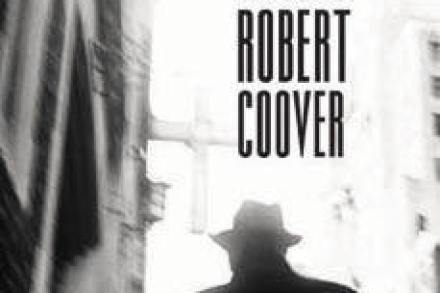
Robert Coover’s Noir is a graphic novel. Robert Coover’s Noir is a graphic novel. Not literally, in the contemporary sense in which the phrase is used to designate a highfalutin words-plus-pictures album; but figuratively, in that its language cannot help but be converted, in the reader’s inner eye, into a series of monochromatic images, images suggestive less of a film than of, precisely, the layout of some neo-noir comic-strip. Frank Miller’s Sin City, for instance. Like Miller, Coover pulverises the film noir aesthetic to a hallucinatory essence. In a conceit subsequent pasticheurs will find it hard to improve on, he actually has the nerve to name his private eye Philip M. Noir (‘M’ presumably standing for ‘Marlowe’).

A certain look

From our UK edition

Just as there are people who are their own worst enemies, so there are books that are their own worst reviews. Mark Griffin’s A Hundred or More Hidden Things, a new biography of the Hollywood film-maker Vincente Minnelli, is one such. No review could possibly be as damning as a verbatim reproduction of its irresistibly putrid pages. Minnelli’s achievement certainly does merit attention. In fact, for the auteurist critics of Cahiers du Cinéma, who argued that a film’s distinction derived primarily, even exclusively, from the degree to which it reflected its director’s own personal visual and thematic preoccupations, his was practically an open-and-shut case.

Cast a long shadow

From our UK edition

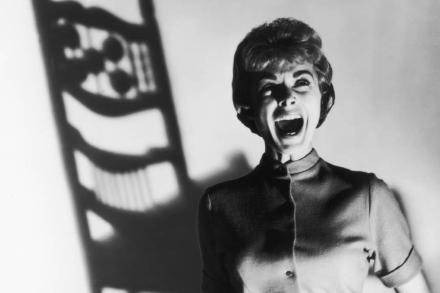
Many years ago I invited a young student of mine to see Psycho, a film of which she had never heard, made by a director (Hitchcock) with whose name she was unfamiliar and shot in a format (black-and-white) whose apparent old-fashionedness so mystifed her she wondered aloud why no one thought to complain to the projectionist. Yet, shrieking on cue at all the spooky moments, she ultimately admitted to having been so bowled over by the film that she asked what other Hitchcocks she ought to see. I recommended North by Northwest — only subsequently to learn, to my stupefaction, that she had found it boring. Boring? The most euphoria-inducing comedy thriller in cinema history? I asked her why. ‘Well,’ she replied. ‘I was under the impression he made horror movies.

Repeat that, repeat

From our UK edition

When the Louvre invited me to organise for the whole of November 2009 a series of conferences, exhibitions, public readings, concerts, film projections and the like on the subject of my choice, I did not hesitate for a second and proposed the list. Thus Umberto Eco on the genesis of this book, published simultaneously in Italian, French and English. Considering those parallel manifestations of the project, it was perhaps to be expected that this, its sole printed version, would be situated at the more ingratiatingly ludic end of the Eco spectrum. The Infinity of Lists is a work less of theory than of taxonomy.

The usual detectives

From our UK edition

That very title prompted in me a little Proustian epiphany. I was abruptly transported back to the mid-Fifties when, a swotty little creep, I would stow away my completed homework, switch on what we called the wireless and tune in to the Third Programme. For readers too young to have known that august institution, a typical evening’s edification might consist of, precisely, an illustrated lecture on detective fiction (although not, of course, by P. D. James — Jacques Barzun, perhaps, or Ronald Knox), sandwiched between a performance of Christopher Fry’s The Dark is Light Enough and a concert of Schütz motets. And nothing changed when I opened the book.

Going through the motions

From our UK edition

If book reviews in The Spectator were, God forbid, ‘starred’, this self-styled biography of James Bond would merit just two stars out of five. The rationale behind so mediocre a score, however, would not be, as you might expect, that Pearson’s book is a curate’s egg, good in parts. Rather, it would reflect the fact that, inept as it mostly is, it does contain a single good, even quite brilliant and, considering that it was first published in 1973, genuinely postmodern idea that rescues it from the zero rating it would otherwise receive. But since that idea is sprung on the reader two-thirds of the way through, and it would be horribly tricky reviewing the book without divulging the twist in its tail, I invite anyone intending to purchase it to look away now.

When murderers knew their place

From our UK edition

Was Agatha Christie a good writer? The American critic Edmund Wilson was one of the unhappy few who thought not. In 1944 he wrote a famous essay on Christie whose contentious (and contemptuous) tone can already be inferred from the rhetorical question which its title poses: ‘Who Cares Who Killed Roger Ackroyd?’. That title, in fact, could not have got it more hopelessly wrong. Surely Wilson was capable of understanding that, of course, nobody cares who killed Roger Ackroyd. That’s the point, for goodness’ sake! Agatha Christie irrelevant?