Peregrine Worsthorne

Peregrine Worsthorne was a journalist, author and broadcaster. He was editor of the Sunday Telegraph from 1986 to 1989. He famously wrote of his sacking in The Spectator: over lunch at Claridge’s with Andrew Knight, while eating his favourite dish of poached eggs.

What Washington was like during the Cuban Missile Crisis (2002)

From our UK edition

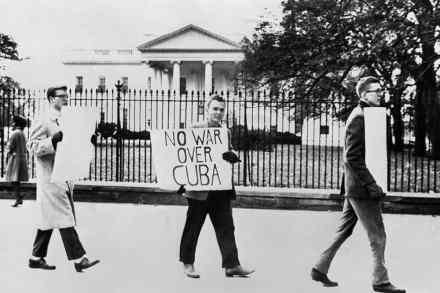
On 27 October 1962, US Defense Secretary Robert McNamara stepped out of crisis meetings and looked up at the sky. ‘I thought it was the last Saturday I would ever see,’ he recalled.  This month marks 60 years since the Cuban Missile Crisis. In 2002, Peregrine Worsthorne wrote about what it was like to be in Washington during humanity’s closest shave. Forty years ago the Americans won what I hope will be the nearest thing to nuclear war between superpowers — of which only one is left — ever fought; and the fact that they won it without firing a shot should not diminish but rather increase the extent of the victory. What I am referring to is known, of course, as the Cuban Missile Crisis, which is how it will go down in history.
Encounters with eight presidents

From our UK edition

Peregrine Worsthorne, the hugely distinguished British journalist, has died aged 96. He was a wonderful man and a brilliant columnist, who once described his job as ‘the articulation of an intelligent, well thought out, coherent set of prejudices’. He also worked as Washington correspondent for The Times and The Daily Telegraph. In 2014, he wrote the following piece about meeting various American presidents. It was his last contribution to The Spectator. RIP. I feel a bit of a fraud writing about the ‘presidents I knew’, since journalists do not really get to know the great figures they interview or shake hands with.

From the archives: Peregrine Worsthorne on Bush 41

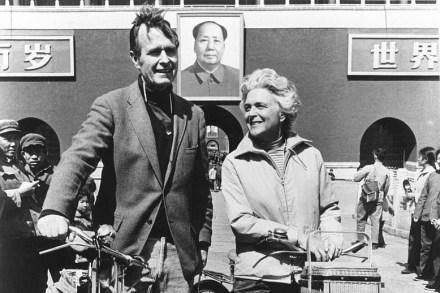
Four years ago, Peregrine Worsthorne wrote about his various experiences with American presidents forThe Spectator magazine. He concluded with this anecdote about George H.W. Bush from the mid-Seventies... The only thing I remember about George Bush senior was an exceptional act of kindness. He was then the American representative in Peking — as it was still called — and had asked me to lunch. It was a scorching day. In the course of the conversation I mentioned I was going on to sleep that night in Mao’s favorite village in the south, a place of pilgrimage for the faithful. ‘Don’t forget to take a good overcoat,’ he warned. ‘It’s mighty cold down there.

george h.w. bush 41

Encounters with eight presidents

Peregrine Worsthorne, the hugely distinguished British journalist, has died aged 96. He was a wonderful man and a brilliant columnist, who once described his job as 'the articulation of an intelligent, well thought out, coherent set of prejudices'. He also worked as Washington correspondent for The Times of London and the Daily Telegraph. In 2014, he wrote the following piece about meeting various American presidents. It was his last contribution to The Spectator. RIP. I feel a bit of a fraud writing about the ‘presidents I knew’, since journalists do not really get to know the great figures they interview or shake hands with. Indeed the relationship between journalist and great personage is about as false as any relationship can be, since each is trying to make use of the other.

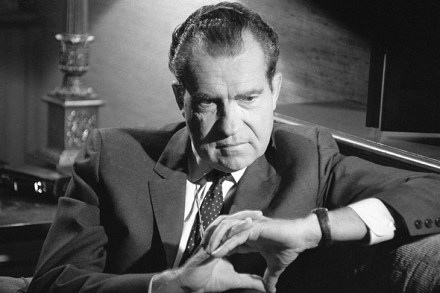
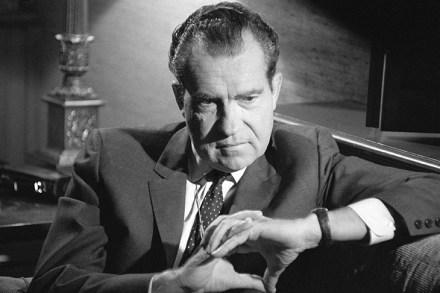
Richard Nixon in September 1968

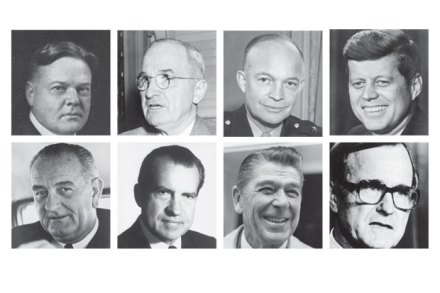
Bourbon from Bush, envy from Nixon… and running into Herbert Hoover: encounters with eight presidents

From our UK edition

I feel a bit of a fraud writing about the ‘presidents I knew’, since journalists do not really get to know the great figures they interview or shake hands with. Indeed the relationship between journalist and great personage is about as false as any relationship can be, since each is trying to make use of the other. So in all likelihood my dreamed relationship with President Herbert Hoover — which began and ended in 1933 when I was aged 11 and only lasted for about a minute — came nearer to being a genuine human relationship than all the other journalistic ones later — which included Harry Truman, Dwight Eisenhower, Jack Kennedy, Richard Nixon, LBJ, Ronald Reagan and George H.W. Bush. Quite a mouthful. My Hoover story — to the best of my childish memory — happened like this.

All human life is here except politics

From our UK edition

Unfortunately for this volume commemorating the 150th anniversary of the Daily Telegraph, most people today are keener to read about the paper’s somewhat scandalous recent experiences and mysteriously uncertain future — about which it has nothing to say — than about its long and worthy past. So the timing of this chatty and jolly tome could not be worse. It is rather as if the Cunard company had brought out a comparably lightweight volume shortly after the sinking of the Titanic. That said, the book has much to commend it, in the form of eye-catching extracts from the paper, starting with the Hyde Park riots of 1855 and ending, as far as I can make out, with a piece by A. N. Wilson, written in 2003, about high camp Anglican priests at an Oxford theological college.

Are explicit sex scenes OK?

From our UK edition

Yes! Philip Hensher In April, I published a novel, King of the Badgers, about a series of events in a small town in Devon called Hanmouth. It is, in a way, about private and public lives, and the surprising and sometimes deplorable events that happen between people when their front doors are closed. It got very enthusiastic reviews: the Sunday Times said it was ‘a really good old-fashioned novel: the sort of thing George Eliot might have written if she was interested in gay orgies and abducted chavs’. Though it doesn’t make a point of obscenity, it does contain one scene in which a group of overweight gay men meet, as they regularly do, to have sex with each other.

Cleared on all counts

From our UK edition

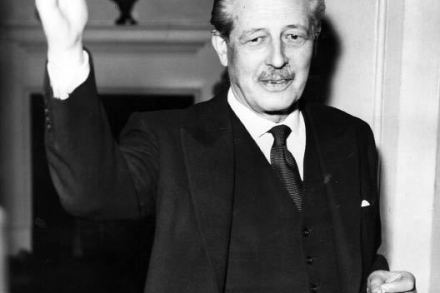
Since the main purpose on earth of the Conservative party was, and still should be, to keep Britain’s ancient and well-proven social and political hierarchy in power — give or take a few necessary upward mobility adjustments — Harold Macmillan must rank very high in the scale of successful Conservative prime ministers; just below Benjamin Disraeli, whose skill in sugaring the pill of inequality and humanising the face of privilege is never likely to be bettered. Earlier biographies of Macmillan, blinded by the egalitarian zeitgeist, have never done justice to this particular dimension of his genius, preferring to see his successful manoeuvring to pass the torch on to a 14th earl as an anachronistic blunder rather than a masterstroke. To his credit, D. R.

Putting the Boot in

From our UK edition

So much was written about Bill Deedes at the time of his death — not to mention his own two autobiographies and the mass of other doting media coverage in recent years — that readers might be forgiven for thinking that this intelligently probing and well-written authorised biography would have little fresh to say. Truth to tell, that is what this reviewer feared. My hopes for the book, however, were soon realised because early on Stephen Robinson, himself a veteran Telegraph man, tells us that Bill went to great lengths ‘to weed out all the disobliging references to himself in his voluminous filing cabinet’. Disobliging references? Shurely shome mistake. Why would anybody want to disoblige dear Bill?

Conservative iconoclasts required

From our UK edition

Having been a monarchist all my life, it was a bit embarrassing the other day to have to admit to a television interviewer that I could not remember the reasons why I had become one in the first place. In truth, of course — as I explained — I became a monarchist as a matter of course, pretty well by instinct; everybody was doing it. So I did it. The interviewer was not impressed. ‘Sounds like prejudice to me’, he said, putting me to shame. Now, along comes the highly cerebral prison doctor, Theodore Dalrymple to assure me that I was wrong to be ashamed.

Blindfolds and mindmists

From our UK edition

Without the existence of ‘apparently [my italics] sophisticated circles’, which the great historian and poet Robert Conquest also calls ‘an intellectually semi-educated class’ (soon abbreviated into just ‘cerebral jellies’) his latest book would never have been written. For its express purpose, he avers, is to tease ‘these misinformed strata’ — yet another description — into abandoning the ‘brain blindfolds’ and ‘mindmists’ which have robbed them of all sense of present realities and future possibilities.

The race of the thoroughbreds

From our UK edition

I read every page, every line of this very long book with sustained interest and pleasure. It is a collective biography of four Grenadier Guards officers — Harold Macmillan, Lord Salisbury, Oliver Lyttelton and Harry Crookshank — who, after becoming friends at Eton, and serving together gallantly and bloodily in the trenches of the first world war, went on to play prominent roles on the stage of British politics for the rest of the century, usually as allies in the Conservative party cause but sometimes as rivals or even, towards the end, as enemies.

Family values under the hammer

From our UK edition

In the course of John Campbell’s superb second volume of his Margaret Thatcher biography, he poses the question of what Alderman Roberts would have thought of the new Thatcherite Britain which his daughter did so much to create. It is a question which, to the best of my knowledge, has never been asked before. But it should have been since any attempt to answer it reveals the paradox at the heart of both her life and her life’s work. For, as Mr Campbell shows, Mrs Thatcher presided over and celebrated a culture of rampant materialism which was repugnant to everything her father stood for. While claiming to stand for thrift, she left behind a population with an unrivalled record of indebtedness.

Kennedy’s finest hour

From our UK edition

Forty years ago the Americans won what I hope will be the nearest thing to nuclear war between superpowers - of which only one is left - ever fought; and the fact that they won it without firing a shot should not diminish but rather increase the extent of the victory. What I am referring to is known, of course, as the Cuban Missile Crisis, which is how it will go down in history. But for those of us who lived through that extraordinary fortnight in October 1962, it was more than a crisis. First, the placing of Soviet nuclear missiles in Cuba, within 90 miles of the American coast, was an explicit and unequivocal casus belli; as explicit and unequivocal as would have been the placing of American nuclear missiles in Tito's anti-Soviet Yugoslavia.
Too much and too late

From our UK edition

By the criteria of the day before yesterday, the late William Whitelaw, a much loved Tory politician who served as Mrs Thatcher's deputy leader, must have seemed a good circulation bet for a successful biography. Most people, after all, would have heard of him, if only because of Mrs Thatcher's memorable remark that 'every prime minister needs a Willie'.

Politics

From our UK edition

This being the first anniversary of the terrorist attack on the Twin Towers, I feel that prudence requires anyone writing a Diary in The Spectator - which has become the principal launching-pad for Mark Steyn's state-of-the-art verbal missiles - to use the main part of his diary to commemorate this event. So let me start uncontroversially with the statutory reminiscence about where I was when the news broke. I was lunching in my club enjoying a post-prandial digestive with Betty Boothroyd, when another member rushed in to summon us urgently to the television room upstairs. So far, so usual. But something else also sticks in my memory.