Robert Stewart

Eager for the fight

From our UK edition

Horatio Nelson is England’s most loved military hero. Marlborough is remote from our view, and the aristocratic Wellington was perhaps too stiff and unbending a Tory for popular taste. Nelson, by contrast, had an engaging personality and a colourful private life. The disabling wounds that he suffered and the affecting circumstances of his death in the midst of the country’s greatest naval victory have secured him in the national memory. The navy, at any rate, has deeper roots in national sentiment than the army; it was seapower, after all, that carried Great Britain and its empire to pre-eminence in the world. The second volume of John Sugden’s biography, covering the last eight years of Nelson’s life, might have been shorter.
Patriot or traitor?

From our UK edition

The mighty convulsion that was the French Revolution has stirred the blood of historians from Thomas Carlyle to Simon Schama and consideration of it still inflames opinions. At its centre stood Maximilien Robespierre — 5’ 3”, stern, unaffacted in manner or dress, Spartan in his domestic habits — deified by his followers as the ‘Incorruptible’ and vilified by his opponents as a traitor to the ideals of 1789, bent on dictatorship. Peter McPhee spares us speculation (Robespierre left no memoirs or diaries) on his subject’s ‘inner life’.

Poetic licentiousness

From our UK edition

Reprobates were, in the Calvinist lexicon, those unfortunates not included among God’s elect and therefore sentenced to eternal damnation. Reprobates were, in the Calvinist lexicon, those unfortunates not included among God’s elect and therefore sentenced to eternal damnation. For stern English puritans it was pleasing to think that Royalist ‘cavaliers’ were among them. Alas, there was no way of knowing. Gallingly, since life everlasting could be bought neither by good works (in the Roman tradition) nor by belief alone (in the Lutheran disposition), cavaliers had an equal chance of it with anyone else. But then, confusion reigns everywhere in the entangled mesh of roundhead versus cavalier.

Ride on in majesty

From our UK edition

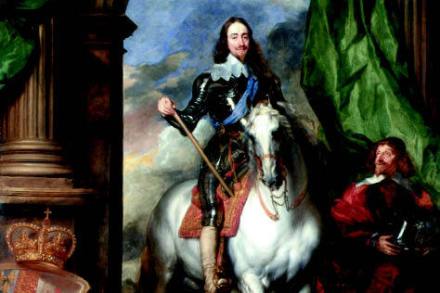
Governments in early modern England, having no standing army nor a civil service to speak of, required the consent of the governed. Authority had to be ‘culturally constructed’. That is the starting-point for Kevin Sharpe’s monumental investigation into royal branding in the age of the Tudors and Stuarts. In the first volume of a projected trilogy, Selling the Tudor Monarchy, he argued that the Tudors made the person of the monarch more important than administrative procedures in establishing royal authority. Elizabeth, in particular, fixed in the national memory by her portraits, played down political divisions and ‘privileged her image over actions and events’, making the sovereign the sacred ‘unifying embodiment of the nation’.

What’s in a date?

From our UK edition

Felipe Fernández-Armesto has a grand idea. Felipe Fernández-Armesto has a grand idea. After the formation of separate continents about 150 million years ago, the world’s ‘cultures’ became progressively more ‘sundered’ and its ecosystems more divergent. Then, ‘with extraordinary suddenness’, in 1492 this long-standing pattern ‘went into reverse’: divergence ceased and ‘a new convergent era of the history of the planet began’.

Karl Marx got it right

From our UK edition

Whether the refusal to allow the Confederate states the right to self-determination, flying as it did in the face of the Declaration of Independence, was the first overt act of American imperialism is a question that goes largely undiscussed. John Keegan does not raise it. For him, unlike World War I, which was ‘cruel and unnecessary’, the American Civil War was cruel and necessary. (What constitutes an uncruel war is not explained.) Necessary both sides deemed it. At the outset volunteers came forward in such numbers that equipping them and finding capable officers to lead them proved nearly beyond both the Union and the Confederacy.

Rebels with a cause

From our UK edition

The Peasants’ Revolt of 1381 was a singular event in English history, not merely a food riot, but an organised outbreak of pure class warfare which, leaving aside John Ball’s rabble-rousing, Biblical egalitarianism, was untrammelled by constitutional quarrels or religious disputes. It was fomented by vicious class legislation — the Statute of Labourers of 1351 and three poll taxes levied between 1377 and 1380 — which was intended to prevent the common people from benefiting from increased wages as a result of the Black Death’s depletion of the labour supply. The government presented the poll taxes as a fair way of supplying the revenue needed to sustain a faltering and unpopular war against France.

A country of ruins

From our UK edition

Contributers to multi-volume national histories are usually straitjacketed, expected to keep to well-trodden paths. But Robert Gildea’s subtitle is ‘the French’, not France, and in the third volume of the New Penguin History of France to be published he wanders freely. Foreign policy, for example, gets short shrift. Instead, a chapter is devoted to the French view of foreigners. Mathematics, science and medicine are sidelined, but the treatment of women is spacious. The political chapters are there and so are the socio-economic ones. The political narrative down to 1870, awash with names, is a bit helter-skelter. Of little interest to the initiated, it may have green undergraduates reeling.

Might is always right

From our UK edition

Since the first political trial in modern history — that of Charles I in 1649 — not a single one has ended in the aquittal of the accused. That tells us everything. In no other category of trial would a perfect record for the prosecution be conceivable. In this important, timely, and cogently argued book John Laughland lays bare the truth that political trials, by which he means trials of heads of state or government ministers for acts of state, not for personal trangressions of the law, have never been properly constituted nor properly conducted judicial proceedings. They are staged events, intended as theatre, whose purpose is to legitimise the new regime, or ‘new world order’, brought about by the fall of the old.

Last but not least | 30 April 2008

From our UK edition

‘Love is but a frailty of the mind when ’tis not to ambition joined.’ So Thomas Seymour, destined to be Catherine Parr’s fourth and last husband, expressed a notion taken as read in Tudor families of sufficient standing to seek social and financial ladders to climb. Catherine understood the ways of the world. When at the age of 30, already twice sold into marriage and twice widowed, she married the corpulent, ailing Henry VIII, she did so for her family’s sake, suppressing, but not killing, her ardour for the rakish Seymour. ‘You are,’ she wrote of her wedding to her brother, ‘the person who has most cause to rejoice.

Power to the people | 27 February 2008

From our UK edition

In July, 1642, as the English House of Commons debated whether to raise an army against the king, a dismayed MP, Bulstrode Whitelocke, wondered how parliament had 'insensibly slipped into this beginning of a civil war by one unexpected accident after another [so that] we scarce know how, but from paper combats, by declarations, remonstrances, protestations, votes, messages, answers and replies we are now come to the question of raising forces.' Historians have come up with a variety of explanations. The beauty of Michael Braddick’s book is that he does not feel compelled to deliver one. At the war’s end England had neither a king nor a House of Lords. At its beginning almost no one had such an outcome in mind.

Peanuts and popcorn and crackerjack

From our UK edition

Baseball Haiku: The Best Haiku Ever Written About The Game edited by Cor van den Heuvel and Nanae Tamura Every American schoolboy and schoolgirl knows the mock epic, ‘Casey at the Bat’ (which William Schuman made into an opera), and Franklin Adams’s ‘saddest of possible words,/Tinker-to-Evers-to-Chance’ (of the Chicago Cubs’ double-play past masters). The historian, J.H. Hexter, analysed a baseball game to help him fathom the depths of causation in history; Stephen Jay Gould made extensive use of batting statistics in support of a theory of evolution. Baseball reaches parts of Americans that other games still cannot reach. It continues to lie warm and deep in the national spirit, renewing it every spring and hibernating there when the snows close in.

Shakespeare got it wrong

From our UK edition

The Fears of Henry IV: The Life of England’s Self-Made Kingby Ian Mortimer Henry IV, in Ian Mortimer’s graceless (and sense-defying) words, is ‘the least biograph-ied English king to have been crowned since the Conquest’. No longer. Here is a full and richly detailed life. Not a deal more would need to be said were it not that Mortimer has invited us to look upon his book as representative of a new species of biographical history. In his introduction Mortimer argues against the traditional view that a lack of documentary evidence (chiefly letters) places limits on medieval biography. His book is intended to demonstrate that not only is a ‘personality-based’ biography of Henry possible, but that biography is the most important approach to the past.

The unkindest cut

From our UK edition

From the day in 1513 that Balboa stared at the Pacific from a peak in Darien men dreamed of cutting a path from the Atlantic to the Pacific through the ‘Golden Isthmus’ of Panama. Not until the 19th century did the dream become a realistic engineering possibility. We have become blasé about scientific breakthroughs and technological innovation, but men and women of that age marvelled at the broad prospect opened up to humanity by the application of science, which would increase trade and wealth and, in their wake, foster international co-operation and lead humanity to ever-higher levels of civilisation. Ironic it was that the Panama Canal, the crowning achievement of 19th-century technology, was open on 14 August, 1914, just when such optimism was falling to earth.

When tobacco worked wonders

From our UK edition

The British empire in North America was not founded in a fit of absence of mind, though it might be said, in its beginnings at least, to have represented the triumph of hope over experience. From the outset, King James I and his chief minister, Robert Cecil, the Earl of Salisbury, were sceptical. A royal charter was granted to the London Virginia Company in 1606 and a Royal Council appointed to oversee the trans-Atlantic adventure, but the king was interested only in grabbing the lion’s share of the profits that might accrue. Otherwise, as Cecil put it, the colonists were to be left on their own ‘unto the peril which they incur’. The omens were bad.

All too minor to matter

From our UK edition

Monarchy, monarchy, monarchy. Are we so addicted to it that we want to read the life of a boy who came to the throne at the age of nine and died six years later? Chris Skidmore seems to think so. His purpose, he says, is to rescue the ‘lost’ Edward VI from the obscurity to which negligent historians have consigned him and resurrect him as ‘a central figure in the Tudor age’. Can it be done? Amid the contest between the Lord Protector, the Duke of Somerset, and his rivals (first his younger brother, Edward Seymour, and then John Dudley, the Earl of Warwick) for control of the Council which governed England during his minority, was there a role of any significance for Edward to play? Skidmore makes a half-hearted stab at suggesting that there was.

Heads that wore the crown

From our UK edition

David Starkey’s latest book has a Gibbonesque moment. Charles I was undone by ‘his unbending adherence to principle’; ‘in contrast the only rigid thing about Charles II was his male member’. Monarchy also, alas, exhibits some of the pitfalls encountered in turning the script of a television series into a book. Breeziness cohabits with an anxious, repetitive hammering of key points; cliff-hanging intimations of what is to come are overly dramatic; the syntax is frequently sloppy. The prose is disfigured, above all, by the unrelenting use and abuse of the conjunction ‘but’ that is the hallmark of lazy journalism in the present day. Still, Starkey is a fine scholar with the ability to show us the woods, not the trees.

A shortage of wine and olives

From our UK edition

War and religion are the enduring themes of history and they, or at least war and the Church (for theology gets short shrift), are the chief matters in John Julius Norwich’s latest book. It attempts the difficult job of making a coherent entity of the history of Mediterranean lands from antiquity to the close of the first world war and it does not altogether succeed. The idea of a discrete Mediterranean history makes most sense for the millennium when Greece, then Rome, had reason to think of their compass as the ‘known world’ and the Middle Sea as their lake. A coherent theme is also provided by the mediaeval contest for mastery between Christian Europe and successive Arab empires.

The minimum of turbulence

From our UK edition

Glorious, bloodless, last, perhaps all of those things, but the revolution of 1688 was hardly a revolution at all. It was the neat solution to a succession crisis: how to keep the throne of England secure against a Roman Catholic successor to the Roman Catholic James II. The essential ingredients were the resolve of James’s Protestant son-in-law, William of Orange, to bring Great Britain into permanent alliance with the Netherlands against France and, in the face of that resolve, James’s timidity and eventual flight.

Elusive brothers in arms

From our UK edition

History and fiction have their differences. The most obvious and the most important is that scrupulous historians hesitate to say anything for which they cannot provide some form of documentary evidence. But history and fiction are also more alike than is usually acknowledged. Both historians and novelists seek to show how the world operates (or operated) and both do so on the basis of fragmentary knowledge, the one chiefly from whatever survives in the various forms of historical record, the other chiefly from perceptions acquired from life in the world. The demarcation is less clearly defined than it once was. For some time — at least since the publication of Truman Capote’s In Cold Blood 40 years ago — genre boundaries have been collapsing everywhere.