Culture

Culture

The good, the bad and the ugly in books, exhibitions, cinema, TV, dance, music, podcasts and theatre.

Courting Sultana Isabel

More from Books

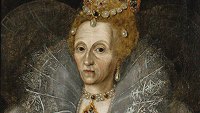
The idea for a mechanical cock was never going to work. In 1595 the English ambassador to Constantinople, Edward Barton, advised Queen Elizabeth I that the surest way for her to impress Sultan Mehmed III, the new leader of the formidable Ottoman empire, was to send him a ‘clock in the form of a cock’. Knowing that Mehmed had a growing reputation for psychopathy rather than ornithology — he had his 19 brothers circumcised and then strangled to death — Elizabeth demurred and eventually sent him an elaborate clockwork organ instead. The organ was accompanied by its maker, Thomas Dallam, who spent his first month in Constantinople fixing the damage it had suffered in transit before eventually playing it for the Sultan and his retinue at the Topkapi palace.

‘A good boy trying to be bad’

Lead book review

Robert Mapplethorpe made his reputation as a photographer in the period between the 1969 gay-bashing raid at the Stonewall Inn on Christopher Street and the identification of HIV in 1983. This was the High Renaissance, the Age of Discovery, the Bourbon Louis Romp, the Victorian imperial pomp, the Jazz Age, the Camelot moonshot, the Swinging Sixties of gay culture in New York. In the 18th century New York punished sodomy with death. This was later reduced to 14 years’ solitary or hard labour. By 1950, it was only a misdemeanour. By the Seventies, it was becoming positively fashion-able, like a ten-speed bike or a breadmaking machine.

Following the followers

More from Books

In his new book Apostle Tom Bissell has an advantage over writers who go looking for Jesus: he can start with human remains. His frame for this uneven combination of travel and Church history is a series of trips to the alleged tombs of the apostles. To flesh out 13 ghosts (the 12 disciples and Paul) Bissell mines the gospels, the work of Church historians both early and late, and the Apocrypha. ‘Without the Apocrypha,’ he admits, ‘the 12 apostles would seem even more irrevocably distant.’ The former disciples of Jesus are an elusive bunch. Destroyed or partial texts throw up discrepancies and cases of contested identity, equivocal traditions set in unspecified places and fanciful pasts invented by unreliable chroniclers.

Sins of omission | 23 March 2016

More from Books

My last review for The Spectator was of Julian Barnes’s biographical novel about Shostakovitch. A Girl in Exile also depicts the life of an artist favoured by a brutally oppressive regime, this time written by one who was there. Ismail Kadare survived the rule of that isolationist tyrant Enver Hoxha. In some quarters, Kadare has been criticised for surviving. Like Shostokovitch, indeed, he has been accused of collaborating with the regime within which he worked, joining the party and accepting public appointments. It is not the business of a book review to enter into such arguments; but some of the criticisms, made by armchair freedom fighters insisting that others should stand up for uncompromising heroism, are obviously, cruelly and merely naive.

Neighbours and strangers

More from Books

Margaret Forster, who died on 8 February, excelled at writing about complex relationships between women. Even old friends, she demonstrated, can experience jealousy, disapproval or dislike. Here, ‘Sarah’ has changed her name to live incognito on the west coast of Cumbria, in a town chosen at random. When she gets locked out of her house, a bond is formed between her and her elderly neighbour Nancy — whose deceased friend Amy once owned Sarah’s rental and left Nancy a key. Although Sarah is ostensibly the one with ‘a past’ (prison), it was Nancy whom I found most interesting.

Worshipping the sun

More from Books

The Sun is a star that many astronomers assume is only worth studying because of its averageness; it’s middle-aged and middle-sized. Its convenient proximity to us means it can act as a testbed for physics research. But we’re too well-schooled in the Copernican principle to view it as ‘special’ in any way. In contrast, Lucie Green’s huge enthusiasm for the Sun is apparent throughout her book. Her purpose is to convey the current state of knowledge about our neighbourhood star, and the story proper starts with sunspots.

Murder most foul

More from Books

On 1 November 2006 Alexander Litvinenko, ex-KGB officer and by then a British citizen, met two of his former colleagues, Andrei Lugovoi and Dmitri Kovtun, in Mayfair and drank a cup of tea with them. What happened next must count as the century’s most gruesome crime so far. The tea taken by Litvinenko was laced with a dose of polonium-210 and he died in agony in UCH several days later. The radioactive substance was detected on a belated hunch of a brilliant forensic scientist. The suspects, Lugovoi and Kovtun, had already left Britain, and the Metropolitan Police found polonium deposits at nearly every hotel and shop that they had visited.

Sexy self-advertising

More from Books

At nearly eight foot high and five foot wide, Adélaïde Labille-Guiard’s portrait of herself with two of her students is by any reckoning a tour-de-force. Painted in 1785, it shows the artist seated at her easel, palette, brushes and mahlstick in hand, as though looking up briefly before adding to the large canvas before her. Seated on a gilt and green velvet chair, she is dressed in a pale blue satin décolleté dress and a straw hat decorated with ribbons and ostrich feathers. Her two female pupils stand behind her, one gazing in admiration at the work in progress, the other looking out of the painting, level-eyed and sober.

Disgusted of X-ville

More from Books

Eileen is an accomplished, disturbing and creepily funny first novel by Ottessa Moshfegh, the latest darling of the Paris Review, which has published her stories and given her a prize. It recalls, half a century later, a week in the life of Eileen Dunlop, leading up to Christmas 1964. Her mother, whom she loathed, has died some years ago, and at the age of 24 Eileen is living in a dreary New England town she calls ‘X-ville’ with her father. He’s a demented, gin-sodden retired cop whom she also loathes, and whom she is supposedly looking after, though her care is limited to shouting at him, maintaining his gin supply and hiding his shoes to prevent him from terrorising X-ville in his pursuit of imaginary ‘hoodlums’.

A mix of myths

More from Books

With ‘both arms stretched out like a starfish, her long hair floating like seaweed at the sides of her body’, Kitty Finch swam naked into view in Deborah Levy’s Booker-shortlisted Swimming Home. Similarly, in Hot Milk, Sofia Papastergiadis loves to swim —as, indeed, does Levy herself. Only, whereas Kitty swims up and down the gravelike plot of a villa’s swimming pool, Sofia prefers the open expanse of the sea. She swims off the coast of Spain, in Almeria, where she is helping her mother find treatment for the periodic ‘mysterious’ paralysis of her legs. Caring for her mother means that she has given up pursuing a doctorate in anthropology, despite her first-class degree.

Tainted love | 23 March 2016

More from Books

In 1963, when the bloom was still on the rose, Bob Dylan described Woodstock as a place where ‘we stop the clouds, turn time back and inside out, make the sun turn on and off… the greatest place’. Six years later, he wrote in Chronicles: Volume One, ‘Woodstock had turned into a nightmare, a place of chaos.’ Barney Hoskyns, who lived there in the 1990s, marshals plenty of evidence to support both assessments. This Catskills hamlet has been at various times a blue-collar small town, a bohemian enclave, a tourist trap, a hotbed of creativity, a cauldron of hedonism, a madhouse and ‘a counter-cultural touchstone’. In its heyday it attracted such luminaries as Janis Joplin, Van Morrison, Todd Rundgren, George Harrison and The Band.

Going global

More from Books

We can all identify decades in which the world moved forward. Wars are not entirely negative experiences: the social and technological advances of the 1910s and 1940s are obvious. Ben Wilson has been more thoughtful, and has chosen the 1850s — or, more specifically, the years from 1851 to 1862. It was a time when, as he says, Britain was at the peak of her power. The empire was not at its greatest — the Scramble for Africa had yet to occur — but Germany had not unified, and America was economically overdependent on slavery and, not least because of that abomination, about to fall into civil war. Wilson describes the Great Exhibition of 1851 as a showcase of Britain’s manufacturing might, when it was truly ‘the workshop of the world’.

Sick transit

More from Books

Sitting at her desk at the BBC in March 2006, researching a documentary about the Olympic Games, Caroline Jones pressed her thumbs deep into her eyelids, allowed herself to visualise a chocolate brownie and started to salivate. After work she stopped at the supermarket and bought some brownies… along with a chocolate loaf cake and a large pot of cream to pour over it, a giant chocolate bar, an apple puff, two eclairs, a cream slice, a selection of reduced pastries, a loaf of bread, a packet of butter and three packets of biscuits: bourbons, custard creams and Maryland cookies. When she got home she ate it all in under four hours. In her thoughtful new memoir on her 14-year struggle with bulimia, Jones describes a moment of sharp self-awareness experienced two hours into that binge.

‘Help the British anyhow’

Lead book review

The other day, some anti-imperialist students were questioning the presence in their institutions of statues of Cecil Rhodes, a West African cockerel and, very strangely in view of her conspicuously anti-racist convictions, Queen Victoria. In response, a Guardian columnist, who has probably made less effort to learn Hindi than Queen Victoria did, amusingly said that it was time to ‘start a debate’ about the British empire. I would have thought that we have spent much of the last century energetically examining the subject from topknot to shoesole. Nevertheless, there remain some large areas which haven’t been properly considered, and among them is the complex story of India’s role in the second world war.

Among the snobs, slobs and scolds

More from Books

The author of this jam-packed treasure trove has been a film critic at the New York Times since 2000 and is also professor of film criticism at Wesleyan University. As if these platforms weren’t enough, he’s now written a book about the tangled worlds of films, books, music, paintings and criticism, dragging in Aristotle, Pope, Plato, Matthew Arnold, Isaiah Berlin and millions of others — but not, alas, my former next-door neighbour, the wonderfully controversial Brian Sewell. Crammed in alongside George Orwell’s ‘All writers are vain, selfish and lazy’ and H. L. Mencken’s ‘Literature always thrives best in an atmosphere of hearty strife,’ the author’s own views often hit hardest.

Bribes, bickering and backhanders

More from Books

The decrepitude of old age is a piteous sight and subject. In his second book Michael Honig — a doctor-turned-novelist and sharp observer of the body’s frailties, and the mind’s — zanily explores it through the imagined senility of Vladimir Putin, once supremely powerful, now struggling to tie his laces. The horror, sadness and momentary furies of dementia are all traced in Vladimir’s plight, plus the tedium and — especially — the bleak comedy. As the story opens, he is visited by his successor: ‘I’m going to fire that bastard,’ he says. ‘Have we got cameras?’ On a lakeside walk he strips off for phantom paparazzi.

A sex vampire on wheels

More from Books

The title of this book tells you a lot. Jack Sutherland, who grew up in London and Los Angeles, worked as a personal assistant to Michael Stipe, the singer in REM and, later, to Mickey Rourke. He also worked as a limo driver in Hollywood. A drug addict, he gravitated toward crystal meth, which can make you both wired and horny, sometimes for days on end. So we know to expect a particular brew of glamour, indignity and recrimination that perhaps some readers (including me) have come to enjoy. Sutherland certainly delivers — with a bit of glamour, an awful lot of indignity and not too much recrimination. But there’s something else going on here. This book is a collaboration between Jack the addict and his adoptive father John Sutherland.

Pox-ridden and power-crazed

More from Books

Poor old Henry IV: labelled (probably unfairly) as a leper, but accurately as a usurper, he has been one of England’s most neglected monarchs. He is best known through his Shakespearean starring roles — which little resembled the real man, according to Chris Given-Wilson — and as the father of the ultimate warrior-king, Henry V, rather than in his own right. Ian Mortimer began redressing the balance in 2007; now Given-Wilson has produced this meticulous and definitive life of the troubled king for Yale’s ‘English Monarchs’ series. Though he was the son of John of Gaunt and his heir to the Duchy of Lancaster, England’s richest estate, Henry was not guaranteed an easy life of privilege.

Mother courage

More from Books

Helen Stevenson’s daughter Clara has cystic fibrosis. Love Like Salt is an account of living with the disease, but it is much else besides. Stevenson calls it a memoir, because it is an intensely personal version of events. It is also a scrapbook, a commonplace book, a series of meditations, an exercise in self-scrutiny. It is emphatically not a medical handbook. Stevenson is a writer, translator and musician; her husband Nico, ‘the kindest man on earth’, is a retired academic and translator of poetry. The book is structured like a piece of music. I’m too ignorant to give you the correct terminology, but there are three movements, and all the shorter passages branch away from, and then return to, the central theme. The effect is cumulative.

Too high, too fast

More from Books

You have to get nearly halfway through this book before it starts to show some life. Until that point, as Rowan Moore ambles in his wry manner through pages of familiar description of the capital’s built and social history, you find yourself wondering what it is all for. After all, if you choose to write a book about the architecture of London you are putting yourself in some pretty distinguished company. Ian Nairn, say, whose magnificently off-kilter, beer-goggled 1966 hymn to the city, Nairn’s London, has been reissued as a Penguin Modern Classic to universal acclaim. Or Peter Ackroyd, whose colossal 2001 London: The Biography is drizzled with lazy assumptions but is an eloquent advocate of the city as living organism.

A gift from beyond the grave

Lead book review

When Virgil died at Brindisium in 19 bc, on his way back to Rome from Greece, he left the Aeneid unfinished. When Seamus Heaney died in Dublin in 2013, his translation of Book VI was also unfinished, but like the whole of the original, his 1,222 lines were found to be in a publishable condition (‘final’, he wrote on the last draft, which allows for it not being ‘complete’). The coincidence is touching. So too is the fact that this book is concerned with news from the afterlife. Aeneas descends into the underworld to visit his father, Anchises, and receives there a history lesson that leads beyond the founding of Rome to the glories and struggles that lie in the future. Heaney’s version is also a kind of gift from beyond the grave.

Spectator competition winners: a 21st-century elegy on a country churchyard

The latest competition marked the tercentenary of Thomas Gray’s birth with an invitation to submit an ‘Elegy on a Country Churchyard’ written in the metre of his famous and enduringly popular poem. General Wolfe was a such a fan of Gray’s meditation on death and remembrance that in 1759, on the eve of the attack on Quebec, he is said to have read the poem to his officers, declaring, ‘I would rather have been the author of that piece than beat the French tomorrow.’ It obviously struck a chord with you too, and there were stellar performances all round. Congratulations and commiserations to the following, who fell victim to a lack of space but are worthy runners-up: John Beaton, John Priestland, Katie Mallett, George Simmers, T.J.

A devilish instrument of war

More from Books

‘China is a sleeping lion,’ Napoleon reportedly remarked. ‘When it wakes, the world will tremble.’ There is no need to fear China, its current leaders are quick to stress — with President Xi Jinping claiming that the country’s rise will be ‘peaceful, pleasant and civilised’. Such words are of little comfort to hawks in the United States who watch the Asia-Pacific region with a growing sense of alarm — even if the Chinese economic slowdown of recent months has made it more likely that we will hear a growl rather than a blood-curdling roar as the lion awakes. This interesting new book asks why it is that China has been sleeping for so long.

An innocent abroad | 10 March 2016

More from Books

For those who read the weekly music press during the 1980s, David Quantick’s was a name you could rely on. Unlike some of the more Derridean elements at the NME, his reviews of new bands and LPs were both comprehensible and authentically funny. He has gone on to become a successful comedy broadcaster and writer for radio, TV and film: The Day Today, The Thick of It, Harry Hill’s TV Burp. Recently he was part of the team that won an Emmy for the US political comedy series Veep. The Mule is Quantick’s second novel (his first, Sparks, came out in 2012).

Away with the fairies | 10 March 2016

More from Books

As an erstwhile obituarist, I pity the poor hack who had to write up the life of Laurence Oliphant — adventurer, diplomat, war correspondent, mystic, spy (and the subject of Bart Casey’s biography) — when he died, aged 59, in 1888. The first paragraph should (according to the well-seasoned formula) contain some characterising incident or achievement, giving the measure of the man, the impact he made on the world and those around him, and an indication of his interior life. The anecdote must — like cherry-picked quotations for a Shakespeare exam — inform more than one facet of a broader narrative. Any runner-up contenders can be dropped into paragraphs four, eight and 12.

A topsy-turvy world

More from Books

‘A crane fell on top of me in Kladno in 1952, after which my writing got better,’ Bohumil Hrabal (who died in 1997) once wrote, with typical self-deprecation and comic timing; but there are other versions of what made him change from being an almost rococo engineer of magic realism (‘building my house from the roof on down’, as he put it) to the flawlessly brisk comic writer he became. (Another story: a dry-cleaner’s receipt which said ‘some stains can be removed only by the destruction of the material itself’). He was sent, along with tens of thousands of other white-collar workers, to a factory; in his case, the steel mill in Kladno (named, curiously enough, after Wittgenstein’s mother).