Culture

Culture

The good, the bad and the ugly in books, exhibitions, cinema, TV, dance, music, podcasts and theatre.

Too close to the sun

More from Books

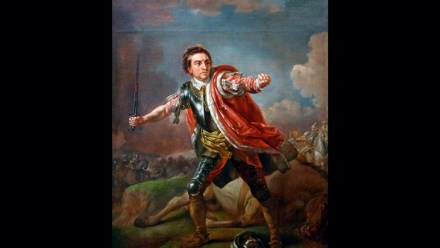
If you go to the Campo dei Fiori in Rome on 17 February every year, you’ll find yourself surrounded by an eclectic crowd of atheists, free-thinkers, Catholic reformers, anarchists, mystics, students, scientists and poets all jostling to lay tributes before the statue of the hooded Dominican friar whose shadowed face stares inscrutably towards the Vatican. His name is Giordano Bruno and his statue, erected by public subscription in the 19th century, commemorates the site where he was burned for heresy in 1600 at the hands of the Roman Inquisition.

Books Podcast: Jesse Norman and how to properly appreciate Adam Smith

Adam Smith is the most quoted and misquoted economist of all time. But was he the prophet of devil-take-the-hindmost neoliberalism, or the heroic enemy of cartels, monopolies and stitch-ups? To try to get him in the round, I’m talking in this week’s podcast to Jesse Norman, author of the new Adam Smith: What He Thought and Why It Matters (reviewed in last week’s Spectator by Simon Heffer). Norman argues that we can only understand Smith in the round by reading his Theory of Moral Sentiments as well as the Wealth of Nations; and by putting him in the context of the Scottish Enlightenment and the thinkers such as Hume who surrounded and influenced him. But he also says that a proper appreciation of Smith’s thought has relevance for us right to the present day.

Why have we forgotten the greatest of all crusaders?

Columns

For your perfect summer read I’d recommend Zoé Oldenbourg’s 1949 classic medieval adventure The World Is Not Enough. It’ll comfortably occupy you for a good fortnight and while it’s thrilling, romantic and heartbreaking enough to keep you turning the pages, it’s also so beautifully written and historically illuminating that you won’t feel the emptiness and self-disgust you do when you’ve finally got to the end of a bog-standard airport thriller. It begins in 12th-century France but then moves to the wonderfully exotic-sounding Outremer, the contemporary name for the crusader states on the far side of the Med, such as the Principality of Antioch, the County of Tripoli and the Kingdom of Jerusalem.

Consumed by guilt

More from Books

At the beginning of After the Party, Phyllis Forrester tells us she was in prison. While inside, her hair turned yellowy-white, ‘like the mane of an old wooden rocking-horse’, not out of shock, she reassures us, but because ‘one couldn’t get one’s hair dyed’. She thinks she deserved to be there: ‘What I did was terrible. Terrible. The shame of it will never leave me until my dying day.’ For a long time in Cressida Connolly’s chilling new novel, though, it’s not clear what she has done. The year is 1979, and middle-class Phyllis, who is bitter and alone (her family don’t talk to her any more), recounts her story to a voiceless interviewer in mannered, first-person chapters that interject throughout.

Leaping dragon

More from Books

Every cinema-loving person has a favourite Bruce Lee moment. My own comes towards the end of Enter the Dragon, the film which Lee made just before his death in 1973 at the age of 32, and that would in turn seal his worldwide stardom. There, on one side, stands Lee himself. There, on the other, is the villainous Han, who has a set of metal talons where one of his hands ought to be. The two men leap across each other, leaving Lee with an unpleasant gash on his shirtless torso. He pauses, dabs a finger in the blood, raises it to his mouth — and licks. It is weird, gruesome and oh-so-cool, all at once. Why did Lee do this? The answer is in Matthew Polly’s biography.

Dreams of oblivion

More from Books

The new novel by the author of the 2016 Booker shortlisted Eileen is at once a jumble of influences — Oblomov by way of Tama Janowitz and Elizabeth Wurtzl, Bartleby with a touch of Bright Lights, Big City, a lunatic psychiatrist who melds Ayn Rand and William Burroughs — and unnervingly original. It takes guts, after all, to spin a yarn out of a rich Upper East Side orphan who decides to put herself to sleep for a year in an attempt at rebirth. Beyond the evident — the death of her parents, an obnoxious man in her life — precisely why our narrator wishes to shed her skin remains unclear to us; but her tenacity in pursuing oblivion is unshakeable.

Every man in his humour

More from Books

Since the 17th century, a ‘humourist’ has been a witty person, and especially someone skilled in literary comedy. In 1871, the Athenaeum said that Swift had been ‘an inimitable humourist’. But in modern usage the term seems to describe a specifically American job title: someone who specialises in writing short prose pieces whose only purpose is to be funny. The current king of humourists is David Sedaris, and his books are essentially scripts for his sell-out reading tours. But is he funny? On a line-by-line basis, he sure can be. He helps push someone’s broken-down car, ‘and remembered after the first few yards what a complete pain in the ass it is to help someone in need’.

No country for old women

More from Books

Lissa Evans has had a good idea for her new novel. It’s ‘suffragettes: the sequel’. She sets her story not in 1918 but in 1928. Two washed-up spinster suffragettes in their sixties, Florrie (known as ‘the Flea’) and Mattie, live together platonically in a house in Hampstead known as the Mousehole, because it used to be a convalescent home for hunger-striking suffragettes during the Cat and Mouse Act. It’s freezing, and they cut up old Christmas cards for splints, conversing like two dotty old dons. ‘What utter spinach!’ ‘Small sherry? Or a toddy? Buck you up a bit.’ Their WSPU glory days are behind them. Florrie is now a sanitary inspector, and Mattie gives lectures with slides about her window-smashing past.

Get lost

Lead book review

When Boris Johnson resigned recently he automatically gave up his right to use Chevening House in Kent, bequeathed by the Earl Stanhope for the use of a person nominated by the prime minister, traditionally the foreign secretary. I think I’m right in saying that when she first came to office, Theresa May attempted to get Boris to share the place with David Davis and Liam Fox, but to no avail, which was surely a sign of things to come. Among its many attractions and allurements — 115 rooms, a boating lake, all the other usual country-house trimmings — Chevening has a magnificent maze, planted by the 4th Earl Stanhope, to a design by his great-grandfather, Philip Stanhope.

Rewriting Kipling for the modern age

It is often said that we should worry about the world we are leaving to the younger generation. I am a bit more worried about the poor world, given the state of the younger generation who will soon have custody of it. Last week, for example, the students of Manchester University have decided that Rudyard Kipling’s poem “If” is not suitable for their college because he was raaaaacisst. Of course. They have replaced his poem with some vapid drivel from the serially overrated Maya Angelou. It might have been better if they’d simply rewritten Kipling’s verse, adapted it for modern times.

In search of Japan

More from Books

‘Much of what I say may turn out not to be true.’ Hardly the ideal beginning to a guided tour. But Alex Kerr is not your typical tour guide, briskly selling a place to a time-pressed group via a few must-snap essentials — the glint of the sun off Kyoto’s Golden Temple and its still waters; the demure shuffle of geisha; winter rays radiating through a bamboo grove. Kerr is more the lone local you’re not entirely sure you should trust, sidling up and engaging you in conversation. Why do temples have gates without doors? Are they entrances — or exits? Ever thought about that? No? Come on, I’ll show you.

Travel literature

More from Books

Jonathan Raban was largely responsible for changing the nature of travel writing. Back in the 1970s when he began, the genre still viewed the world from under the tilt of a Panama hat. (‘I looked at the tops of the columns. Were they Doric or Ionic?’) It was considered as ill-bred for a writer to reveal anything about themselves as to have illustrations — ‘the best travel books never do’. Raban tore a lot of this up, and with glee. He had worked closely with confessional poets from America like Robert Lowell and John Berryman, producing what is still one of the best essays on Lowell’s late poems about his messy divorce. He had even been Lowell’s lodger for a while.

Stories we tell ourselves

More from Books

Sofka Zinovieff’s new novel, Putney, is an involving, beautifully written, and subtle account of an affair in the 1970s between Ralph, a composer in his thirties, and Daphne, a young girl, who is nine when she is first encountered: ‘Flitting, animal movements; narrowed, knowing eyes; dark, tangled hair; dirty bare feet.’ Enchanted by this creature, whom he idealises as a kind of embodiment of the free spirit of the age, he convinces himself, though he has never felt love for a child before, that this is a new, powerful and pure thing — ‘the beginnings of love’ — and grooms her, kissing her under a tree when she reaches the age of 12, before embarking on a full blown affair.

Turn off and tune out

More from Books

All good non-fiction writing shares certain characteristics: consistent economy, upbeat pace and digestible ideas that logically flow. Tech writers have an additional challenge, however, of combining all this with boring technical detail. How to explain the mechanical stuff without being either too dry or too simple? What’s the reader’s likely level of knowledge? These questions can eat an author up. I imagine science writers have the same difficulty, but this problem weighs especially on tech writers, because the composition of a piece of software, an encryption standard, or a machine-learning algorithm has a direct bearing on how it works and therefore how it affects the world.

‘T’ is for Trotskyite

More from Books

Varlam Shalamov’s short stories of life in the Soviet Gulag leave an impression of ice-sharp precision, vividness and lucidity, as though the world is being viewed through a high-resolution lens. His subject matter, as well as his complete lack of sentimentality, means that much of what is brought into focus is horrifying or pitiful. Yet his capacity to capture and distil the experience, moment by moment, has an exhilarating effect, like that of the frozen bilberries he picked in the depths of the Siberian winter: ‘bright blue, wrinkled like empty leather purses, containing a dark, bluish-black juice… I ate the berries myself, my tongue carefully and eagerly pressing each one to my palate. The sweet, aromatic juice of each squashed berry intoxicated me for a second.

Character actors

More from Books

Willa Drake’s second husband calls her ‘little one’, even though she is over 60 and the mother of two grown boys. After a troubled childhood in Lark City, Pennsylvania, she married at 21, stopped studying after her first pregnancy and was widowed with teenage children when her first husband was killed in a road-rage incident of his own making. Willa walked away from the crash physically unscathed: ‘She seemed to be in a kind of bubble, sealed away on her own.’ Late in life she suddenly decides the time has come to stop drifting, or going ‘at things so slantwise’. To her new husband’s bafflement, she responds to a random call for help after one of her son’s ex-girlfriends is shot in the leg in Baltimore.

The pursuit of money

Lead book review

Jesse Norman is one of only three or four genuine intellectuals on the Tory benches in the House of Commons. It must vex him, as it does most of us with A-levels, to witness the distressingly ignorant, chaotic and unprincipled way in which the government, run by the party of which he is a member, conducts its business and that of the country. Those who control the destinies of that government would do well to read his book on Adam Smith, and indeed Adam Smith himself.

First Novels

More from Books

Katharine Kilalea is a South African poet who has written a startlingly good first novel. OK, Mr Field (Faber, £12.99) is the haunting story of a concert pianist whose wrist is fractured in a train crash. On a whim, he uses his compensation money to buy a house that he has only seen in pictures. If that sounds dull, this might be because it is hard to convey the shocking accuracy of Kilalea’s prose, which, ultimately, is what makes this novel so riveting. The absolute correctness of the vocabulary she uses makes one realise how pretentious and unnecessary the language in much contemporary fiction is. This would be nothing, of course, if Kilalea didn’t have anything to say, but she has so much to convey about loneliness, madness and mortality.

Books Podcast: Margo Jefferson on Michael Jackson

In this week’s Books podcast, we’re moonwalking back to the glory days of Michael Jackson with the brilliant Margo Jefferson, author of On Michael Jackson and the memoir Negroland. What was it that made Jackson so captivating? Can his artistic legacy ever be disentangled from the gruesome murk of the last years? And does it really matter if you’re black or white? We consider all these questions and more.

The Stuart supremacy

More from Books

Few twists of political fortune are as discombobulating as the youngest child making off with the family inheritance. Richard III, George W. Bush, Ed Miliband: monsters all three. Sophia, Electress of Hanover — bright, lively and self-indulgent — left a no less divisive legacy. The 12th child of an exiled Mittel Europa princeling, Sophia had scarce prospects when she was born in The Hague in 1630. Yet through her mother Elizabeth, daughter of James I, Sophia was able to pass the newly unified British crown to her son George I. (She missed out on the throne herself when she predeceased her cousin Queen Anne by less than two months.

Read Rhys

More from Books

The problem with writing about writers — and a particular blight on the current vogue for autofiction — is that writers do not necessarily live very interesting lives. Wrangling with editors, hatereading your rivals, making coffee and (occasionally) typing are all consuming occupations, but not the stuff of prepossessing narrative. That, at least, wasn’t an issue for Jean Rhys, whose colonial childhood and dissolute adulthood gave her ample material for fiction. But reprocessed by Caryl Phillips as the subject of this new novel, Rhys (or rather Gwendoline, since she has yet to take her pen name in the period Phillips covers) is somehow rendered boring.

Enjoy the ride

More from Books

It is easier to say what this book is not than to describe what it is. It is not a biography, nor a work of musicology. As an extended historical essay it is patchy and selective. It is partly about pianos and pianism, but would disappoint serious students of that genre. It is not quite a detective story — though there are, towards the end, elements of a hunter on the track of his prey. It is probably best to begin the book with no expectations of where it will lead. It starts in the Palma workshop of one Juan Bauza in the 1830s as he fashioned an upright piano — crude, even by the standards of the day — from local softwood, felt, pig iron and copper.

Beautifully out of sync

More from Books

‘Myshkin’ wants ‘a tiding ending’ to his life and has settled down to write his will. An ageing Indian horticulturalist, his childhood nickname (after Dostoevsky’s protagonist in The Idiot) remains. It is the first sign that this is a novel about people out of sync with their times and their surroundings. Abandoned by his mother as a child, Myshkin has received a letter ‘pulsing with the energy every unopened letter in the world has’. It involves his mother but he cannot bear to open it. Instead he narrates her life, and his own, one of tending trees with commendable diligence, and waiting for her return. As with Roy’s previous work, the prose is intensely visual.

Outward bound

Lead book review

Paris, Venice, Montevideo, Cape Town, Hobart. There are cities, like fado, that pluck at the gut. In my personal half dozen, having also lived there, Lisbon ranks high. ‘What beauties doth Lisboa first unfold,’ gasped Byron’s Childe Harold. Two centuries on, Portugal’s capital remains Queen of the Sea. Yet beyond a sombrely sentimental gift to entrance, the character of Lisbon is elusive. It outreached the grip even of its greatest modern muse, Fernando Pessoa, whose posthumous 100-page guidebook, Lisbon: What the Tourist Should See, finally published in 1992, included the helpful information that Lisbon ‘rises like a fair vision in a dream, clear-cut against a bright blue sky which the sun gladdens with its gold’.

Coach, politician and agony aunt

More from Books

When I picked this book up, I already loved it — or at least I loved the idea of it: heroic sporting underdogs, a new coach with nothing in common with his players, and the forging of an indestructible bond of comradeship, all topped off by success on the world stage. But I felt trepidation too. Books about sporting greatness often descend into a gruelling slog through humdrum match reportage, reheated banter and details of contract negotiations, game plans, diet plans and training. I needn’t have worried. In this account of three years in charge of the Fiji sevens rugby squad, Ben Ryan and his writing collaborator Tom Fordyce get the mix just right.

The British Dreyfus

More from Books

One day in December 1908, a wealthy 81-year-old spinster named Marion Gilchrist was bludgeoned to death in her Glasgow flat. Miss Gilchrist, who lived alone with her maid, was an obsessive collector and hoarder of jewels, which she hid among her clothes. There was no sign of a forced entry, but a valuable diamond brooch was missing. The month before the murder she had changed her will, cutting out her relatives, whom she hated, and leaving everything to her maid. The Glasgow police decided to arrest a foreigner named Oscar Slater. He happened to have pawned a brooch around the time of the murder. The brooch turned out to belong to Slater himself, but the police persisted in pursuing him, even though he denied having any knowledge of Miss Gilchrist.