Culture

Culture

The good, the bad and the ugly in books, exhibitions, cinema, TV, dance, music, podcasts and theatre.

The healing art

More from Books

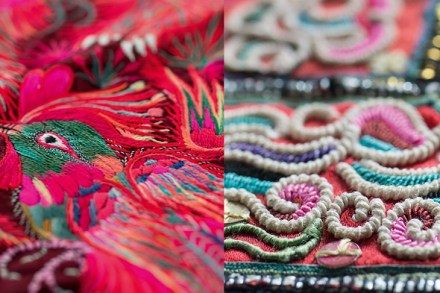
In this unusual book, part memoir, part history, Clare Hunter offers a personal meditation on the textile arts. Sewing and its associated skills have been coded as female, and the expertise required to master them has been trivialised. Hunter describes how when women demonstrate intricate embroidery or stitching, a man can be guaranteed to crack a joke about how his trousers need hemming or a button needs sewing on. But embroidery was not always so devalued. Royal families commissioned it for clothing and wall hangings to demonstrate their wealth and power. During the high point of medieval English embroidery (Opus Anglicanum), it was desired all over Europe. Gold thread created shimmering effects, and meant that each piece was worth a fortune.
Daydreams in the outback

More from Books

Gerald Murnane is the kind of writer literary critics adore. His novels have little in the way of plot or even character, and it is hard to tell the narrator from the writer, so that all his stories might be essays; his sentences are weirdly flat but interrupted occasionally by wild visions. Try this, for example: There in a room with enormous windows a man with a polka-dotted bow tie broadcasts radio programmes to listeners all over the plains of northern Victoria, telling them about America where people are still celebrating the end of the war. Where are we? Who can see the bow tie on the radio announcer, and did the war end recently or long ago? At the risk of a little racial profiling, this all sounds so odd that it has to be Australia, and Murnane himself is a perfect Australian type.

More dystopian futures

More from Books

Only Helen DeWitt would start a book with an epigraph of her own pop-culture mash-up poetry and end with an appeal to buy the writer coffee. The author of just two previous published novels (about a multilingual child prodigy, and an encyclopaedia salesman turned sex-peddler, respectively), DeWitt keeps a pure flame, and doesn’t want to hear why others won’t. She and her characters inhabit an intellectual, emotional and physical triangle between New York, Berlin and Gloucester Green bus station, Oxford. ‘It would mean a lot to me to work with [an editor] who admired Bertrand Russell,’ one of her narrators remarks... about her children’s book. Another one has ‘views on the Kaddish of Mr Leon Wieseltier’.

The biggest story on the planet

More from Books

One of my vanities is that all my novels are different. Yet one astute journalist identified a universal thread: ‘Too many people,’ she said. From among the many other piquant factoids in Paul Morland’s The Human Tide, I was unnerved to learn that ‘Hitler was obsessed with demography’ too. Whether you also suffer from this unhealthy preoccupation or are simply shopping for a new way of looking at the world, this is a readable, trenchant, up-to-date overview of the biggest story on the planet — one in which we’re all actors. The author has a moderate bent, and doesn’t claim that population — its surging, contraction and migration — explains all of human history. But it comes awfully close. After all, the long view is astonishing.

Uncle Tom Wedgwood and all

More from Books

Readers of Geoff Dyer’s Out of Sheer Rage will remember that its author set out to write a life of D.H. Lawrence and somehow it never got written. In the course of the story, however, we travel to many of the scenes where Lawrence lived and wrote, and a hilarious  journey it is. Emma Darwin, namesake and descendant of Charles Darwin’s wife, alludes to Dyer’s book at the end of this charming ramble round her family. It begins with a conversation with her agent. Inevitably, the agent wants her to play safe and to write a straight biographical account of the marriage of the famous Victorian biologist. This author, the present-day Emma Darwin, is resistant to the idea, and believes that there is room for a fictional account.

Eric the Red

Lead book review

Sir Richard Evans, retired regius professor of history at Cambridge, has always been a hefty historian. The densely compacted facts in his books, the evidence of an inexorable mind incessantly at work, the knock-out blows that he has dealt to adversaries from David Irving upwards — they all characterise authoritative books by a hard-man among scholars. But in retirement, it seems, the great man is mellowing. His latest book — a biography of his friend, the historian Eric Hobsbawm — is a masterpiece of gentle empathy. Hobsbawm was born in 1917 in Alexandria, where his father (a naturalised British citizen of Polish origins) worked for the Egyptian Post & Telegraph service. His mother’s family were jewellers in Vienna.

Spectator competition winners: how to be happy

The latest challenge was to write a poem taking as your first line ‘Happy the man, and happy he alone’, which begins the much-loved eighth stanza of poet-translator Dryden’s rendition of Horace’s Ode 29 from Book III. At a time of year when we traditionally take stock and have a futile stab at self-reinvention, you came up with prescriptions that were witty, smart and wide-ranging. The best appear below and earn their deserving authors £20 each. Basil Ransome-Davies Happy the man, and happy he alone, Who dwells securely in his comfort zone, Disdaining the temptations of success While relishing the fruits of idleness.

Life at the Globe | 24 January 2019

More from Books

    IN ASSOCIATION WITH THE PRINCIPAL PARTNERS OF SHAKESPEARE’S GLOBE’S 2019 SUMMER SEASON I quoted last week that rather Brexit-flavoured passage from John of Gaunt’s deathbed speech in Richard II — noting how it chimed with the times. I didn’t mention that the Globe’s forthcoming production, opening at the Sam Wanamaker Playhouse on 22 February, has an unusual distinction: it will be the first Shakespeare production on a major UK stage to feature a company – directed by and starring Adjoah Andoh — entirely made up of black and minority ethnic women. That adds an extra layer of irony to the play’s treatment of national identity. Is that, as some will grumble, a politically correct anachronism?

A great track record

More from Books

Monisha Rajesh wrote lovingly about the Indian railways in her previous book, Around India in 80 Trains; but her new one set her wondering whether the train journey had lost its allure elsewhere — for which there is a strong case to be made in Britain, at least. The constant outpouring of anger in the media about the horrors of modern travel seems to have captured the public mood: the delays, the cancellations, the overcrowding, the fatuous announcements, the garish logos of the privatised companies and the overspending on major projects all seem set to undermine our love of the railways. Rajesh, however, muses that the greater threat might in fact come from an unexpected direction — that the trains are now too good.

Treacherous Old Father Thames

More from Books

While its shape is famous — prominent on maps of London and Oxford — the Thames is ‘unmappable’, according to Diane Setterfield, because it not only ‘flows ever onwards, but is also seeping sideways, irrigating the land to one side and the other’. In Once Upon a River, she redefines the boundaries that separate land and water. The Thames ‘finds its way into wells and is drawn up to launder petticoats and to be boiled for tea’ and ‘from teapot and soup dish, it passes into mouths’. Setterfield places the Thames all around, underneath and inside her characters — it nourishes their crops but also destroys them; it hydrates people but drowns them. It’s an understatement to say that the river is a character in this novel.

Be careful what you wish for

More from Books

Adam Foulds’s fourth novel, Dream Sequence, is an exquisitely concocted, riveting account of artistic ambition and unrequited love verging on obsession. In previous novels he has been interested in exploring the limits of perception and knowledge. Here he examines, with beautiful, forensic attention, the minds of a young, thrusting English actor, Henry Banks (a mix of Dan Stevens and Henry Cavill), and Kristin, an American divorcée with a stalkerish crush on him from the other side of the world. She writes letters, decorated with butterflies: ‘He was the key signature in which the music of her life was played.’ This is a novel about celebrity and its consequences, with Henry as, in his own words, a ‘permeating light’.

Lies born from fantasy

More from Books

What is the most repulsive sentence in English/American literature? Even as a 12-year-old American boy, I cringed when reading, in Ernest Hemingway’s For Whom the Bell Tolls: ‘But did thee feel the earth move?’ At school I bought the myth of Hemingway as the master craftsman of American letters, teaching us to keep our sentences short and our syllables few. At university, however, I was privileged to be taught by R.S.

How we lost to Big Brother

More from Books

There is a trend in non-fiction — in fact my editor has been on to me about this lately — to reveal things. Apparently, readers like to feel they’ve got the inside track, even when there are no secrets to uncover. Perhaps this drove Yasha Levine to call his new book Surveillance Valley: The Secret Military History of the Internet. It promises to shine a light on the close and ongoing relationship between state surveillance and Silicon Valley. There are two problems with this. First, most of it is not secret. Second, I don’t think it’s right.

Another blessed Waugh memorial

More from Books

Auberon Waugh was happy to admit that most journalism is merely tomorrow’s chip paper but, of all the journalists of his generation, his penny-a-line hackery seems most likely to endure. What made him so special? Like all great writers, it was a combination of style and substance. He had a lovely way with words — he could write a shopping list and make you want to read it — and his libertarian diatribes were wonderfully unorthodox, lambasting pompous humbugs on the left and on the right. Yes, he could be outrageous (and often gloriously rude), but even his most outlandish opinions contained a grain of truth. Above all, he was funny.

A never-ending mystery

More from Books

In an age where ‘authenticity’ is prized above all things (even if what this actually means is that — like, say, Trump — you are just celebrated for being authentically narcissistic), it seems a rare kind of delight to investigate a spiritual/mystical philosophy of which it is airily claimed that: ‘It’s meaningless to speak of authenticity.’ Wow. Double-blink. Welcome to the curious but fascinating world of Harry Freedman’s Kabbalah: Secrecy, Scandal and the Soul, a cheerfully non-partisan, no-frills attempt at demystifying one of the world’s most mysterious, opaque and esoteric spiritual traditions. Yes. Kabbalah… or…um… Cabala. Freedman certainly has his work cut out here.

In the realms of gold

Lead book review

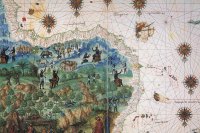
A thought kept recurring as I read Toby Green’s fascinating and occasionally frustrating book on the development of West Africa from the 15th to 19th centuries: that the money in my pocket was just a piece of polypropylene. And what is that worth in the greater scheme of things? The thought occured because money and its predecessor, barter goods, play a central role in the story Green has to tell in this monumental volume. The shells of the title are cowries, which for centuries were accepted as currency across the region. Cowries are not native to West Africa and had to be shipped from the Indian Ocean. But they worked as currency in the way polypropylene does: they had no absolute value but were accepted as currency because they were impossible to fake.

Books Podcast: what modern Bibles get wrong

In this week’s books podcast, my guest is Robert Alter - who has just published the fruits of decades of labour in the form of his complete new translation of the Hebrew Bible into English. Acclaimed for his Bible translations by Seamus Heaney, John Updike and Peter Ackroyd, Prof Alter tells me how Biblical Hebrew really works, what can and cannot be preserved in translation - and why, as he sees it, nearly every modern translation of the Bible gets it catastrophically wrong.

An eye in the storm

Lead book review

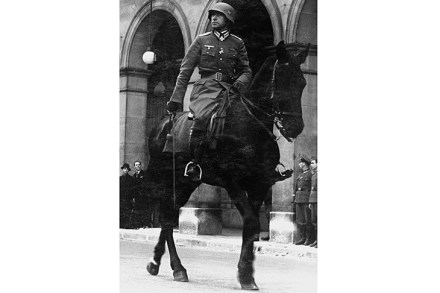
Ernst Jünger, who died in 1998, aged 102, is now better known for his persona than his work. A deeply confusing and controversial figure who loathed democracy and glorified German militarism, yet despised the Nazis, he not only bore witness to the industrial flesh-mangles of two world wars, but almost the entirety of the 20th century. His writings and insights have long earned him sage status in Germany. This, the first publication in English of his diaries from 1941–45, heightens his complexity but also makes him a more rounded figure.

Life at the Globe | 17 January 2019

More from Books

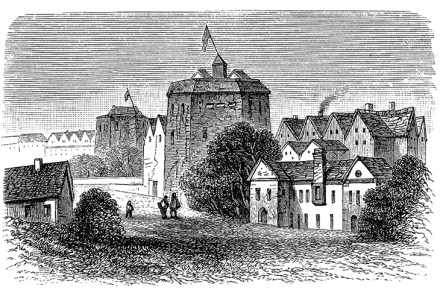
    IN ASSOCIATION WITH THE PRINCIPAL PARTNERS OF SHAKESPEARE’S GLOBE’S 2019 SUMMER SEASON One of the things about Shakespeare that always makes you marvel is how insistently he speaks to the present moment — any present moment you choose. Academic literary critics wince when you start bandying around phrases like ‘eternal truths’, so let’s just say Shakespeare has a way of chiming with current events. The Globe’s Richard II opens next month, the first in that chain of history plays that continues with Henry IV parts one and two and culminates with Henry V, all of which are part of the summer season.

The journalist as sleuth

More from Books

Despite being well-travelled as the BBC’s world affairs editor, John Simpson doesn’t roam far from home in his spy thriller, Moscow, Midnight (John Murray, £20). Life and art intermingle, in both subject matter and character. The hero is named Jon Swift, a veteran journalist bristling under new media regimes. When government minister Patrick Macready is found dead — presumably from a solo sex game gone wrong — Swift takes it upon himself to clear up a few loose ends. Soon he’s under investigation himself, ostracised, and journeying to Moscow to work a connection to a number of Russians who have met similar ‘accidental’ fates. Swift is cynical, unreconstructed in his view of women, a bit snobbish at times.

Behind the top 20

More from Books

This is a story of resurrection. A mere three decades ago, club football in England was a professional game largely and listlessly run by amateurs. Fans shuffled in decreasing numbers to obsolete stadia redolent of pie and pee. Lives were lost in the tragedies of Bradford, Hillsborough and Heysel. The sport was scarcely entertainment; it was certainly not a business. Yet today the Premier League is the world’s richest sporting brand. How this happened is a tale told with much verve and some wit by two experienced sports journalists.

Water, sky, wind and cold

More from Books

Dystopian fiction continues to throng the bookshelves, for all the world as though we weren’t living in a dystopia already, and the latest entrant to the glum-futures category is John Lanchester’s The Wall, about which much can be divined from a glossary of the capitalised nouns that throng it from the title onwards. The Wall encircles the perimeter of a fortified Britain. The Change has caused the sea level to rise, transforming the world forever. The Defenders, a national service now demanded of all young people, protect the Wall. The Guards patrol the coastal waters in boats, the Flight in planes. The Others want to get over the wall from outside, by violence or stealth. The Breeders make babies, which most people won’t do any more.

The human chimera – part lion, part goat

More from Books

Richard Wrangham embraces controversy, and appears to enjoy munching apples from carts he upsets himself. While his new book seems to be the history of an amalgam of moral and political virtues and vices, its thesis is actually the large claim that these have evolved; and he has no compunction about writing that the foundation stone of good behaviour is the possibility of capital punishment (against it though he is in today’s world). It’s not just that the logic of his argument requires this hypothesis; he has found examples of premeditated (‘proactive’), co-operative (‘coalitionary’) killing in the Pleistocene record, providing an empirical basis for his claims about our evolution. Chimpanzees have (reactive) murderous rages.

A serious tease

More from Books

Is there anything one can never laugh about? A question inevitably hanging over humour writing, it’s best answered by the masters of the genre who, rather than inventing jokes (a skill many possess), notice life’s winks and chuckles and tease them out of their surrounding matter, even if the latter happens to be of grave concern. Teffi was one of those writers. Born in 1872 in St Petersburg, by her early twenties Nadezhda Lokhvitskaya was a housewife with three children stranded in a provincial town; by her early thirties she was back in the capital, a literary celebrity writing for various publications under a snappy pseudonym, her witticisms quoted ‘in the streets, in trams, in clubs, in living rooms, at student gatherings’.

Music and revolt

More from Books

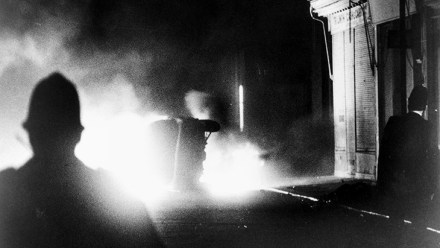
On 13 August 1977, a demonstration by the National Front was routed in the streets of Lewisham by thousands of anti-fascist activists. The latter’s elation palled, however, when they saw the evening news frame the event as a battle between rival extremists. Among the critical voices were Labour’s deputy leader Michael Foot and the Daily Mirror, which branded the anti-fascists ‘as bad as the National Front’. The NF’s opponents learned a valuable lesson at remarkable speed. Just weeks later, they launched the Anti-Nazi League at the House of Commons, with Neil Kinnock and Peter Hain on the steering committee and a medley of celebrity supporters that included Iris Murdoch, Brian Clough, Melvyn Bragg, Dave Allen, Warren Mitchell and Prunella Scales.

Their finest hour

More from Books

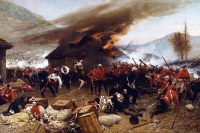
On 22 January last year, the entrance whiteboard at London Underground’s Dollis Hill carried a brief factual statement: On this day in history On the 22–23 January 1879 in Natal, South Africa, a small British garrison named Rorke’s Drift was attacked by 4,000 Zulu warriors. The garrison was successfully defended by just over 150 British and colonial troops. Following the battle, 11 men were awarded the Victoria Cross. A female passenger complained that it was ‘celebrating colonialism’. The board was wiped clean and a suitably opaque quote from Martin Luther King substituted: ‘We are not the makers of history. We are made by history.