Culture

Culture

The good, the bad and the ugly in books, exhibitions, cinema, TV, dance, music, podcasts and theatre.

A spiral of deceit

More from Books

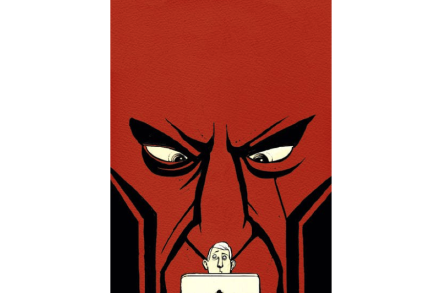
The Hebrew word for ‘truth’ – see above left  (emet) is comprised of the first, middle and last letters of the alphabet. Truth, scholars say, pervades all things. Talmudists add that the aleph, mem and tav that form emet are balanced, grounded characters, while the letters that make up the word for‘lie’ – see above

Looking back on Baku

More from Books

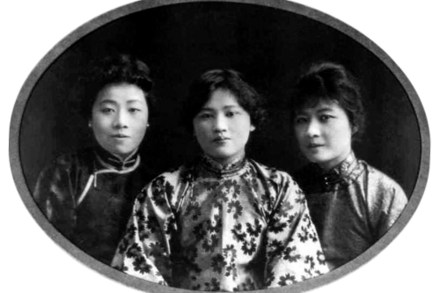
The discovery of oil in Baku brought Ummulbanu Asadullayeva’s family respect if not respectability. Peasant-born, her grandparents ranked by the time of her birth among the richest in the Russian empire, thanks to the abundance of black gold unearthed on their doorstep. Yet while oil barony went hand in hand with fantastic wealth and political

To hell in a handcart

More from Books

An immortal faery queen from a magical gynocratic island arrives in Los Angeles to track down her missing daughter. This is actually the entire plot of a novel entitled Only Americans Burn in Hell. Of course, as in Jarett Kobek’s previous book, I Hate the Internet, the fictional element is a foil, with most of

Two men and no baby

More from Books

The sorrow of involuntary childlessness is profound. The award-winning novelist Patrick Flanery and his husband knew this pain. Their craving to love and nurture a child left them with an intractable emptiness. Flanery has no siblings; his parents lived abroad, and he had a difficult relationship with his father. So his desire was to create

A class act | 2 May 2019

More from Books

Kate Clanchy is an extraordinary person. She is a veteran of 30 years’ teaching in difficult state schools, as well as an acclaimed poet (awarded an MBE in 2018 for services to literature) who has nurtured a generation of successful young migrant writers. In 2006 she was one of the judges for the Foyle young

Lost and found | 2 May 2019

More from Books

One of the oddest of Bloomsbury’s event venues must be the Foundling Museum. The handsome building on Coram’s Fields houses what remains of the London Foundling Hospital, which opened on the site in 1745. Its imposing rooms are lined with oil portraits of past patrons and among the artefacts on display is the original score

Conning the dons

More from Books

In 2010, Adam Sisman published a masterly biography of Hugh Trevor-Roper, who was not merely one of the best historians of his generation but also a former intelligence officer, fascinated by tricks, lies and fraud. He himself wrote a mischievous series of anonymous articles for The Spectator, purporting to emanate from the 17th-century pen of

An idea made concrete

More from Books

Was the Bauhaus the most inspired art school of all time or the malignant source of an uglifying industrial culture which has defiled our cities? Two books look at its influence abroad after 1933 when the Nazis put the jackboot in. The Bauhaus was nothing if not modern — even if ‘modern’ is now a

Dispatches from the underworld

More from Books

Edmund Burke, as a young Irish lawyer in 1756, first made the distinction between beauty and sublimity. Beauty for Burke was about continuity and connectedness. ‘Vegetables,’ he says, in one of the great pre-Romantic sentences, ‘are not sublime.’ Vegetables are beautiful because they are constant and continuous, and because beauty is the quality of perfect

Women of the Raj

Lead book review

Despite efforts to prevent them, British women formed a part of the Indian empire almost from the start. Although the East India Company warned them off, citing difficulties of climate, disease, morality, religion and culture, a few managed to travel there all the same. By the late 18th century their numbers had increased considerably, making

What Roger Scruton can teach his detractors

I thought I knew everything about Sir Roger Scruton. I had already written two books on his life and philosophy and was just about to embark on the last volume in my Scruton trilogy. This was to be a book of conversations that encompassed all facets of his biography and intellectual interests. Over three days

Living with Leviathan

More from Books

Our relations with cetaceans have always been charged with danger and delight, represented by the extremes of the Book of Revelation’s ‘beast out of the sea’, and the frescoed dolphin-riders of Pompeii. Rare, huge, and unknowable, whales have traditionally been omens, or metaphors for improbability — ‘very like a whale’, Hamlet chaffs the cloud-watching Polonius.

An outsider inside

More from Books

It’s not immediately obvious who the survivors in Tash Aw’s formidable new novel are, or who the narrator even is, or who has been killed. We know there has been a murder, however, or a culpable homicide not amounting to murder, as the narrator quotes the person being addressed as describing it. Details reveal themselves

Genius and geniality

More from Books

I cast my Readers under two general Divisions, the Mercurial and the Saturnine. The first are the gay part of my Disciples, who require Speculations of Wit and Humour; the others are those of a more solemn and sober Turn, who find no Pleasure but in Papers of Morality and sound Sense…Were I always Grave,

Method in the madness

More from Books

Have you heard of the Oulipo? The long-running Parisian workshop for experimental writing? Even if you haven’t, you might have heard of some of its members: Georges Perec, Italo Calvino, Marcel Duchamp. The group’s stock-in-trade (so-called ‘constrained writing’) is best illustrated by their most notorious production: Perec’s 1969 novel La Disparition which manages to avoid

A moral hypochondriac

More from Books

Surely God, if He existed, would find a major source of entertainment down the ages in the activities of theologians, reaching their climax perhaps in the 19th century, when they involved Him with German idealism, and then the descent from that to the present day, when the sheer naivete of anyone who thinks that God

The ultimate comfort food

More from Books

‘You are what you eat.’ The old phrase always reminds me of Denzil, John Sparkes’s character in the comedy sketch show Absolutely, who quotes it to his girlfriend and then adds: ‘And you have obviously eaten something very stupid.’ Pete Brown, on the other hand, has taken it as the theme of his book about

The House of Eliot

More from Books

Like many a 20th-century publishing house, the fine old firm of Faber & Faber came about almost by accident. The inaugurating Faber — Geoffrey — was an All Souls don in search of a livelihood, who began his career in the post-Great War book trade by investing in the Scientific Press, publishers of the Nursing

Life at the Globe | 25 April 2019

More from Books

    IN ASSOCIATION WITH THE PRINCIPAL PARTNERS OF SHAKESPEARE’S GLOBE’S 2019 SUMMER SEASON As I noted last week, the dramatic climax of Henry IV, Part Two — that stew of rot and renewal — is reached when Prince Hal casts off the roguish companion of his younger years, ‘the tutor and the feeder of

The ugly truth

More from Books

Timothy Hyde’s Ugliness and Judgment: On Architecture in the Public Eye is not about why we find things ugly. It’s not even about what ugliness is, or why our understanding of what it is see-saws so violently. We don’t learn why people once loathed John Nash’s All Souls at Langham Place, one MP calling it

A man for all ages

Lead book review

The deployment of Shakespeare to describe Brexit is by now a cliché. It might take the form of a quotation, be borrowed in a headline, or involve the name of one of the better-known characters; it might turn up in that most hollow of adjectives, Shakespearean. It has two possible modes. There is triumphalism drawn

The author John Boyne is wrong to pander to trans activists

You may not have heard of John Boyne, but you’ll almost certainly have come across his most famous book, The Boy in the Striped Pyjamas. A children’s novel about two boys meeting through the barbed wire of Auschwitz, the book was met with heavy criticism for its historical inaccuracies – none of which stopped it

The man and the myth | 17 April 2019

Lead book review

I can only remember one page of any of the dozens of Ladybird histories that I read avidly as a child: an illustration of a scene from the Third Crusade, when Richard the Lionheart, at the head of his Christian army,  met Saladin, the leader of the Muslim forces, outside the port city of Acre

The Books Podcast: Cass Sunstein – Beyond the Nudge

In this week’s Books Podcast I’m joined by Professor Cass Sunstein – best known here as co-author of the hugely influential 2008 book Nudge: Improving Decisions About Health, Wealth and Happiness, which spawned a whole transatlantic movement in using behavioural psychology to influence public policy (not least in the Cabinet Office’s celebrated ‘Nudge Unit’). Cass’s

Was there no end to his talents?

More from Books

John Buchan was a novelist, historian, poet, biographer and journalist (assistant editor of The Spectator indeed); a barrister and publisher; one of Lord Milner’s ‘young men’, charged with the reconstruction of South Africa after the second Boer war; director of propaganda 1917–18, a Member of Parliament; lord high commissioner (i.e. the king’s representative) to the

A struggle not to scream

More from Books

Norway doesn’t have a world-class philosopher (Kierkegaard was Danish). Karl Ove Knausgaard declared at the end of his previous book that he is no longer a writer, and it looks as though he’s moving in to fill that space. A very modern space: a selfie space. Nietzsche observed that all philosophy is autobiography, and Knausgaard